

 08/18/2026
  Steve Bearden
A document’s physical integrity is often the first and most lasting impression a brand makes on a high-value stakeholder. While many view finishing as a final checkbox, the strategic application of perfect binding is actually a catalyst for brand authority and logistical efficiency. You likely recognize that a flimsy manual or a poorly bound annual report can undermine your organization’s professional standing. It’s common to feel a sense of hesitation regarding technical specifications like spine width calculations, minimum page counts, or the fear of pages falling out under heavy use.
This guide provides the precise technical roadmap your design team needs to transform standard documents into high-impact brand assets. You’ll learn how to master the nuances of industrial adhesives and margin requirements to ensure a sleek, bookstore-quality finish every time. We’ll explore the latest advancements in binding technology for 2026, from the durability of PUR adhesives to the operational scales required for national distribution. By the end of this article, you’ll have the confidence to move from a complex business challenge to a streamlined, professional solution that scales with your growth.
Key Takeaways
- Discover how the premium “square spine” aesthetic creates a bookstore-quality finish that instantly elevates your brand’s perceived value.
- Master the technical specifications for perfect binding, including the 28-page minimum and essential gutter margins required for professional durability.
- Learn to strategically apply high-end finishing to transform standard catalogs and annual reports into authoritative business assets.
- Understand how to leverage industrial-scale production and MarCom On-Demand portals to manage inventory and national distribution with precision.
What is Perfect Binding? The Professional Standard for Modern Books
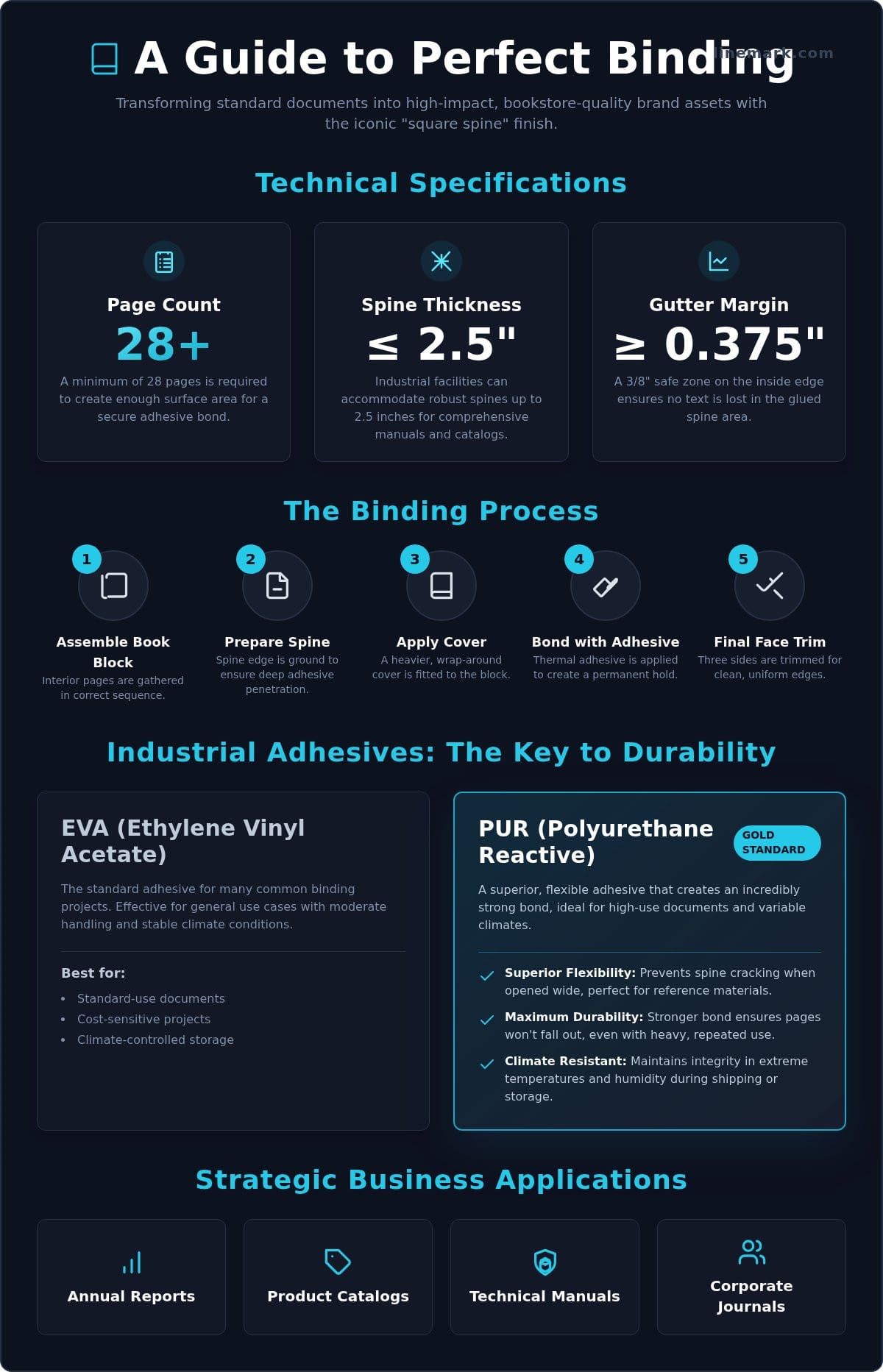
Perfect binding is a sophisticated thermal adhesive method where a single, wrap-around cover is bonded to the spine of gathered interior pages. This technique creates the iconic “square spine” aesthetic seen on premium paperbacks and high-end corporate journals. Unlike stapled alternatives, this method provides a flat, printable surface along the spine, allowing for clear branding and title identification when the document is shelved. It’s the preferred choice for organizations that value a bookstore-quality finish for their most critical communications.
The hallmark of this process is its ability to handle high-page-count projects with precision. While thinner documents might rely on saddle stitching, projects exceeding 28 to 40 pages require the structural support that only industrial adhesives can provide. Commercial printers prioritize this method because it balances aesthetic elegance with the rugged durability needed for high-traffic items like product catalogs and annual reports. It’s a strategic investment in the longevity of your brand assets.
The Anatomy of a Perfect Bound Book
To achieve a professional result, the process begins with the book block. This is a collection of individual sheets or folded sections that are gathered in the correct sequence. The spine edge of this block is typically ground or notched to create a rough surface, which allows the adhesive to penetrate deeper into the paper fibers for a permanent hold. Various Bookbinding methods exist to secure these pages, but the thermal bond used here is uniquely suited for modern, high-speed production.
Once the book block is prepared, a wrap-around cover, usually made from a heavier paper stock, is applied. This cover protects the interior content while providing a canvas for high-impact graphics and finishes like soft-touch lamination or spot UV. The final step is the face trim. Industrial blades trim the top, bottom, and front edges of the assembled book simultaneously. This creates the clean, uniform edges that define a professional product.
Industrial Adhesives: Ensuring Lifetime Durability
Modern industrial binding has evolved from basic Ethylene Vinyl Acetate (EVA) glue to advanced Polyurethane Reactive (PUR) adhesives. EVA is effective for standard projects, but PUR offers superior flexibility and bond strength. It’s chemically formulated to stay pliable, which prevents the spine from cracking when the book is opened wide. This flexibility is vital for documents intended for frequent reference, such as technical manuals or educational workbooks.
Because these documents often travel through diverse climates, temperature and humidity resistance are critical factors in adhesive selection. PUR adhesives maintain their integrity in extreme conditions, ensuring that pages don’t fall out during nationwide shipping or long-term storage in non-climate-controlled warehouses. PUR binding serves as the gold standard for high-usage manuals that require maximum structural integrity.
Technical Specifications: Designing for a Perfect Bind
Designing for perfect binding requires a shift from purely aesthetic thinking to industrial precision. While digital layouts offer infinite flexibility, the physical manufacturing process demands adherence to strict structural limits. For instance, this binding method typically requires a minimum of 28 pages. Anything thinner lacks the surface area necessary for the adhesive to create a secure bond, making saddle stitching a more appropriate choice for those smaller projects. Conversely, for high-capacity projects, industrial facilities can accommodate spine thicknesses up to 2.5 inches, providing a robust solution for comprehensive manuals and catalogs.
Calculating Spine Thickness and Margin Safety
The most critical element of your cover layout is the spine width. This isn’t a fixed number; it’s a variable determined by your specific page count and the caliper (thickness) of your chosen paper stock. The standard formula used by production teams is (Page Count / 2) multiplied by the Paper Thickness. Even a minor miscalculation can lead to “creeping” graphics where the front cover bleeds onto the spine. To avoid these issues, your design team should consult Technical specifications for perfect binding early in the design phase.
Margin safety is equally vital. Because the glue creates a rigid spine, the interior “gutter” area where the pages meet is not fully visible. We recommend a safe zone margin of at least 0.375 inches (3/8″) on the inside edge. This ensures that text and critical imagery don’t disappear into the binding. For full-wrap graphics, always include a 0.125-inch bleed beyond the trim line to account for the mechanical tolerances of industrial three-side trimming.
Paper Selection and Its Impact on Binding
The choice of paper stock dictates more than just the feel of the book; it determines the integrity of the bond. Higher GSM (grams per square meter) stocks provide a premium, bulky feel but can be more resistant to traditional glues. Grain direction is another often overlooked factor. The paper grain must run parallel to the spine. If the grain runs perpendicular, the pages will resist the fold, resulting in “wavy” edges and a book that refuses to stay closed.
Coated stocks require specialized PUR adhesives to penetrate the surface coating, while uncoated stocks absorb adhesive more readily. Choosing a stock that balances weight with flexibility is essential for a product that feels both substantial and accessible. For complex catalogs and annual reports, selecting the right stock is the first step toward a durable finished product that represents your brand with distinction.
Perfect Binding vs. Alternatives: Which is Right for You?
Selecting the appropriate finishing technique is a strategic decision that impacts both your production budget and your brand’s market perception. While various methods exist to secure a document, perfect binding is the definitive choice for projects that require a balance of professional authority and industrial scalability. It’s not just about holding pages together; it’s about creating a product that communicates stability and precision to your end user. When evaluating your options, consider the document’s intended lifespan and the environment where it will be used.
High-volume runs benefit significantly from the automated efficiency of modern binding lines. Unlike manual or semi-automated processes, industrial-scale binding allows for rapid production without sacrificing the meticulous attention to detail your brand requires. This makes it the superior choice for national distribution where consistency across thousands of units is a non-negotiable requirement.
Perfect Bound vs. Saddle Stitching
Saddle stitching remains a cost-effective, reliable solution for smaller brochures, newsletters, and programs. However, once a project exceeds the 48-page rule of thumb, the structural integrity of staples begins to fail. Thicker documents secured with staples often suffer from “buckling,” where the interior pages push outward and prevent the book from closing flat. Transitioning to perfect binding at this threshold ensures a clean, professional finish that handles the increased bulk with ease.
The durability of a glued spine also far exceeds that of a wire staple in high-frequency use cases. For annual reports or corporate handbooks that stakeholders will reference throughout the year, the adhesive bond provides a level of security that staples cannot match. While the initial setup for a glued spine involves more technical preparation, the resulting shelf presence and longevity offer a significantly higher return on your print investment.
Perfect Bound vs. Mechanical Binding (Spiral & Wire-O)
Mechanical binding methods like spiral and Wire-O are the preferred choices for workbooks or technical manuals that must lay completely flat on a desk. This functionality is a major advantage for interactive content, but it comes at the cost of professional aesthetics. Mechanical binds lack a printable spine, making them difficult to identify when stored on a shelf and giving them a more utilitarian, less premium feel.
Mailability is another critical factor where the glued spine excels. Perfect bound documents are ideal for automated direct mail and fulfillment systems because they lack the snagging hazards associated with plastic or wire coils. This streamlined profile reduces the risk of damage during high-speed sorting and transit. For a deeper dive into these technical trade-offs, consult our guide on choosing the right book binding to determine the best fit for your specific project goals.
Strategic Business Applications for Perfect Bound Books
Beyond simple aesthetics, perfect binding acts as a catalyst for brand authority and operational efficiency. In the B2B sector, documents aren’t just information carriers; they’re high-impact brand assets. When you transition from a stapled brochure to a bound volume, you’re signaling stability and permanence to your stakeholders. This professional finish transforms utilitarian documents into authoritative resources that command attention in a crowded marketplace.
The square spine of a perfect bound book provides a distinct advantage in the logistics chain. Unlike mechanical binds that can snag in high-speed postal sorters, the smooth, uniform edges of a bound book facilitate seamless transit through automated systems. This efficiency translates to better mailbox visibility. The spine allows the document to stand out against a sea of flat envelopes, ensuring your message isn’t lost in the shuffle. It’s a strategic choice for organizations that value both form and function in their national distribution efforts.
Commercial Catalogs and Product Guides
Commercial catalogs have evolved from simple SKU lists into high-value brand lookbooks. By utilizing spine-printed titles and logos, you ensure your brand remains visible even when the catalog is tucked away on a shelf. This maximized shelf presence is essential for maintaining top-of-mind awareness with long-term partners. We leverage advanced technology to integrate variable data printing, allowing you to customize covers for specific regional markets or high-value accounts without slowing down production.
For organizations looking to optimize their outreach, integrating these premium assets with direct mail marketing strategies ensures that your content reaches the right audience with industrial precision. The result is a unified partnership between high-end manufacturing and strategic distribution that drives measurable growth.
Training Manuals and Corporate Handbooks
Training manuals and corporate handbooks require a level of durability that standard office printing simply can’t provide. In high-use employee environments, pages must stay secure despite constant handling and frequent reference. Using perfect binding to consolidate complex technical documentation into a single, durable volume reduces the risk of lost pages and fragmented information. It’s an investment in the operational clarity of your organization.
Standardizing your brand identity through unified binding ensures that every office location presents a consistent image of professional excellence. Whether you’re distributing safety handbooks or technical guides, the structural integrity of the glued spine projects a sense of reliability. You can manage these critical assets through centralized digital portals, ensuring that your teams always have access to the latest versions. Transform your next project into a high-performance brand asset by exploring our custom book printing and binding solutions today.
Scalable Production: The Linemark Perfect Binding Advantage
Executing a high-volume print strategy requires more than just a binder; it demands an integrated industrial ecosystem. Our 90,000-square-foot high-capacity facility is engineered to handle the complexities of large-scale perfect binding projects with meticulous precision. With 30+ years of industrial experience, we’ve refined a workflow that bridges the gap between digital design and physical distribution. This isn’t a transactional service; it’s a strategic partnership designed to support your organization’s growth through operational excellence.
Precision finishing is the cornerstone of our production model. Automated three-side trimming and rigorous quality control protocols ensure that every book block meets exacting standards before it leaves the facility. By leveraging advanced technology, we maintain the tight tolerances required for professional spine alignment and clean edges across thousands of units. This level of consistency is vital for maintaining brand integrity during national rollouts where every asset must reflect your corporate standards.
Streamlining with MarCom On-Demand
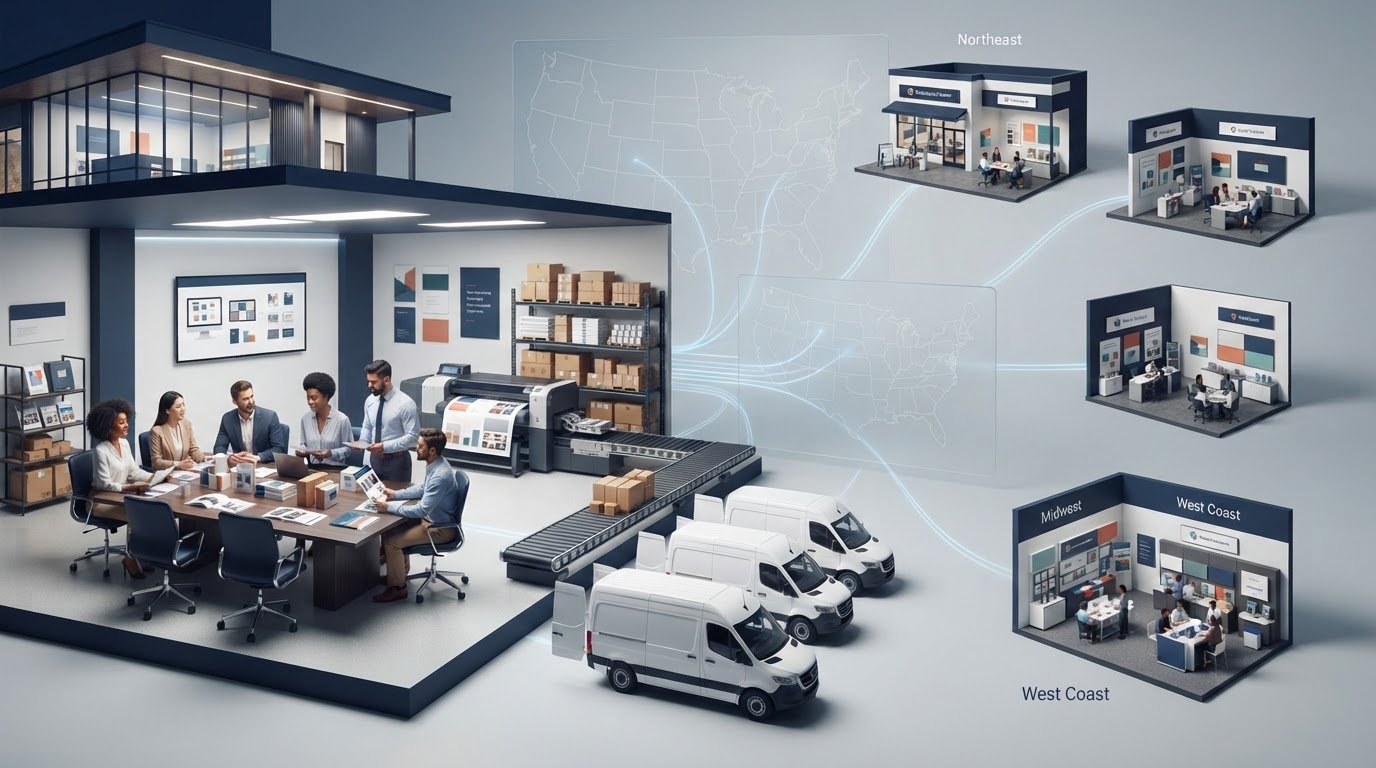
Managing a library of perfect bound assets across distributed teams often leads to brand dilution and inventory waste. Our proprietary MarCom On-Demand portal solves this by providing a centralized destination for your marketing collateral. Regional managers can order the exact quantity of catalogs or manuals they need, reducing the overhead costs associated with obsolete inventory. This model ensures that your field teams always have access to the most current, high-impact brand assets without the logistical friction of manual ordering processes.
Integrated Kitting and Nationwide Distribution
The journey doesn’t end at the binder. We offer a seamless transition from production to nationwide fulfillment, allowing you to combine perfect bound books with other collateral in custom kits. This integrated approach simplifies your supply chain by providing a single source for production, kitting, and storage. Whether you’re shipping a few hundred annual reports to executive offices or thousands of training manuals to retail locations, our logistics team manages the complexity so you don’t have to.
Partnering with a comprehensive service provider means your projects move through a unified workflow from start to finish. This holistic journey reduces lead times and minimizes the risk of errors that occur when moving between multiple vendors. It’s a modern, proactive spirit focused on delivering high-touch service at an industrial scale, ensuring your documents remain powerful catalysts for business growth.
Elevating Your Brand Through Industrial Precision
Mastering the technical requirements of perfect binding transforms standard business documents into authoritative brand assets that command attention in any marketplace. The technical roadmap provided here ensures that precise spine calculations and advanced PUR adhesives deliver the durability required for high-volume catalogs and corporate handbooks. By combining these premium finishing techniques with automated logistics, you move beyond a simple print transaction toward a strategic communications partnership that scales with your organization’s growth.
Linemark supports your vision with over 30 years of industrial print expertise and a 90,000-square-foot high-capacity production facility designed for precision at scale. Our integrated MarCom On-Demand logistics ensure that your finished products are managed and distributed across the country with surgical accuracy. This unified workflow reduces waste and protects your brand integrity from the binder to the final destination. We’re ready to help you navigate the nuances of modern production and deliver a bookstore-quality product that reflects your professional standards. Request a custom book printing quote for your next project and take the first step toward transforming your corporate collateral into high-performance assets.
Frequently Asked Questions
What is the minimum page count for a perfect bound book?
The standard industrial minimum for a perfect bound book is 28 pages. While some digital processes can accommodate slightly fewer, projects with 40 or more pages yield the most durable and aesthetically pleasing results. This threshold ensures there is sufficient surface area on the spine for the adhesive to create a permanent bond. If your project falls below this count, saddle stitching is usually the more reliable finishing method to prevent page detachment.
Can a perfect bound book lay flat when opened?
Traditionally, perfect bound books don’t lay completely flat due to the rigid nature of the glued spine. However, utilizing advanced PUR (Polyurethane Reactive) adhesive significantly improves flexibility compared to older methods. While it won’t lay as flat as a spiral or Wire-O bind, PUR allows the reader to open the book wider without the spine cracking or pages pulling loose. This makes it a functional choice for high-end corporate catalogs and reports.
How do I calculate the spine width for my cover design?
To calculate your spine width, use the formula: (Page Count / 2) multiplied by the paper’s caliper or thickness. Since different paper stocks have varying weights and bulks, it’s essential to confirm the specific caliper with your production partner before finalizing the cover art. An accurate calculation prevents “spine creep,” where the front or back cover graphics bleed onto the spine, ensuring a professional, bookstore-quality finish for your brand assets.
Is perfect binding durable enough for textbooks or manuals?
Yes, perfect binding is exceptionally durable when executed with industrial-grade PUR adhesives. This method is the professional standard for textbooks, technical manuals, and corporate handbooks that face frequent handling. The adhesive remains pliable over time, resisting the brittleness that causes pages to fall out in extreme temperatures. Our 30+ years of industrial experience ensures that your high-use documents maintain their structural integrity throughout their intended lifecycle across nationwide distribution networks.
What is the difference between EVA and PUR adhesive in perfect binding?
EVA (Ethylene Vinyl Acetate) is a traditional hot-melt glue that’s effective for short-term projects but can become brittle over time. PUR (Polyurethane Reactive) is a superior adhesive that offers 40% to 60% more strength and significantly higher flexibility. PUR is resistant to temperature extremes and ink solvents, making it the essential choice for coated papers and high-capacity industrial projects that require a lifetime bond and a premium, resilient feel.
Can I print on the spine of a perfect bound book?
You can absolutely print on the spine of a perfect binding project, provided the spine is at least 0.1875 inches (3/16″) thick. This printable surface is one of the primary strategic advantages of the method, allowing for easy identification on a shelf. For the best legibility, we recommend centering text and keeping it at least 0.0625 inches away from the spine edges to account for minor mechanical shifts during the industrial trimming process.
How does perfect binding affect mailing and shipping costs?
Perfect bound books are highly efficient for national distribution because their flat, uniform edges prevent snagging in automated postal sorting equipment. This streamlined profile often results in lower damage rates compared to mechanical binds during high-speed transit. While the weight of the book is the primary driver of shipping costs, the compact nature of a glued spine allows for denser packing in shipping containers, maximizing your logistical budget for large-scale fulfillment.
What kind of paper is best for perfect bound books?
The best paper for perfect binding typically ranges from 50lb to 100lb text weights. For the most professional results, the paper grain must run parallel to the spine to prevent “waviness” and ensure the book opens smoothly. While both coated and uncoated stocks work well, coated papers require the superior bonding strength of PUR adhesive to ensure that the pages remain secure even with heavy ink coverage near the interior gutter.