

 11/18/2026
 Steve Bearden
A welcome kit is more than a box of branded merchandise. Thoughtful new hire onboarding kits combine useful essentials, onboarding materials, a personal welcome, and items that help new employees feel connected to the company from day one.
A strong first-day package feels both practical and personal. Curate it around what employees need, how they work, and the culture you want to introduce, rather than filling a box with unrelated items.
This guide explains what employee welcome kits can include, how custom branding and packaging shape the experience, and how to choose items that work together. You’ll also learn how welcome materials and thoughtful logistics can support a smooth start for employees in the office or working remotely.
Key Takeaways
- Match kit contents to employees’ roles and budget, while choosing items with comparable perceived value across different versions.
- Use consistent logos, colors, and messaging to make each item feel connected to the company culture.
- Choose packaging that suits the contents and delivery format, then use thoughtful details to make the unboxing feel intentional.
- Organize welcome letters, HR materials, and first-day schedules as a practical onboarding packet, with remote delivery timed ahead of the start date.
What is an employee welcome kit?
An employee welcome kit combines practical essentials, onboarding materials, and a personal greeting. A well-chosen selection can make the first day memorable while introducing company culture through useful items.
Kit Ideas by Budget and Team
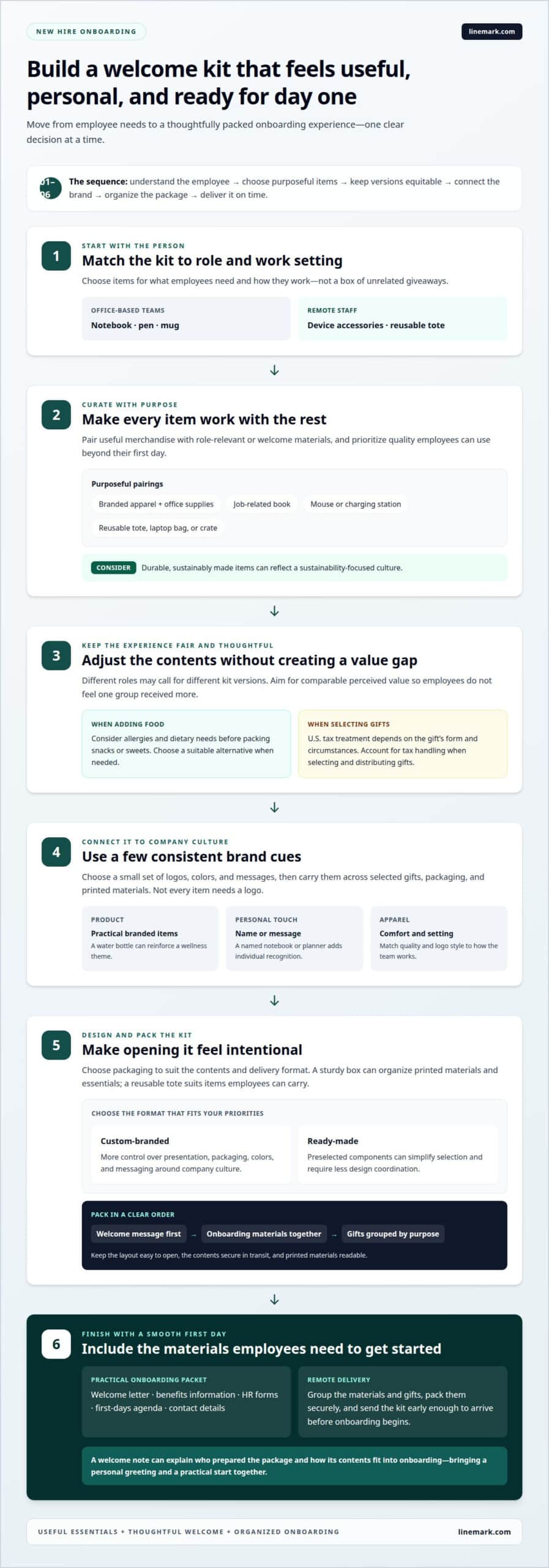
Start with the employee’s role, work setting, and the purpose of each item. Office-based teams might use notebooks, pens, and mugs, while remote staff may value device accessories and a reusable tote. Keep versions at a similar perceived value when contents differ, so employees don’t feel one group received more.
Choose durable, sustainably made items to reflect a sustainability-focused culture. Consider allergies before adding granola bars, nuts, crackers, or sweets, and select alternatives when needed. U.S. tax treatment depends on the gift’s form and circumstances, so no single rule applies to every kit. Account for tax handling when selecting and distributing gifts.
Curated Kits and Branded Merchandise
Curating means choosing items that serve a clear purpose together, rather than filling a box with unrelated giveaways. Pair branded apparel with role-specific office supplies, a job-related book, or technology accessories such as a mouse or charging station. Choose quality merchandise employees can use beyond their first day. A reusable tote, laptop bag, or crate can hold the items and remain useful afterward.
For remote employees, group the materials and gifts, then pack them securely for delivery before the first day. Send the kit early enough to arrive before onboarding begins. Include a welcome note explaining who prepared the package and how the onboarding materials fit in.
Company Kit Examples and Gift Sets
A corporate office set might pair a branded notebook, pen, mug, and welcome letter. A remote-work set could combine a laptop bag, device accessory, and first-days agenda. A company that makes physical products might include one for new employees to experience firsthand. These examples are starting points, not fixed templates; align each gift set with the role and company culture.
Welcome treats can add a personal touch, from durable snacks to gourmet sweets. Consider dietary needs before packing food, and use a nonfood alternative when it better suits the employee. A gift card to a local restaurant or business offers another option. Finish with benefits information, HR forms, and contact details so the package supports both a warm welcome and a practical start.
Custom logos, colors, packaging, and brand messaging
Build a recognizable onboarding experience by using the same logo, colors, and message across selected gifts. A branded notebook, apparel item, and welcome insert can feel connected without making every item identical. Choose a small set of brand elements first, then apply them consistently to product choices, packaging, and printed materials. This gives employees a clear introduction to company culture.
For apparel, prioritize comfortable, high-quality pieces over the cheapest T-shirt. Consider whether employees will use the item at work, remotely, or outside the office. Match the style and branding to the team’s day-to-day setting. A subtle logo may suit a workplace where employees prefer understated clothing, while a stronger graphic may fit a more expressive brand.
Keep the budget manageable by setting priorities before selecting gifts. Decide which items carry the brand message, then choose supporting pieces with a practical purpose. A branded water bottle can reinforce a wellness theme; a useful accessory can support a remote-work setup. Consistent presentation matters more than putting a logo on every object. If kits differ, aim for a similar perceived value so employees don’t feel some were favored.
Personalization can make employee onboarding gifts feel considered. A notebook or planner bearing the employee’s name adds a direct welcome, while a printed message can explain why the selected items reflect the company’s values. Use packaging to carry that message through a coordinated label, insert, or welcome card. For a longer introduction to the organization, a custom-printed welcome guide can bring key stories and onboarding content together in a branded format. Keep names, colors, and messaging aligned across each piece.
Custom kit packaging and design
Packaging sets the order in which employees open an employee welcome kit. Plan the container, printed pieces, and gifts as one coordinated presentation.
Customized Kit Design
Start with the kit’s contents and delivery format. A sturdy box can organize printed onboarding materials alongside a tumbler, bottle, or other essentials, while a reusable tote suits items employees can carry. Use a welcome card or printed insert to guide the unboxing and connect each piece to onboarding. Keep the layout easy to open and the contents secure in transit.
A customizable gift set can balance shared company items with a personal detail. For example, a notebook or planner bearing the employee’s name adds individual recognition without changing the overall design. Choose packaging dimensions to fit the contents neatly and keep printed materials readable.
Custom-Branded and Ready-Made Kits
Custom-branded kits coordinate packaging, colors, and messaging around company culture; ready-made kits use preselected components and require less design coordination. Custom kits offer more control over presentation, while ready-made components can simplify selection. Compare your priorities for brand consistency, personalization, and item choice before choosing a format.
With either approach, make the opening sequence clear. Place a welcome message where the employee will see it first, then group onboarding materials and gifts by purpose. This small design decision can make unpacking a more intentional onboarding moment.
Use packaging to organize, not just decorate. A printed sleeve can identify the kit, while an insert can explain the purpose of a wellness gift or branded accessory. Limit competing messages; one welcome note and concise instructions give each piece room to register. If contents vary by role, keep the outer design consistent and adjust the interior arrangement.
Before production, map each item to its place in the package. Confirm that a bottle or tumbler fits alongside the printed materials and that the container closes securely. A simple layout plan aligns the design, contents, and unboxing experience while reducing the risk of a crowded or confusing presentation.
Curated new hire onboarding kits
Curated new hire onboarding kits connect each item to a defined employee need and company purpose. Start with the first-week experience, then select gifts and materials that reinforce the company mission rather than compete with it.
For example, a welcome package might pair drinkware with a printed company overview and role-specific resources. A wellness-focused team could include a reusable bottle, while a product company might introduce employees to one of its products. Add a welcome letter explaining how each piece connects to company culture. This makes the welcome feel intentional, not just like a collection of branded objects.
The right U.S. vendor depends on the project’s needs, not a universal ranking. Look for a partner whose capabilities match the printed materials, kit assembly, personalization, and fulfillment you require.
Common mistakes include choosing items before defining their purpose, overlooking allergies or accessibility, and selecting different gifts with unequal perceived value. These gaps can weaken the welcome and leave hires feeling overlooked. A curated plan addresses dietary needs, practical use, and consistency across roles before packing begins.
Build the kit around a simple sequence: welcome message, essential onboarding information, then useful gifts. Include benefits information, HR forms, contact details, and a first-days agenda where they support the employee’s start. Keep instructions readable, and choose alternatives when a plant, snack, or other item may not suit everyone. For role-based variations, maintain a shared core and tailor only the relevant contents.
Review the final selection as a complete set. Check that every item supports appreciation, usability, or company culture; remove pieces that serve none of these purposes. This keeps the package focused and helps the employee understand its intent. To coordinate printed onboarding materials with kit fulfillment, discuss a curated kit project.
Linemark
Linemark helps organizations bring printed onboarding materials into a cohesive employee welcome experience. When a curated kit needs a polished handbook, welcome guide, or other branded print pieces, Custom Book Printing and Commercial Printing can produce those components. Direct Mail can help deliver printed communications to new hires, while Large Format Graphics can extend the welcome into the workplace.
The right mix depends on what employees need to read, receive, and see as they join. Gather the intended materials and message, then shape a coordinated print approach around the kit. Contact Linemark to discuss printed materials for your onboarding kits.
Make the First Welcome Count
Give your employee welcome program room to evolve. As roles, teams, and company priorities change, review which materials help new employees feel informed and included. A well-planned set of new hire onboarding kits can become a repeatable part of that experience, with thoughtful updates that keep each package relevant.
Printed pieces can carry the welcome beyond the first unboxing. Custom Book Printing can turn employee guides or company stories into a lasting format. Direct Mail can deliver printed communications to new hires, while Large Format Graphics can help create a welcoming workplace environment. Choose pieces that support your message and fit how employees join your organization.
When you’re ready to shape the print elements around your onboarding plans, contact Linemark about your kits. A clear starting brief can help turn your welcome goals into a coordinated, practical experience for each new employee.
Frequently Asked Questions
What should a new hire onboarding kit include?
A useful kit pairs essential company information with items suited to the employee’s work. Include a concise guide to key policies, a team contact list, and a clear route to internal resources. Add gifts only when they serve a practical or welcoming purpose. For employees in different roles, keep core information consistent and tailor supporting materials to their responsibilities.
How much do new hire onboarding kits cost per employee?
The per-employee cost depends on the selected items, print specifications, personalization, packaging, kit quantity, and delivery needs. A simple printed welcome package differs from a set with multiple gifts and customized components. To request a project quote, define the intended contents and quantities first; the price depends on the project.
What are popular onboarding kit gifts for different roles and industries?
Popular choices depend on how employees work. Desk-based teams may appreciate useful office accessories, while field employees may prefer durable drinkware they can carry. A company introducing a physical product can include a sample for firsthand experience. For a sales team, a concise company or product guide can build familiarity with the organization’s offerings. Choose gifts that fit the role and avoid one-size-fits-all selections.