

 08/20/2026
  Steve Bearden
How much of your 2026 marketing fund contribution is currently sitting in a “marketing closet” or being wasted on unauthorized local print jobs? With the U.S. franchise sector projected to reach 845,000 establishments this year, the pressure to scale while maintaining brand integrity has never been higher. It’s frustrating to watch your national vision get diluted by local “rogue” campaigns or slowed down by manual approval bottlenecks that eat into your 1.6 percent projected economic growth. Modern franchise marketing fulfillment must be more than just a shipping service; it’s a strategic engine for growth that aligns corporate standards with local agility.
You’ve likely felt the sting of high shipping costs and the friction of slow distribution during national rollouts. We understand that your role as a strategic communications ally requires a well-oiled machine that can handle any scale without sacrificing precision. This guide will show you how to centralize brand control, automate marketing logistics, and empower local franchisees with a high-capacity fulfillment strategy. We will explore how MarCom On-Demand portals and on-demand production can eliminate waste and transform your distribution into a competitive advantage for your entire network.
Key Takeaways
- Learn how to transition from passive inventory storage to a data-driven franchise marketing fulfillment system that eliminates waste and ensures national brand consistency.
- Discover how MarCom On-Demand portals and Variable Data Printing empower local franchisees with localized, compliant messaging without the need for manual corporate approvals.
- Understand the operational advantages of leveraging a 90,000-square-foot production facility for managing complex kitting and high-volume national rollouts.
- Follow a five-step strategic workflow to identify current fulfillment bottlenecks and centralize your brand assets for maximum operational efficiency.
- Identify the critical criteria for selecting a strategic communications ally capable of handling diverse needs, from custom book printing to large-scale marketing collateral.
What is Franchise Marketing Fulfillment? Beyond Order Processing
Franchise marketing fulfillment represents the intersection of industrial production and technological agility. It’s far more than a simple pick-and-pack operation. It’s a centralized ecosystem designed to produce, manage, and distribute brand assets with surgical precision. Traditional Franchising models often struggle with fragmented supply chains that lead to inconsistent messaging. Modern systems solve this by shifting from passive storage to active, data-driven marketing logistics. Instead of printing thousands of brochures and hoping they get used, you produce what’s needed based on real-time local demand. This specialized model ensures that every location maintains 100% brand compliance without corporate teams having to manually oversee every order.
The High Cost of Decentralized Marketing
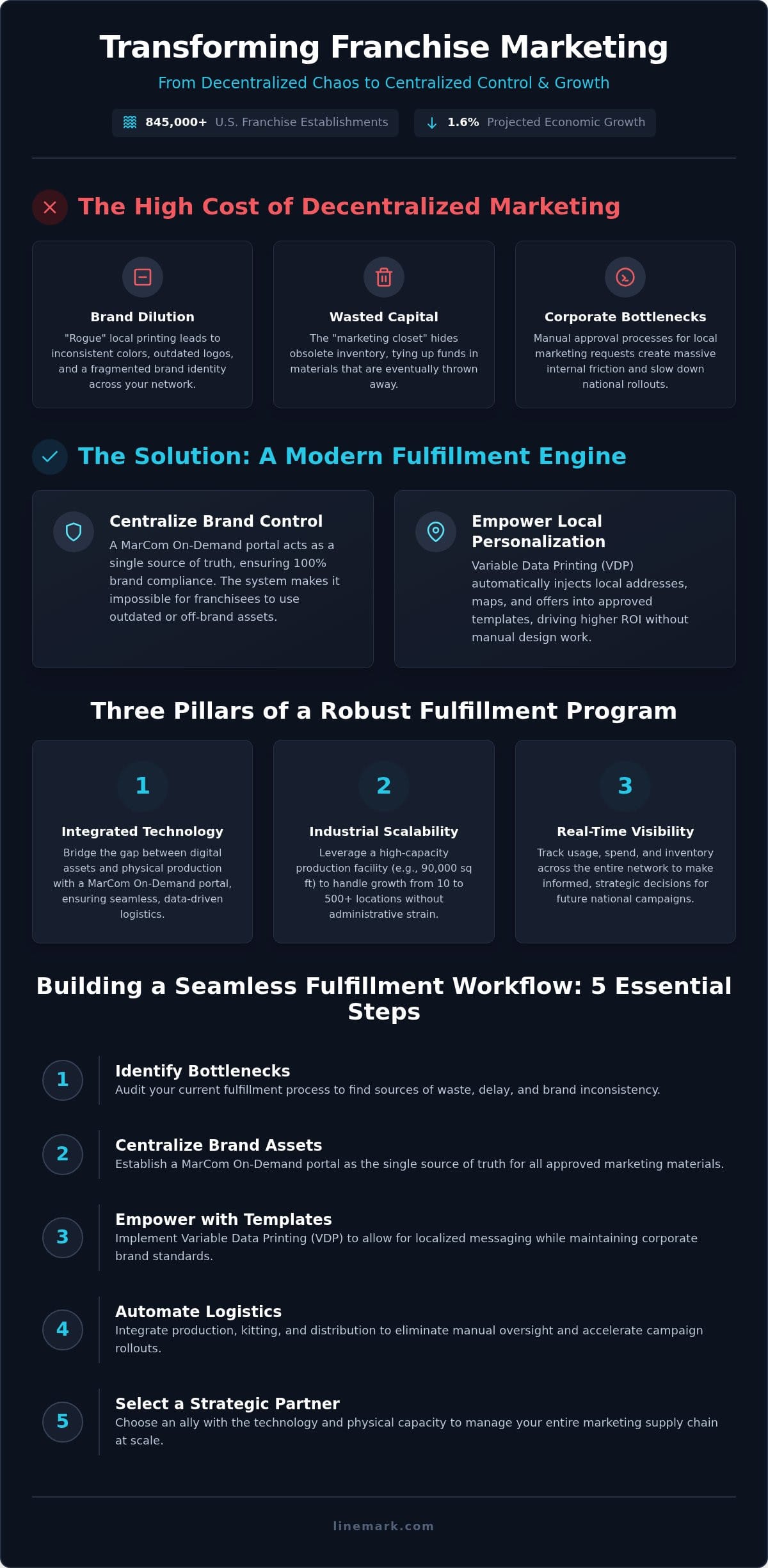
Decentralization is the enemy of brand equity. When local owners resort to “rogue” printing at the nearest retail shop, the result is brand dilution through inconsistent colors and outdated logos. These manual fulfillment processes also create massive internal bottlenecks for corporate teams. Additionally, the “marketing closet” problem hides significant costs in obsolete inventory that sits in a franchisee’s backroom until it’s eventually thrown away. It’s capital that could have been used for growth, wasted on paper that no longer serves a purpose.
The Pillars of a Modern Fulfillment Program
A robust franchise marketing fulfillment strategy relies on three critical pillars. First, you must integrate digital asset management with physical production. By using MarCom On-Demand technology, you bridge the gap between a design file and a finished product. Second, scalability is vital. Leveraging a 90,000-square-foot production facility ensures your system handles growth from 10 locations to 500 without increasing administrative overhead. Finally, you need real-time visibility. Tracking usage and spend across the entire network for kitting & fulfillment allows you to make informed decisions about future national campaigns.
Centralizing Brand Control with MarCom On-Demand Technology
Scaling a franchise requires a delicate balance between rigid brand standards and the agility of local market needs. Technology bridges this gap. A sophisticated MarCom On-Demand portal acts as your brand’s single source of truth. It ensures that every location, whether you have 50 or 500, accesses the same approved creative assets. This centralized approach to franchise marketing fulfillment eliminates the risk of outdated logos or off-brand messaging. By hosting a digital asset library within a production-integrated portal, corporate teams can push updates instantly across the entire network. Franchisees don’t have to wonder if they’re using the right file; the system makes it impossible to use the wrong one.
Local Personalization at National Scale
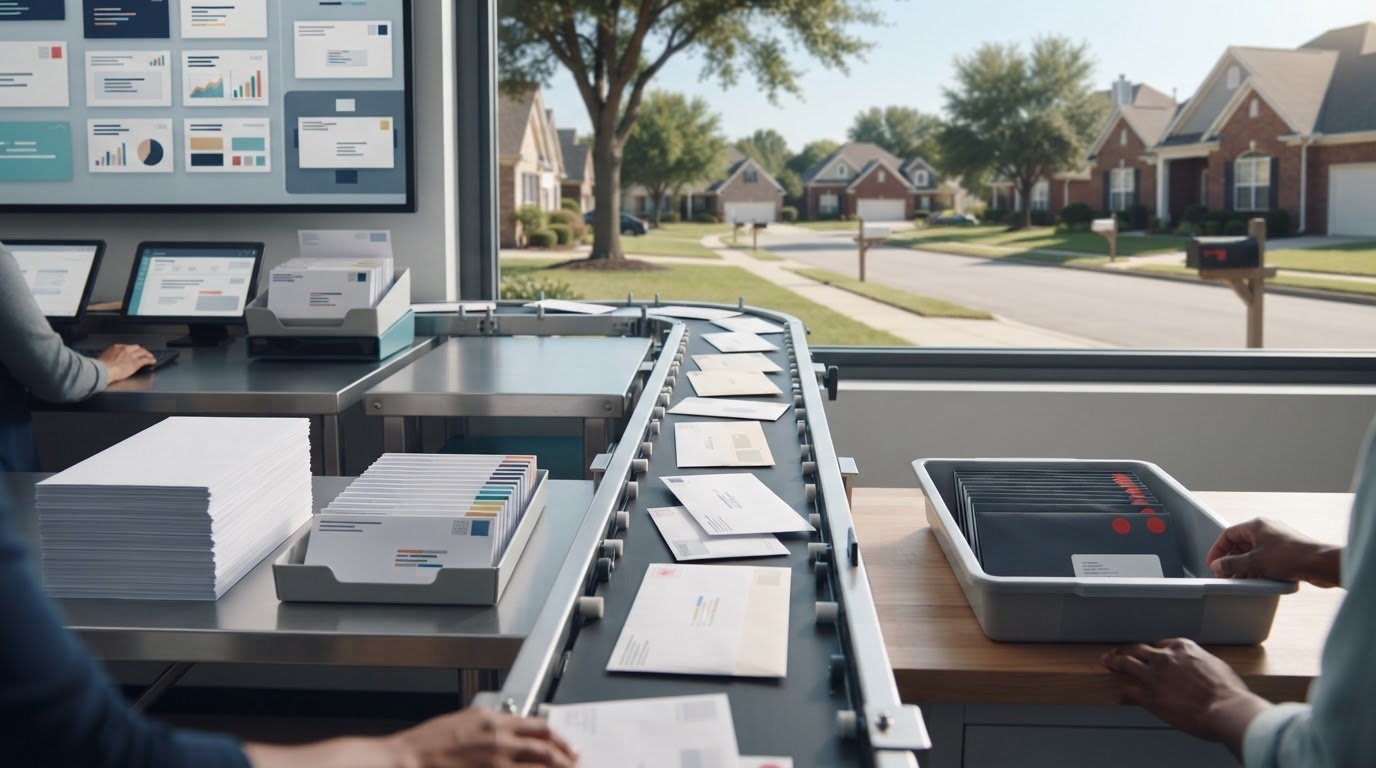
The true power of modern fulfillment lies in the integration of Variable Data Printing (VDP). Most platforms offer basic templates, but a strategic partner uses VDP to inject hyper-local relevance into every piece of collateral. This technology automatically inserts local store addresses, unique maps, and specific regional offers into the production stream. It’s particularly effective for direct mail campaigns where personalization is a primary driver of ROI. You maintain the high-level brand aesthetic while giving the local owner a tool that feels tailored to their specific neighborhood. This level of precision transforms standard mailers into high-performing local assets without requiring manual design work for every location.
User Management and Permission Hierarchies
Control doesn’t mean micromanagement. Effective portals utilize tiered permission hierarchies to empower users while protecting the bottom line. You can set specific spending limits for individual franchise owners or grant regional managers oversight of multiple territories. These permissions simplify the user experience by only showing franchisees the products and budgets relevant to them. It reduces the administrative burden on your corporate marketing team, as the system handles the approval workflow automatically based on your pre-set rules. When the ordering process is this intuitive, adoption rates across the network skyrocket. A unified strategy starts with the right platform. You can explore how these integrated portals function to see the impact on your operational flow.
Automating these workflows ensures that your brand remains cohesive as you expand. High-capacity production facilities then take these digital orders and turn them into physical reality with industrial speed. This synergy between software and hardware is what defines a truly scalable model for the coming years.
The Logistics of Scale: High-Volume Printing, Kitting, and Distribution
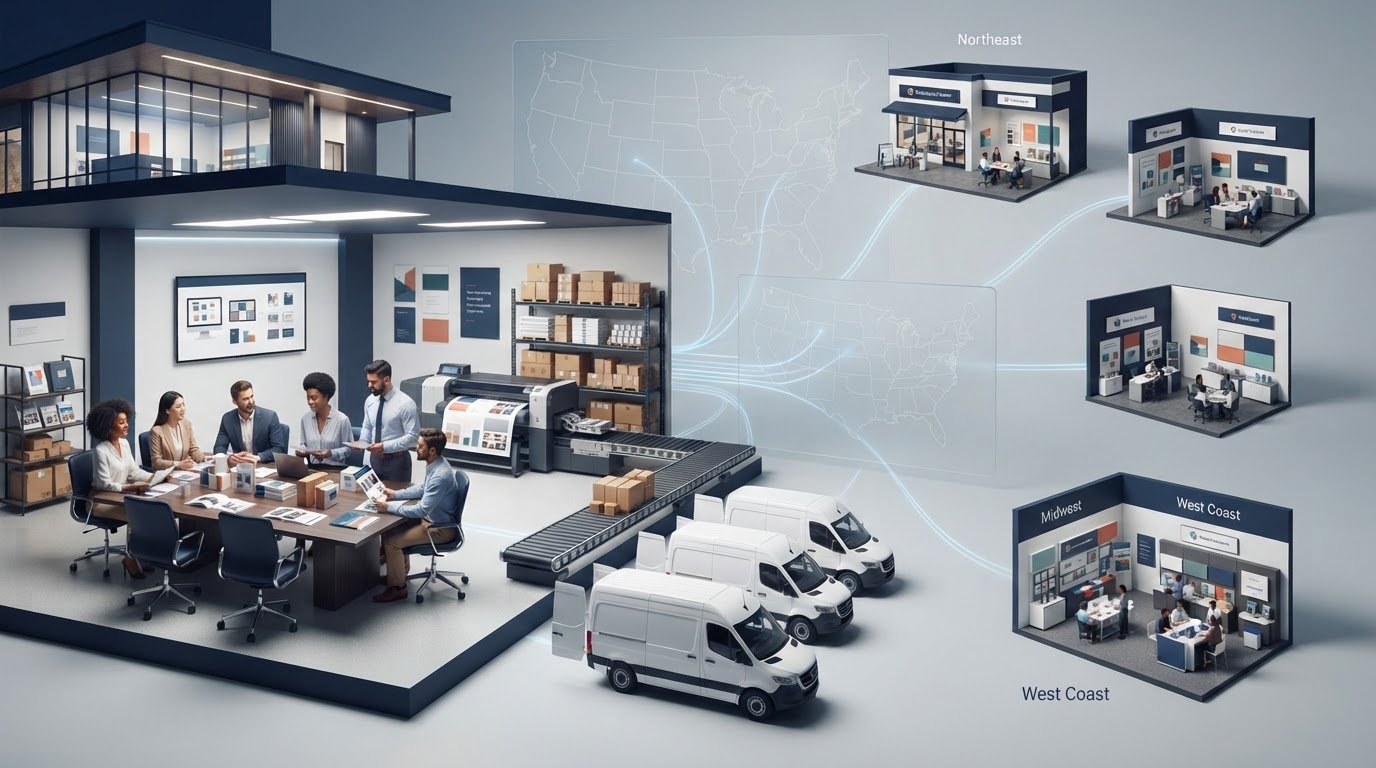
A digital portal is only as effective as the industrial muscle behind it. While software manages the order, the physical reality of franchise marketing fulfillment happens on the production floor. The transition from a screen-based request to a delivered asset requires a high-capacity infrastructure capable of handling massive volume without sacrificing detail. Operating from a 90,000-square-foot centralized production facility allows for a level of control that decentralized vendors simply cannot match. This scale ensures that every component of a national campaign is produced, staged, and shipped under one roof, eliminating the communication gaps that occur when multiple vendors are involved.
Complexity management is a defining challenge for growing brands. Managing kitting & fulfillment for multi-item promotional kits involves more than just putting paper in a box. It requires an integrated approach to inventory management where on-demand production meets strategic warehousing. Instead of overproducing materials that might become obsolete, you produce core items in bulk while utilizing digital printing for time-sensitive inserts. This hybrid strategy reduces waste and ensures that your capital isn’t tied up in “marketing closets” across the country.
Advanced Kitting and Assembly
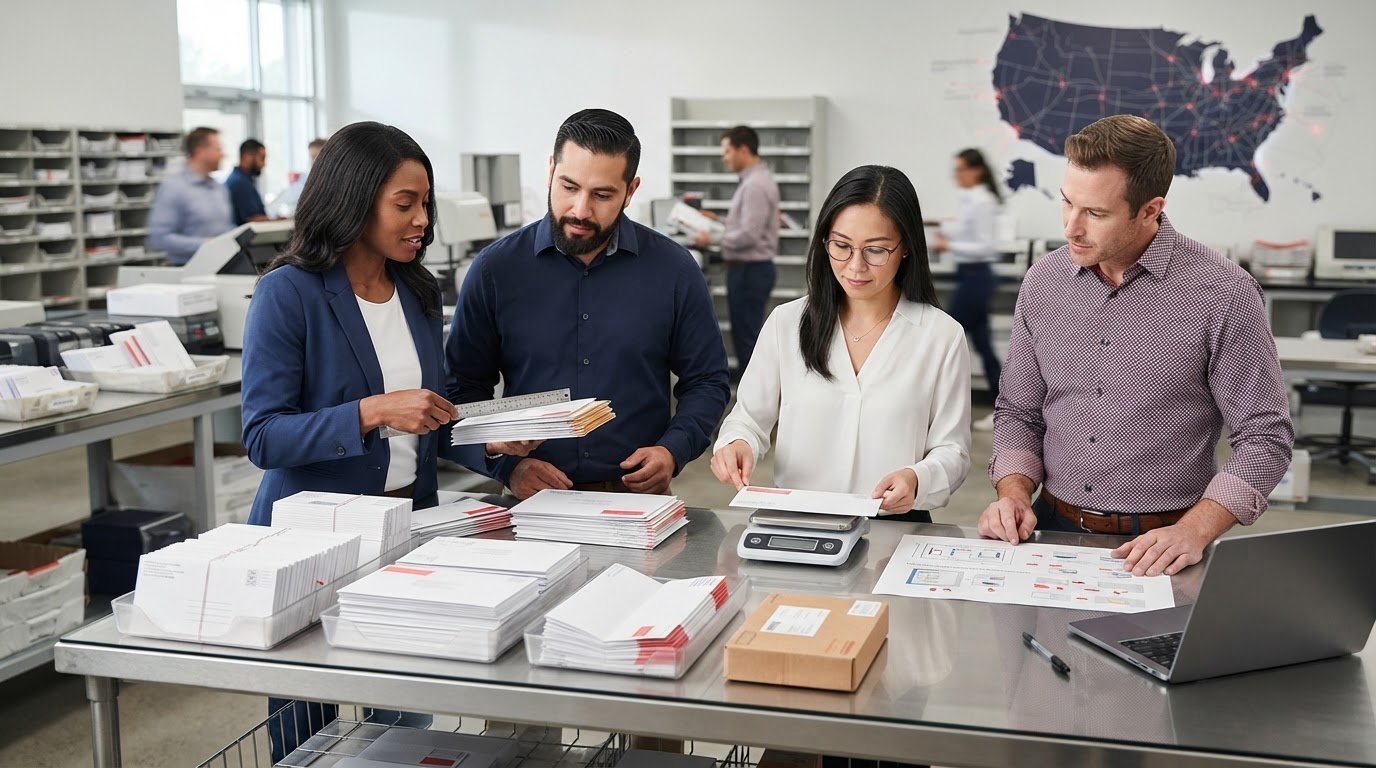
Precision assembly is the heartbeat of a successful rollout. Custom kits often include a mix of brochures, newsletters, and promotional items that must arrive in perfect condition. We implement rigorous quality control protocols for these multi-component packages to ensure every franchisee receives exactly what they need for a launch. Our pick-and-pack workflows are optimized for high-volume environments, allowing for the rapid assembly of thousands of unique kits. This industrial efficiency means that a complex national rollout doesn’t have to be a logistical nightmare for your corporate team.
National Distribution and Shipping Optimization
Shipping a single kit is easy; coordinating 500+ shipments for a simultaneous national launch date is a feat of engineering. We leverage data-driven logistics to minimize postage and shipping costs for nationwide delivery. This includes optimizing routes and choosing the most efficient carriers for different types of materials, from standard direct mail to large-format graphics and window signage. Real-time tracking provides franchisors with a birds-eye view of every shipment in the network. You’ll know exactly when the materials arrive at every location, ensuring your brand message hits the market at the same moment from coast to coast. This level of transparency builds confidence between the franchisor and the local owner, fostering a unified partnership focused on growth. For organizations that also manage a digital storefront, the transition to a unified logistics model can be further enhanced by collaborating with an expert 3PL like Silicon Valley Direct, ensuring that eCommerce orders are fulfilled with the same strategic precision as national marketing campaigns.
Implementing a high-performance system for franchise marketing fulfillment isn’t a one-time event; it’s a strategic shift in how your organization communicates. It requires moving from reactive ordering to a proactive, automated workflow. By following a structured five-step process, you can eliminate the friction between your corporate vision and local execution. This approach ensures your brand remains agile while your logistics stay lean.
- Step 1: Conduct a marketing audit to identify current fulfillment bottlenecks. You can’t fix what you haven’t measured. Look for where orders stall and where brand standards slip.
- Step 2: Centralize assets in a MarCom On-Demand portal with strict brand guidelines. This creates a single destination for all approved creative.
- Step 3: Implement Variable Data templates for localized franchise marketing. This allows for hyper-local relevance without manual design intervention.
- Step 4: Establish inventory thresholds to trigger automated on-demand production. This prevents stockouts while minimizing waste.
- Step 5: Monitor analytics to optimize spend and material effectiveness. Use data to see which assets drive results and which are ignored.
Auditing Your Current Fulfillment Lifecycle
A successful transition begins with a deep dive into your existing processes. You must identify “hidden” costs in your current print and mail workflow, such as the time your corporate team spends on manual approvals or the cost of shipping materials twice. Gathering direct feedback from franchisees on their marketing pain points is equally vital. Are they waiting too long for banners? Is the ordering system too complex? Once you understand these friction points, set clear KPIs for the new fulfillment system, such as reducing order-to-delivery time or lowering the percentage of obsolete inventory.
Optimizing for On-Demand Production
The most effective way to protect your budget is to move away from massive, static print runs that often end up in a landfill. Digital printing enables low-volume, high-frequency orders that match actual market demand. By integrating inventory tracking with production schedules, you achieve a zero-downtime environment where materials are replenished exactly when needed. This on-demand model ensures that your franchisees always have the latest versions of brochures or postcards without the burden of storing excess stock. To see how this workflow can transform your operations, you can partner with a strategic communications ally to build your custom portal.
This strategic approach turns a logistical necessity into a competitive advantage. It allows your brand to remain agile, responding to market changes in days rather than months. By focusing on the entire lifecycle of a marketing asset, you ensure that every dollar spent contributes to national growth.
Selecting a Strategic Partner for National Franchise Fulfillment
Selecting a partner for franchise marketing fulfillment is a pivot point for your brand’s trajectory. It’s the difference between a fragmented supply chain and a unified growth engine. You need to evaluate more than just price; you must assess production capacity, the sophistication of the technology stack, and logistics expertise. A unified partner that manages diverse needs, such as custom book printing alongside your standard marketing collateral, provides a “single source of truth” that a fragmented vendor network can’t replicate. This “all-under-one-roof” model ensures color consistency and kitting accuracy while significantly reducing the administrative burden on your corporate team. When your fulfillment partner acts as a catalyst for growth, scalability becomes a natural part of your operational flow.
The Value of 30+ Years of Industrial Expertise
Experience isn’t just a number; it’s a safeguard against common fulfillment errors. Having 30+ years of industrial experience means the production team has seen every possible logistical hurdle. They anticipate issues in kitting or distribution before they ever reach a franchisee’s door. This seasoned expertise allows for a boutique-level attention to detail, even when processing high-volume national rollouts. We leverage advanced technology to ensure that your brand’s growth isn’t just fast, but sustainable. This collaborative partnership focuses on your long-term success, positioning the fulfillment process as a strategic asset rather than a transactional expense.
Ready to Scale Your Franchise Marketing?
Transitioning from a transactional vendor relationship to a strategic communications alliance is essential for the coming year. As you look toward your 2026 expansion goals, consider how a 90,000-square-foot facility can serve as your operational backbone. This massive capacity allows for simultaneous national launches without the risk of production delays. It’s time to move beyond the “marketing closet” and into a streamlined, automated ecosystem. By consolidating your logistics with a partner that understands the nuances of modern franchising, you empower your local owners and protect your national brand. Streamlining your marketing logistics today ensures you’re ready for the scale of tomorrow. Our team is prepared to handle the complexity of your national rollout with industrial precision and a proactive spirit.
Mastering the Future of Franchise Logistics
National scaling in 2026 demands a departure from outdated, manual logistics. You’ve seen how centralizing your assets through technology eliminates brand dilution and reduces the hidden costs of obsolete inventory. By integrating high-capacity industrial production with intuitive portals, you transform your franchise marketing fulfillment into a proactive growth engine. Your brand is ready for this shift. This synergy ensures that every location, regardless of its distance from headquarters, delivers a consistent and impactful brand experience.
Success at scale is about choosing a partner that functions as a strategic communications ally. With our 90,000-square-foot production facility and 30+ years of high-volume print experience, we provide the industrial muscle required for complex national rollouts. Our proprietary MarCom On-Demand portal technology streamlines your workflow, giving you the visibility and control needed to lead your network with confidence. It’s time to turn your logistical challenges into a competitive advantage.
Request a MarCom On-Demand Demo to Streamline Your Franchise Fulfillment
We look forward to helping you build a more efficient, scalable future for your entire franchise network. Your expansion starts here.
Frequently Asked Questions
What is the difference between order fulfillment and marketing fulfillment?
Marketing fulfillment focuses on brand assets and promotional materials rather than retail products. While order fulfillment moves finished goods to consumers, marketing fulfillment manages the lifecycle of brochures, signage, and direct mail to support local sales efforts. It requires specialized kitting and version control to ensure that every franchisee receives the correct, brand-compliant collateral for specific campaigns. This specialized approach is essential for maintaining a unified national presence.
How does a marketing portal help maintain brand consistency in a franchise?
A marketing portal serves as a digital gatekeeper for all creative assets. By centralizing approved designs in one location, you prevent franchisees from using outdated logos or creating “rogue” materials. The system enforces brand standards automatically, ensuring that every piece of print or signage ordered across the national network remains 100% compliant with your corporate identity guidelines. This centralized control is the foundation of a successful franchise marketing fulfillment strategy.
Can franchisees personalize their own marketing materials in a centralized system?
Franchisees can easily personalize materials through integrated Variable Data Printing templates. These templates allow local owners to edit specific fields, such as store addresses, local phone numbers, or regional offers, while the core brand elements remain locked. This balance gives local locations the relevance they need to drive traffic without risking the integrity of the national brand’s visual identity. It’s a scalable way to empower owners while keeping corporate in control.
What are the benefits of on-demand printing for a franchise network?
On-demand printing eliminates the need for massive, static print runs that often lead to significant waste. By producing materials only when an order is placed, you ensure that every brochure or newsletter is current and relevant. This approach reduces storage costs and prevents the “marketing closet” problem where obsolete materials sit unused. It protects your marketing fund from unnecessary expenditures and keeps your messaging agile in a fast-moving market.
How do you handle national distribution for a franchise with hundreds of locations?
National distribution is managed through a centralized logistics hub that leverages data to optimize shipping routes and costs. By coordinating from a 90,000-square-foot facility, we can execute simultaneous rollouts to hundreds of locations. This centralized model provides a birds-eye view of every shipment, ensuring that time-sensitive campaign materials arrive at every franchise location on the exact same launch date. It removes the logistical burden from your corporate marketing team.
What is kitting, and why is it important for franchise marketing?
What is kitting, and why is it important for franchise marketing?
Tracking ROI is achieved through integrated analytics within the marketing portal. You can monitor which locations are ordering specific assets and correlate that data with local sales performance. By using unique tracking codes or localized URLs on printed materials like direct mail, you can measure the conversion rates of national campaigns at a hyper-local level. This transparency allows for data-driven optimizations of future marketing spends across your entire network.
Is it better to have one national fulfillment partner or several regional ones?
A single national partner is typically superior for maintaining brand consistency and operational efficiency. Managing several regional vendors often leads to color variations, inconsistent kitting standards, and fragmented reporting. A centralized partner provides a unified workflow, leveraging high-capacity production to handle national volume while offering the meticulous attention to detail required to protect your brand equity. It simplifies communication and ensures that your national strategy is executed flawlessly everywhere.