


 10/03/2026
  Steve Bearden
A higher GSM isn’t automatically the better choice for your print project. Within the 148-216 gsm range, a lighter sheet may suit a flexible brochure or magazine page, while a heavier stock may give a postcard or booklet cover more structure. GSM, or grams per square meter, measures paper weight by area, but it doesn’t tell you exactly how thick or stiff a sheet will feel.
If GSM figures are hard to translate into a real-world paper choice, that’s understandable. Pound-weight conversions vary by paper category, and stocks with the same GSM can still differ in feel and performance. Choosing the wrong stock can affect readability, handling, finishing, and mailing.
This guide explains what GSM measures, compares practical uses across the 148-216 gsm range, and shows how to specify stock clearly. You’ll also see why paper selection works best as part of a broader production decision, alongside the format, printing method, finishing, quantity, and distribution plan.
Key Takeaways
- Treat 148-216 gsm as a range of stock options, not a single grade with one standard use.
- Compare paper by how the finished piece should fold, turn, present, and hold up in readers’ hands.
- For brochures, direct mail, and book components, weigh the format and handling needs before settling on a stock.
- Describe the result you want, including audience, visual goals, and distribution method, to make your paper specification more useful.
- Resolve stock selection early so it can inform artwork, printing, finishing, quantity, and distribution planning.
What Does 148-216 GSM Mean in Paper Weight?
Paper weight can help narrow a stock choice, but the number alone won’t tell you how a sheet feels in a finished piece. GSM means grams per square meter: it measures the mass of a sheet of paper with an area of one square meter. The 148-216 gsm range therefore covers multiple possible stocks, not one paper grade or a universal recommendation for a particular project.
Thickness, stiffness, coating, and fiber composition all influence how a sheet handles and performs. Two papers with the same grammage may feel different or behave differently during folding and finishing. The Grammage reference explains the measurement and how it differs from paper-weight systems such as basis weight.
For a visual introduction to choosing paper and card weight, watch this video:
How GSM Measures Paper Weight
GSM, also called grammage, describes mass per area. It is not the same as caliper, the measurement of a sheet’s thickness. A higher GSM often corresponds to a heavier, more substantial sheet, but it doesn’t specify an exact thickness or stiffness. Those properties depend on how the paper is made as well as its composition.
Pound-based labels can also be difficult to compare directly with GSM. In the U.S. system, basis weight is calculated using a ream of paper, but the standard sheet size differs by paper category. As a result, the same pound figure can describe unlike stocks. Compare conversions by category rather than relying on a single blanket conversion.
What 148-216 GSM Paper Feels Like
Across this range, stocks may shift from relatively flexible sheets toward more substantial options, but the number doesn’t set a precise feel. Coating and finish matter too: a coated surface may feel smoother, while an uncoated sheet can feel more natural or textured. These qualities, along with stiffness, influence how the paper folds, turns, and presents.
A physical sample gives you information the GSM figure can’t. Handle it, fold it, and assess it in the format you’re producing. For a print project, this hands-on comparison connects the technical specification to the experience you want the finished piece to deliver.
How 148-216 GSM Paper Performs in Print
A sheet’s performance depends on the job it needs to do. A brochure that must open and fold comfortably has different handling demands from a mail piece designed to feel firm in the hand. Within 148-216 gsm, evaluate stock in context: consider the finished format, how often it will be handled, and the impression it should create. GSM can help narrow the options, but it can’t make the decision on its own.
GSM alone cannot determine a paper stock’s print performance. It describes mass per area, not the complete combination of thickness, stiffness, surface, and composition that shapes a printed piece.
Paper Weight, Thickness, and Stiffness
Stocks with similar GSM can differ in thickness and rigidity because their fibers, composition, and manufacturing can vary. That difference matters in production and in use. A bulkier sheet can increase the thickness of a multi-page piece, while a stiffer sheet may resist folding or feel less flexible as a reader turns pages. The right balance depends on the format and the experience you want.
Think beyond a single sheet. For a booklet, consider how the selected paper will work across the page count and how the finished piece will open and turn. For a folded brochure, assess whether the sheet feels manageable at the crease and in the reader’s hands. If tactile qualities matter, compare actual samples in the intended format rather than relying on GSM alone.
Coated and Uncoated Stocks in This Range
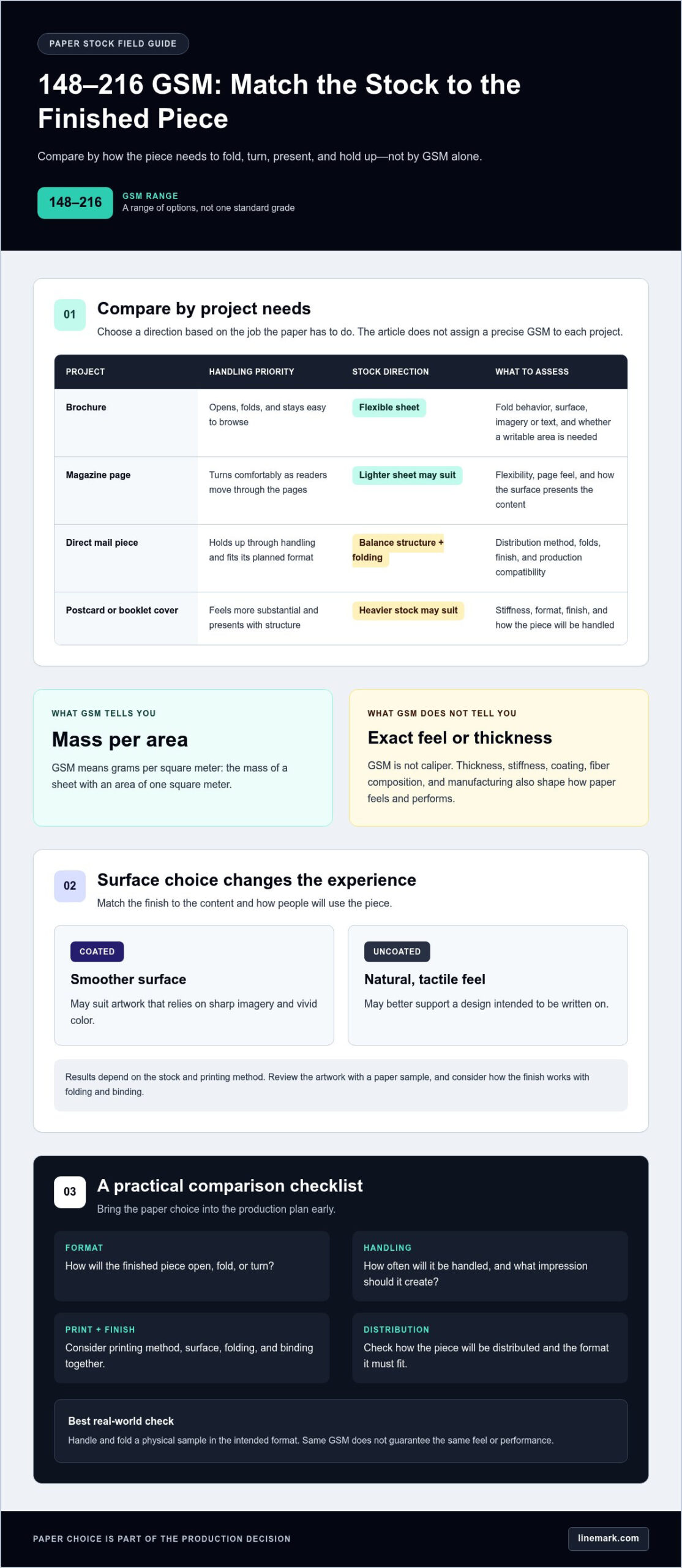
A coated surface is generally smoother, which can suit artwork that relies on sharp imagery and vivid color. An uncoated surface tends to have a more natural, tactile feel and may better support a design meant to be written on. The result depends on the stock and printing method, so don’t assume every coating will behave the same way in production.
Match the surface to the content and reading experience. A photo-led brochure may call for a different finish than a text-forward mail piece, while a writable area can influence the choice for a response-oriented format. Review the artwork alongside the paper sample, and consider how finish, folding, and binding will work together. This helps prevent a surface choice from working against the design or how the piece will be used.
For commercial printing, digital or offset production, and finishing, stock selection is one part of the overall specification. Linemark’s commercial printing capabilities bring paper choice into the context of the format and production plan.
How to Compare 148-216 GSM Stocks for Different Print Projects
Start with the finished piece, not a target number. A stock that works well for a frequently handled brochure may not suit a book cover, interior pages, or a mail piece with different folding and distribution needs. The 148-216 gsm range gives you options to evaluate, but a useful comparison considers format, handling, print method, and finishing together.
| Project type | Handling needs | Stock characteristics to consider | Questions to resolve |
|---|---|---|---|
| Brochure | Must open, fold, and be easy to browse | Flexibility, fold behavior, surface, and how the sheet presents imagery or text | How often will it be handled? Does the design need a writable area? |
| Direct mail piece | Must hold up through handling and fit its planned format | Stiffness, folding needs, finish, and compatibility with the production plan | How will it be distributed? Does the format require folds or other finishing? |
| Book cover | Protects and presents the book through repeated use | Structure, cover finish, binding approach, and relationship to the interior | How should the book open and feel? What binding and page count are planned? |
| Book interior pages | Should turn comfortably across the complete book | Flexibility, readability, page count, and overall bulk | How will the stock affect the finished thickness and reading experience? |
Match Stock to Format and Use
For a brochure, consider whether readers will carry it, refer to it repeatedly, or write on it. For direct mail, assess the complete format and distribution plan rather than choosing by feel alone. A book needs separate decisions for its cover and interior pages: page count and binding affect how the interior turns and how the assembled piece feels. The custom book printing guide covers how to plan those components together.
Account for Printing and Finishing
Digital and offset production may involve different job requirements, so assess stock suitability against the actual specifications rather than assuming it from GSM. Folding, binding, and other finishing steps also interact with the sheet. Resolve these details as part of production planning, especially when a fold, cover, or mailing format is central to the design. If mailing is the primary purpose, the direct mail marketing guide offers a broader planning perspective.
Use the comparison to describe the result you need: how the piece should handle, present, and travel. That gives the production team a more useful starting point than a GSM figure by itself.
How to Choose a 148-216 GSM Paper Stock for Your Job
A useful paper specification starts with the finished piece you need, not a GSM number in isolation. Describe who will use it, how it should feel and function, and how it will be printed and distributed. That context helps narrow the 148-216 gsm range to stocks that support the job’s practical and visual goals.
A Practical Stock-Selection Checklist
- Define the piece. Identify the format, such as a brochure, direct mail piece, book cover, or interior page. Note finished dimensions and page count where relevant.
- Consider the audience and handling. Will readers browse it once, carry it, write on it, or return to it repeatedly? Prioritize readability, durability, flexibility, or a more substantial presentation accordingly.
- Set the visual and tactile goals. Describe the intended surface and impression, such as smooth and image-led or natural and easy to write on. If feel matters, compare physical stock samples.
- Record finishing needs. Include folds, binding, or other finishing steps. The stock should work with the way the piece will be assembled and handled.
- Plan distribution. Explain whether the piece will be mailed, packaged, stored, or distributed another way. Its format and handling requirements can shape the stock decision.
What to Include in a Print Specification
Give the production team the details needed to assess stock as part of the complete job. Include the finished format and dimensions, quantity, artwork or image requirements, desired finish, binding or folding, and mailing or distribution needs. For a book, identify the page count and distinguish the cover from the interior pages, since each serves a different purpose in the finished piece.
Then explain the result you want in plain terms: for example, pages that turn comfortably, a brochure that folds neatly, or a mail piece with a firmer feel. You can include a preferred GSM as a starting point, but pair it with functional and visual requirements. That makes the specification more actionable than a weight figure alone.
Evaluate the paper and production method together. Digital or offset printing, finishing, and the job’s format can all inform whether a particular stock is a suitable fit. If paper feel is a deciding factor, build a sample review or production discussion into planning before artwork and specifications are finalized.
Paper, printing, and finishing work best when specified together. Linemark’s print production services support that coordinated planning.
Bring Your 148-216 GSM Paper Choice into Production
A paper choice becomes useful when it’s connected to the full production brief. The intended format, artwork, quantity, print method, finishing steps, and distribution plan all help determine whether a stock is a practical fit. Resolving these details early gives the production team a chance to consider how paper decisions relate to the design and finished piece before artwork and specifications are locked.
From Stock Specification to Finished Print
Start with the intended result, then assess the stock alongside digital or offset printing and the planned finishing. A fold, binding method, or other finishing step can influence how the sheet needs to work in the assembled piece. The quantity and distribution plan matter too: a project stored before release has different planning considerations from one moving directly into a mailing workflow.
Integrated planning connects these decisions rather than treating paper as a standalone line in a specification. Linemark works across commercial printing, custom book printing, direct mail, and finishing, supporting different production contexts. Storage and nationwide distribution are also part of its capabilities, so project planning can account for what happens to printed materials after production.
When a Print Partner Adds Value
Production expertise can help translate a visual goal into a workable print specification. If the brief calls for a flexible feel, a distinctive presentation, or pages that work with a particular binding approach, discuss those priorities alongside the stock, artwork, print method, and finishing plan. Reviewing these elements together helps identify decisions that need to be coordinated, without assuming that GSM alone determines the outcome.
Linemark was founded in 1985 and operates a 90,000-square-foot production facility. Its digital and offset printing, custom book printing, direct mail, and finishing capabilities support a broad range of print projects. Bringing stock decisions into the conversation early helps connect the intended reader experience with production and distribution requirements.
For a brochure, book, or direct mail project, begin with a clear brief describing the finished piece you have in mind. That gives the team a practical basis for aligning paper, printing, finishing, and distribution.
Make Your Paper Choice Work for the Whole Project
The right stock is more than a GSM figure. In the 148-216 gsm range, paper weight helps guide your decision, but the finished feel and performance also depend on thickness, stiffness, surface, and how the piece will be printed and finished. Start by defining how the printed piece should look, feel, fold, and travel, then align the stock with its format and use.
A clear production brief brings those choices together. Include the intended dimensions, quantity, artwork, finishing, and distribution needs so paper selection can inform planning early. Comparing samples can also help turn a desired tactile result into a more useful specification.
Linemark combines digital and offset printing, custom book printing, and direct mail capabilities in a 90,000-square-foot production facility. That range supports a coordinated view of stock, printing, and finishing. Discuss your next print project with Linemark to plan a paper choice around the result you want.
Frequently Asked Questions
What does 148-216 GSM mean in paper?
148-216 GSM describes paper with a grammage within that range. GSM means grams per square meter, a measure of the mass of one square meter of paper. It doesn’t identify one exact thickness, finish, or stiffness. Composition and coating also affect a sheet’s appearance and feel. Use the number to compare potential stocks, then consider the intended print format and how the finished piece will be handled.
Is 148 GSM paper thick enough for a brochure?
It can suit some brochure applications, but the right stock depends on the format, fold, finish, and desired feel. GSM alone can’t determine whether a particular paper will work for your project. Consider how readers will handle the brochure and how it will be distributed. If appearance or stiffness is important, compare physical samples. Include the finished dimensions and folding requirements in the print specification, not just the paper weight.
Is 216 GSM paper cardstock?
Not necessarily, because paper terminology can vary by supplier and paper category. At 216 GSM, a sheet may feel more substantial than lighter paper, but its thickness and stiffness also depend on composition and finish. Rather than relying on a general label such as cardstock, review the specific stock description and handle a sample. For a print project, assess how the paper works with the format, finishing, and intended use.
What is the difference between GSM and paper thickness?
GSM measures the mass of a square meter of paper, while thickness measures the distance between the sheet’s surfaces. The measurements are related, but they aren’t interchangeable. Stocks with similar GSM can have different thicknesses because composition and manufacturing characteristics vary. If bulk, stiffness, or page count matters, review the stock’s thickness specification and compare a sample. Don’t use paper weight as a substitute for a thickness measurement.
Can 148-216 GSM paper be used for book printing?
Yes, paper in the 148-216 gsm range may suit some book components, depending on the design and production requirements. Covers and interior pages have different functions, so consider page count, binding, readability, and the finished book’s feel. GSM is a starting point, not a complete stock specification. Compare options in the context of the book’s format and binding, and assess the cover and interior separately.
How do I choose between 148 GSM and 216 GSM paper?
Start with the finished piece and decide how it should look, feel, fold, and hold up during handling. Compare samples, then consider finish, thickness, printing method, and finishing requirements. A higher GSM isn’t automatically the better choice. Include the project format and distribution needs in your print brief so stock selection reflects the intended result, whether you’re producing a brochure, mail piece, or book component.
Does higher GSM paper always mean better print quality?
No. GSM measures paper weight, not overall print quality. The result also depends on the surface, artwork, printing method, and finishing. A heavier stock may support a particular feel or presentation, but it won’t be the right choice for every job. Choose paper based on the printed piece’s purpose and evaluate the actual stock alongside the production requirements instead of relying on GSM alone.