

 08/23/2026
  Steve Bearden
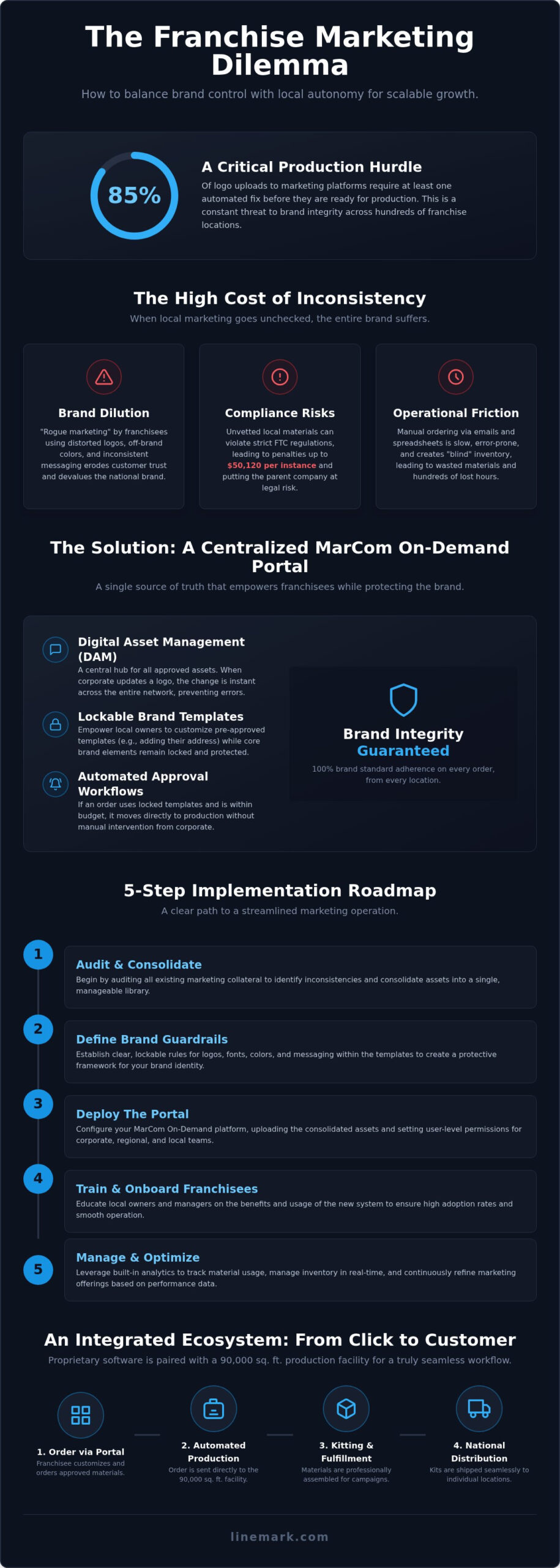
Did you know that 85% of logo uploads to marketing platforms require at least one automated fix before they are ready for production? For a franchisor, this statistic represents more than just a technical hurdle; it is a constant threat to brand integrity across hundreds of locations. You have likely experienced the frustration of seeing non-compliant materials or managing the high overhead of manual order processing. Implementing a sophisticated system for web-to-print for franchises is the only way to scale without losing control of your visual identity.
It is entirely possible to empower local owners with on-demand marketing materials while ensuring every asset remains perfectly on-brand. This guide reveals how to establish a single source of truth for your assets, reducing time-to-market for national campaigns and lowering logistics costs. We will explore the transition to an integrated ecosystem where proprietary MarCom On-Demand technology meets a 90,000-square-foot production facility. From navigating the 2026 FTC fee disclosure crackdowns to leveraging automated artwork fixes, you will learn how to build a resilient, high-capacity marketing operation that treats every local owner as a strategic partner.
Key Takeaways
- Learn how to eliminate brand dilution by providing local owners with pre-approved, customizable templates that protect your visual identity.
- Discover why web-to-print for franchises is most effective when deployed through a centralized MarCom On-Demand portal.
- Understand the strategic benefits of an integrated model that pairs proprietary software with a 90,000-square-foot industrial production facility.
- Follow a five-step roadmap to audit your existing collateral and establish lockable brand guardrails for every location.
- Master the logistics of national distribution by leveraging professional kitting and inventory management for seamless seasonal campaigns.
The Franchise Marketing Challenge: Balancing Brand Control with Local Autonomy
The High Cost of Inconsistent Branding
Visual inconsistency erodes consumer trust faster than almost any other factor. When marketing materials look amateurish or deviate from the established brand guide, the perceived value of the entire franchise system drops. Beyond aesthetics, there are significant legal and compliance risks. In 2026, the FTC has increased scrutiny on franchise disclosures and marketing claims, with penalties for violations reaching up to $50,120 per instance. Unvetted local materials can inadvertently violate these strict standards, putting the parent company at risk. Corporate marketing teams also lose hundreds of hours annually performing manual brand audits and correcting errors that should’ve been prevented at the source. This is where a professional system for web-to-print for franchises becomes a critical defensive asset.
Operational Friction in Multi-Unit Organizations
Traditional print models rely on a transactional approach that fails at national scale. If your current process involves endless email chains, PDF proofs, and manual spreadsheets, you’re facing a logistics bottleneck. Manual ordering is slow and prone to human error. It creates a state of “blind” inventory management where corporate has no real-time visibility into what materials are actually being used across hundreds of sites. This inefficiency leads to immense waste; bulk printed materials often sit in backrooms until they become obsolete.
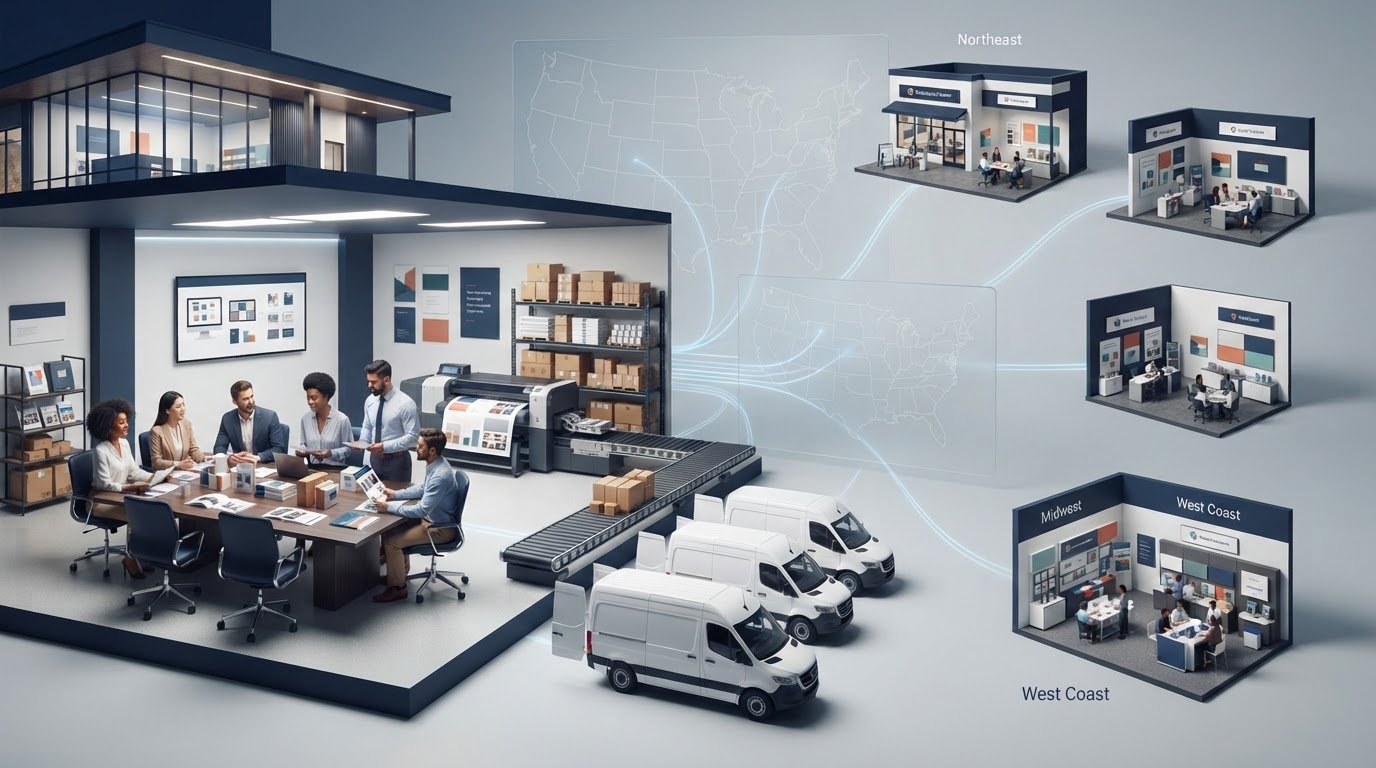
Shifting from a vendor-client relationship to a strategic partnership requires a fundamental change in how you view production. It isn’t just about ink on paper; it’s about building an integrated ecosystem. Our MarCom On-Demand model serves as this foundation, providing the technological infrastructure to support national distribution while maintaining the meticulous attention to detail required for brand governance. By replacing the chaotic manual workflow with a streamlined, automated process backed by a 90,000-square-foot industrial facility, you ensure that every local order meets the same high standard as your national campaigns.
What is Web-to-Print for Franchises? The MarCom On-Demand Model
Effective web-to-print for franchises isn’t merely an online storefront; it’s a centralized command center for your brand’s physical presence. While standard e-commerce sites focus on a simple transaction, our MarCom On-Demand model functions as a strategic communications ally. It bridges the gap between your corporate marketing vision and the practical needs of local owners. By hosting all approved assets in one secure portal, you eliminate the risk of franchisees using outdated logos or unvetted messaging. This system ensures that every brochure, banner, and postcard produced across your national network adheres to 100% of your brand standards.
The Core Components of a Franchise Portal
The foundation of a successful portal is a robust Digital Asset Management (DAM) integration. This serves as your single source of truth. When your corporate team updates a logo or a seasonal promotion, the change propagates instantly across the entire system. Research from 2026 indicates that 85% of logo uploads to unmanaged platforms require at least one automated fix; a centralized DAM prevents these technical errors before they happen.
Governance is maintained through sophisticated user-level permissions. Regional managers might have the authority to view analytics and manage budgets for multiple sites, while local owners are restricted to ordering specific materials for their own location. Automated approval workflows further streamline the process. If a local owner stays within their pre-allocated budget and uses locked templates, the order moves directly to our 90,000-square-foot production facility without requiring manual intervention from your corporate office. This automation removes the human error that typically plagues manual ordering systems.
Beyond Static Orders: Dynamic Personalization
Modern franchise marketing requires more than just generic flyers. This is where MarCom On-Demand serves as the engine for localized content. Through the use of smart templates, local owners can personalize materials with their specific address, phone number, or even location-specific pricing, all while the core brand elements remain locked and unchangeable.
Variable Data Printing (VDP) takes this personalization a step further by allowing for mass customization at scale. Variable Data Printing is a tool for mass customization that enables the production of high-volume marketing materials with individualized content for every recipient or location in 2026. This technology allows you to run sophisticated direct mail campaigns that feel personal to the consumer but remain operationally efficient for the franchisor. If you’re ready to see how an integrated ecosystem can transform your distribution, consider partnering with a strategic communications ally that understands both the software and the physical production of your brand assets.
Integrated Production vs. Software-Only: Choosing the Right Model
Selecting the right partner for web-to-print for franchises often feels like a choice between two distinct worlds: standalone software platforms and integrated production ecosystems. Software-only solutions, often referred to as the SaaS model, focus exclusively on the digital interface. While these tools can be visually appealing, they frequently hide significant overhead costs in the form of integration fees and manual setup requirements. When the portal and the pressroom are owned by different companies, the franchisor is left to manage the friction between them. We believe the most resilient model is one where proprietary technology is natively tied to a 90,000-square-foot industrial facility. This integration ensures that the precision of the digital interface is matched by the physical quality of the final product.
The Accountability Gap in Distributed Marketing
The most significant risk in a fragmented marketing workflow is the accountability gap. In a software-only model, if a color profile is inaccurate or a shipment is delayed, the software provider often blames the printer, while the printer blames the file delivery. This vendor finger-pointing creates unnecessary stress for corporate marketing teams. Our integrated approach eliminates this cycle entirely. Because the MarCom On-Demand portal is built directly into our own production environment, there is no risk of data loss during a third-party handoff. You gain real-time tracking from the moment a local owner clicks ‘order’ until the package arrives at their door. This level of transparency is only possible when the technology and the logistics move as a single, unified entity.
Scaling with Industrial Capacity
Franchise growth demands a partner with the industrial breadth to handle diverse needs across a national footprint. Your organization might require high-volume offset printing for millions of brochures or rapid digital printing for personalized, location-specific postcards. A partner must have the scale to deliver these varied materials without hesitation. Our facility operates with the industrial capacity needed to maintain aggressive turnaround times, ensuring that grand openings and seasonal campaigns are never stalled by production bottlenecks. For organizations that require complex materials such as detailed training manuals or high-end product catalogs, our expertise in Custom Book Printing provides a professional finish that reinforces your brand’s authority. By consolidating these high-volume needs under one roof, you secure a strategic communications ally that values operational excellence as much as you do.
Implementing a Web-to-Print Strategy: A 5-Step Roadmap
Transitioning to a decentralized marketing model requires more than just a software license; it demands a structured execution plan. Moving from manual ordering to a streamlined system for web-to-print for franchises is a transformative journey that turns local owners into efficient brand ambassadors. By following a rigorous roadmap, you can eliminate the operational friction discussed earlier and ensure your national identity remains unshakeable. This process moves beyond simple file storage to create a dynamic, data-driven ecosystem where every asset serves a specific strategic purpose.
Step 1: The Collateral Audit and Template Design
Success begins with a comprehensive audit of your existing marketing materials. Identify high-frequency items such as brochures, newsletters, and large format signage that franchisees use most often. During this phase, you must establish rigid brand guardrails. We focus on creating lockable templates where core elements, like your logo and legal disclaimers, are immutable. This prevents the “rogue marketing” errors that lead to costly compliance issues.
For the non-designer at the local level, the experience should be intuitive. They should only have access to editable fields for location-specific details, such as addresses or regional promotions. Our team ensures these designs are optimized for both high-speed digital printing and high-volume offset production within our 90,000-square-foot facility. This technical foresight guarantees that the final physical product matches the digital proof perfectly every time.
Step 2: Data Integration and Personalization
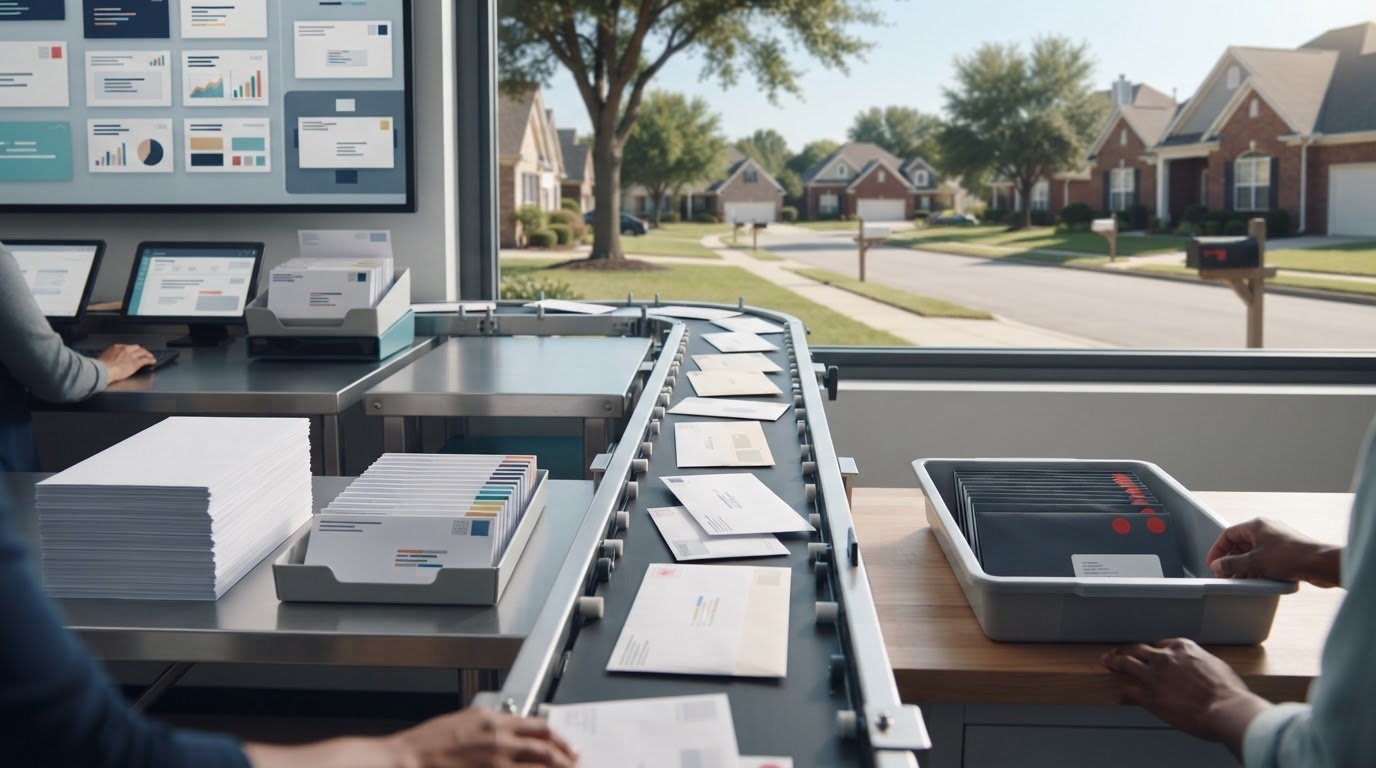
The true power of a modern portal lies in its ability to leverage your existing data. By integrating your CRM with the MarCom On-Demand system, you can auto-populate franchisee contact information, reducing manual entry errors to zero. This integration is particularly vital for executing sophisticated Direct Mail campaigns. You can use localized data to drive foot traffic to specific sites while maintaining a unified national message.
Automation doesn’t stop at personalization. You can set up automated triggers for recurring needs, such as seasonal menu updates or quarterly window graphics. This proactive approach ensures that local owners always have the materials they need before they even realize they need them. To see how this level of integration can support your growth, you can request a MarCom On-Demand demo to explore our proprietary portal technology.
Steps 3-5: Pilot, Training, and National Rollout
Before a full national launch, initiate a pilot program with a small group of select locations. This phase is critical for gathering feedback on user experience and refining the approval workflows. Once the system is tuned to your specific operational nuances, move to the national rollout. Provide comprehensive training and ongoing support to ensure every franchisee feels confident using the portal. A well-supported rollout transforms the technology from a corporate requirement into a valuable tool that helps local owners grow their business while you protect the brand’s future.
The Final Piece: Kitting, Fulfillment, and National Distribution
Digital efficiency means little if the physical materials arrive late or damaged at the local level. While many software providers ignore the logistical reality of national distribution, we treat the “final mile” as a critical component of brand governance. Successful web-to-print for franchises requires an integrated ecosystem where the order screen is natively linked to a 90,000-square-foot fulfillment center. This physical capacity allows you to move beyond the limitations of traditional bulk printing, where materials often go unused due to obsolescence or storage damage. By leveraging on-demand production and intelligent warehousing, you can eliminate inventory waste while ensuring every location has exactly what it needs. It’s about creating a steady, controlled flow of assets that mirrors the operational excellence of your franchise model.
Smart Inventory and Warehousing
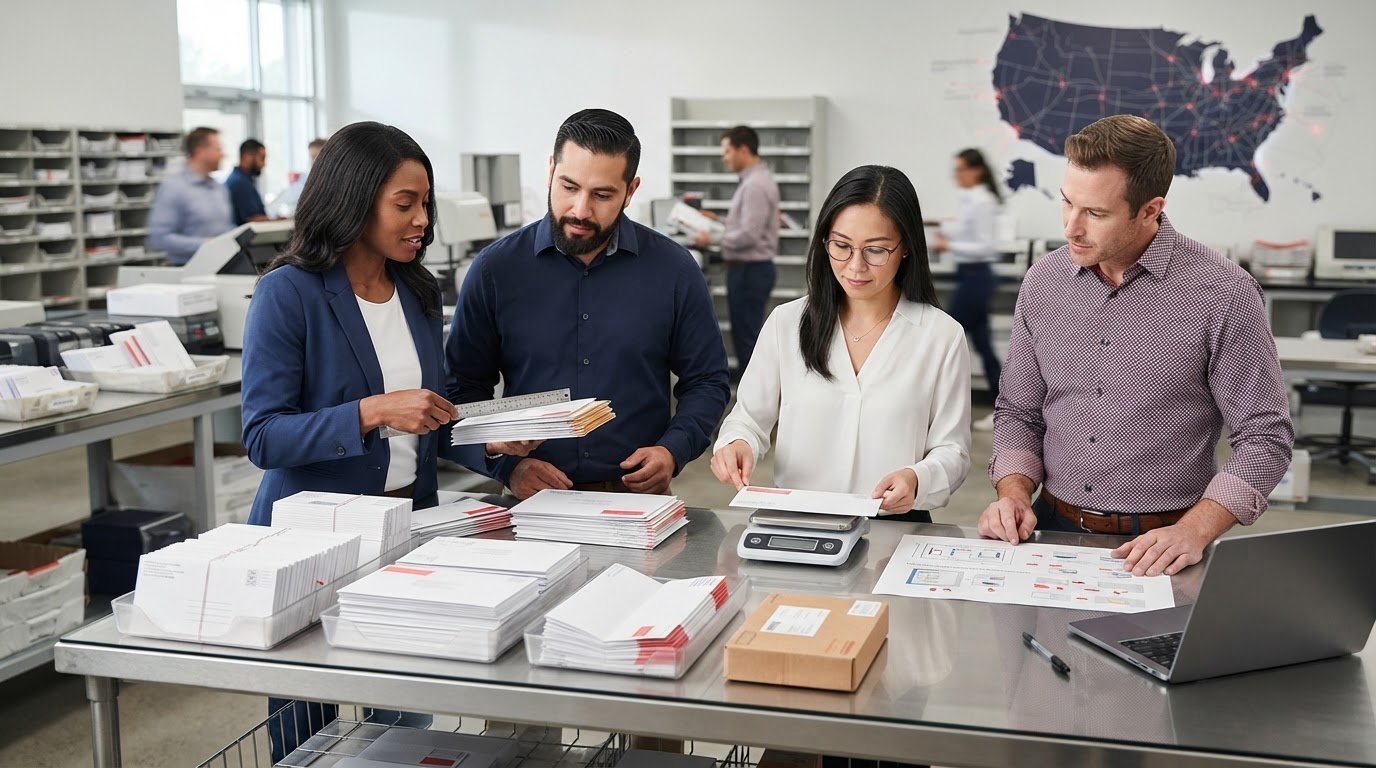
Maintaining a national presence requires real-time visibility into your marketing collateral across hundreds of sites. Our MarCom On-Demand portal tracks inventory levels with industrial precision, triggering automated alerts when stock reaches a critical “low” threshold. This proactive management is essential for high-impact items such as Large Format Graphics, where centralized storage ensures that massive banners and wall murals are protected and ready for immediate dispatch. By consolidating your assets in a single, high-capacity facility, you achieve consistent delivery times to every zip code. This centralized model removes the friction of managing multiple local vendors, providing a single source of truth for your entire physical inventory.
Complex Kitting for Franchise Success
Grand openings and seasonal shifts demand more than just individual items; they require coordinated marketing kits delivered with surgical precision. Our kitting and fulfillment process involves assembling multi-item packages that include everything from catalogs to floor graphics in a single, organized shipment. We utilize automated kitting workflows to reduce labor costs and eliminate the shipping errors that often occur during manual assembly. For a new franchisee, receiving a professionally packed, complete marketing kit on day one instills immediate confidence in the parent organization. This level of operational excellence transforms a simple transaction into a premium, holistic journey. It ensures that your strategic communications ally is handling the heavy lifting, allowing local owners to focus on serving their customers.
Securing Your Brand’s Future at Scale
Modern franchising requires a fundamental shift from fragmented vendor management to a unified, integrated partnership. By bridging the gap between brand governance software and a 90,000-square-foot high-tech production facility, you ensure that every marketing asset across your national network is both compliant and impactful. This strategic approach eliminates the friction of “rogue marketing” while providing local owners with the tools they need to succeed in their specific markets. It’s about maintaining a single source of truth while allowing for the local agility that drives growth.
With 30+ years of industrial print expertise, we understand that your brand’s consistency is its most valuable asset. Our proprietary MarCom On-Demand technology acts as a strategic communications ally, offering the precision of a boutique shop with the capacity of a large-scale operation. Implementing a robust system for web-to-print for franchises is a commitment to operational excellence that pays dividends in consumer trust and reduced overhead. It transforms your marketing from a series of transactional exchanges into a streamlined, holistic journey.
Request a MarCom On-Demand Demo to see how Linemark streamlines franchise marketing. We are ready to help you navigate the complexities of national distribution with a steady, controlled approach that guarantees quality at every scale. Your brand deserves a partner that values precision as much as you do.
Frequently Asked Questions
What is the difference between web-to-print and MarCom On-Demand?
Web-to-print is a broad category of online ordering for printed materials. MarCom On-Demand is our proprietary, integrated ecosystem that connects software directly to a 90,000-square-foot production facility. While many platforms are software-only, our model provides a unified path from design to delivery. It moves beyond a simple transaction to become a strategic tool for national brand governance and industrial-scale fulfillment.
Can I limit how much my franchisees spend on the portal?
Yes, you maintain full control over financial exposure through role-based permissions. Corporate administrators can set specific monthly or quarterly budgets for individual locations or regional groups. The system prevents orders that exceed these limits unless a manual approval is granted. This transparency helps you manage marketing funds effectively while providing franchisees with the autonomy they need to order essential materials.
How does web-to-print ensure brand consistency across different locations?
Brand consistency is maintained through template locking and centralized asset management. Corporate teams determine exactly which elements, such as logos or color palettes, remain immutable. Local owners can only edit designated fields for location-specific information. This ensures that every piece of collateral produced through our system for web-to-print for franchises meets your exact standards, regardless of where the order is placed.
Do franchisees need design skills to use the web-to-print system?
No design expertise is required at the local level. The portal is built for non-designers, using an intuitive interface that guides users through the customization process. By using pre-approved templates, local owners can generate professional-grade materials in minutes. This removes the temptation for franchisees to create their own “rogue” designs, protecting your brand’s visual identity across the entire national network.
What types of materials can be ordered through a franchise portal?
Implementation timelines depend on the complexity of your collateral audit and the number of lockable templates required. The process generally involves a structured roadmap of auditing, data integration, and pilot testing. While every organization moves at a different pace, focusing on high-frequency items first allows for a faster initial rollout. Our team provides the technical support needed to ensure a smooth transition.
Can the portal integrate with our existing CRM or ERP software?
Yes, integration with existing CRM or ERP systems is a core capability of our technology. This allows for automated data flow, enabling features like auto-populating franchisee contact details and triggering direct mail campaigns based on customer behavior. By connecting your digital data to our physical production environment, you create a more efficient marketing ecosystem that reduces manual entry and minimizes the risk of human error.
Is print-on-demand more expensive than traditional bulk printing?
While the unit cost of print-on-demand may appear higher than bulk offset printing, the total cost of ownership is often lower. Traditional bulk printing frequently leads to inventory waste when materials become obsolete or damaged in storage. On-demand fulfillment eliminates these hidden costs by producing only what is needed. This agile approach reduces warehousing fees and ensures your franchisees always distribute the most current version of your materials.