

 07/08/2026
  Steve Bearden
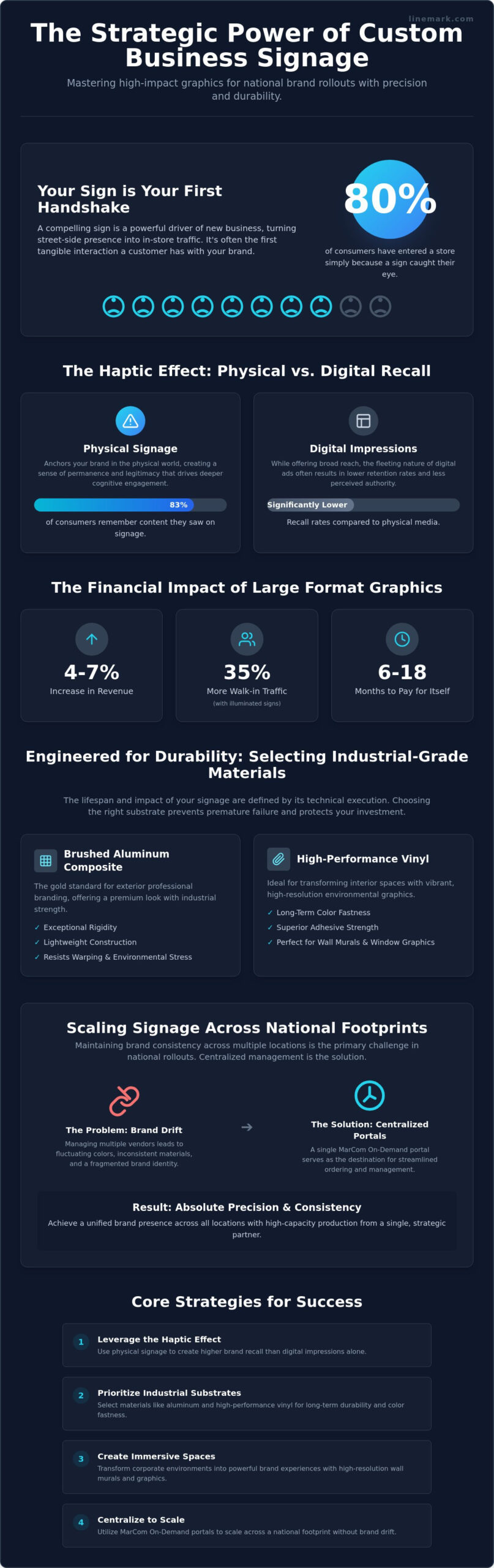
Did you know that 80% of consumers have entered a store for the first time simply because its sign caught their eye? In a global market projected to reach $39.4 billion this year, your custom business signage is a high-stakes handshake that defines your brand’s authority. You’ve likely felt the frustration of managing a national rollout where colors fluctuate between vendors or materials fail long before they should. It’s difficult to maintain a unified identity when logistics become a bottleneck rather than a bridge.
We understand that scaling large format solutions requires more than just a printer; it demands a strategic communications ally. This guide will help you master the technical, material, and operational strategies needed to deploy high-impact graphics across a national footprint with absolute precision. We’ll explore how to achieve industrial-grade durability and streamlined ordering through centralized portals that serve as a single destination for your diverse needs. From wall murals to window graphics, you’ll discover how to transform your physical locations through a unified partnership built on operational excellence.
Key Takeaways
- Understand how the haptic effect of physical signage creates significantly higher brand recall than digital impressions alone.
- Identify the ideal industrial substrates, such as aluminum and high-performance vinyl, to ensure long-term durability and color fastness in any environment.
- Learn to transform corporate spaces into immersive brand experiences using high-resolution wall murals and integrated environmental graphics.
- Discover how to scale custom business signage across national footprints without brand drift by utilizing centralized MarCom On-Demand portals.
- Transition from transactional vendor management to a strategic communications partnership that leverages high-capacity production facilities for consistent results.
The Strategic Impact of Custom Business Signage on Brand Authority
In 2026, custom business signage serves as a high-touch communications tool that anchors your brand in the physical world. While digital marketing offers reach, physical signage provides a sense of permanence and legitimacy that pixels cannot replicate. This is often referred to as the “Haptic Effect.” Physical presence drives higher brand recall because it occupies three-dimensional space, forcing the brain to engage more deeply with the environment than it does with a flickering screen. When a visitor interacts with your physical space, they aren’t just seeing a logo; they’re experiencing your brand’s scale and stability.
Establishing a clear visual hierarchy through your signage strategy is essential for guiding user behavior and building trust. Whether in a high-stakes corporate boardroom or a busy non-profit center, the way you present information dictates how visitors perceive your professionalism. To appreciate how these visual cues have evolved, one can look into the history and purpose of signage as a foundational element of human commerce and social organization. Modern applications take this further, using environmental graphics to create a seamless journey from the parking lot to the executive suite.
To better understand the creative potential of these physical assets, watch this helpful video:
Signage as a Permanent Brand Asset
Moving beyond temporary banners allows a company to invest in permanent environmental branding. This shift is critical for reinforcing industrial authority, especially in B2B markets where reliability is the primary currency. When you utilize high-quality materials like architectural-grade acrylic or brushed metals, you create a psychological impact on the viewer. These materials suggest longevity and attention to detail, traits that clients subconsciously associate with your service quality. High-end custom business signage acts as a silent ambassador, communicating your market position 24/7 without requiring an ongoing media buy.
Measuring the ROI of Large Format Graphics
The financial benefit of large format graphics is often found in its exceptional cost-per-impression. Unlike digital ads that require a constant budget to remain visible, a one-time investment in physical assets provides years of exposure. Quality signage can increase revenue by 4-7% and illuminated signs can generate 35% more walk-in traffic, often paying for themselves within 6 to 18 months.
- Reduced Friction: Professional wayfinding signage lowers operational costs by helping visitors and staff navigate complex facilities without assistance, reducing the burden on front-desk personnel.
- Digital Integration: Strategic signage now acts as a gateway to digital platforms through embedded QR codes, allowing for immediate data capture and mobile engagement.
- Brand Recall: Research shows that 83% of consumers remember the content they saw on signage, a rate that significantly outperforms traditional print or digital display ads.
Technical Specifications: Selecting Materials for Durability and Performance
Technical execution defines the lifespan of your custom business signage. High-quality production isn’t just about visual resolution; it’s about the chemistry between the ink, the substrate, and the installation environment. Selecting the wrong material can lead to premature failure, such as delamination, color shifting, or adhesive degradation in high-traffic zones. Our approach focuses on matching the specific operational needs of each facility with industrial-grade materials that withstand both environmental stress and physical wear.
Substrates for Industrial and Exterior Use
Brushed aluminum composite is the gold standard for exterior professional branding. It offers exceptional rigidity without the weight of solid metal, resisting warping even in extreme temperature fluctuations. For high-volume, short-term promotional needs, coroplast provides a cost-effective, lightweight solution that doesn’t compromise on print quality. If your strategy includes evening visibility, high-performance light-box film ensures that backlit signage maintains vibrant color saturation without hot spots from internal LED arrays. These materials form the backbone of a resilient visual identity that maintains its integrity year after year.
Finishing and Coatings for Longevity
Sunlight is the primary enemy of exterior graphics. Applying UV-protective laminates is a non-negotiable step for any asset facing direct exposure, extending the life of high-performance vinyl from three years to seven or more. Beyond protection, the finish reinforces your brand voice. A high-gloss finish conveys energy and modern innovation, while a soft-touch matte finish suggests sophistication and stability. You can find a deeper analysis of these material properties in our Large Format Graphics guide, which details how to pair finishes with specific lighting conditions.
The science of adhesives is just as critical as the print itself. Window graphics require optically clear, low-tack bonds that allow for clean removal, while floor graphics demand high-tack, scuff-resistant adhesives designed to withstand industrial cleaning equipment. Safety compliance is the final, non-negotiable layer of technical specification. For indoor corporate environments, large-scale wall murals must adhere to Class A fire ratings (ASTM E84) to meet stringent local building codes. If you’re managing a high-volume rollout, partnering with a strategic communications ally helps you navigate these regulatory nuances without sacrificing design quality.
- Aluminum Composite (ACM): Best for permanent exterior building signs and directional wayfinding.
- High-Performance Vinyl: Ideal for long-term window graphics and fleet branding with 7-year durability.
- Acrylic: Provides a premium, glass-like finish for interior lobby signs and executive suites.
- Light-Box Film: Specialized translucent media designed for consistent illumination in backlit displays.
Environmental Graphics: Transforming Spaces with Immersive Signage
Environmental graphics represent a paradigm shift in how organizations view their physical real estate. Instead of treating walls as passive dividers, brands now use them as active storytelling canvases. This is the intersection of interior design and custom business signage, where every surface becomes an opportunity to reinforce market authority. By utilizing underused surfaces like floors and windows, you create a cohesive brand journey that begins the moment a visitor enters the parking lot and continues through to the boardroom.
In some creative or retail environments, this brand journey is further enhanced by hand-drawn window displays or bespoke signage. Using professional-grade markers from PoscART ensures that these artisanal additions maintain the same level of color vibrancy and durability as your printed assets.
When you integrate large format graphics into the architecture of a building, you transform a transactional space into an immersive experience. This approach doesn’t just decorate a room; it communicates corporate history and mission through high-resolution imagery and strategic placement. It’s a method of building trust by showing, rather than just telling, your brand story.
Wall Murals and Dimensional Lettering
Designing large-scale wall murals requires a deep understanding of resolution and viewing distance. A mural that looks sharp from across a lobby must also maintain its integrity when viewed from six inches away. To achieve a premium office impact, we often recommend combining high-resolution vinyl graphics with 3D dimensional lettering. This layered approach adds depth and shadows, transforming a flat wall into a sophisticated brand statement that commands attention.
Surface preparation is the most critical step in high-volume mural installation. Walls must be properly cured, typically requiring at least 30 days for fresh paint to outgas, and cleaned with specialized solutions to ensure a permanent bond. We treat every installation as a technical project, conducting adhesion tests to match the specific vinyl chemistry to the wall texture. This meticulous attention to detail ensures that your investment remains vibrant and intact for years.
Functional Signage: Wayfinding and Regulatory Solutions
Intuitive wayfinding systems are essential for complex corporate campuses. When visitors can navigate a facility without hesitation, operational friction decreases and trust in the organization grows. Professional wayfinding integrates seamlessly with the architecture, using consistent typography and color coding to guide traffic flow across multiple levels or buildings.
Regulatory compliance is a core component of our strategic approach to custom business signage. Meeting ADA requirements is a mandatory operational standard that carries significant risk if ignored. Permanent room identification signs must feature Grade 2 Braille and raised characters, with the baseline of tactile text mounted between 48 and 60 inches from the floor. Fines for non-compliance can range from $75,000 to $150,000, making precision in production and installation a financial necessity. We ensure these safety and accessibility markers complement your brand aesthetics rather than detracting from them.
In industrial facilities, floor graphics play a vital role in maintaining safe traffic flow. High-visibility graphics mark pedestrian zones and forklift paths, using scuff-resistant laminates that withstand heavy machinery and industrial cleaning. By centralizing these diverse needs, you ensure that even the most functional elements of your facility contribute to a unified brand identity.
Scaling Signage: National Distribution and Centralized Management
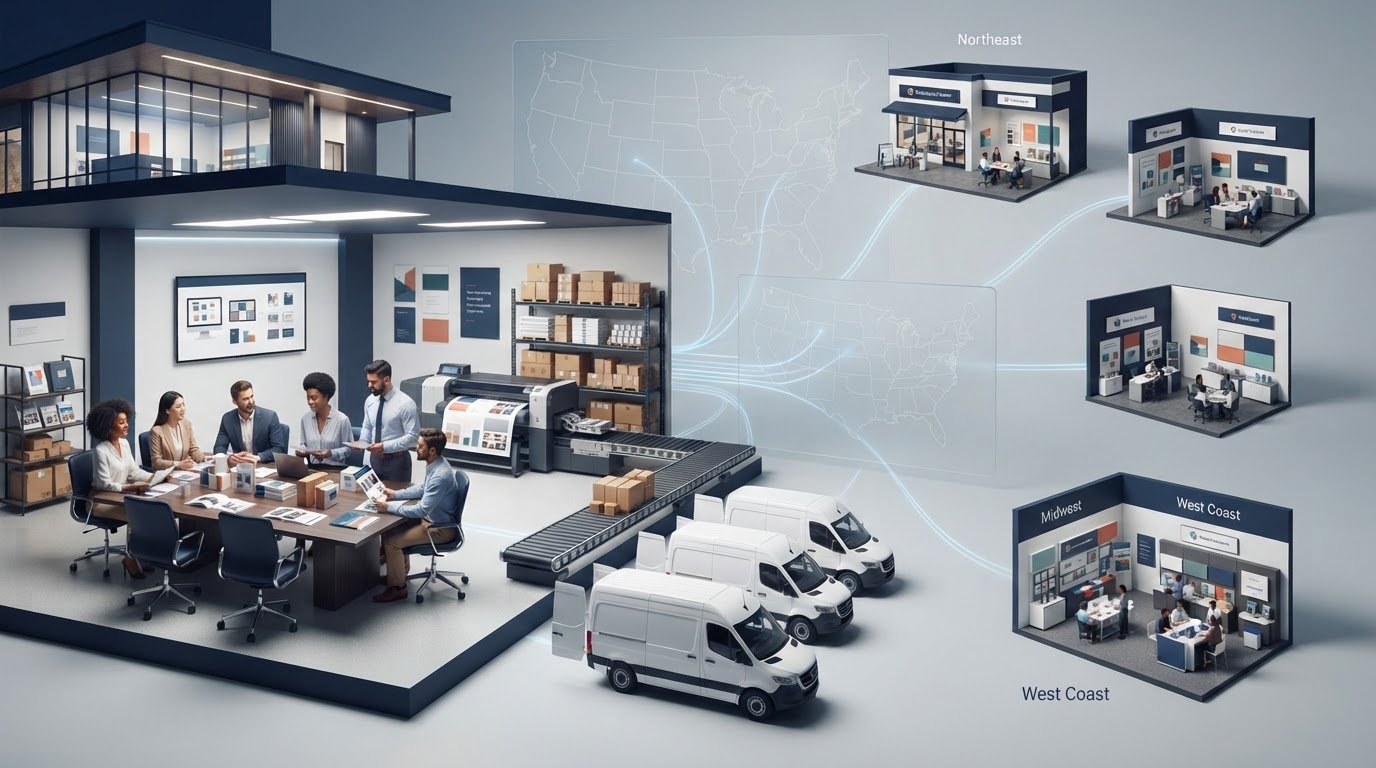
Scaling a visual identity across a national footprint introduces the significant risk of brand drift. When national companies rely on a fragmented network of local vendors, they often encounter inconsistencies in color profiles, substrate quality, and installation standards. One location might feature a vibrant, UV-protected window graphic while another displays a faded, low-tack alternative that peels prematurely. Centralizing your custom business signage production ensures that your brand authority remains absolute from coast to coast, regardless of the number of facilities you manage.
Operational excellence in signage requires moving beyond transactional orders toward a managed corporate asset model. This transition allows marketing teams to maintain control over the creative integrity of the brand while empowering regional managers to execute local requirements. By treating signage as a centralized logistics project rather than a series of one-off purchases, you eliminate the administrative burden of managing dozens of separate vendor relationships and billing cycles.
Centralized Portals for National Consistency
Web-to-print portals act as a single destination for regional stakeholders to access pre-approved branding assets. These platforms allow for controlled localization, where users can update specific details like store hours or regional addresses without altering the core design elements. This ensures that every piece of signage, from lobby displays to exterior banners, adheres to the same rigorous standards. For a deeper look at how these systems integrate with broader marketing efforts, consult our MarCom On-Demand Guide. These portals streamline the approval process, reducing the time from order to installation and ensuring that nationwide campaigns launch with perfect synchronization.
Logistics and Nationwide Fulfillment
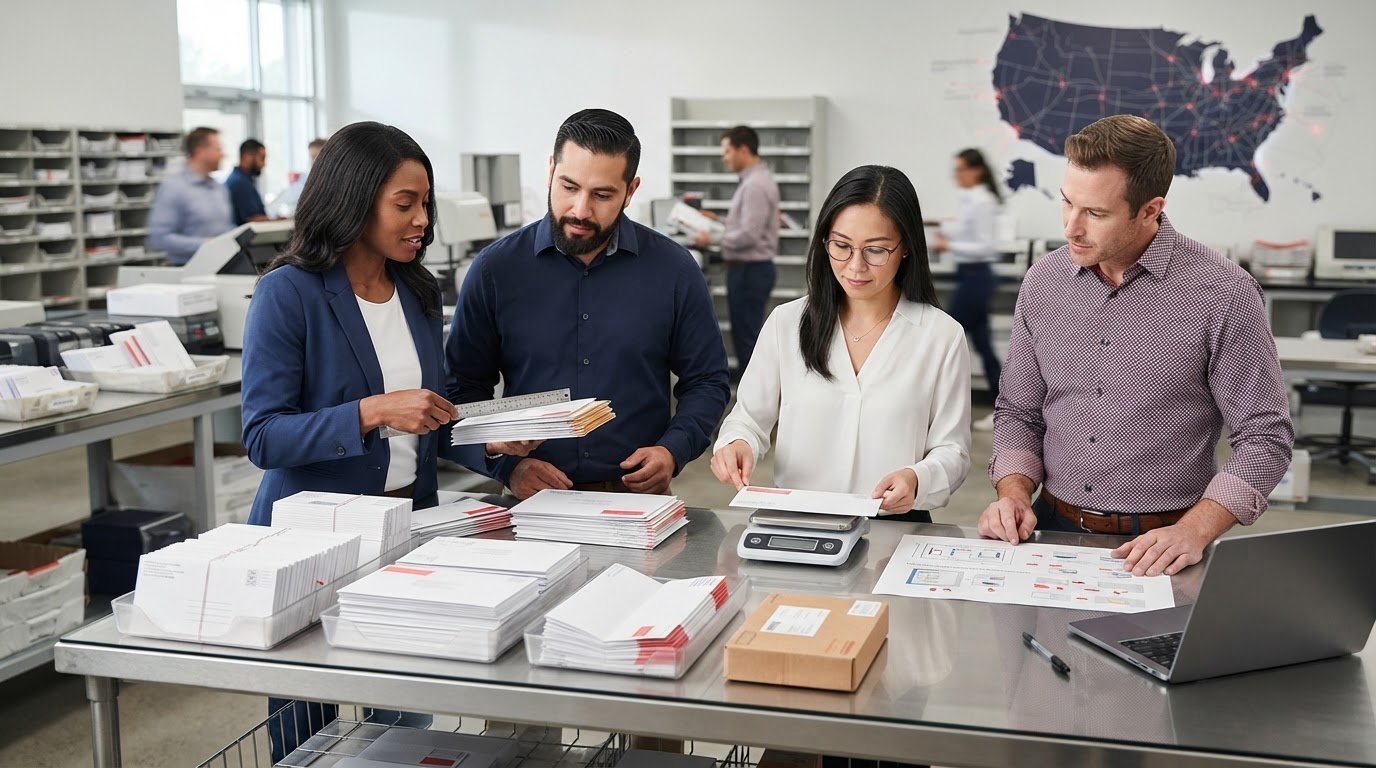
Efficiency in a national rollout is often determined by how well the signage is “built to ship.” We optimize the dimensions and weight of large format graphics to maximize postage efficiency and minimize the risk of transit damage. Our approach to logistics involves sophisticated kitting and fulfillment, where all necessary components-including the graphics, mounting hardware, and installation instructions-are bundled into a single, ready-to-deploy package. This level of precision is mirrored in our broader logistics strategies, which focus on reducing operational friction for high-volume clients.
Managing inventory through just-in-time production further reduces waste and storage costs. Seasonal or promotional custom business signage is produced on-demand, ensuring that materials are current and that you aren’t paying for outdated stock. If you’re ready to transform your signage rollout into a streamlined, high-tech operation, contact our team to discuss a tailored fulfillment strategy that protects your brand and your budget.
Partnering for Success: The Linemark Production Advantage
Choosing a partner for your custom business signage isn’t just about finding a printer. It’s about finding an organization that operates at the intersection of manufacturing power and logistical intelligence. We’ve built our reputation by moving beyond the role of a transactional vendor to become a strategic communications ally. This shift means we’re invested in your long-term brand authority, not just a single invoice. Our 90,000-square-foot facility is designed to handle high-volume projects with the same meticulous attention to detail you’d expect from a boutique shop. This capacity allows us to manage every phase of the process, from initial technical specifications to nationwide installation and fulfillment.
The Linemark approach centers on operational excellence. By integrating our large-format production with sophisticated kitting and fulfillment services, we provide a streamlined journey for marketing executives. You no longer need to coordinate between a design house, a print shop, and a logistics provider. We serve as your centralized destination, offering a well-oiled machine that can handle any scale of work without sacrificing quality. This steady, controlled pace builds the security you need when launching a nationwide rollout.
Industrial Capacity Meets Boutique Detail
Consistency across a national footprint requires industrial-scale technology. We utilize advanced digital and offset capabilities to ensure that your brand’s specific color profiles remain identical, whether they’re printed on a rigid aluminum substrate or high-performance window vinyl. This technical precision is vital when managing complex signage needs for national associations. Our data-driven production model tracks every asset through our facility, ensuring that high-capacity runs never sacrifice the accuracy your brand demands.
Getting Started with Your Custom Project
A successful rollout begins with a comprehensive signage audit. This process identifies gaps in your current brand presence and highlights opportunities for immersive environmental graphics you might have overlooked. We collaborate with you on material selection to find the perfect balance between industrial-grade durability and cost efficiency. By analyzing the light conditions and traffic patterns of your facilities, we ensure your investment is built for the long term. If you’re ready to master the complexities of high-impact large format solutions, consult with Linemark for your national signage strategy.
Elevating Your Brand Presence with Strategic Large Format Solutions
Your physical environment is the most powerful silent communicator your brand possesses. By mastering material science and leveraging centralized logistics, you ensure that your visual identity remains consistent across every location. We’ve explored how technical precision in custom business signage protects your investment while environmental graphics transform passive spaces into immersive brand journeys. Scaling these solutions requires a partner with the infrastructure to deliver quality and speed simultaneously.
Our 90,000-square-foot high-capacity production facility is backed by over 30 years of industrial printing and logistics expertise. Through our proprietary MarCom On-Demand system, we provide the centralized ordering and fulfillment necessary to maintain absolute brand authority nationwide. It’s time to move beyond transactional vendor relationships and embrace a strategic communications alliance that values your growth as much as you do. We’re ready to help you navigate the complexities of large-scale rollouts with precision and ease.
Request a Quote for Your National Signage Rollout
Frequently Asked Questions
What is the most durable material for outdoor custom business signage?
Aluminum composite (ACM) is the most durable substrate for exterior custom business signage due to its exceptional resistance to warping and thermal expansion. When you pair this rigid core with high-performance vinyl and a UV-protective laminate, these signs can maintain their structural and visual integrity for seven years or more. This combination is specifically engineered to withstand harsh weather while preventing the color fading common in lower-quality materials.
How do I ensure brand color consistency across different types of signs?
Achieving consistency requires standardized color profiles and advanced digital printing technology that calibrates output across diverse substrates. We ensure that your specific brand colors match perfectly whether they’re applied to brushed metal, acrylic, or translucent window vinyl. This technical precision is a core component of our strategic communications partnership, protecting your brand authority during every production run.
What are the standard lead times for high-volume signage orders?
Lead times depend on the complexity of the project, but our 90,000-square-foot facility is designed for rapid high-volume output. We prioritize operational efficiency to ensure that even large-scale national rollouts stay on schedule. A detailed production and logistics timeline is established during your initial consultation to ensure all assets arrive in synchronization with your campaign launch.
Do you provide professional installation services for large-format graphics?
We offer full-service integration that moves from large-format production directly to nationwide installation. Our team manages the logistical challenges of applying graphics to diverse surfaces, ensuring that every installation meets our rigorous industrial standards. This end-to-end approach eliminates the friction of coordinating multiple vendors and guarantees that your signage is mounted for maximum longevity.
How does a MarCom On-Demand portal help manage signage for multiple locations?
A MarCom On-Demand portal serves as a centralized destination where regional managers can order pre-approved custom business signage. This system empowers local branches to fulfill their specific needs while ensuring that every piece of signage adheres to corporate brand standards. It streamlines the approval process and provides real-time inventory management, which is essential for maintaining consistency across a national footprint.
What is the difference between vinyl lettering and a full wall mural?
Vinyl lettering consists of individual characters or logos cut from solid-colored vinyl, typically used for business hours or simple branding on windows. A wall mural is a full-surface graphic that covers an entire wall to create an immersive environmental experience. While lettering is functional and minimalist, wall murals utilize high-resolution imagery to communicate corporate mission and history on a much larger scale.
Can I use variable data to personalize signage for different regional branches?
Variable data printing allows you to personalize signage for different locations without compromising the core brand layout. You can automatically swap out regional details like addresses, local phone numbers, or branch-specific promotional offers during a single production run. This technology ensures that your national brand remains relevant to local audiences while maintaining a unified visual identity.
What resolution should my design files be for large format printing?
Design files should be at least 150 DPI at 100% of the final output size to ensure crisp, professional results. While standard commercial printing often requires 300 DPI, the viewing distance for large format graphics allows for 150 DPI without a perceptible loss in quality. We always prefer vector files for logos and typography, as they allow for infinite scalability without the risk of pixelation.