

 06/01/2026
  Steve Bearden
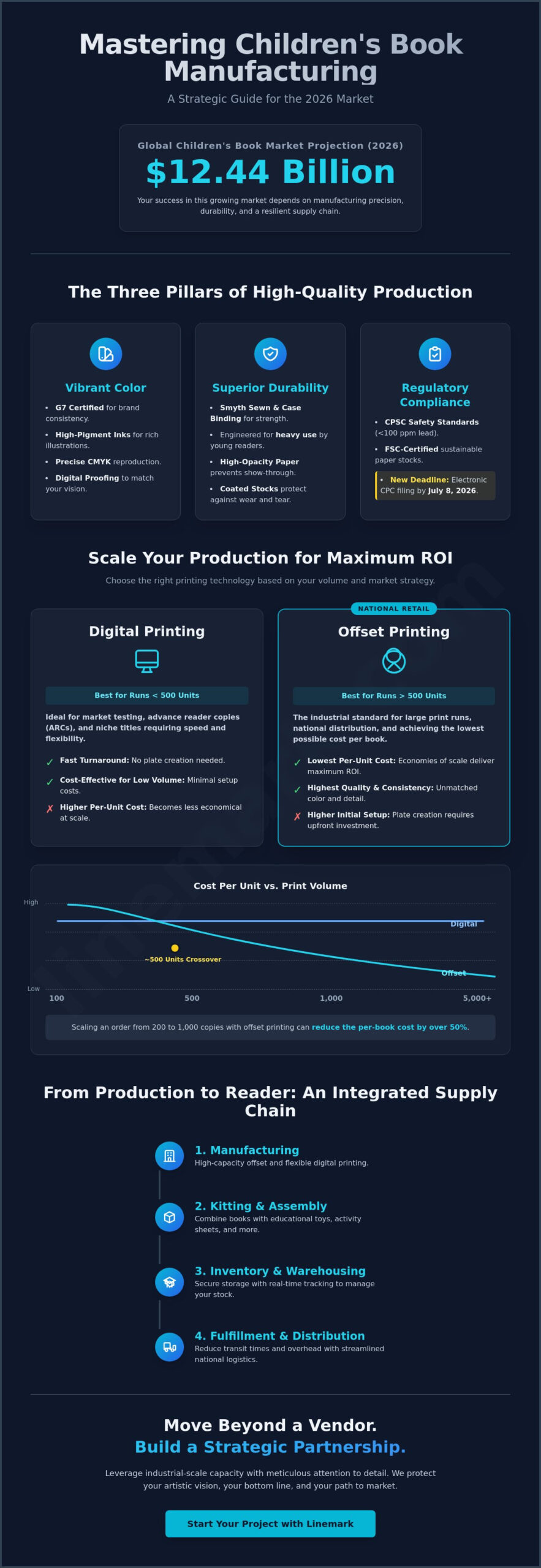
With the global children’s book market projected to reach $12.44 billion in 2026, the gap between a creative manuscript and a commercial success is defined by manufacturing precision. You understand that a brilliant illustration loses its impact if the color reproduction is inaccurate. Finding reliable children’s book printing services is no longer just a procurement task. It’s a strategic partnership that must account for durability, vibrant aesthetics, and complex safety regulations.
This guide will help you master the technical and logistical nuances of professional production to ensure your titles achieve scalable distribution. We’ll show you how to streamline your path to market while addressing critical 2026 updates, such as the July 8 deadline for electronic Children’s Product Certificate filing. From leveraging high-capacity offset printing to implementing efficient kitting and fulfillment, you’ll learn how to build a resilient supply chain. This approach protects both your artistic vision and your bottom line.
Key Takeaways
- Learn how G7 certification and high-precision color gamut ensure your illustrations remain vibrant and consistent across every print run.
- Discover how to select between digital and offset children’s book printing services to maximize your ROI based on production volume and market testing needs.
- Identify the structural advantages of Smyth sewn and case binding to provide the durability required for heavy use by young readers.
- Optimize your supply chain by integrating kitting, fulfillment, and inventory management to reduce transit times and overhead.
- Transition from a transactional vendor model to a strategic partnership that leverages industrial-scale capacity with meticulous attention to detail.
What Defines High-Quality Children’s Book Printing Services?
High-quality children’s book printing services represent a specialized segment of industrial manufacturing. In 2026, the professional standard is no longer defined by simple ink-on-paper. It requires a convergence of aesthetic vibrancy, mechanical resilience, and strict regulatory compliance. You aren’t just producing a book; you’re engineering a product that must withstand physical handling while maintaining the visual integrity of the artist’s vision.
The history of printing reveals a steady evolution toward the high-speed, precision-controlled environments we operate today. Modern production relies on G7 certification to ensure color consistency across different devices and print runs. This industrial authority guarantees that your brand’s signature characters look identical in every copy, regardless of whether you’re printing 500 or 50,000 units.
To visualize how these high-volume machines operate within a modern facility, watch this overview of a book production factory:
Durability is another critical differentiator. While a standard novel might sit on a shelf, a children’s book is an active participant in a child’s day. It’s dropped, pulled, and shared. This necessitates higher structural standards, including reinforced Binding & Finishing techniques. Beyond physical strength, material safety is paramount. CPSC regulations require that lead content in accessible components stays below 100 parts per million. As of July 8, 2026, the new requirement for electronic filing of Children’s Product Certificates (CPC) makes choosing a compliant partner even more vital for your supply chain.
The Visual Impact: Achieving Vibrant Color Accuracy
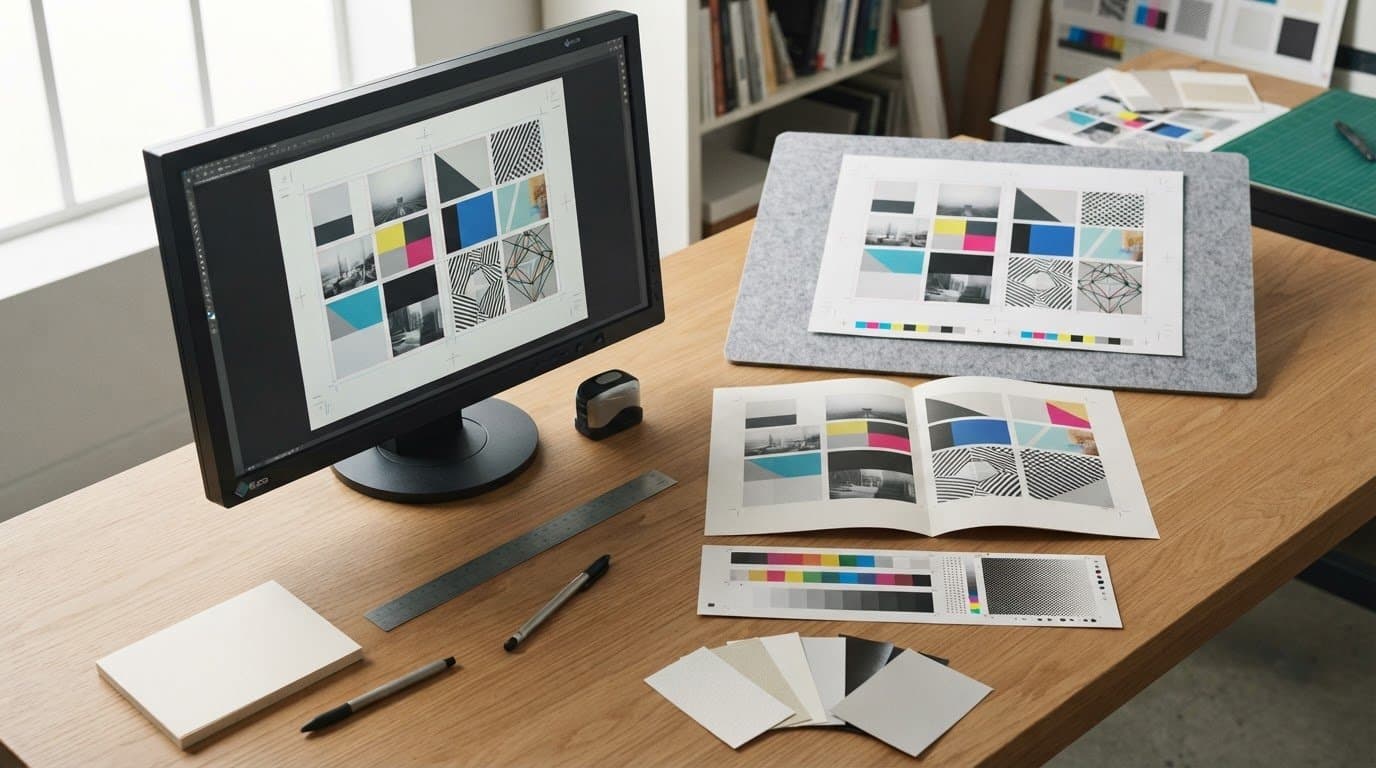
CMYK consistency is the backbone of professional illustration. We use high-pigment inks to capture the subtle nuances of hand-drawn art, ensuring the “pop” that attracts young readers. Digital proofing serves as our collaborative checkpoint. It allows us to verify that the final physical product matches your digital files exactly before we move to full-scale Custom Book Printing. This precision eliminates the risk of poor color reproduction that often plagues lower-tier services.
Material Selection: Choosing the Right Paper Stock
Digital vs. Offset Printing: Scaling Your Production for ROI
Selecting the right children’s book printing services requires a deep understanding of your distribution goals. Digital printing offers an agile entry point for Advanced Reader Copies (ARCs) or niche market testing. It eliminates the need for plate creation, making it the preferred choice for runs under 500 units. This flexibility allows you to iterate on designs or update content without the heavy upfront investment of traditional methods. However, as your title gains traction, the limitations of digital unit costs become apparent.
Offset printing provides the industrial scale necessary for national retail success. While the setup process is more involved, the per-unit cost drops significantly as volume increases. For example, industry data suggests that scaling an order from 200 to 1,000 copies can reduce the per-book cost by over 50%. This creates the margin necessary for healthy retail partnerships and sustainable growth. Understanding the future of book manufacturing involves balancing these two technologies within a single, unified supply chain.
Many publishers now utilize a hybrid model to maximize their return on investment. They start with Digital Printing for speed and transition to Offset Printing for inventory replenishment once a title is proven. This strategy minimizes upfront risk while ensuring access to high-quality children’s book printing services for the long term. If you’re ready to scale your production, our team provides the industrial capacity to handle complex, high-volume projects with precision.
When to Make the Switch to Offset
The tipping point usually occurs when your distribution reaches the 500 to 1,000 unit range. Beyond cost, offset printing excels in fine-detail reproduction. It uses liquid ink rather than toner, which provides smoother gradients and more accurate color saturation for detailed illustrations. Specialty finishes, such as spot UV or metallic foils, also become more cost-effective when integrated into an offset run. These tactile elements are often what distinguish a premium gift-market book from a standard paperback.
Variable Data and Personalization in 2026
Variable Data Printing (VDP) is transforming children’s literature by allowing for mass customization. You can now integrate a child’s name or local environment directly into the narrative during a high-speed digital run. This technology is particularly effective for educational publishers focusing on Social-Emotional Learning (SEL), which has seen a 33% increase in demand since 2020. Our integrated digital and offset solutions ensure your personalized projects maintain the same industrial durability as your standard editions.
Binding and Finishing: Ensuring Durability for Young Readers
The structural integrity of a book is as vital as the narrative it contains. For children’s literature, this physical resilience is non-negotiable. Books in this category face rigorous handling that would quickly destroy a standard trade paperback. High-quality children’s book printing services prioritize Binding & Finishing techniques that withstand the test of time and touch. While perfect binding is a cost-effective solution for activity books and one-time-use materials, it often fails under the mechanical stress of a child’s repeated reading.
Smyth sewn binding remains the industrial gold standard for books that need to lay flat. This process involves stitching folded signatures together with thread before adhering them to the spine. It prevents the spine from cracking when opened wide, ensuring the book remains intact through years of use. This is especially critical for titles with sprawling, two-page illustrations where the central “gutter” must remain accessible and visible. Beyond the binding, protective finishes like UV coating and film lamination serve as a necessary defense against spills and sticky fingers. These barriers don’t just add a premium feel; they preserve the visual clarity of your illustrations for the long term.
The Anatomy of a Durable Hardcover
Case binding, or hardcover production, offers the highest level of perceived value and longevity. We utilize reinforced spines and high-quality endpapers to secure the interior block to the heavy-weight cover boards. This construction is the primary choice for the library and gift markets. To enhance shelf appeal, you can integrate specialty finishes such as spot UV, foil stamping, or embossing. These tactile elements create a multi-sensory experience that encourages engagement before the first page is even turned. Choosing between matte and gloss lamination depends on your aesthetic goals. Matte offers a sophisticated, non-reflective finish; gloss provides maximum color “pop” and the highest level of moisture resistance.
Board Books and Specialized Juvenile Formats
Strategic Logistics: Warehousing and National Distribution
Most providers treat shipping as a post-production afterthought. We view it as the final, critical stage of a unified supply chain. By integrating children’s book printing services with advanced logistics, you eliminate the friction between manufacturing and the end-user. This approach reduces transit times and protects your margins from rising freight costs. It transforms a simple transaction into a strategic advantage that allows you to respond to market demands with agility.
Storing your inventory at the production source is a significant operational win. It removes the need for costly double-handling. When a retailer places an order, the books move directly from our warehouse to their loading dock. This centralized model is essential for high-volume publishers who need to manage thousands of units across multiple titles without the overhead of maintaining their own facility. Our Inventory Management systems provide real-time tracking of your stock levels, ensuring total transparency at every stage of the journey.
The children’s market often requires more than just a single book. Educational publishers frequently bundle books with supplemental materials like posters or teacher guides. Our Kitting & Fulfillment services allow you to manage these complex bundles with precision. We assemble these multi-item kits in-house, ensuring that every box meets your brand standards before it reaches schools or subscription box customers. This unified process protects the physical integrity of your product while streamlining your path to market.
Streamlining Your Supply Chain
Efficiency starts with visibility. You can set automated reorder points within our system to ensure you never miss a sales spike during peak seasons like back-to-school or the holidays. For organizations with distributed sales teams, we offer MarCom On-Demand portals. These platforms allow sales reps or retailers to order specific quantities of books and marketing collateral directly from your pre-printed stock. This on-demand access reduces waste and ensures that your latest titles are always available where they’re needed most.
Nationwide Distribution Strategies
Reaching a national audience requires a multi-channel approach. We combine bulk shipping logistics for major library systems with targeted Direct Mail for local outreach. If you’re launching a new title, leveraging data-driven Postcards can drive traffic to your digital storefront or local bookstores. This integrated strategy ensures that your marketing efforts and physical product are perfectly synchronized. Ready to optimize your path to market? Explore how our integrated logistics and book manufacturing can scale your distribution.
Partnering with Linemark for Professional Book Manufacturing
Choosing the right children’s book printing services requires more than just a price list. It demands a partner with the industrial capacity to scale and the technical expertise to ensure every copy meets commercial standards. Linemark operates a 90,000-square-foot facility designed to handle high-volume projects with the meticulous care of a boutique shop. We move beyond the traditional vendor relationship to act as a strategic communications ally. This partnership model ensures that your creative vision is supported by a robust, tech-savvy infrastructure.
Our operation is built on a foundation of technological pride and operational excellence. We integrate Digital Printing and Offset Printing within a single facility to provide a seamless transition as your titles grow in popularity. By centralizing Custom Book Printing, warehousing, and fulfillment under one roof, we eliminate the logistical bottlenecks that often delay national launches. You gain the security of knowing your project is in capable, steady hands from the initial proof to the final delivery.
The Linemark Advantage: Quality at Scale
Our commitment to G7 color accuracy ensures that your illustrations remain vibrant across every print run. This industrial authority is paired with advanced Binding & Finishing capabilities, providing the structural durability children’s books require. To simplify your operations, we offer MarCom On-Demand portals. These platforms allow you to manage inventory in real-time, reducing the risk of stockouts or overproduction. We’ve helped partners scale titles from an initial run of 500 copies to a national distribution of 50,000, maintaining quality at every stage of the journey. This scalable model is designed to act as a catalyst for your organization’s growth.
Getting Started with Your Project
We begin every project with a professional consultation to align our production capabilities with your business goals. Our experts review your specifications to identify opportunities for cost savings and quality improvements. When requesting a quote, providing details on your desired trim size, page count, and distribution requirements helps us optimize your ROI. This thorough preparation ensures a streamlined path from production to national distribution. You don’t have to manage the complexities of manufacturing alone. Start your professional children’s book project with Linemark today and experience the benefits of a unified, high-capacity printing partnership.
Mastering the Future of Children’s Literature Manufacturing
Success in the 2026 book market requires a unified strategy that bridges the gap between creative vision and industrial execution. We’ve explored how G7 color accuracy, reinforced binding, and centralized logistics form the pillars of a resilient supply chain. Choosing children’s book printing services is a decision that impacts every stage of your product’s lifecycle, from the first digital proof to national retail fulfillment.
Linemark provides the industrial scale and technological precision necessary to navigate this complex landscape. With over 30 years of experience and a 90,000-square-foot high-tech facility, we operate as a G7 Master Certified Printer dedicated to your growth. Our integrated model ensures that your titles are manufactured to the highest standards of durability and aesthetic vibrancy. It’s time to move beyond transactional printing and build a strategic partnership that secures your place on the shelf.
Request a Professional Book Printing Quote today and let’s bring your project to life with precision.
Professional Production: Frequently Asked Questions
What is the best binding for a children’s book?
Smyth sewn binding is the superior choice for durability and functionality. This method allows the book to lay flat without the spine cracking, which is essential for young readers who handle books roughly. For premium gift editions, case binding with reinforced spines provides the longevity expected by libraries and high-end retailers. It ensures the interior block remains secure through years of heavy use.
How many pages should a standard children’s picture book have?
A standard children’s picture book typically contains 32 pages. This count is based on traditional offset printing signatures, where paper is folded into 8 or 16-page sections. While professional children’s book printing services can accommodate 24 or 40-page layouts, staying within the 32-page standard is often the most cost-effective approach for production and logistics. It optimizes paper usage and minimizes waste during the trim process.
What is the difference between offset and digital printing for kids’ books?
Offset printing is the industrial standard for high-volume runs, offering lower per-unit costs and superior color saturation for detailed illustrations. Digital printing serves as the agile alternative for short runs or market testing. Our facility utilizes both technologies to ensure your project scales efficiently. This allows you to move from an initial prototype to a national retail release without changing partners.
How do I ensure my book’s colors are accurate?
We utilize G7 Master Certification to maintain strict color consistency across all devices and print runs. This industrial standard ensures that your digital files translate accurately to the physical page. We also provide physical proofs during the production cycle. This checkpoint allows you to verify that every illustration meets your expectations before we begin full-scale manufacturing.
Can you handle warehousing and fulfillment for my book?
Yes, we offer comprehensive kitting and fulfillment services alongside centralized inventory management. Storing your stock in our 90,000-square-foot facility reduces transit times and eliminates the need for third-party logistics. This integrated approach allows us to ship directly to retailers, schools, or individual customers with precision. It transforms your printing process into a complete distribution solution.
What paper weight is recommended for children’s book pages?
We typically recommend 80lb or 100lb coated text stock for interior pages. These weights provide the opacity needed to prevent image show-through while offering enough thickness to resist tearing. Coated finishes are preferred for children’s book printing services because they hold ink on the surface. This prevents absorption and ensures your colors remain vibrant and sharp for the reader.
Do you offer specialty finishes like spot UV or foil?
Our binding and finishing department provides a wide range of premium treatments, including spot UV, foil stamping, and embossing. These tactile elements increase shelf appeal and create a multi-sensory experience for the child. They are particularly effective for hardcover gift editions where a high-end aesthetic is required. These finishes add a layer of sophistication that distinguishes your title from standard retail offerings.
How do I prepare my files for professional children’s book printing?
Professional production requires high-resolution PDF files set to a minimum of 300 DPI. You should ensure your artwork is in CMYK color mode and includes at least an eighth-inch bleed on all sides to account for trimming. Our technical team works with you during the initial consultation to verify that your files are optimized for our high-speed presses. This preparation prevents delays and ensures a high-quality final product.