

 07/06/2026
  Steve Bearden
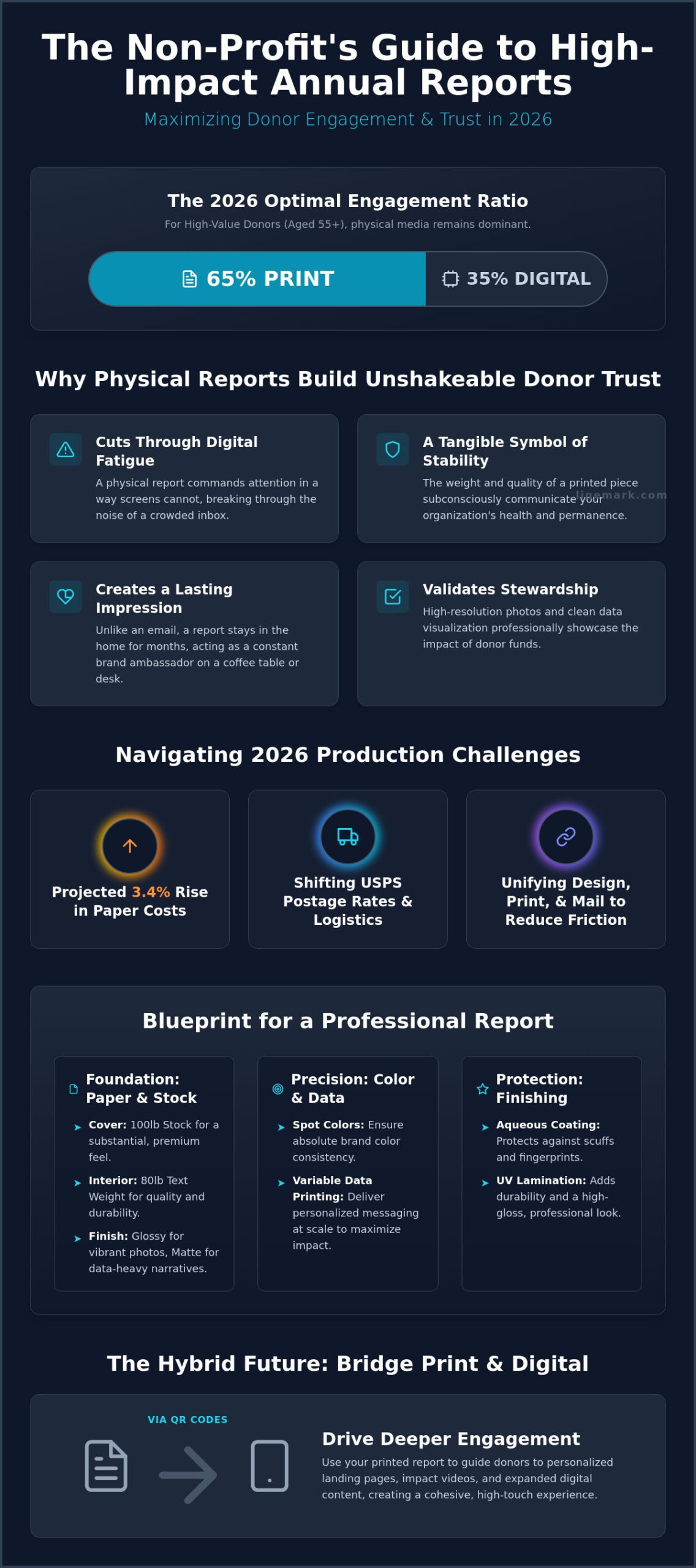
While digital channels dominate headlines, donors aged 55 and over still represent your highest value segment, and this demographic maintains a powerful preference for physical media. Research suggests a 65% print to 35% digital marketing mix is the optimal ratio for organizations seeking to maximize engagement in 2026. Mastering annual report printing for non-profits is no longer just about meeting an IRS filing deadline. It’s about creating a tactile touchpoint that secures a permanent place on a donor’s coffee table.
We recognize the friction involved in coordinating design, production, and the mail house while facing a 3.4% projected rise in paper costs and shifting USPS postage rates. You need a partner who treats your financial disclosures as a strategic retention asset rather than a logistical burden. This guide will show you how to transform your data into a high-impact narrative through professional printing and streamlined distribution. We’ll explore how to leverage variable data printing for hyper-personalization, manage national mailing costs with precision, and ensure your brand’s color integrity remains flawless across every page.
Key Takeaways
- Learn why high-value donors in 2026 respond more effectively to the tactile authority of a physical report than digital-only disclosures.
- Identify the specific paper stocks and binding techniques that align with your mission to enhance brand perception through touch.
- Maximize your budget for annual report printing for non-profits by utilizing variable data printing to deliver personalized messaging at scale.
- Reduce operational friction by unifying your production and direct mail fulfillment under a single strategic partner.
- Navigate the complexities of 2026 USPS postage increases and paper price fluctuations through integrated logistics and technical expertise.
The Strategic Role of Printed Annual Reports for Non-Profits in 2026
The modern annual report has evolved beyond a simple comprehensive report on a company’s activities into a high-stakes narrative tool. For non-profits, this document serves as the definitive record of mission fulfillment. While digital PDF versions are easy to distribute, they often vanish into the noise of an average donor’s inbox. In 2026, the physical report stands as a signal of stability and permanence. Professional annual report printing for non-profits transforms abstract financial data into a tangible asset that donors can hold, feel, and trust.
Digital fatigue is a documented reality for many supporters. When a donor receives a high-quality printed piece, it commands a level of attention that a screen cannot replicate. This physical presence creates a tactile advantage. The weight and texture of the paper stocks subconsciously communicate the organization’s health and attention to detail. It’s a strategic move that aligns with the expectations of high-value supporters who prioritize transparency and long-term impact over fleeting digital interactions.
To better understand the core components of these documents, watch this helpful video:
Building Donor Trust Through Tangible Impact
Print vs. Digital: Finding the Hybrid Balance
Effective 2026 strategies don’t choose between mediums; they integrate them. Use your printed report to drive engagement with digital deep-dives via QR codes or personalized landing pages. This hybrid approach is particularly effective for major gift officers who need a premium physical leave-behind to anchor their conversations. By focusing annual report printing for non-profits on your most loyal donor segments, you enhance the perceived value of your work. You’re not just sending a document; you’re delivering a high-touch experience that justifies continued investment in your mission.
Essential Production Specifications: Choosing the Right Paper, Binding, and Finishes
The technical specifications of your document serve as a silent communicator of your organization’s health. When planning annual report printing for non-profits, your choice of substrate is a primary decision. High-gloss finishes highlight vibrant impact photography, while matte stocks suggest a more reflective, scholarly tone for data-heavy narratives. With the Producer Price Index for paper forecast to rise by 3.4% in 2026, selecting the right weight and texture is a matter of both brand perception and fiscal responsibility. A 100lb cover stock paired with 80lb text weight interiors provides a substantial feel that donors associate with institutional stability.
Brand consistency requires technical precision beyond standard CMYK digital printing. If your non-profit relies on a specific signature color, utilizing specialized spot colors ensures your identity remains identical across every page and every year. Durability is another operational priority. Applying an aqueous coating or UV lamination protects the report from scuffs and fingerprints as it moves through the mail stream and onto a donor’s desk. These finishes ensure that when determining the essential components of a non-profit annual report, the physical presentation mirrors the importance of the financial disclosures inside.
Binding Options for Professional Results
Your binding choice should reflect your page count and the intended use of the document. Perfect binding provides a flat, square spine similar to a high-end book, making it ideal for prestige reports that donors might keep on a shelf. For shorter documents, saddle stitching offers a cost-effective, professional solution that doesn’t compromise on quality. If your report includes complex fold-outs or data sets that require the reader to lay the book flat, wire-o or spiral binding may be the most functional choice. You can find more technical guidance on choosing the right book binding to ensure your project meets industrial standards for durability and aesthetics.
Sustainable Printing in 2026
Donors in 2026 expect non-profits to lead in environmental stewardship. Utilizing FSC-certified papers and vegetable-based inks isn’t just a trend; it’s an alignment with donor values. These choices demonstrate that your organization is mindful of its footprint while still prioritizing high-impact communication. If you’re looking for ways to balance these premium specifications with your budget, the experts at Linemark can help you source sustainable materials that maintain brand integrity. By integrating these specifications early, annual report printing for non-profits becomes a catalyst for trust and long-term donor retention.
Maximizing ROI: Balancing Budget with High-Quality Production
Achieving a high return on investment requires a technical understanding of production methods. When executing annual report printing for non-profits, the choice between offset and digital printing hinges on your specific volume and personalization needs. Digital printing provides the agility needed for smaller, targeted mailings or projects requiring rapid turnaround. Conversely, offset printing remains the gold standard for high-volume national campaigns. It leverages industrial-scale efficiencies to drive down the cost-per-unit, making it the most economical choice for organizations distributing tens of thousands of reports.
Planning your production timeline carefully prevents the hidden costs of rush fees and design corrections. Common errors like improper bleeds or low-resolution imagery often trigger expensive production delays. By partnering with a strategic communications ally early in the design phase, you ensure your files are optimized for high-capacity equipment. This proactive collaboration transforms your annual report from a line-item expense into a high-performance donor retention tool that justifies its production cost through increased engagement.
Personalization at Scale with Variable Data
Generic outreach is no longer sufficient to inspire high-tier donors. Variable Data Printing (VDP) allows you to integrate personalized donor impact statements directly into the layout of the report. You can customize cover imagery or include a “thank you” note that references a donor’s specific giving history. VDP technology synchronizes your donor database with digital presses to swap text and imagery in real-time as each individual report moves through the production line. This level of hyper-personalization significantly increases the perceived value of the communication without requiring separate print runs.
Volume Efficiencies for National Organizations
For national associations with diverse chapters, centralized commercial printing offers significant logistical advantages. Large-scale operations allow for superior paper usage optimization, which minimizes waste and helps stabilize costs despite the 3.4% rise in paper prices forecast for 2026. Strategic kitting further streamlines your budget. By combining your annual report with newsletters or customized postcards into a single fulfillment package, you reduce handling fees and optimize postage. This integrated approach ensures that every dollar spent on annual report printing for non-profits contributes directly to building long-term donor trust through professional, polished presentation.
Streamlining the Distribution: From Printing to Direct Mail Fulfillment
High-impact production is only effective if the final product reaches your donor’s hands at the exact moment of peak engagement. The transition from the press to the postal stream represents a significant logistical risk for many organizations. Managing separate vendors for annual report printing for non-profits and mailing services often leads to communication breakdowns. A unified partner eliminates this friction by moving completed reports directly from binding to the mail house floor. This integrated approach reduces transit time and ensures your project maintains its momentum without leaving the facility.
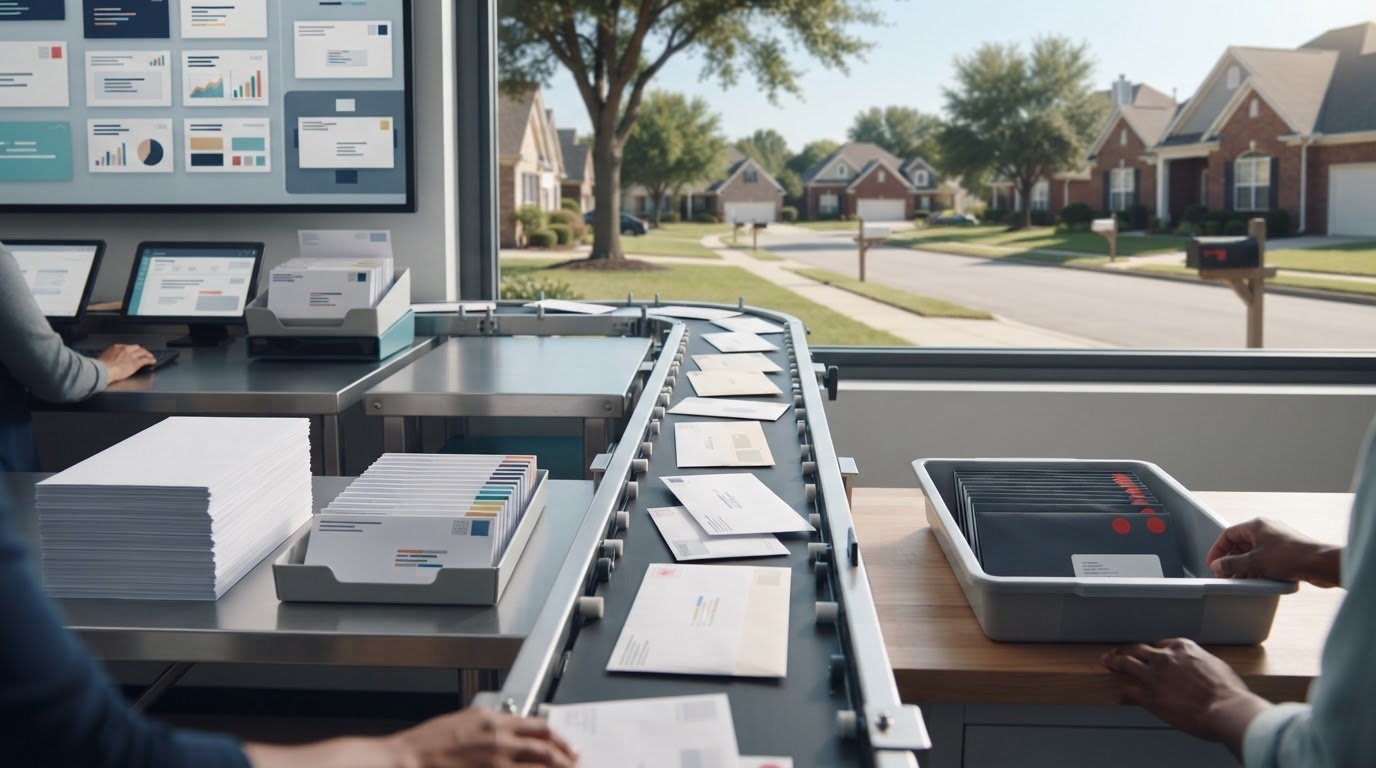
Navigating USPS regulations in 2026 requires technical precision. Effective July 12, 2026, Non-Profit Marketing Mail Automation Letter rates will increase by an average of 5.1 percent. For DSCF 5-Digit presorted mail, the rate will rise by 1.9 percent to $0.164 per piece. These adjustments make list hygiene and data processing more critical than ever. We utilize CASS certification and NCOA processing to ensure your reports reach the correct addresses. This data-driven strategy prevents the waste associated with undeliverable mail while maximizing your non-profit postage discounts.
Integrated Kitting and Fulfillment Logistics
Modern donor engagement often requires more than a standalone document. Strategic kitting allows you to combine your annual report with personalized cover letters, remit envelopes, or even small donor gifts. Automated kitting technology maintains high accuracy for national mailings, ensuring every donor receives the correct components based on their giving level. For advanced fulfillment tactics that go beyond the basics, consult our strategic guide to direct mail. This holistic view of the donor journey ensures your physical touchpoints are as polished as your mission statement.
Managing National Distribution Cycles
Coordinating drop dates is essential for organizations with regional offices or those planning major year-end appeals. Centralized warehousing allows you to print in high-volume batches while distributing the reports in phases. This model reduces overall logistics costs and provides the flexibility to fulfill on-demand requests for late-year fundraising galas. We also prioritize data security throughout the process. Our facility maintains rigorous protocols to ensure donor information remains protected; this is especially important for organizations handling sensitive health or advocacy data. By centralizing these complex tasks, you can focus on donor relationships while we handle the operational heavy lifting.
Streamline your next campaign and reduce distribution friction by partnering with Linemark for integrated print and mail solutions.
Partnering with Linemark for High-Impact Non-Profit Communications
Linemark operates at the intersection of industrial capacity and meticulous craftsmanship. With a 30-year legacy as a strategic communications ally, we’ve refined our processes to meet the exacting standards of national associations and non-profits. Our 90,000-square-foot facility provides the operational breadth required to handle high-volume annual report printing for non-profits without sacrificing the attention to detail typically found in boutique shops. We view our role not merely as a service provider, but as an extension of your marketing and development teams. This partnership is grounded in experience but driven by a modern, proactive spirit that values efficiency and high-touch service.
This collaboration begins with a focus on precision and technological pride. By leveraging both advanced digital and offset printing platforms, we ensure that your organization’s color fidelity and brand integrity remain uncompromised across every run. Our technical production capabilities are designed to handle the complexities of modern logistics, providing a centralized destination for your most critical communication assets. We move beyond transactional exchanges to offer a premium, holistic journey that transforms your financial disclosures into powerful donor retention tools.
MarCom On-Demand: Empowering Regional Chapters
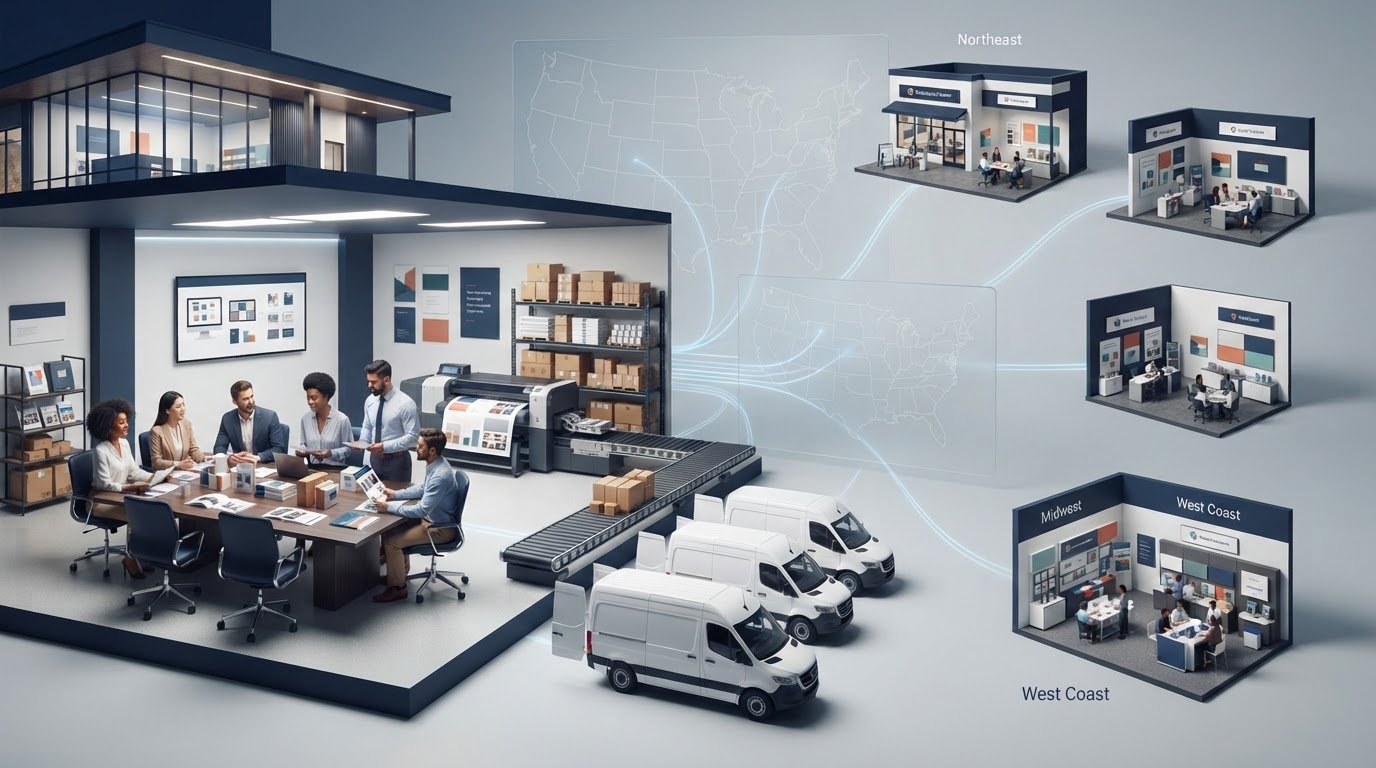
National non-profits often face the challenge of maintaining brand consistency across multiple regional offices or chapters. Our MarCom On-Demand platform solves this by providing a centralized portal where authorized users can order branded materials as needed. This system ensures that every report, regardless of where it’s distributed, adheres to your established design standards. It eliminates the risk of “rogue” branding and ensures that your mission is presented uniformly to every donor across the country.
Beyond consistency, this model significantly reduces waste. Instead of over-printing and warehousing thousands of reports that may go unused, chapters can utilize on-demand distribution for specific events or local donor meetings. This lean approach to production aligns with the sustainability goals of modern organizations and protects your budget from unnecessary inventory costs. For a deeper look at these efficiencies, read more about distributed marketing strategy for non-profits.
Your Strategic Partner from Design to Delivery
Elevating your donor engagement requires a holistic journey rather than a series of disconnected tasks. We provide collaborative consultation from the earliest stages of your project. Our experts help optimize your report’s specifications, ensuring you achieve maximum impact while staying within your budgetary parameters. Whether you need a prestige, perfect-bound report or a high-speed digital run for a year-end appeal, our facility is equipped to deliver with unrivaled color fidelity and structural integrity.
The 2026 donor landscape demands a blend of transparency, storytelling, and professional excellence. By unifying your production, kitting, and fulfillment under one roof, we provide the security and reliability your mission deserves. Our proactive spirit and commitment to industrial excellence ensure your project is in capable hands from the first file upload to the final mailbox delivery. Ready to elevate your donor communications? Contact Linemark for a custom annual report quote and discover how our integrated services can act as a catalyst for your organization’s growth.
Elevating Your Mission Through Strategic Production
Selecting a partner with the capacity to manage these variables is essential for your organizational growth. We provide 30 years of industrial print expertise and a 90,000-square-foot high-capacity production facility to handle your project with absolute precision. Our integrated direct mail and data-driven fulfillment services ensure that your annual report printing for non-profits is a streamlined, professional journey. We’re ready to help you transform your financial data into a lasting narrative that drives donor retention.
Request a Professional Consultation and Quote for Your Non-Profit Annual Report
Frequently Asked Questions
Why should non-profits still invest in printed annual reports in 2026?
Physical reports build psychological trust and organizational credibility in a way digital files cannot. Research indicates that donors aged 55 and over, who represent your highest-value segment, maintain a strong preference for physical media. A printed report serves as a year-round brand ambassador in a donor’s home, ensuring your mission remains visible long after an email has been buried in a crowded inbox.
What is the best binding for a 40-page non-profit annual report?
Perfect binding or saddle stitching are the most professional options for a 40-page document. Perfect binding provides a flat, square spine that resembles a high-end book, making it ideal for prestige reports intended for long-term display. Saddle stitching is a more cost-effective alternative that provides a clean, polished look for mid-sized page counts while allowing the report to open easily.
How can we qualify for non-profit postage rates for our mailing?
Organizations must be authorized by the USPS to mail at non-profit prices by filing Form 3624 at a post office. Once approved, you can access significantly lower rates for bulk mailings that meet specific preparation standards. We assist you in navigating these regulations and utilize CASS certification to ensure your data meets all USPS requirements for automation discounts.
What is variable data printing, and how does it help donor retention?
Variable data printing (VDP) is a technology that allows you to customize text and imagery for each individual recipient within a single print run. It drives donor retention by enabling hyper-personalization, such as including a donor’s specific giving history or a tailored impact statement. This level of technical detail makes supporters feel uniquely recognized and valued by your organization.
Can Linemark handle both the printing and the mailing of our reports?
Yes, we provide a unified solution that covers everything from industrial-scale printing to direct mail fulfillment. By centralizing these services in our 90,000-square-foot facility, we reduce transit times and eliminate the friction of coordinating multiple vendors. This integrated approach ensures your annual report printing for non-profits is handled with consistent precision from the press to the postal stream.
How long does the printing and fulfillment process usually take?
Production timelines vary based on the complexity of the project and the specific binding requirements, but most reports are completed within 7 to 10 business days after final proof approval. Large-scale kitting or complex fulfillment cycles for national distribution may require additional time. We provide a detailed production schedule at the start of every project to ensure your drop dates align with your fundraising calendar.
What are the most durable paper finishes for a report that will be mailed?
Aqueous coating and UV lamination are the most effective finishes for protecting reports during the mailing process. These coatings provide a protective layer that resists scuffing, fingerprints, and moisture as the document moves through sorting equipment. They ensure your document arrives on the donor’s desk in pristine condition, protecting the professional image of your organization.
How can we integrate our digital content with our printed annual report?
Integrating QR codes is the most effective way to bridge the gap between your physical report and digital content. You can link donors directly to impact videos, interactive financial dashboards, or personalized donation pages. This hybrid strategy allows you to maintain the tactile authority of print while offering the expanded storytelling capacity of your digital platforms.