

 06/08/2026
  Steve Bearden
Did you know that incorporating tactile or sensory elements into your mailings can qualify your organization for a 5% USPS postage discount through June 30, 2026? While many view post-press techniques as a final aesthetic touch, they’re actually critical engineering decisions that determine the shelf-life and logistical success of your brand assets. We recognize the frustration that comes with technical jargon, especially when you’re caught between choosing Spot UV or a standard varnish while worrying about production delays. Understanding print finishing options is essential for any marketing professional who needs to balance high-impact design with the durability required for global distribution.
You deserve a partner who treats your print runs as strategic investments rather than simple transactions. This guide provides a technical framework to help you master the nuances of coatings, laminates, and tactile effects. We’ll explore how specific finishes impact brand trust, ensure compliance with evolving 2026 recycling laws, and maximize your campaign ROI. By the end of this article, you’ll have the confidence to coordinate complex, high-volume projects that arrive exactly as intended, every time.
Key Takeaways
- Transform standard print runs into high-impact brand assets by mastering the suite of post-press processes that safeguard quality.
- Navigate the technical nuances of Aqueous, UV, and sensory coatings to enhance brand perception through tactile engagement.
- Develop a strategic framework for understanding print finishing options such as precision die-cutting and scoring to ensure logistical durability.
- Align finishing selections with your marketing funnel to maximize campaign ROI and capitalize on 2026 USPS tactile promotion discounts.
- Learn how industrial-scale capacity and meticulous attention to detail streamline complex projects from the press to the final delivery.
Defining the Post-Press Landscape: What is Print Finishing?
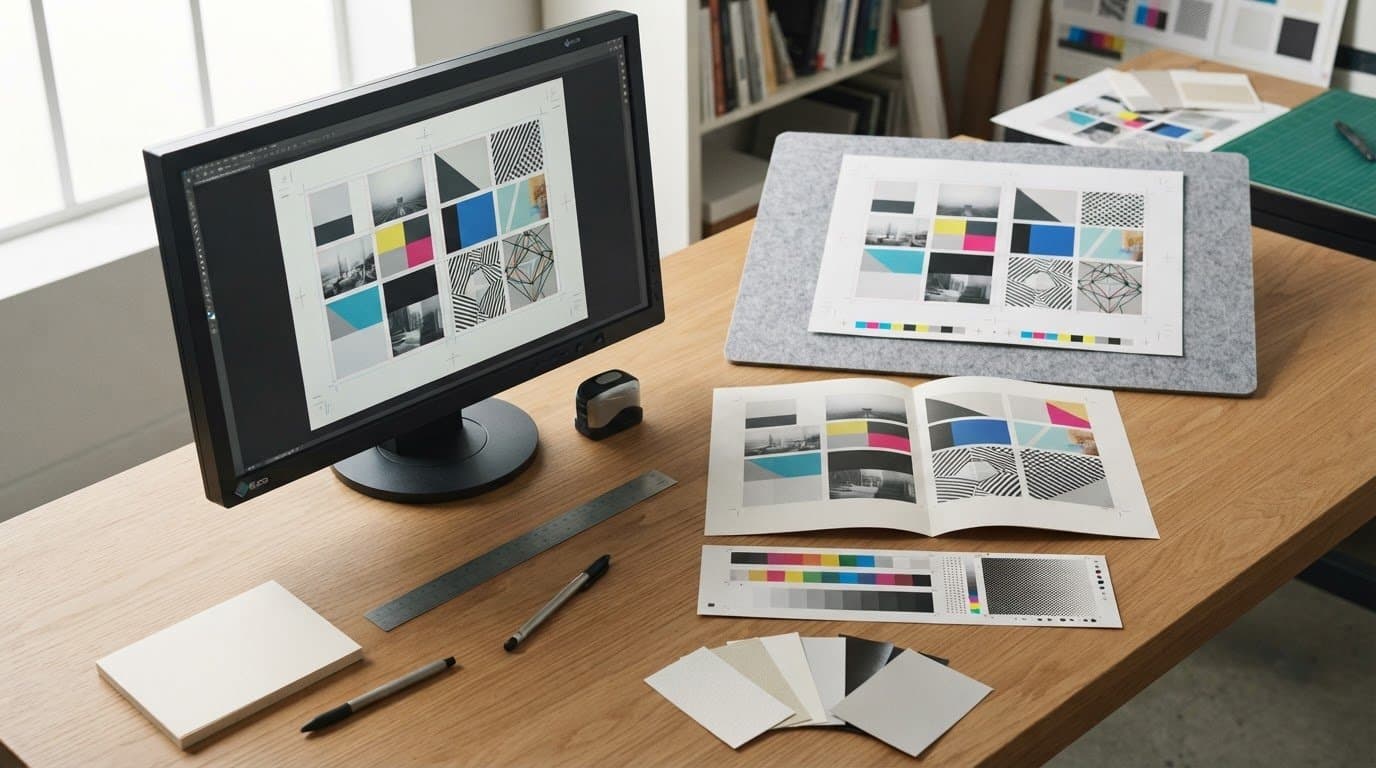
Print finishing represents the suite of specialized processes performed after the ink meets the substrate. It’s the bridge between a digital file and a tangible brand asset. For marketing executives and operations managers, understanding print finishing options is about more than just aesthetics; it’s about engineering a product that survives the rigors of distribution while maintaining visual integrity. This stage serves as the final safeguard for brand quality. It ensures that every piece of collateral reflects the precision of your organization.
We categorize these processes into two primary streams: aesthetic enhancements and functional requirements. Aesthetic finishes like spot UV or foil stamping create visual impact. Functional requirements like creasing, scoring, and binding provide structural durability. In a high-capacity industrial environment, these aren’t just afterthoughts. They are essential components of post-press finishing that determine whether a catalog arrives pristine or damaged. Modern technology now allows for this level of precision even in on-demand digital environments, bridging the gap between custom boutique quality and industrial scale.
To see the impact of precision settings on the final look of a project, watch this helpful overview:
The transition from a printed sheet to a finished product requires a sophisticated understanding of material science. Paper fibers react differently to heat, pressure, and adhesives. A strategic communications ally doesn’t just apply a coating; they analyze how that coating interacts with the specific ink and substrate chosen for the project. This level of technical oversight prevents common failures like cracking or peeling during the folding process. It’s this meticulous attention to detail that separates a standard print run from a high-impact brand asset.
The Role of Finishing in Brand Communication
Texture and sheen dictate the first touch perception of your brand. When a prospect picks up a brochure, the weight and tactile feedback of the paper communicate value before they read a single word. High-end collateral relies on this psychological weight to establish authority. Finishing turns a commodity product into a premium experience by engaging senses that digital screens cannot reach. It creates a physical connection that reinforces brand trust and professionalism in a crowded marketplace. This level of physical branding is also a specialty of The CEO Creative, which helps businesses establish their identity through high-quality custom products and strategic vendor solutions.
Balancing Speed, Scale, and Sophistication
A common misconception suggests that complex finishing inevitably leads to production delays. In a modern, integrated facility, this isn’t the case. Automated post-press workflows maintain efficiency even for high-volume commercial runs. We advocate for integrated production, where finishing is planned during the initial design phase. This ensures that the technical requirements for binding or die-cutting are baked into the timeline from the start. By coordinating these nuances early, you achieve a sophisticated result without compromising your distribution schedule.
Visual and Sensory Enhancements: Coatings, Foils, and Textures
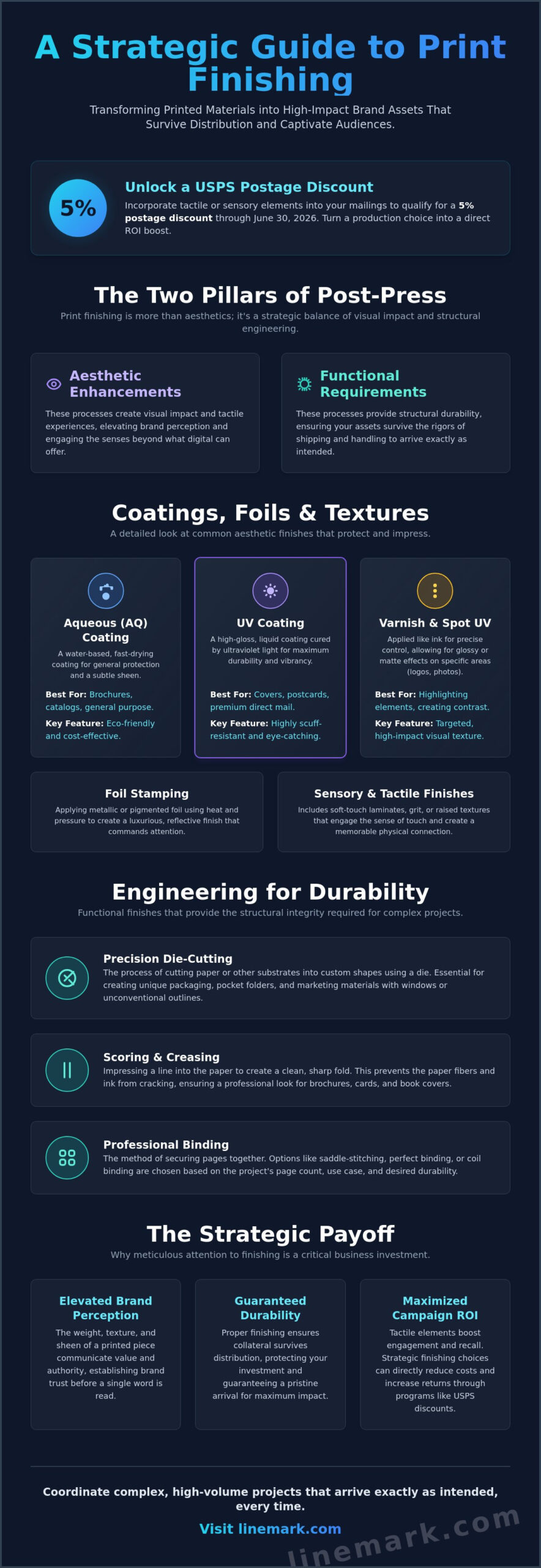
Visual and sensory enhancements represent the intersection of marketing psychology and industrial precision. Within a professional print finishing division, these options are categorized by their ability to protect the substrate or elevate the brand’s perceived value. Understanding print finishing options allows you to choose between standard coatings like Aqueous (AQ), UV, and Varnish based on the specific needs of your project. AQ is a water-based, fast-drying coating often used for general protection. UV coating offers a high-gloss, durable finish that resists scuffing during distribution. Varnish is applied like ink on the press, allowing for precise control over specific areas of the page.
The rise of sensory finishes has transformed how brands interact with their audience. Soft-touch lamination provides a velvet-like texture that instantly signals luxury and care. Conversely, grit textures or sand coatings create a rugged, industrial feel that is highly effective for outdoor or construction-related branding. These tactile elements encourage physical engagement, a principle also seen in the work of WoodSnap, which prints directly onto birch wood to create a unique sensory experience. Such finishes make the recipient linger on the piece longer than they would with a standard gloss sheet, directly correlating to higher brand recall and engagement rates.
Foil stamping remains the gold standard for premium positioning. By using heat and pressure to bond a thin metallic film to the paper, we create a reflective depth that ink alone cannot replicate. This is often paired with Spot UV to draw the eye to logos or critical calls to action. Utilizing these sensory elements is also a financial strategy. Through June 30, 2026, the USPS Tactile, Sensory and Interactive Promotion offers a 5% postage discount for mail that incorporates these specialty coatings or dimensional elements. This makes sophisticated finishing a tool for both impact and cost efficiency.
Protective vs. Decorative Coatings
Selecting the right coating requires balancing light reflection with operational durability. Gloss finishes provide high reflection and vibrant colors but show fingerprints easily. Matte finishes offer a sophisticated, non-reflective look, while Satin sits in the middle. For materials facing heavy handling, UV coating provides the maximum protection against moisture and abrasion. It’s critical to ensure your chosen coating is compatible with any subsequent variable data printing. Some coatings prevent ink from adhering if you plan to add addresses or personalized codes later in the fulfillment process.
Dimensional Effects: Embossing and Debossing
Dimensional techniques add a physical 3D layer to your design. Embossing raises the image above the paper surface, creating a tactile peak. Debossing sinks the image into the substrate, creating a professional indentation. Both methods require high-quality, long-fiber substrates to prevent tearing or warping under the pressure of the dies. When executed correctly, these effects create shadows and highlights that change as the reader moves the piece. Our team at Linemark can help you select the ideal substrate to handle these deep impressions without compromising the structural integrity of your project.
Structural Solutions: Professional Binding and Precision Die-Cutting
Structural integrity is the silent backbone of high-performance print. While visual coatings capture initial attention, the structural choices you make determine whether your project functions as intended in the hands of a consumer. Understanding print finishing options is critical when moving from the press to the assembly stage. For instance, heavy cardstocks often suffer from unsightly cracking along fold lines if they aren’t properly prepared. We solve this by implementing precision creasing and scoring. This process compresses the paper fibers to allow for a clean, professional fold that preserves your design’s integrity and prevents the white paper core from showing through the ink.
The longevity of your document is largely dictated by your binding selection. This choice impacts everything from lay-flat capability to mailing weight. In the context of custom book printing, selecting a high-durability binding ensures that your annual reports or catalogs withstand repeated use without losing pages. A well-chosen binding doesn’t just hold sheets together. It reinforces the premium nature of your brand and ensures the piece remains a functional asset long after the initial delivery.
A Comparison of Professional Binding Methods
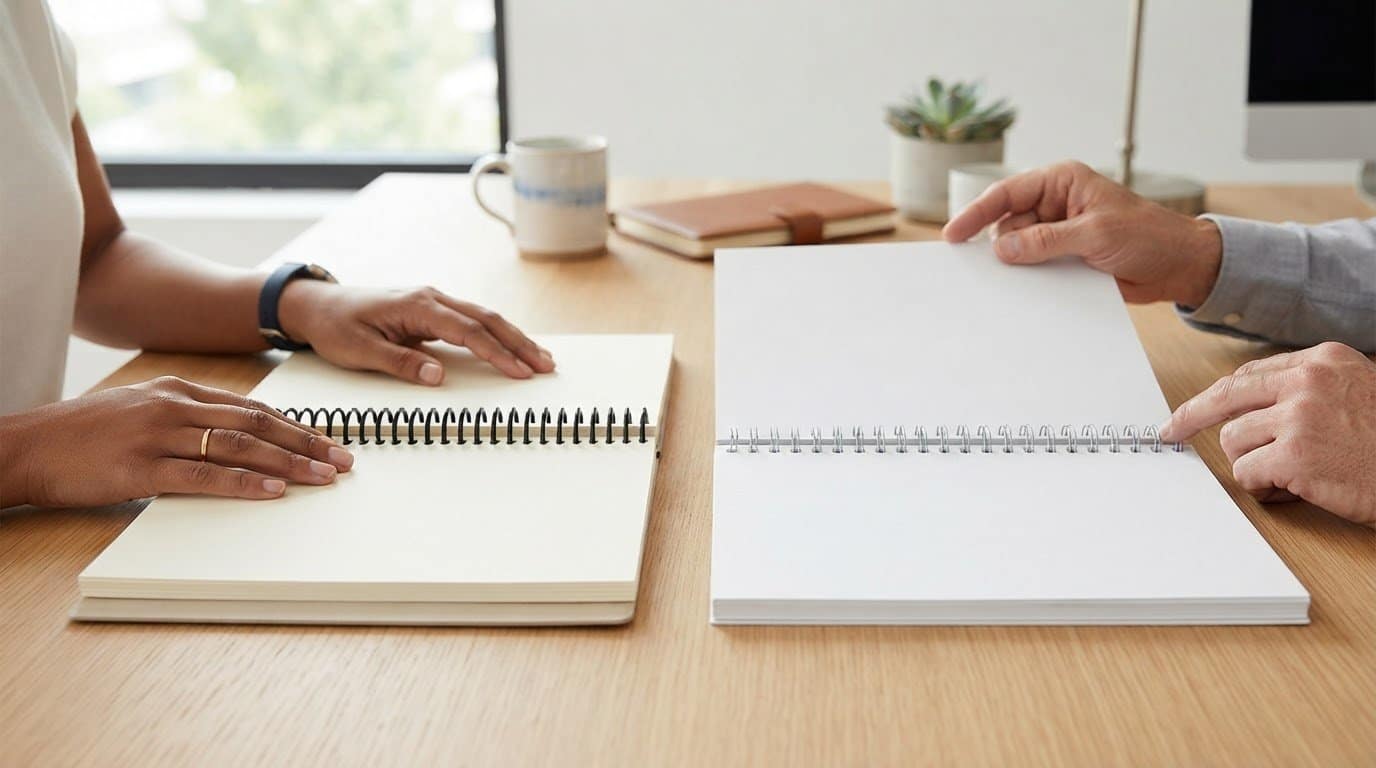
Saddle stitching remains an efficient, economical choice for brochures with low page counts. It uses wire staples along the spine, allowing the document to open almost completely flat. For thicker projects, perfect binding offers a premium look with a flat, printable spine. We often recommend PUR (Polyurethane Reactive) glue over traditional EVA glue for these projects. PUR is significantly stronger and more flexible. It prevents pages from falling out even when exposed to extreme temperatures or heavy handling during distribution. For educational materials or reference guides, Spiral and Wire-O binding provide 360-degree rotation for maximum usability.
Precision Cutting and Functional Perforations
Die-cutting isn’t limited to small marketing items. It’s a foundational tool for creating unique large format graphics and complex retail displays. This process allows for custom shapes that break the standard rectangular mold, immediately drawing the eye in a retail environment. We also utilize strategic perforations for functional elements like tear-off coupons or response cards. Precision cutting ensures that every unit in a high-volume run is identical. This consistency is vital for maintaining brand standards across multiple locations and ensuring that every piece of collateral fits perfectly into its intended display.
Strategic Application: Selecting Options for Maximum Campaign ROI
Strategic ROI in print is never an accident. It’s the result of aligning physical production with specific marketing goals. Understanding print finishing options allows you to select textures and coatings that resonate with your target audience at every stage of the funnel. While a high-gloss UV might suit a mass-market retail promotion, a subtle matte finish often better serves a high-stakes annual report. These decisions directly influence the “open rate” and “keep rate” of your physical assets. When a piece feels substantial and well-crafted, it’s less likely to be discarded and more likely to be retained as a reference tool.
Logistics play a significant role in your total campaign cost. The USPS 2026 promotions provide a clear financial incentive for strategic finishing. You can secure a 5% postage discount for First-Class and Marketing Mail by including tactile or sensory elements through June 30, 2026. Additionally, catalogs with at least 12 bound pages can qualify for a 10% discount during the same period. These aren’t just design choices; they are calculated moves to lower distribution costs while simultaneously increasing the impact of your materials. We help you navigate these regulations to ensure your project is fully automation-compatible.
Your finishing choices also impact long-term storage and inventory management. Corporate collateral often sits in a warehouse before distribution. If you don’t select the right coatings, sheets can stick together or yellow over time. Durable aqueous or UV coatings protect your investment, ensuring that materials pulled from inventory six months from now look just as professional as they did on day one. This foresight prevents waste and ensures your brand standards remain consistent across every touchpoint.
Finishing for High-Performance Direct Mail
Direct mail must survive high-speed sorting machines that can scuff or tear unprotected sheets. We recommend high-durability coatings for postcards and self-mailers to ensure they arrive in the recipient’s hands looking pristine. Integrating “interactables” like scratch-offs or integrated stickers drives engagement by forcing a physical action. This physical touchpoint is what separates your direct mail from the noise of a digital inbox. It creates a memorable experience that digital ads simply can’t replicate.
Finishing for Books, Catalogs, and Annual Reports
For catalogs and annual reports, functionality is paramount. Frequently handled materials benefit from fingerprint-resistant matte or satin finishes. These coatings maintain the professional look of your brand even after multiple reads. You might also consider French flaps or dust jackets as premium extensions that provide additional real estate for brand storytelling. By aligning these choices with a MarCom On-Demand portal, you ensure that every branch or department orders materials that meet these exact specifications, regardless of their location.
Ready to optimize your next project for maximum impact and efficiency? Consult with our industrial finishing experts to bridge the gap between high-concept design and scalable execution.
Industrial Capacity Meets Meticulous Detail: The Linemark Approach
Linemark operates as a strategic communications ally rather than a traditional print vendor. Our 90,000-square-foot facility is engineered for the seamless movement of projects from the press directly into high-precision finishing stations. This integrated layout eliminates the logistical friction and transit risks often associated with outsourcing post-press work to third-party shops. By maintaining everything under one roof, we exercise absolute control over the quality and timeline of your brand assets. Our approach combines industrial-scale capacity with the meticulous attention to detail usually reserved for boutique operations.
The collaborative partnership model is at the heart of our daily operations. We believe that understanding print finishing options shouldn’t be a burden for your marketing or operations teams. Instead, our experts act as technical consultants. We help you navigate the nuances of coatings, bindings, and structural engineering to find the most efficient path to your goals. This synergy between advanced technology and deep industry expertise ensures that your vision is realized without technical compromises. We provide the security of a well-oiled machine that handles any scale of work with steady, controlled precision.
Scaling Custom Sophistication
Maintaining boutique-level detail on high-volume production runs requires more than just high-end machinery; it requires data-driven strategies. We analyze the technical requirements of every project to determine the most efficient finishing workflows. This ensures that complexity doesn’t lead to unnecessary production delays. Having a centralized destination for design, production, and finishing offers a level of reliability that decentralized models simply can’t match. You gain the advantage of sophisticated custom effects while benefiting from the operational efficiencies of industrial-scale production.
Beyond the Finish: Kitting and Nationwide Fulfillment
Finishing isn’t the final step of the process; it’s the critical preparation for successful distribution. Once materials are finished, they transition immediately into our kitting and fulfillment workflows. This integration is vital for projects destined for nationwide distribution or long-term inventory management. Protective finishing becomes even more important for materials stored in our warehouse. It prevents scuffing and environmental damage during the storage cycle. We invite you to view the finishing stage as the bridge that ensures your materials arrive at their final destination in the same pristine condition they left the press. This holistic journey, from the first ink drop to the final delivered kit, defines the Linemark partnership.
Mastering the Physical Touchpoint: Your Path to Impactful Print
Mastering the nuances of post-press production transforms standard sheets into high-impact brand assets that command attention. We’ve explored how understanding print finishing options serves as a critical engineering phase, balancing visual sophistication with the structural durability required for distribution. By aligning these technical choices with your specific marketing goals, you don’t just improve aesthetics. You actively lower distribution costs through 2026 USPS incentives and safeguard your long-term inventory investment against environmental wear. Every crease, coating, and binding choice contributes to a cohesive brand experience that digital channels can’t replicate.
Success in complex, high-volume projects requires a partner who understands the intersection of industrial capacity and meticulous detail. With over 30 years of industrial printing and logistics expertise and a 90,000-square-foot high-capacity facility, we provide a unified partnership model that streamlines your journey from initial production to nationwide distribution. Partner with Linemark to elevate your next print project with professional finishing. We’re ready to help you turn every print run into a powerful catalyst for brand growth and operational excellence.
Frequently Asked Questions
What is the main difference between aqueous coating and UV coating?
Aqueous coating is a water-based solution applied while the ink is still wet, providing a fast-drying, cost-effective layer of protection. UV coating is a liquid polymer cured under ultraviolet light, resulting in a much harder, more durable finish with a higher gloss level. While aqueous is ideal for general protection, UV is the preferred choice for materials requiring maximum scuff resistance during distribution or a high-impact shine.
Can I use foil stamping on both offset and digital print projects?
You can apply foil stamping to both offset and digital print projects. Traditional foil stamping uses a heated metal die to press foil into the paper, making it perfect for high-volume offset runs. Modern digital foil technology allows us to apply metallic effects without the need for custom dies, providing a scalable solution for personalized or short-run digital projects. This flexibility ensures premium branding is accessible regardless of the specific print method chosen.
How does the choice of print finish affect the final color of my design?
The finish you select will alter the visual perception of your ink colors. Gloss coatings tend to saturate colors and increase contrast, making images appear more vibrant and deep. Conversely, matte or satin finishes diffuse light, which softens the colors and reduces glare for a more sophisticated, muted appearance. We recommend reviewing a physical proof with your chosen finish to ensure the final result aligns with your organization’s brand standards.
What binding method is best for a book that needs to lay flat?
Saddle stitching and mechanical bindings like Spiral or Wire-O are the most effective options for documents that must lay completely flat. If you require a professional spine for a thicker book, PUR binding offers superior flexibility compared to traditional glues. This allows the pages to stay open with less tension on the spine. Understanding print finishing options like these is vital for ensuring the end user can interact with your content comfortably and efficiently.
Are there specific print finishes that are more eco-friendly or sustainable?
Sustainable finishing starts with water-based aqueous coatings and soy-based inks, which are more environmentally friendly than traditional oil-based alternatives. Many modern laminates are now designed to be fully recyclable, and we prioritize substrates that meet FSC certification standards. As regulations like the 2026 California Recycling Label Law (SB 343) take effect, selecting finishes that don’t interfere with the paper’s recyclability is a strategic necessity for every eco-conscious brand.
How do I ensure my specialty finish is compatible with USPS mailing regulations?
Ensuring compatibility requires following specific USPS automation guidelines regarding thickness, flexibility, and reflective levels. Specialty finishes should never overlap the barcode or address block, as high-gloss coatings can interfere with optical character readers. Our team coordinates these technical details during the design phase to ensure your project qualifies for the 5% tactile promotion discount available through June 30, 2026, without risking delivery delays or extra surcharges.
What is soft-touch lamination and why is it popular for premium brands?
Soft-touch lamination is a premium film that provides a velvet-like texture and a deep matte appearance. It’s popular for luxury brands because it creates an immediate tactile connection that signals quality and care. This finish also provides a layer of protection against fingerprints and scuffs, ensuring your catalogs or brochures maintain their pristine look even after repeated handling. It’s a transformative tool for understanding print finishing options that drive physical engagement.
Does adding a print finish significantly increase the production timeline?
The impact on your timeline depends on the complexity of the process. Inline coatings like aqueous are applied during the print run and don’t add significant time to the schedule. However, offline processes like foil stamping or embossing require custom dies and additional setup phases, which can extend production by a few business days. We utilize automated post-press workflows in our 90,000-square-foot facility to minimize these delays and maintain a steady, predictable schedule for your projects.