


 07/21/2026
  Steve Bearden
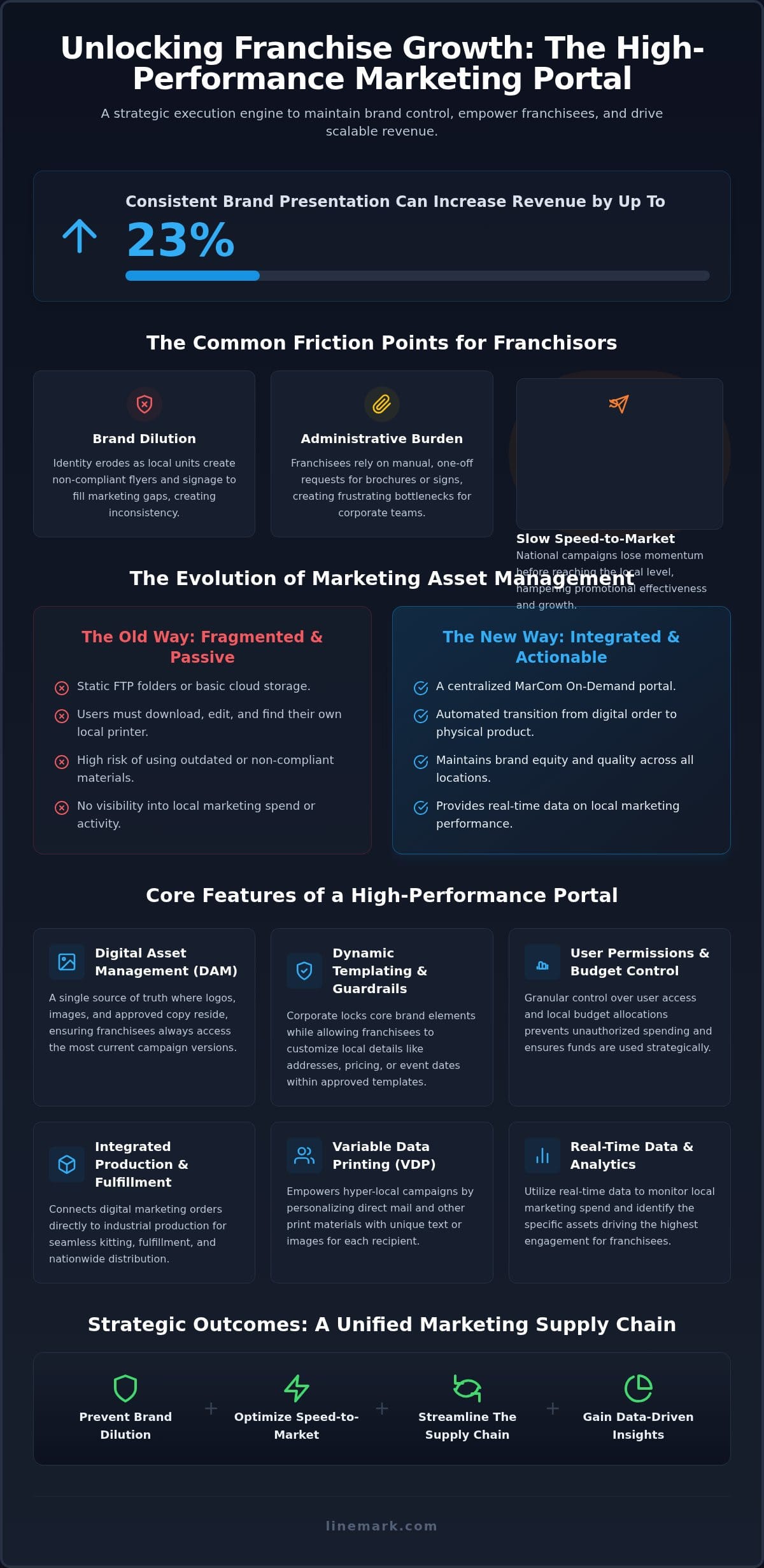
Research indicates that a consistent brand presentation can increase revenue by up to 23%. Yet, many franchisors watch their identity erode as local units create non-compliant materials to fill gaps in their local strategy. You’ve likely felt the administrative burden of manual marketing requests and the frustration of national campaigns that lose momentum before they reach the local level. It’s a common friction point that hampers operational excellence and slows your speed-to-market.
This guide demonstrates how a high-performance franchise marketing portal serves as a strategic execution engine for your organization. You’ll learn how to centralize assets into a definitive source of truth while empowering franchisees through automated direct mail and print-on-demand capabilities. We’ll show you how to maintain absolute brand control and gain real-time visibility into local marketing spend. By the end, you’ll understand how to integrate sophisticated production workflows with your brand vision to drive scalable growth in 2026.
Key Takeaways
- Define the strategic role of execution portals in preventing brand dilution across diverse geographic locations.
- Optimize local speed-to-market by leveraging a centralized franchise marketing portal that offers dynamic templating within corporate guardrails.
- Connect your digital marketing orders directly to industrial production facilities to ensure seamless kitting, fulfillment, and nationwide distribution.
- Utilize real-time data to monitor local marketing spend and identify the specific assets driving the highest engagement for your franchisees.
- Streamline your entire marketing supply chain by partnering with a communications ally that manages both the software platform and the physical production.
What is a Franchise Marketing Portal? Lead Gen vs. Execution
To better understand these strategies in practice, watch this helpful video:
This technology empowers two primary stakeholders. Corporate marketing teams gain absolute control over brand integrity. Simultaneously, local franchise owners receive the autonomy to launch campaigns without waiting for head-office approval. It effectively eliminates the friction that occurs when a high-capacity operation relies on manual, one-off requests for brochures or signage.
The Evolution of Marketing Asset Management
The industry has shifted away from passive asset libraries. In the past, brands relied on static FTP folders or basic cloud storage that required users to download, edit, and then find their own local printer. This created a massive bottleneck. Today, sophisticated MarCom On-Demand solutions have replaced these outdated systems. Modern technology maintains brand equity across diverse geographic markets by automating the transition from a digital order to a physical product. It ensures that a franchisee in Seattle and another in Miami are using the same high-quality, approved materials.
Why Your Current Intranet Isn’t a Marketing Portal
Many organizations mistake their corporate intranet for a marketing solution. There is a fundamental difference between sharing a file and executing a campaign. An intranet might host a PDF, but it does not offer the dynamic templating or built-in fulfillment required for modern logistics. Without integrated production capabilities, the process remains fragmented. A true franchise marketing portal is a strategic engine for distributed marketing that integrates digital asset management with industrial-scale production. It moves beyond viewing and into executing, turning a 90,000-square-foot facility into a seamless extension of the franchisee’s local office.
Core Features of a High-Performance Marketing Portal
A high-performance franchise marketing portal transforms a brand’s intellectual property into actionable assets. It moves beyond simple storage to provide a sophisticated Digital Asset Management (DAM) system where logos, images, and approved copy reside in a single location. This ensures every franchisee accesses the most current version of a campaign, eliminating the risk of using outdated materials. Research shows that a consistent brand presentation can increase revenue by up to 23%. Adopting a centralized approach to marketing allows corporate teams to maintain a bird’s-eye view of all activity while providing local units the tools they need to succeed.
Beyond storage, the portal manages granular user permissions and local budget allocations. This level of control prevents unauthorized spending and ensures that marketing funds are used strategically across the network. It creates a well-oiled machine that handles any scale of work without sacrificing quality.
Dynamic Templating and Brand Guardrails
The most effective portals use dynamic templating to balance brand control with local relevance. Corporate designers lock core elements like logos, brand colors, and legal disclaimers. Franchisees then customize specific text fields, such as store addresses, local pricing, or event dates, within these established guardrails. This approach empowers franchisees to act as their own local designers without the danger of brand dilution. It effectively solves the common pain point where local owners create their own non-compliant flyers because they can’t get a timely response from corporate.
Variable Data Printing (VDP) Integration
One of the most powerful features of a modern franchise marketing portal is the integration of variable data printing directly into the ordering workflow. This allows local owners to upload mailing lists and automatically personalize direct mail, brochures, or catalogs for their specific audience. Personalization at scale makes local marketing feel hyper-relevant to the consumer, which significantly boosts engagement rates.
When these digital workflows are backed by industrial production capabilities, the transition from a screen click to a physical product is seamless. By automating these complex processes, you reduce administrative friction and accelerate your speed-to-market. If you’re ready to see how these features can scale your operations, exploring a MarCom On-Demand solution is the next logical step in your brand’s evolution.
The Logistics of Scale: From Portal Click to Front Door
A sophisticated digital interface is only half of the equation for multi-unit brands. For a franchise marketing portal to drive true growth, it must be backed by a high-capacity production facility capable of translating digital intent into physical reality. This is where many software-only solutions fail. They provide the platform but leave the complex logistics of printing, packing, and shipping to third-party vendors who don’t understand your brand’s specific requirements. A unified partnership between software and production ensures that your marketing assets move seamlessly from a screen click to a customer’s front door.
When a franchisee selects a campaign, the system triggers an automated transition from the digital order to a physical print run. This process removes the administrative friction of manual approvals for every single flyer or postcard. By integrating these workflows into a 90,000-square-foot production facility, you ensure that high-volume projects are handled with industrial precision. Real-time tracking of fulfillment status and shipments provides every location with the transparency they need to plan local events with confidence. This visibility builds a sense of security, knowing that the project is in capable, steady hands.
Kitting and Fulfillment for Multi-Unit Brands
Kitting is a critical component for brands managing seasonal rollouts or grand openings. It involves pre-assembling various marketing materials, such as banners, floor graphics, and window graphics, into a single package for distribution. Utilizing centralized kitting and fulfillment ensures that every unit receives a consistent set of materials simultaneously. This strategic approach reduces shipping costs and guarantees that physical brand touchpoints look identical across a national footprint, regardless of the local unit’s size.
Inventory Management and Warehousing
Measuring ROI: Data-Driven Franchise Marketing
Data transforms intuition into strategy. A high-performance franchise marketing portal provides the transparency required to measure the true impact of distributed campaigns across an entire network. By monitoring every transaction within the system, corporate leadership gains a granular view of how marketing dollars are deployed at the street level. This oversight allows you to track local marketing spend against national budget allocations with surgical precision. It effectively eliminates the ambiguity of where funds are going and which regions are most active in their local outreach.
Beyond tracking spend, the portal identifies which assets are most popular among franchisees. If a specific direct mail piece or large format banner is being ordered at high volumes, it serves as a clear indicator of field-level confidence in that creative. Conversely, assets that sit untouched in the digital library can be retired, reducing the “marketing closet” clutter mentioned previously. This data-driven approach also exposes hidden costs. You can significantly reduce non-compliant print spending and local design fees by providing a centralized destination for all needs. When franchisees have access to high-quality, pre-approved templates, they no longer feel the need to hire outside agencies for one-off projects.
Visibility for Corporate Marketing Teams
Portal data provides the evidence needed to justify marketing investments to the board or a franchise advisory council. Instead of reporting on vague engagement metrics, you can present hard numbers regarding asset utilization and campaign adoption. This visibility allows you to benchmark high-performing locations against their specific marketing activity. You might discover that your top 10% of earners are the most frequent users of the portal’s variable data printing features. Additionally, the system streamlines the co-op fund reimbursement process. Because every order is tracked within the portal, the audit trail for co-op spending is automated, removing weeks of administrative back-and-forth.
Improving Speed-to-Market
In a competitive landscape, the ability to react to market changes in 24 to 48 hours is a distinct advantage. A portal eliminates the “middleman” in the local ordering process, connecting the user directly to the production queue. For example, a national brand can launch a promotional campaign across 500 locations simultaneously by simply uploading the new assets to the portal. Franchisees receive a notification, customize their local details, and trigger the print run immediately. This agility ensures that your brand remains relevant and proactive rather than reactive. To see how these data-driven workflows can revitalize your strategy, consider exploring the MarCom On-Demand platform to bridge the gap between digital intent and physical results.
Implementing a MarCom On-Demand Portal with Linemark
Successful execution of a franchise marketing portal requires more than a software license; it demands a strategic communications ally that understands the logistics of high-volume production. Many organizations encounter friction when they adopt a digital platform that is disconnected from the physical fulfillment process. Linemark bridges this gap by providing a unified partnership. We combine our proprietary technology with a 90,000-square-foot production facility to ensure that your brand vision is realized with industrial precision. This integrated approach allows you to scale from your first ten locations to your first thousand without adding administrative headcount.
Transitioning your current assets into a centralized marcom on-demand ecosystem is a transformative journey. It moves your organization away from transactional exchanges and toward a holistic marketing supply chain. By housing everything in one destination, you provide your franchisees with a reliable tool that reflects the operational excellence of your brand. Our team works alongside yours to map out workflows that reduce waste and accelerate your speed-to-market across the entire network.
Customization vs. Out-of-the-Box Solutions
One-size-fits-all portals often fail because they don’t account for the unique nuances of your brand culture. A high-performance franchise marketing portal should feel like a natural extension of your corporate identity, not a generic third-party tool. Linemark takes a consultative approach to building your platform. We focus on creating a tailored user experience that simplifies complex ordering processes. Whether you need specific approval hierarchies or custom budget tracking, the platform is built to match your specific requirements rather than forcing you to adapt to a rigid software structure.
Getting Started: The Path to Marketing Automation
The first step toward marketing automation is a comprehensive audit of your current collateral. This process identifies which items are ready for dynamic templating and which evergreen assets belong in our centralized warehouse. You can also set up the infrastructure for specialized needs, such as custom book printing for training manuals or large format graphics for seasonal store refreshes. Once your assets are digitized and the guardrails are set, your network is ready for a national rollout. We invite you to schedule a strategic consultation to see how our 30 years of industrial authority can streamline your marketing operations and protect your brand equity.
Empowering Your Brand for Scalable Growth
The transition to a centralized marketing model is no longer optional for brands aiming to lead in 2026. By implementing a robust franchise marketing portal, you eliminate the friction that historically hindered local execution and national brand control. You’ve seen how dynamic templating and data-driven insights transform manual requests into a streamlined, automated workflow. This shift ensures your brand remains agile and responsive to market changes while maintaining absolute consistency.
Success depends on a unified partnership that bridges the gap between digital strategy and physical production. Linemark offers 30 years of industrial printing and logistics expertise, providing the stability your network needs to grow. With our 90,000-square-foot advanced production facility and proprietary MarCom On-Demand technology, we handle your high-volume projects with meticulous attention to detail. We act as your strategic communications ally throughout every step of your organization’s journey.
Streamline your national brand execution with MarCom On-Demand from Linemark.
Your network’s expansion is a journey that requires precision and reliability. With the right infrastructure in place, your brand’s potential for growth is limitless.
Frequently Asked Questions
What is a franchise marketing portal?
A franchise marketing portal is a centralized digital destination designed for the management and execution of brand assets. It serves as a unified platform where corporate marketing teams upload approved templates and local units customize them for their specific markets. This technology bridges the gap between digital asset management and physical production, ensuring that every piece of collateral meets corporate standards before it ever reaches a printing press.
How does a marketing portal ensure brand consistency?
A portal enforces brand consistency through dynamic templating and locked design elements. Corporate administrators lock core brand identifiers like logos, colors, and fonts, allowing franchisees to edit only specific fields like local contact information or event dates. This guardrail system prevents brand dilution. It ensures that every brochure, postcard, or large format graphic produced remains visually aligned with the national identity across all locations.
Can franchisees order their own direct mail through a portal?
Yes, franchisees can execute complete direct mail campaigns directly through a high-performance portal. The system allows local owners to select an approved design, upload their specific mailing lists, and trigger the production and mailing process in a single workflow. This automation reduces the administrative burden on corporate teams while providing local units with the agility to respond to community-specific opportunities without waiting for manual approvals.
Does a franchise marketing portal support variable data printing?
Modern portals fully support Variable Data Printing (VDP) to enable hyper-local personalization at scale. By integrating VDP into the franchise marketing portal, franchisees can automatically customize individual pieces of mail or brochures with recipient names, local addresses, or specific promotional offers. This technology ensures that high-volume projects maintain a personal touch, which significantly improves engagement and return on investment for local marketing campaigns.
How much does it cost to set up a franchise marketing portal?
The cost of implementing a portal varies based on the complexity of your brand’s requirements and the number of active locations. Factors influencing the total investment include the level of custom software integration needed and the specific fulfillment capabilities required. Organizations should look for a partner that offers a consultative approach to find a solution that balances operational breadth with long-term scalability and growth potential.
What is the difference between a lead gen portal and a MarCom portal?
A lead gen portal focuses on franchise recruitment and candidate communication, while a MarCom portal is built for operational execution. Lead gen tools are designed to find new franchisees; however, a MarCom franchise marketing portal supports active owners by providing the physical materials needed to run their business. This distinction is critical because a MarCom portal integrates directly with production facilities to handle kitting and fulfillment.
Can I integrate my existing DAM with a franchise marketing portal?
Many advanced portals offer integration capabilities with existing Digital Asset Management (DAM) systems through secure APIs. This allows your corporate team to maintain their current creative workflows while pushing approved assets into the portal for franchisee use. By connecting these systems, you create a seamless pipeline from design to distribution, ensuring that your production facility always has access to the most recent high-resolution files.
How does a portal help with franchise co-op fund management?
A portal streamlines co-op fund management by providing real-time visibility into local marketing spend and activity. Every order placed through the system generates an automated audit trail, making it easy to track how funds are being utilized across the network. This transparency simplifies the reimbursement process and ensures that co-op dollars are spent on pre-approved, brand-compliant materials, reducing the risk of financial leakage and administrative errors.