


 09/25/2026
  Steve Bearden
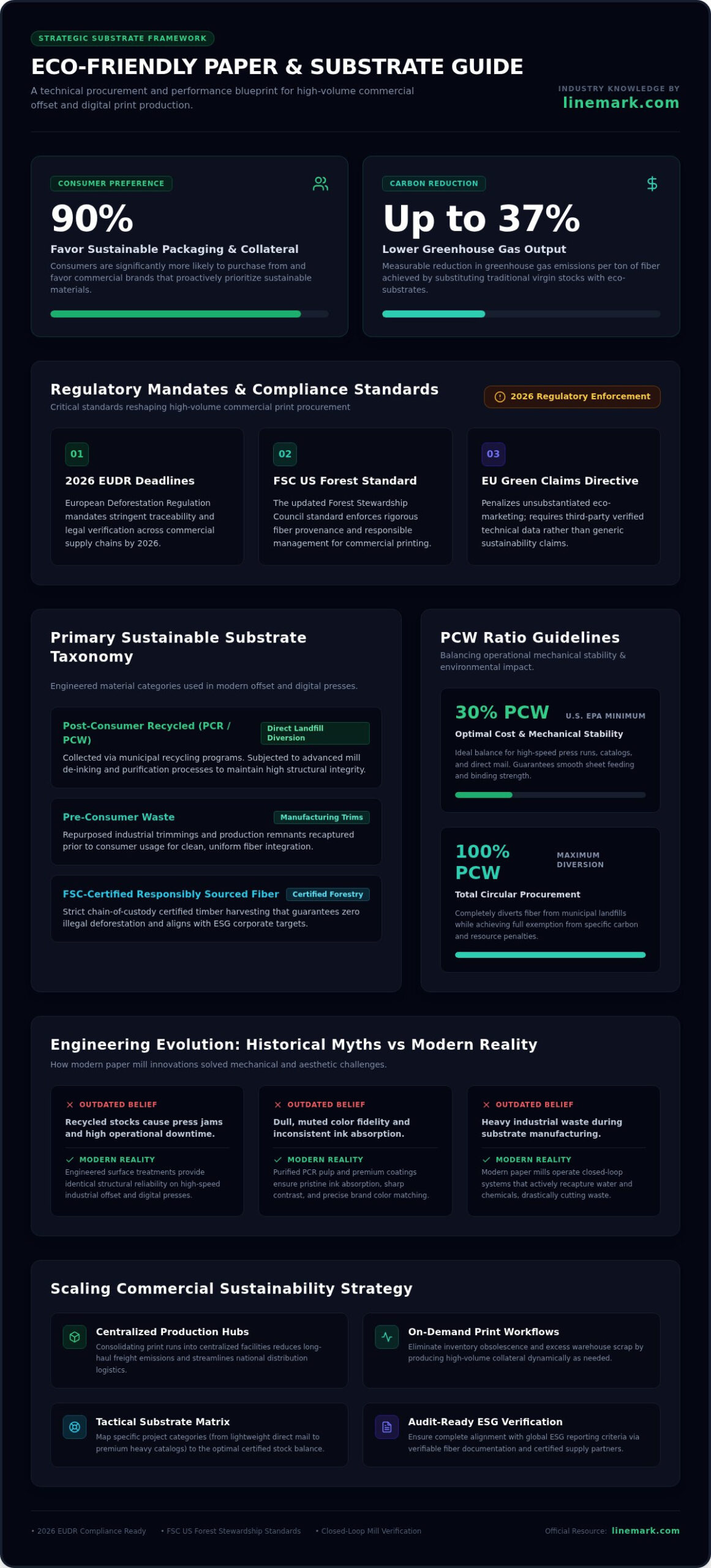
With 90 percent of consumers now favoring brands that prioritize sustainable packaging, the shift toward eco-friendly paper options is no longer a choice but a commercial necessity. You’ve likely faced the frustration of recycled stocks that jam high-speed digital presses or produce dull, inconsistent color reproduction. It’s a common tension between meeting corporate environmental targets and maintaining the precision your brand demands. We understand that a substrate isn’t just a surface; it’s a critical component of your operational efficiency and communication strategy.
This guide provides a reliable framework for evaluating sustainable substrates that perform under the rigors of high-volume offset and digital production. We’ll cut through the confusion of the 2026 EUDR compliance deadlines and the new FSC US Forest Stewardship Standard to help you make informed procurement decisions. You’ll discover how to select the ideal sustainable substrates for high-volume commercial print projects without sacrificing quality or performance. We’ll also explore how to optimize your print logistics and maintain brand standards using advanced materials that don’t compromise on ink absorption or mechanical integrity.
Key Takeaways
- Align your print strategy with global ESG standards by understanding how sustainable substrates support corporate environmental targets and compliance requirements.
- Distinguish between genuine environmental certifications and greenwashing to ensure your high-volume projects meet rigorous 2026 regulatory mandates.
- Evaluate the mechanical performance of modern eco-stocks to maintain brand precision and prevent production downtime on high-speed offset and digital presses.
- Utilize a tactical selection matrix to map the most effective eco-friendly paper options to your specific commercial printing needs, from catalogs to direct mail.
- Scale your sustainability initiatives through centralized production and on-demand printing workflows that eliminate inventory waste and optimize logistics.
Why Corporate Print Strategies Require Eco-Friendly Paper Options
Modern high-volume print production requires a shift from transactional sourcing to strategic material selection. Today’s eco-friendly paper options encompass a range of engineered substrates, including post-consumer recycled (PCR) content and fiber certified by the Forest Stewardship Council (FSC). These materials aren’t just “green” alternatives; they’re high-performance tools that help organizations meet strict Environmental, Social, and Governance (ESG) targets. As regulatory pressure mounts, adopting these stocks is a proactive move to ensure long-term operational resilience.
Many print buyers still hesitate due to historical myths about sustainable stocks causing press jams or poor ink coverage. Those days are gone. Modern manufacturing has refined the surface treatments of recycled papers, ensuring they handle the speeds of industrial offset and digital presses with the same reliability as virgin wood-pulp stocks. This technical evolution allows you to maintain brand precision while significantly reducing your organization’s ecological footprint.
To better understand this concept, watch this helpful video:
Defining True Sustainability in Modern Paper Manufacturing
True sustainability goes beyond a simple recycling logo. It involves analyzing the entire lifecycle, from raw material extraction to chemical processing innovations. Modern mills now utilize closed-loop systems that recapture water and chemicals, drastically reducing industrial waste. While basic recycling might result in inconsistent fiber length, engineered commercial-grade sustainable substrates are meticulously processed to maintain the structural integrity required for high-speed binding and finishing. Understanding the environmental impact of paper is essential for any marketing executive looking to balance aesthetic quality with ethical production.
The Environmental Impact of High-Volume Commercial Collateral
Transitioning to eco-friendly paper options offers a measurable reduction in carbon emissions. By substituting traditional virgin stocks, companies can lower their greenhouse gas output by as much as 37 percent per ton of fiber. This choice directly influences consumer loyalty, as 90 percent of consumers are more likely to purchase from brands using sustainable packaging. Beyond the metrics, circular material procurement demonstrates a commitment to reducing landfill waste. It positions your brand as a responsible leader in the national market while optimizing your long-term supply chain logistics.
The Primary Categories of Sustainable Paper Substrates Available
Procurement teams need a clear taxonomy to navigate the growing market of sustainable stocks. Selecting the right substrate doesn’t have to be complex if you focus on verified technical categories. Stricter regulations, like the EU Green Claims Directive, now penalize unsubstantiated claims, making verified eco-friendly paper options essential for compliance. Industrial digital and offset workflows typically rely on three primary material categories.
Post-Consumer Waste (PCW) and Recycled Content Stocks
Recycled stocks are classified by their source fibers. Pre-consumer waste includes industrial scraps from trim and manufacturing, while post-consumer recycled (PCR) content comes from materials collected through municipal recycling programs. PCR fiber provides a stronger environmental benefit because it directly diverts waste from landfills. To create premium commercial sheets, mills put PCR pulp through rigorous de-inking and purification processes. For high-speed press runs, a 30 percent PCW blend offers an excellent balance of cost and mechanical stability, meeting the minimum recommendations set by the U.S. EPA. For maximum impact, 100 percent PCW stocks are completely exempt from certain international traceability regulations like the EUDR.
FSC-Certified and Responsibly Sourced Virgin Fibers
Virgin fiber remains crucial for maintaining the structural integrity and tensile strength required in complex binding and finishing. Sustainable procurement demands that these fibers originate from responsibly managed forests. The Forest Stewardship Council (FSC) provides a strict chain-of-custody tracking mechanism to guarantee origin. Buyers should understand the three primary designations. FSC 100% indicates all fiber comes from certified forests. FSC Mix combines certified virgin fiber, recycled content, or controlled wood. FSC Recycled confirms the product is made entirely from reclaimed materials. Aligning your procurement with the revised FSC US Forest Stewardship Standard published on January 1, 2026, ensures your brand meets modern compliance benchmarks.
Alternative Fiber Options: Bamboo, Hemp, and Agricultural Residue
Non-wood plant fibers offer rapid renewability metrics that traditional timber cannot match. Bamboo and hemp mature in months rather than decades. They provide high tensile strength and unique tactile finishes that elevate premium corporate collateral. Agricultural residue, such as sugarcane bagasse, repurposes industrial byproducts into viable print surfaces. Despite their environmental advantages, alternative fibers face scalability constraints for national, high-volume contracts. Supply chains aren’t as mature as traditional timber networks, which can lead to longer lead times. Partnering with an expert in commercial printing helps ensure you balance these innovative material characteristics with your project’s logistical requirements.
Evaluating Performance: Eco-Friendly Paper Options vs. Traditional Stocks
Direct comparisons between sustainable substrates and traditional virgin wood-pulp papers reveal that the performance gap has closed. Modern mill treatments ensure that today’s eco-friendly paper options meet the rigorous criteria required for industrial production. Advanced digital and offset press technology optimizes ink coverage on these specialized surfaces, preventing the dull finishes often associated with older recycled stocks. Evaluating these materials requires a look at specific mechanical properties and material science.
Tensile Strength, Brightness, and Ink Absorption Metrics
Industrial press runs subject paper to intense heat and mechanical tension. Premium recycled sheets maintain high ISO brightness ratings through advanced mechanical purification rather than heavy chlorine bleaching. Opacity remains a critical metric, especially for double-sided printing in high-volume catalogs or annual reports. Proper opacity prevents ink show-through, ensuring crisp text and vibrant imagery. Furthermore, modern sustainable stocks are engineered for high tensile strength, providing excellent resistance to tearing and stretching on high-speed web offset presses. Surface smoothness is carefully calibrated during the calendering process to guarantee precise dot gain and rapid ink drying times.
Cost-Benefit Analysis for Large-Scale Print Runs
Evaluating the cost-to-value ratio requires shifting focus from upfront material fees to the total cost of ownership. Manufacturing efficiencies have normalized the pricing of sustainable stocks, making them highly competitive with standard virgin alternatives. While market dynamics cause minor fluctuations in scrap paper pricing, the long-term value of protecting brand equity and meeting ESG compliance targets outweighs nominal upfront differences. Utilizing advanced variable data printing further optimizes your investment by personalizing content, which minimizes substrate waste on premium eco-stocks. This precision targeting ensures that every sheet run through the press delivers maximum marketing value with minimal environmental impact.
Sustainable Stock Framework for High-Volume Print
Selecting the right substrate requires a tactical approach that balances aesthetics with technical requirements. A generic choice can lead to binding failures or excessive postage costs. We’ve developed a selection matrix to help you map specific eco-friendly paper options to your diverse commercial needs, ensuring every project meets industrial standards. By aligning your material choice with the intended application, you can maintain operational efficiency without compromising your environmental commitments.
Best Sustainable Options for Custom Book Printing and Catalogs
For text-heavy layouts and custom book printing, we recommend uncoated, high-opacity recycled stocks. These materials provide the necessary bulk for spine integrity while preventing ink show-through on lightweight pages. Matte eco-finishes are particularly effective for corporate annual reports and catalogs. They offer a sophisticated, glare-free aesthetic that highlights brand precision while demonstrating a clear commitment to sustainable procurement.
Optimizing Direct Mail and High-Volume Corporate Collateral
Direct mail requires stocks that can survive the rigors of automated postal sorting machinery. High-yield recycled cover stocks offer the necessary durability without adding unnecessary weight. As detailed in our direct mail strategic guide, material weight directly impacts national postage distribution costs. We ensure your recycled content levels don’t interfere with barcode readability or ink adhesion, which is vital for the success of complex variable data campaigns.
Selecting Substrates for Large-Format and Environmental Graphics
Large-format requirements differ significantly from standard commercial sheets. Substrates for signage and banners must be both durable and environmentally responsible. Our large format graphics analysis covers biodegradable rigid substrates that maintain structural integrity for wall and window installations. These innovative materials are fully compatible with UV-ink technology, ensuring long-lasting, vibrant color reproduction for both indoor and outdoor applications.
Early consultation is the key to a seamless production cycle. By involving a manufacturing ally in the design phase, you can verify that your chosen eco-friendly paper options align with your specific binding and finishing requirements. This proactive step prevents technical bottlenecks and ensures your project scales effectively. Partner with us to audit your current print inventory and identify high-performance sustainable upgrades.
Scaling Sustainable Print Production with Advanced Commercial Solutions
Scaling a national print strategy requires more than just selecting a substrate. It demands a centralized production model that integrates advanced technology with data-driven logistics. Enterprise organizations often struggle with the environmental cost of obsolete inventory, which accounts for a significant portion of print waste. Centralizing production in a 90,000-square-foot facility allows for tighter control over eco-friendly paper options and minimizes the carbon footprint of national distribution through optimized shipping routes and fulfillment kitting.
Leveraging Web-to-Print Portals for Sustainable Inventory Management
Decentralized teams can maintain brand standards while hitting green targets using automated workflows. Our marcom on-demand portal guide illustrates how automated brand compliance eliminates print overruns. By ordering only what’s needed, you prevent thousands of pounds of paper from reaching landfills each year. This just-in-time manufacturing approach ensures that marketing collateral remains current without the waste associated with traditional bulk storage. Consolidated storage and precise fulfillment kitting further reduce transit emissions, making your entire supply chain leaner and more responsible.
Precision Engineering and Digital Press Optimization for Eco-Stocks
Precision engineering is the ultimate enabler of these initiatives. We optimize our digital and offset press configurations specifically for the unique surface tensions and absorption rates of eco-friendly paper options. This isn’t a one-size-fits-all process. It involves the seamless integration of soy-based and low-VOC inks with certified recycled paper substrates to ensure vibrant color reproduction. These technical adjustments guarantee that your high-volume catalogs and annual reports maintain the industrial authority your brand requires while adhering to the strictest environmental standards.
A strategic print partnership turns a transactional exchange into a holistic journey toward corporate sustainability. We invite enterprise clients to collaborate on custom supply-chain solutions that leverage our 30 years of industrial experience. By combining innovative manufacturing technology with a modern, proactive spirit, we help you scale your sustainability initiatives without sacrificing the meticulous attention to detail your projects deserve. Let’s build a print ecosystem that supports your growth and your environmental values simultaneously.
Future-Proofing Your Print Strategy through Sustainable Innovation
Transitioning to sustainable print production is a strategic imperative for the modern enterprise. We’ve explored how selecting high-performance eco-friendly paper options doesn’t mean sacrificing mechanical integrity or brand precision. By utilizing a tactical framework for stock selection and leveraging on-demand workflows, you eliminate obsolete inventory while meeting 2026 ESG mandates. Our 90,000-square-foot advanced manufacturing facility is engineered for this level of precision, offering comprehensive FSC chain-of-custody compliance and data-driven nationwide fulfillment networks.
The era of generic green claims is over, replaced by verifiable performance and industrial-scale reliability. You now have the framework to maintain brand standards while achieving significant environmental targets. We’re ready to serve as your strategic communications ally, handling the nuances of modern marketing and logistics so you can focus on growth. Partner with Linemark to build your sustainable corporate print strategy today. It’s time to transform your print ecosystem into a catalyst for responsible, high-impact communication.
Frequently Asked Questions
What makes a paper option truly eco-friendly for commercial printing?
A paper option is truly eco-friendly when it originates from responsibly managed forests or reclaimed post-consumer waste. We look for certifications from the Forest Stewardship Council (FSC) to verify chain-of-custody and ensure legal harvesting. Modern mills utilize closed-loop water systems and chlorine-free bleaching to minimize environmental impact. These eco-friendly paper options ensure your marketing collateral supports corporate ESG goals without sacrificing the mechanical integrity required for high-volume commercial runs.
Can recycled paper options handle high-speed digital and offset printing without jamming?
Modern recycled substrates are engineered to match the tensile strength and surface smoothness of virgin wood-pulp stocks. Advanced mill treatments prevent the dust buildup and curling that previously caused press malfunctions. Whether you are utilizing high-speed digital presses or traditional offset equipment, these stocks maintain consistent performance. Our 90,000-square-foot facility regularly processes high-volume projects on recycled materials, ensuring your production schedule remains on track without technical bottlenecks.
What is the difference between FSC-certified paper and recycled post-consumer waste paper?
FSC-certified paper typically consists of virgin fibers sourced from forests managed according to strict environmental and social standards. In contrast, post-consumer waste (PCW) paper is manufactured from materials already used by consumers and diverted from landfills. While both are eco-friendly paper options, PCW has a lower carbon footprint, while FSC virgin fiber often provides superior structural integrity for complex binding and finishing. Many corporate projects utilize a blend of both to optimize performance.
Does choosing eco-friendly paper options significantly increase the cost of a commercial print run?
Manufacturing efficiencies have normalized the pricing of sustainable substrates, making them highly competitive with traditional virgin papers. While market dynamics for scrap paper can cause minor fluctuations, the price difference is often negligible in high-volume runs. You should consider the total cost of ownership, including the long-term value of brand equity and meeting regulatory compliance. Investing in sustainable materials often results in lower waste and improved consumer perception, which drives overall project value.
Are eco-friendly papers bright enough for high-fidelity corporate marketing materials?
Today’s recycled and certified stocks achieve high ISO brightness ratings through advanced mechanical purification rather than harsh chemical bleaching. This ensures that your photography and brand colors remain vibrant and accurate. Modern mill technology produces sheets with excellent opacity and surface smoothness, preventing ink show-through in double-sided printing. Your annual reports and brochures will maintain a premium, high-fidelity aesthetic that reflects your brand’s authority while adhering to modern environmental standards.
How does on-demand printing support a corporate sustainability strategy?
On-demand printing is a cornerstone of sustainable logistics because it eliminates the waste associated with obsolete inventory. Instead of printing large batches that might become outdated, you order precise quantities through a centralized MarCom portal. This just-in-time manufacturing model reduces the physical volume of paper used and lowers the energy required for long-term warehousing. It is an efficient way to manage corporate collateral while ensuring that every printed piece serves a specific, current purpose.
Can eco-friendly paper options be used for specialized processes like die-cutting and perfect binding?
Sustainable substrates are fully compatible with specialized binding and finishing techniques. Engineered recycled stocks possess the necessary tensile strength for crisp die-cutting and the internal bond strength required for durable perfect binding. We recommend consulting with your production ally during the design phase to select the correct basis weight and grain direction. This proactive approach ensures that your custom books and catalogs maintain their structural integrity throughout their entire lifecycle in the field.