

 07/24/2026
  Steve Bearden
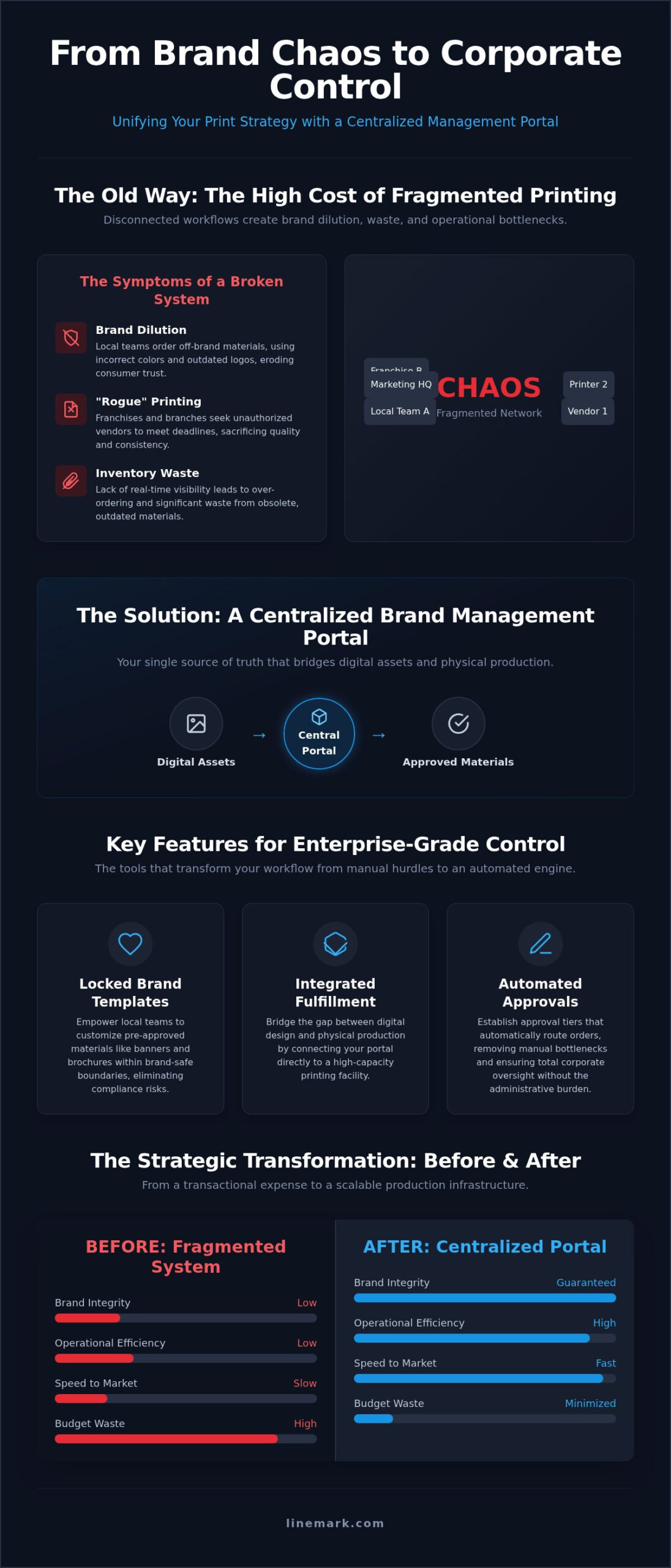
By 2026, the traditional model of fragmented print procurement has become a liability that compromises corporate identity and drains marketing budgets. You’ve likely felt the frustration when local teams order off-brand custom business banners or outdated brochures that don’t align with your national strategy. It’s a common struggle to maintain a consistent visual voice across multiple regions while managing a disconnected network of vendors. This fragmentation creates bottlenecks that slow down your speed to market and lead to significant waste in obsolete materials.
You know that protecting your brand’s integrity shouldn’t feel like a constant battle against non-compliant materials and wasteful inventory spending. This article reveals how a centralized brand management portal transforms your print workflow from a series of administrative hurdles into a scalable production engine. We will explore how automated approvals, locked templates, and integrated fulfillment provide the real-time visibility you need to secure your corporate identity in an increasingly complex market. Discover how to move beyond transactional printing to a unified strategy that supports your growth.
Key Takeaways
- Eliminate brand dilution and “rogue printing” by establishing a centralized digital storefront for all corporate print assets.
- Ensure visual consistency for high-impact materials like custom business banners through the use of locked templates and automated approval tiers.
- Bridge the gap between digital design and physical fulfillment by integrating your portal directly with a high-capacity production facility.
- Reduce logistics bottlenecks and inventory waste with real-time tracking and scalable kitting services tailored for national distribution.
- Transition from manual, fragmented ordering to a streamlined, on-demand workflow that empowers local teams while maintaining total corporate control.
The Challenge of Distributed Marketing: Why You Need a Brand Management Portal for Print
Managing a national brand requires more than just a shared drive and a style guide; it requires absolute control over physical execution in every market. When local branches or franchises source their own materials, they often inadvertently dilute your brand’s impact. Whether it’s a slight shift in color on custom business banners or an outdated logo on a direct mail piece, these small discrepancies erode consumer trust. Effective brand management relies on a single source of truth that prevents these variations before they ever reach the public. It’s a strategic necessity in a landscape where visual precision defines market authority.
To better understand the practical side of these assets, watch this helpful video on banner creation:
Traditional Digital Asset Management (DAM) systems are excellent for storing high-resolution images and videos, but they lack the operational bridge to physical production. A brand management portal for print fills this gap by connecting your approved creative assets directly to a high-capacity production facility. In 2026, the demand for speed has reached a peak. Marketing teams must balance the need for instant collateral with the rigid requirements of corporate identity. A portal ensures that “on-demand” doesn’t mean “off-brand.”
The High Cost of Brand Inconsistency
When a customer sees different shades of corporate colors across various locations, their perception of your professionalism drops. This inconsistency is often the result of manual approval workflows that simply cannot scale. Corporate marketing departments become overwhelmed by requests for local brochures or signage. The sheer volume of manual oversight creates a bottleneck effect that paralyzes marketing departments and forces local teams to seek unauthorized, non-compliant printing solutions just to meet their immediate deadlines.
Moving from Transactional Printing to Strategic Partnerships
Relying on a fragmented network of local vendors makes it impossible to maintain quality at scale. Instead of managing dozens of transactional relationships, organizations are shifting toward a strategic communications ally that offers a centralized destination for diverse needs. This partnership provides the industrial authority needed to ensure that high-volume national orders, including large-format graphics and custom business banners, meet exact specifications every time. Precision matters when your reputation is on the line.
By utilizing a portal backed by a 90,000-square-foot high-capacity facility, you gain the operational breadth required for rapid growth. You’re no longer just buying print; you’re building a scalable infrastructure. This setup supports an expanding footprint without sacrificing the meticulous attention to detail that your brand deserves. It’s about moving from a reactive state to a proactive, tech-driven strategy.
What is a Brand Management Portal for Print?
An enterprise-grade brand management portal is a specialized web-to-print ecosystem designed to centralize marketing procurement. While a standard consumer site might let you design a generic flyer, a corporate portal acts as a sophisticated production engine. It integrates a digital asset library with a dynamic template engine and a direct production bridge. This ensures that every item, from business cards to custom business banners, adheres strictly to your pre-defined brand standards. It’s a unified command center that bridges the gap between your creative vision and the physical reality of high-volume production.
Distinguishing these systems from B2C “photo print” sites is essential for marketing executives. Consumer sites prioritize creative freedom, which often leads to brand dilution in a corporate setting. In contrast, an enterprise portal prioritizes brand governance. By integrating directly into commercial and digital printing workflows, these systems turn complex logistics into a streamlined, repeatable process. This allows your team to focus on strategy rather than managing individual print files or vendor emails.
The Mechanics of Web-to-Print Technology
Dynamic templates are the foundation of modern print portals. They allow local users to input specific data, like store addresses or event dates, without altering the underlying brand architecture. The “locking mechanism” is the critical feature here; it prevents non-designers from changing logos, fonts, or primary colors. For more complex campaigns, Variable Data Printing (VDP) allows for high-level personalization. This technology enables you to speak directly to specific customer segments within a standardized framework, ensuring that even highly customized pieces remain on-brand.
MarCom On-Demand: The Evolution of Print Portals
The marcom on-demand framework represents the next evolution of this technology. In 2026, the journey from a digital screen to a physical doorstep is shorter than ever. This efficiency is driven by a portal that isn’t just software; it’s a gateway to a 90,000-square-foot industrial production facility. This direct link eliminates the middleman and ensures that the precision seen on your monitor is exactly what is delivered to your regional office. If you want to see how this industrial scale can benefit your organization, you can explore the options available at Linemark.
Operating from a centralized hub allows for better quality control and faster turnaround times. When your portal is backed by high-capacity offset and digital capabilities, you aren’t limited by the equipment of a local print shop. You gain access to professional binding, finishing, and large-format production for custom business banners all within a single interface. It’s a holistic journey that turns a transactional exchange into a strategic communications partnership.
Essential Features of an Enterprise-Grade Print Portal
An enterprise-grade portal is defined by its ability to enforce hierarchy and maintain order within a complex organizational structure. Role-based permissions ensure that only authorized personnel can order high-value items or edit sensitive templates. By establishing automated approval workflows, corporate marketing teams eliminate the need for manual oversight on every single request. This level of control is essential for managing national campaigns where localized versions of custom business banners must still reflect a unified brand voice.
Spend analytics and budgeting tools provide total transparency across the organization. Instead of reactive accounting, you’ll gain predictive insight into marketing spend by region, department, or individual user. This multi-channel support allows you to manage diverse assets, from sophisticated direct mail campaigns to large-format signage, within a single interface. It’s a unified approach that turns raw data into actionable business intelligence.
Template Management and Brand Locking
Smart fields within dynamic templates allow local representatives to input contact information or location-specific offers without touching the core design. This technology ensures that logos and brand colors remain identical whether they’re produced via digital printing or a high-volume offset run. These intelligent layouts effectively eliminate the need for local design skills at the branch level, ensuring that every asset produced is professional and compliant.
Inventory and Logistics Integration
Real-time visibility is the cornerstone of operational excellence in 2026. AI-driven inventory tools now use predictive analytics to establish automated reorder points, which prevent the stock-out of critical sales materials before a crisis occurs. Through the portal, you can monitor the status of kitting & fulfillment in real time, ensuring that complex promotional bundles are assembled and ready for distribution.
A national distribution network ensures that your custom business banners and other collateral arrive at their destination exactly when needed. This predictability is vital for time-sensitive marketing pushes. By merging software-driven inventory tracking with high-capacity production, the portal serves as a reliable engine for growth, providing the logistical backbone required for a truly scalable corporate identity. It’s a holistic journey that starts with a digital asset and ends with a physical delivery, handled with precision at every stage.
Strategic Integration: Bridging the Gap Between Portal and Production
A significant risk in modern marketing is relying on “software-only” portals that act as mere digital middlemen. These platforms offer a polished interface but lack the industrial muscle of a dedicated, high-capacity print facility. When your portal is directly integrated with a 90,000-square-foot production hub, you eliminate the disconnect between creative intent and physical output. This synergy allows for superior quality control, which is essential for items like custom business banners that must withstand various environmental conditions. It’s especially critical when managing high-impact large format graphics where color fidelity and material durability define your brand’s presence in the physical world.
Beyond standard signage, this integrated approach supports specialized needs like custom book printing for national associations and corporate training. These projects require professional binding and finishing that smaller, decentralized shops simply can’t provide at scale. By centralizing these diverse needs into a single production engine, you ensure that every asset, regardless of complexity, meets the same rigorous standards. This is the difference between a transactional vendor and a strategic communications ally.
The Fulfillment Engine: Beyond the Order Button
Operational efficiency in 2026 is driven by what happens after the order is placed. A robust portal translates digital requests into complex pick-and-pack kitting operations. Whether you’re shipping a single set of business cards or bulk custom business banners for a nationwide rollout, the logistics must be flawless. Choosing between print-on-demand and print-and-store models becomes a data-driven decision. This flexibility reduces waste and ensures that oversized graphics and environmental signage are managed through the same unified interface as your smallest postcards.
Data-Driven Strategies for Direct Mail
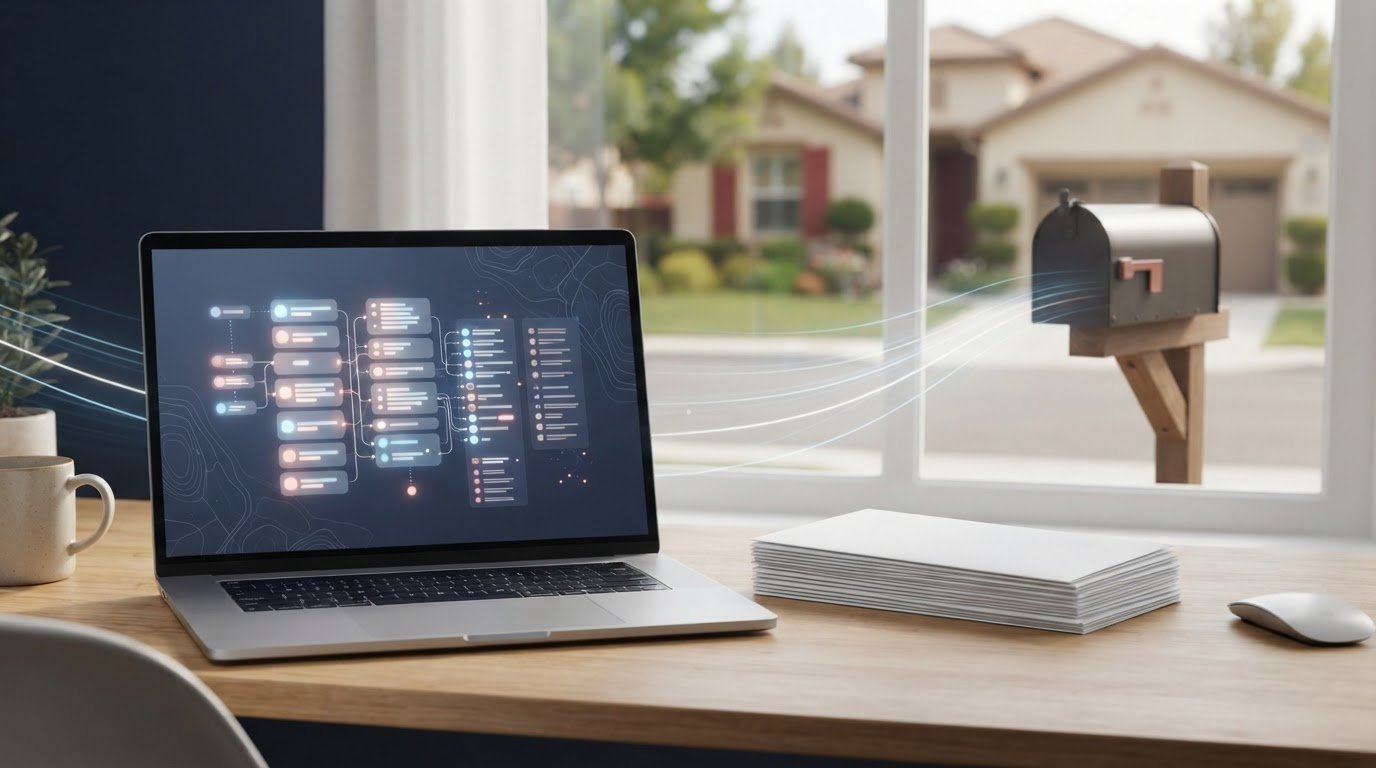
The portal also serves as a secure gateway for direct mail logistics. You can upload encrypted mailing lists directly into the system, ensuring data privacy while automating postal logistics. In 2026, data-driven kitting for multi-wave national campaigns has significantly improved direct mail ROI by allowing for hyper-personalized content delivered with industrial speed. This automation removes the manual friction that often stalls large-scale outreach. To see how these integrated production capabilities can scale your brand, contact the experts at Linemark today.
Implementing Your Brand Management Portal: The Linemark Advantage
Transitioning to a modernized print procurement model requires a partner who understands the intersection of software and physical logistics. Moving from manual, email-based ordering to the MarCom On-Demand framework is a structured evolution. Linemark serves as a strategic communications ally throughout this setup, ensuring your transition is seamless and your team is fully equipped to utilize the new tools. Our industrial authority stems from managing a 90,000-square-foot facility where we handle both the precision of digital printing and the high-volume efficiency of offset production.
Success is measured through tangible metrics rather than vague promises. You’ll track ROI by reducing wasteful inventory and eliminating the “rogue printing” that leads to brand dilution. Real-time analytics provide insights into brand compliance, ensuring that every piece of collateral, including custom business banners, meets your exact specifications. By shortening the time-to-market for national campaigns, your organization remains agile and responsive to local market shifts without the typical administrative friction.
Customizing Your Digital Storefront
The portal experience is fully branded to reflect your internal corporate identity and culture. This customization builds trust among local teams and encourages rapid adoption of the system. We organize the digital asset library for maximum accessibility, making it easy for users to find exactly what they need within seconds. A successful portal implementation is a holistic journey that transforms your organizational workflow into a streamlined production engine.
Scalability for the Future
Your brand management needs will evolve as your organization expands into new territories. Whether you’re managing 10 locations or growing to 1,000 national sites, the system scales with you without requiring additional corporate overhead. Our commitment to continuous innovation ensures you have access to the latest production capabilities for 2026 and beyond. This includes predictive inventory tools that prevent stock-outs of essential items like custom business banners and direct mail assets, keeping your marketing engine running at peak performance.
Experience the Power of MarCom On-Demand with Linemark
Securing Your Brand’s Future in a Distributed Market
Linemark provides the industrial muscle to turn this digital vision into physical reality. With over 30 years of commercial print expertise and a 90,000-square-foot high-capacity facility, we ensure that every piece, from complex direct mail to custom business banners, meets the highest standards of precision. Our integrated MarCom On-Demand technology bridges the gap between your marketing team and our production floor, offering a holistic journey that prioritizes your brand’s integrity. It’s time to move beyond transactional printing and embrace a strategic partnership that grows with you.
Streamline Your Brand Management with Linemark
Take the first step toward a more efficient, compliant, and scalable future for your corporate identity today.
Frequently Asked Questions
What is a brand management portal for print?
A brand management portal for print is an enterprise-grade web-to-print storefront that centralizes all marketing collateral procurement. It acts as a digital bridge between your creative assets and an industrial production facility. This system ensures that every user across your organization accesses the same “single source of truth” for print assets, which eliminates the chaos of managing multiple local vendors and unverified files.
How does a print portal ensure brand consistency across multiple locations?
Consistency is maintained through the use of locked templates that restrict editing to specific, pre-approved areas. While local teams can update contact information or regional offers, the core brand elements like logos, fonts, and colors remain unchangeable. This locking mechanism ensures that high-impact items, such as custom business banners, look identical regardless of which regional office places the order.
Can I integrate my existing Digital Asset Management (DAM) system with a print portal?
Modern print portals are designed to integrate seamlessly with your existing Digital Asset Management (DAM) systems. While a DAM serves as a repository for your high-resolution files, the portal acts as the execution engine that pulls those assets into a production-ready workflow. This integration creates a holistic journey from asset creation to physical fulfillment, removing the need for manual file transfers between disconnected systems.
Is a brand management portal cost-effective for mid-sized national companies?
These portals are highly cost-effective for mid-sized national companies because they eliminate “rogue printing” and reduce wasteful inventory spending. By consolidating your print volume into a single strategic partnership, you gain access to industrial-scale pricing and offset quality that local shops can’t match. Real-time budget tracking and automated reorder points also prevent the accumulation of obsolete materials that drain marketing budgets.
What types of materials can be managed through a corporate print portal?
You can manage an extensive range of materials, including commercial print collateral, large-format graphics, and personalized direct mail. The system is robust enough to handle everything from standard brochures and catalogs to specialized custom business banners and window graphics. This versatility makes the portal a centralized destination for all physical marketing needs, ensuring quality across diverse production scales.
Does a brand management portal handle fulfillment and nationwide shipping?
An enterprise-grade portal like MarCom On-Demand includes integrated kitting and fulfillment services backed by a national distribution network. Orders are automatically routed to a 90,000-square-foot high-capacity production facility where they’re printed, kitted, and shipped directly to their final destination. This direct link between the order button and the shipping dock ensures rapid, predictable delivery for time-sensitive national campaigns.
How long does it take to set up a custom MarCom On-Demand portal?
The implementation timeline for a custom MarCom On-Demand portal typically spans several weeks, depending on the complexity of your asset library and approval workflows. This structured process involves a strategic communications ally who helps you brand the storefront, set up user permissions, and configure dynamic templates. This meticulous attention to detail during the setup phase ensures the system is fully optimized for your specific organizational culture.
Can I use a portal for variable data printing and complex direct mail?
The portal is specifically engineered to handle Variable Data Printing (VDP) and complex direct mail logistics. You can upload secure mailing lists directly into the system to automate personalized messaging for multi-wave national campaigns. This capability allows you to leverage sophisticated data-driven strategies that significantly improve ROI while maintaining total corporate oversight of the mailing process.