


 11/26/2026
 Steve Bearden
The best way to make direct mail feel less like junk mail is to send it only to people who have a reason to receive it. For businesses, avoiding the look of junk mail starts with honoring opt-outs, using suppression lists, and matching offers to the people they can serve.
If unwanted mail is piling up, look for ways to stop it at the source. Physical mail doesn’t pass through email spam filters, but irrelevant or repeated pieces can still feel like clutter. This guide explains how to request removal from mailing lists, opt out of prescreened credit offers, and understand when those choices may take effect.
It also covers the sender’s role: how selecting a relevant audience and using suppression lists carefully can make direct mail more useful and less likely to be dismissed as junk.
Key Takeaways
- Start by identifying which senders and types of mail you want to stop, then use the opt-out route that fits each one.
- A direct request to a company can help remove your address from its mailing list; make the request clear and allow time for changes to take effect.
- For business mail, relevant audience selection and suppression lists help keep campaigns focused on recipients who may value them.
- You can block prescreened credit and insurance offers online for five years, or choose a permanent opt-out by mail.
1. Why Stop Junk Mail?
Unwanted catalogs, coupon mailers, and promotional emails may keep coming unless you track the senders and submit clear opt-out requests. For households, avoiding the look of junk mail starts with a simple routine: note each sender, unsubscribe, then review later mail to see whether the name still appears. A retailer’s catalog and a coupon circular are separate mailings, so one request may not stop both. Record the company name and mailing address on each piece to make your request specific.
CatalogChoice is free to use for submitting unsubscribe requests for catalogs and coupon mailers. Enter your name and address exactly as they appear on the mail, including misspellings or unusual formatting. This helps identify the record the sender may have on file. Keep a short list of your requests and revisit it when new catalogs arrive. If the same sender continues mailing, use the contact information on the piece to make a direct request.
Apps and online opt-out tools can help organize requests to different senders. Use each service’s interface to submit a request, and review what personal information it asks you to provide before proceeding. Keep a record of the sender and submission date, whether you used an app or a web form. For email, open a message from the sender and look near the bottom for its unsubscribe link. Use that option for expected marketing messages, not suspicious spam.
A visible unsubscribe link gives subscribers a clear way to stop commercial messages. The European Union identifies Article 5 of the GDPR as addressing lawfulness, fairness, and transparency. For a message that appears to come from a familiar business, follow its unsubscribe link and confirm only the request. Don’t reply to suspicious spam or click its links, since that can signal an active address. Mark questionable messages as spam through your email provider instead, then review your inbox for further messages from the same sender.
2. Calling companies to request removal from mailing lists
A direct request can remove your address from a company’s mailing list. Use the phone number or mailing address printed on a catalog, coupon mailer, or promotional letter. Tell the representative you want your name and address removed from marketing mailings. If you want to keep account notices but stop promotions, make that distinction clear during the call.
Before contacting a company, have the mailpiece nearby. Read your name and address as printed, including middle initials, apartment details, or misspellings. Provide the company name and any relevant customer or account identifier shown on the piece. Ask which mailing lists the request covers and whether it also applies to catalogs, offers, or mail sent under a related brand. Keep the request focused on the material you don’t want.
Write down the date, department or representative, and specific request. This record makes it easier to follow up if the same catalog or offer arrives again. If the company provides a confirmation number, save it with your notes. Mail may continue to arrive for several weeks while a request takes effect, so track new pieces rather than submitting duplicate requests right away.
DMAChoice can help with marketing lists from companies you haven’t done business with. Registration doesn’t affect mail from companies whose services you’ve used or organizations you’ve shared information with. Contact those senders directly because their lists require separate requests. For a deceased family member, a deceased do not contact list can help reduce mail addressed to them. Keep the person’s name and address consistent with the mail, then monitor new arrivals to identify senders that may need individual follow-up.
Consumer advocates recommend contacting organizations directly to remove an address from mailing lists or reduce the amount of mail they send. One commenter reports removing their name from 26 mailing lists, while another says catalogs resumed arriving 6 months after companies removed them from mailing lists, so continue monitoring mail and contact senders again if needed.
3. Direct-mail opt-out and suppression lists
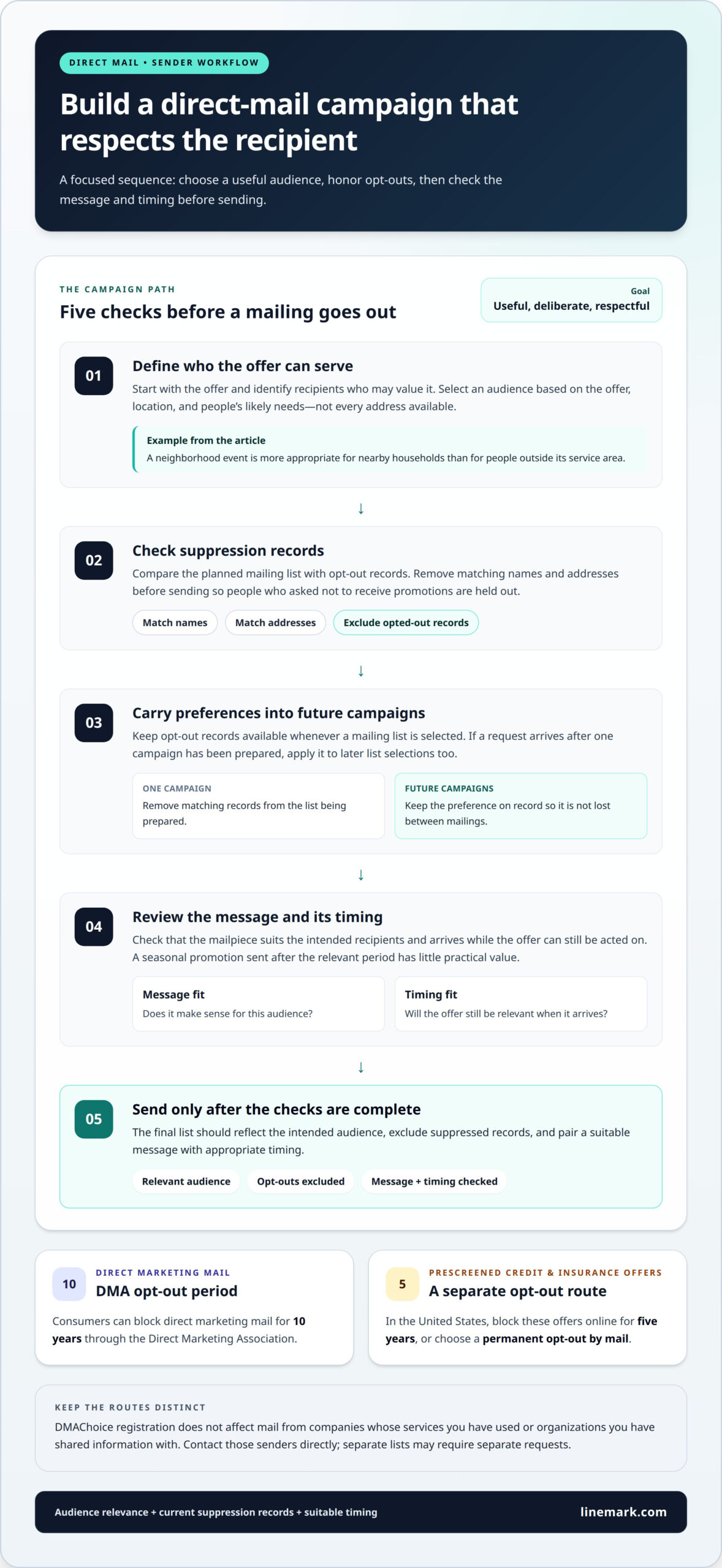
A suppression list helps direct-mail senders exclude people who have asked not to receive promotional mail. It records mailing details to hold out when preparing an audience. For example, a campaign team can compare its planned list with opt-out records and remove matching names and addresses before sending. This helps prevent someone who opted out from receiving another promotion from that sender.
Consumers can block direct marketing mail for 10 years through the Direct Marketing Association. A suppression process also matters for businesses sending campaigns: opt-out records need to be available when each mailing list is selected. If a person requests removal after one campaign is prepared, the sender should apply the request to later list selections too. A current record helps keep the preference from being lost between campaigns.
Relevance is the other part of a focused mailing. Businesses can limit local offers to customers in the area where they can use them. A neighborhood event, for instance, is more appropriate for nearby households than for recipients outside its service area. Audience selection should reflect the offer, location, and recipient’s likely needs, rather than sending the same piece to every available address. For regional flyer campaigns, distribution specialists like leafletprouk.com use GPS tracking to ensure materials reach the exact local neighborhoods intended.
Timing also affects whether a mailpiece feels useful or intrusive. Campaign planners should consider recipients’ schedules and whether the message arrives while its offer can still be acted on. A seasonal promotion sent after the relevant period has little practical value. Before sending, review the audience, remove suppressed records, and confirm that the message and timing suit the intended recipients. These steps help avoid the look of junk mail by making each mailing more deliberate, relevant, and respectful of opt-out preferences.
4. Opting out of credit card offers
Prescreened credit and insurance offers have a separate opt-out process from ordinary catalogs. In the United States, you can block these offers online for five years. To opt out permanently, submit a request by mail. These choices apply to prescreened offers, so they won’t stop every kind of promotional mail from banks or other companies.
OptOutPrescreen is the service for managing prescreened credit and insurance offers from Equifax, Experian, Innovis, and TransUnion. Use its online process to request a five-year block. If you want the permanent option, follow the mailing instructions provided through the service. It also accepts opt-out requests by phone at 1-888-567-8688.
Choose the method that matches how long you want the block to last. The online request covers five years, while a mailed request can make the opt-out permanent. Note the method you used and the date you submitted the request. This can help you distinguish a new offer from one already in circulation when you opted out.
If a prescreened offer arrives after you submitted an online request, first identify whether it’s a credit or insurance offer. Compare its arrival date with your request record, then use OptOutPrescreen to submit or renew a request if needed. Other marketing mail from a bank may require a separate request directly to the company, because prescreened-offer opt-outs cover a specific category of solicitation.
For businesses, this distinction matters when planning audience selection. A consumer’s prescreened-offer preference is different from a sender’s suppression list for its own campaign. Keep those processes separate, and use a targeted mail campaign to focus communications on relevant audiences.
Consumers can permanently opt out of credit card and other credit-related offers through OptOutPrescreen. In the United States, a letter can be sent to permanently block prescreened credit and insurance offers. Consumers can also opt out of those offers by calling 1-888-567-8688. Information provided on warranty cards, credit card applications, refinance applications, or other forms may be gathered and used for solicitation purposes, which is allowed. Third-party spam filtering services or software may offer advanced spam detection and prevention features.
Linemark: Direct Mail
Linemark helps organizations turn direct mail into focused communication for the audiences they want to reach. When planning a campaign, consider how the message, recipient selection, and timing shape whether a piece feels useful or irrelevant. A clear audience strategy can align each mailing with recipients who may value the offer, while opt-out preferences should guide list selection.
Bring your campaign goals, audience information, and key message together before production. Linemark’s direct mail capabilities support personalized, data-driven communications, and its commercial printing services can support other campaign materials. This is a practical next step for organizations coordinating production around a defined mailing objective. Contact Linemark to discuss a direct mail project.
Make Your Next Mailing More Intentional
Each campaign is an opportunity to earn attention through relevance, not volume. For organizations planning print communications, align the audience, message, and format before production begins. This makes avoiding the look of junk mail part of the campaign plan, not an afterthought.
Linemark offers Direct Mail, Custom Book Printing, and Large Format Graphics for different communication goals. A targeted mailing can deliver a focused offer, while a printed book or large-format graphic serves a different purpose. Choose the format that fits what recipients need to know, and keep mailing preferences central to audience planning.
When you’re ready to shape a direct mail project, contact Linemark about direct mail. A clear audience and a relevant message give your next communication a stronger place to start.
Frequently Asked Questions
Are There Other Ways to Avoid Spam Filters?
Yes. For email, use your provider’s built-in spam filter and mark unwanted messages as spam so similar messages can be recognized. Avoid posting your email address publicly, such as on forums, and consider using a separate address for subscriptions. These steps apply to email, not physical mail: postal campaigns rely on mailing preferences and audience selection, not inbox filters.
Why Stop Junk Mail?
Reducing unwanted mail can mean less material to sort and discard. The average person in the United States receives 16 pieces of junk mail each week, so even a few successful opt-outs can reduce the stream arriving at home. It can also help distinguish useful notices from promotions. Start by tracking which senders still appear, then focus removal requests on the mail you don’t want.