


 11/24/2026
 Steve Bearden
A message can be seen and forgotten; a physical experience gives it another way to register. The psychology of tangible marketing explores how touchable materials and concrete language shape attention, understanding, and memory. Marketing psychology applies psychological principles to how people respond to marketing and make decisions.
It may seem intuitive that something concrete is easier to notice and recall than an abstract promise. But physical formats work best when the message is clear and relevant, not simply because it is printed or tactile.
This article explains the psychological factors behind consumer responses, why concrete language can make ideas more memorable, and how tangible materials can support a connected marketing experience. You’ll see where print and physical touchpoints can reinforce a message, and how to consider their role alongside digital channels.
Key Takeaways
- Marketing psychology helps explain how motivation, perception, learning, and beliefs shape consumer decisions.
- Clear, reassuring messages after a purchase can ease second-guessing and support customer confidence.
- Use concrete language and tangible materials to make ideas easier to picture, engage with, and remember.
- Combine physical touchpoints with digital channels so each reinforces the same message and supports the next customer action.
What Is Marketing Psychology?
Marketing psychology examines how human behavior shapes responses to campaigns and purchase decisions. It helps marketers develop messages that influence action without making choices harder.
The psychology of tangible marketing connects these decisions to physical experiences, but the underlying principles also apply to digital messages. Motivation, perception, learning, and beliefs can affect how audiences interpret an offer. A clear example, such as explaining what a product does and who it helps, makes the message easier to evaluate.
After buying, a customer may experience cognitive dissonance: tension between the purchase and doubts about whether it was the right choice. Post-purchase reassurance can address that tension. For example, a follow-up message can recap the benefits the buyer selected and explain the next steps. This connects the original decision with a useful experience instead of introducing another sales pitch.
Easier Purchase Decisions
Action paralysis occurs when uncertainty or too many choices make it difficult to decide. A customer who cannot identify the next step may delay or abandon a purchase. Marketing can reduce friction by presenting a focused set of options, clear terms, and a direct action. For example, a campaign can explain the difference between two plans before asking someone to choose.
Neuropsychology in Purchasing
Neuropsychology considers how brain processes and emotional responses shape purchasing decisions. It matters because people respond to more than product facts: a message’s words, images, and context can influence attention and interpretation. A product description that names a practical use gives the audience something specific to imagine. Similarly, a consistent message across an advertisement and follow-up can help people process the offer.
Scarcity messaging draws attention to limited access, while purchase limits can shape perceived availability. A U.S. grocery-store example set a limit of 12 soup cans per customer, and sales per customer doubled. Limits can influence action, but the message should accurately describe the offer. An artificial deadline can undermine trust when customers discover it isn’t genuine.
For U.S. direct-mail campaigns, privacy considerations depend on how personal data is collected and used. Keep data use relevant to the campaign and give recipients a clear way to opt out.
Tangible campaigns can create waste when materials are unwanted, outdated, or printed in excess. Estimate the intended audience and keep the message current to reduce unused pieces.
What psychological factors influence consumer behavior?
Consumer decisions reflect more than product features. Motivation, personal values, habits, and beliefs shape how people interpret an offer. Psychographics groups characteristics such as interests, goals, desires, and lifestyle choices. For example, a campaign for a practical everyday product can emphasize convenience, while one for a cause-related offer may focus on shared values. The message works best when it connects with what the intended audience cares about.
Social influence can also affect behavior. Reviews, ratings, testimonials, and endorsements provide cues that help consumers assess trust. Social proof applies the same principle by showing that other people engage with a brand or campaign. A marketer can use a customer testimonial to show how a product fits a real situation, then make the next action clear. This gives consumers a relevant example, not just a broad claim.
Memory and perception shape what audiences notice and remember. Priming uses visual or emotional cues to influence how people interpret what follows. Color, imagery, and the context around a product can set expectations before someone reads the details. Daniel Kahneman’s work describes loss aversion: people strongly resist losing what they already have. A message can frame a genuine benefit that someone might miss, but it should explain the offer plainly rather than manufacture urgency.
Digital marketing can engage consumers through reviews, targeted messages, and interactive content. Physical and digital channels can also work together: a direct-mail piece can introduce an offer, while a digital follow-up provides more detail. Research comparing direct mail with digital ads needs to account for the audience, creative, offer, and outcome being measured. There is no single comparison here that establishes one channel as universally more effective.
For a useful comparison, keep the audience and offer consistent, then assess a defined outcome such as responses or conversions. Direct-mail campaigns can provide a physical touchpoint that supports a coordinated digital message.
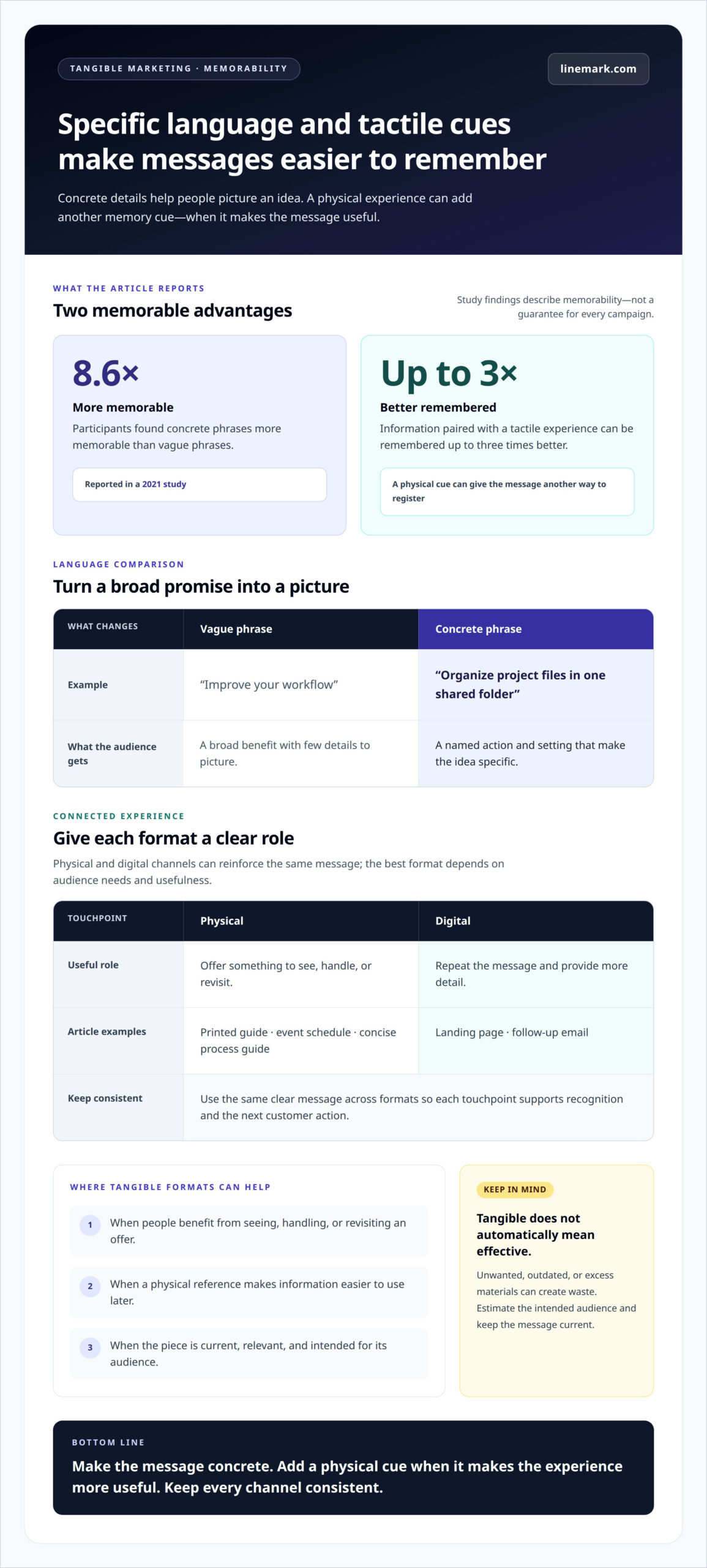
Concrete, tangible marketing language and memorability
Concrete language gives audiences details they can picture, rather than broad promises. In a 2021 study, participants found concrete phrases 8.6 times more memorable than vague phrases. Compare “improve your workflow” with “organize project files in one shared folder.” The second example names an action and a setting, helping the message feel specific. This approach applies psychological principles to marketing strategies by making an idea easier to understand and remember.
Physical experiences can add another memory cue. Information paired with a tactile experience can be remembered up to three times better. A printed guide, for example, gives someone a physical reference to revisit after a presentation. Tangible formats can also carry concise, concrete language, while digital marketing can repeat the same message through a landing page or follow-up email. Consistency supports recognition, and relevant details make the message useful.
Businesses can use tangible campaigns when audiences benefit from seeing, handling, or revisiting an offer. For example, an event organizer might distribute a printed schedule, while a service business could share a concise guide explaining its process. The advantage depends on audience needs and whether a physical piece makes the message more useful.
Measure ROI by connecting each campaign asset to a trackable response. Use an asset-specific QR code or promotional code, then compare scans, visits, inquiries, or purchases with campaign costs. For example, separate codes on two versions can show which message prompted more responses. These measures clarify performance, although the outcome depends on the campaign’s goal.
Design a campaign around one audience, one message, and one desired action. Then test a defined variation, such as changing the image, wording, or QR code. A/B testing printed materials can reveal which version earns more engagement. Keep the offer and audience consistent between versions so the comparison is useful. Apply the stronger-performing approach in the next campaign, then continue learning from response data.
What is tangible marketing and how does it differ from digital marketing?
Tangible marketing uses physical materials to carry a brand message into someone’s environment. A postcard, printed guide, catalog, or event banner can be held, displayed, and revisited after the first encounter. Digital marketing delivers messages through screens, such as an email, online advertisement, or landing page. The difference is the medium, not the underlying goal: both aim to inform, engage, or prompt an action.
A printed guide gives readers a fixed reference they can keep beside a product or share with a colleague. A landing page can link directly to forms, videos, and updated details. These formats support different behavior. Someone reviewing a printed catalog may browse at their own pace, while a digital ad can lead straight to a specific online action. The format should match the moment and the information the audience needs.
Physical materials can occupy a real setting. A banner at a conference identifies a booth, while a printed program helps attendees follow the day’s schedule. Digital messages can reach people across locations and adapt as campaign details change. Each has tradeoffs: printed pieces need production and distribution, while digital messages compete for attention on crowded screens. A useful strategy assigns each channel a clear role instead of treating them as interchangeable.
For example, a conference campaign might use a printed booklet to explain key ideas and a digital page to host extended resources. The booklet works during the event; the page remains accessible afterward. Consistent wording and design help audiences recognize that both touchpoints belong to the same campaign. A QR code can bridge the formats by taking readers from a physical piece to a relevant online resource.
Choose the physical format based on where people will encounter it and what they need to do next. A short postcard suits a concise announcement; a booklet can organize detailed information. Plan a tangible marketing campaign around the audience, setting, and message you need to deliver.
Linemark
Linemark helps organizations turn marketing ideas into physical materials that support a clear, consistent message. When a campaign needs a lasting reference, Custom Book Printing can provide a format for detailed content. Direct Mail provides a physical way to put a campaign message in front of its intended audience, while Large Format Graphics can bring it into a shared environment. Commercial Printing supports other printed campaign materials.
For a coordinated approach, align the audience, message, format, and intended response before production. Linemark combines commercial printing and communications expertise with data-driven strategies to create personalized, on-demand materials. This can help when a campaign needs tangible touchpoints to complement digital engagement, reinforce information, or prompt a specific next step.
Contact Linemark to discuss how printed materials can support your marketing goals.
Put tangible marketing to work
The next opportunity is to make each physical touchpoint purposeful. Start with one audience need, then shape a message and format that help meet it. The psychology of tangible marketing offers a useful lens for planning those choices, but campaign success still depends on relevance: a well-produced piece matters when it gives people a clear reason to engage.
Consider where a lasting reference, a mailed message, or a visible presence could support your audience’s next step. Linemark offers Custom Book Printing, Direct Mail, and Large Format Graphics to bring campaign ideas into physical form. The right format depends on the material, audience, and role it needs to play alongside other channels.
Ready to plan a tangible touchpoint for your marketing? Discuss your project with Linemark and take the next step with a clear, audience-focused plan.
Frequently Asked Questions
What Is Print’s Role in Multichannel Marketing?
Print can provide a physical entry point to a campaign, while digital channels carry related details and follow-up. For example, an annual report mailed to stakeholders can be paired with an email that points to downloadable materials. Keep the central message consistent, but give each channel a distinct purpose: the printed piece can establish context, and the digital touchpoint can make further information easy to access.
What are some important behavioral characteristics in marketing?
Useful consumer characteristics include purchasing habits, product usage, brand interactions, and responses to previous campaigns. These behavioral signals can help distinguish a first-time buyer from a repeat customer, for example. Demographics describe characteristics such as age or income, while psychographics cover interests, values, and lifestyle. Combining these perspectives can help shape audience segments and tailor messages to the decisions people are making.
What psychological principles explain why physical marketing materials influence consumers?
Reciprocity, priming, loss aversion, and social proof help explain how marketing can shape responses. Reciprocity describes a willingness to give after receiving value, while priming uses cues to influence interpretation. Loss aversion focuses on what someone might miss, and social proof signals that others participate. A useful campaign applies these principles transparently, such as offering a helpful guide without disguising the terms of an offer.
How do tangible marketing materials affect memory, attention, and brand recall?
A physical item can create a distinct interaction compared with another screen-based message. Its format, placement, and usefulness help determine whether someone notices and revisits it. For example, a well-organized reference booklet kept near a workstation may prompt repeated exposure to its brand and message. Distinctive design supports recognition, while a clear connection between the item and the audience’s needs gives it a reason to remain accessible.
How does the feel, weight, texture, or quality of a marketing item influence brand perception?
Material choices shape the sensory impression of a printed piece and can influence how its message is received. A sturdy folder may feel appropriate for documents someone needs to keep, while a lightweight handout may suit a brief event reminder. These cues should fit the content and audience. If the finish feels inconsistent with the promise or purpose, it can distract from the information instead of reinforcing it.
How do reciprocity and ownership feelings affect responses to branded merchandise or samples?
Reciprocity can encourage goodwill when a useful item arrives before a request, a principle studied by Robert Cialdini. A sense of ownership may also make people value an item they have received or tried. For example, a product sample lets someone experience its practical use before deciding whether it fits their needs. Keep the gift relevant and the follow-up respectful so appreciation does not feel like an obligation.