

 09/04/2026
  Steve Bearden
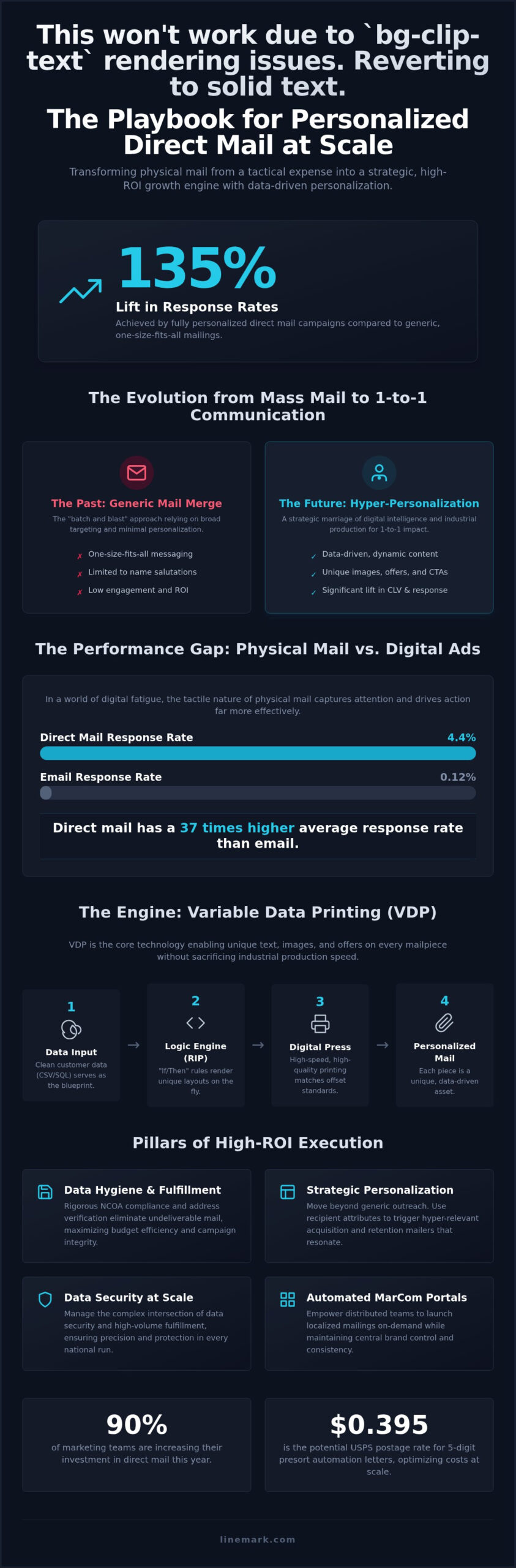
Did you know that fully personalized direct mail campaigns can lift response rates by 135% compared to generic mailings? While the physical mailbox remains a high-impact channel, the gap between a basic postcard and a data-driven masterpiece is widening. Most enterprise leaders recognize that “one size fits all” is a relic of the past, yet the transition to sophisticated, national-scale personalization often feels daunting. Fragmented workflows between data sets and fulfillment centers can stall innovation before it ever reaches the production floor.
We understand the pressure of managing complex logistics while demanding boutique-level precision. This guide offers a comprehensive roadmap to mastering the industrial-scale technology and data strategies necessary for high-ROI execution in 2026. You’ll learn how to leverage Variable Data Printing and automated MarCom portals to eliminate manual friction. We’ll explore everything from current USPS postage optimizations, like the $0.395 rate for 5-digit presort automation letters, to the security protocols that keep your customer data safe during high-volume runs. Our goal is to transform your direct mail from a tactical expense into a scalable, strategic growth engine.
Key Takeaways
- Understand how Variable Data Printing (VDP) allows for individualized content on every piece without impacting industrial production speeds.
- Protect the integrity of your personalized direct mail campaigns through rigorous data hygiene and NCOA compliance to eliminate undeliverable mail.
- Shift your strategy from generic outreach to hyper-personalized acquisition and retention mailers that utilize specific recipient attributes.
- Empower distributed teams to launch localized mailings while maintaining brand control using centralized MarCom On-Demand portals.
- Learn to manage the complex intersection of data security and high-volume fulfillment to ensure precision in every national run.
What Are Personalized Direct Mail Campaigns in 2026?
In 2026, personalized direct mail campaigns are defined by a seamless marriage of digital intelligence and industrial production. This isn’t the “batch and blast” approach of previous decades, which relied on broad neighborhood targeting and generic messaging. Instead, it represents a shift toward data-driven physical communications tailored to individual recipient attributes. Every mailer is treated as a unique asset, generated through Variable Data Printing (VDP) technology that allows for 1-to-1 hyper-personalization at a national scale. By bridging the gap between online behavior and offline impact, enterprises can trigger physical mail based on digital signals like abandoned carts or specific website interactions. This concept of mass customization has become the new standard for organizations that value precision over volume. It allows a high-capacity operation to maintain the meticulous attention to detail usually reserved for small-scale boutique projects.
The Shift from Mail Merge to Hyper-Personalization
Changing a name in a salutation is no longer enough to capture attention in a sophisticated market. Modern campaigns utilize complex versioning where images, specific offers, and calls-to-action change dynamically based on a recipient’s purchase history or demographic profile. If a customer recently bought a high-end camera, their next catalog shouldn’t just have their name on it. It should feature lenses and accessories tailored specifically to that camera model. Modern personalized mail is a strategic extension of a CRM, turning raw data into a tangible touchpoint that feels curated rather than automated. This level of relevance is why 90% of marketing teams are increasing their investment in direct mail this year.
Why Physical Mail Outperforms Digital in an Ad-Saturated World
Digital fatigue is a measurable reality for the modern consumer. With inboxes overflowing and ad-blockers rising, the tactile advantage of high-quality print materials provides a sensory experience that pixels can’t replicate. Physical mail has significantly higher recall rates because it occupies a permanent space in the home or office. Research shows the average response rate for direct mail is 4.4%, which is 37 times higher than email’s average of 0.12%. When you combine this physical presence with data-driven relevance, you see a direct lift in Customer Lifetime Value (CLV). Personalized pieces demonstrate that a brand understands the individual. This builds a level of trust and authenticity that often evaporates in the high-speed world of digital advertising. It’s a transformative catalyst for growth that turns a simple mailing into a long-term relationship.
The Technology of Personalization: Variable Data Printing (VDP)
Execution of high-ROI personalized direct mail campaigns depends on more than just a creative brief; it requires an industrial-grade technological engine. At the heart of this process is Variable Data Printing (VDP), a method that allows for unique text, images, and offers on every single piece without reducing press speeds. Unlike traditional methods that require stopping the machine to change plates, modern digital presses utilize a Raster Image Processor (RIP). The RIP handles complex data files in real-time, rendering individual pages on the fly. This ensures that a run of 100,000 postcards moves as efficiently as a run of 100. High-speed digital presses now match the quality of traditional offset printing, providing the vibrant colors and crisp details necessary for premium brand standards.
Success in the design phase relies on logic-based rules, often referred to as if/then statements. These rules dictate how the layout adapts to the data. For instance, if a recipient is a “Platinum Member,” the press might automatically pull a high-resolution image of a luxury lounge. If they’re “Silver,” it swaps to a different asset. This technological backbone is what allows personalized direct mail campaigns to compete with the speed and relevance of digital ads while maintaining a physical presence.
How Data Communicates with the Press
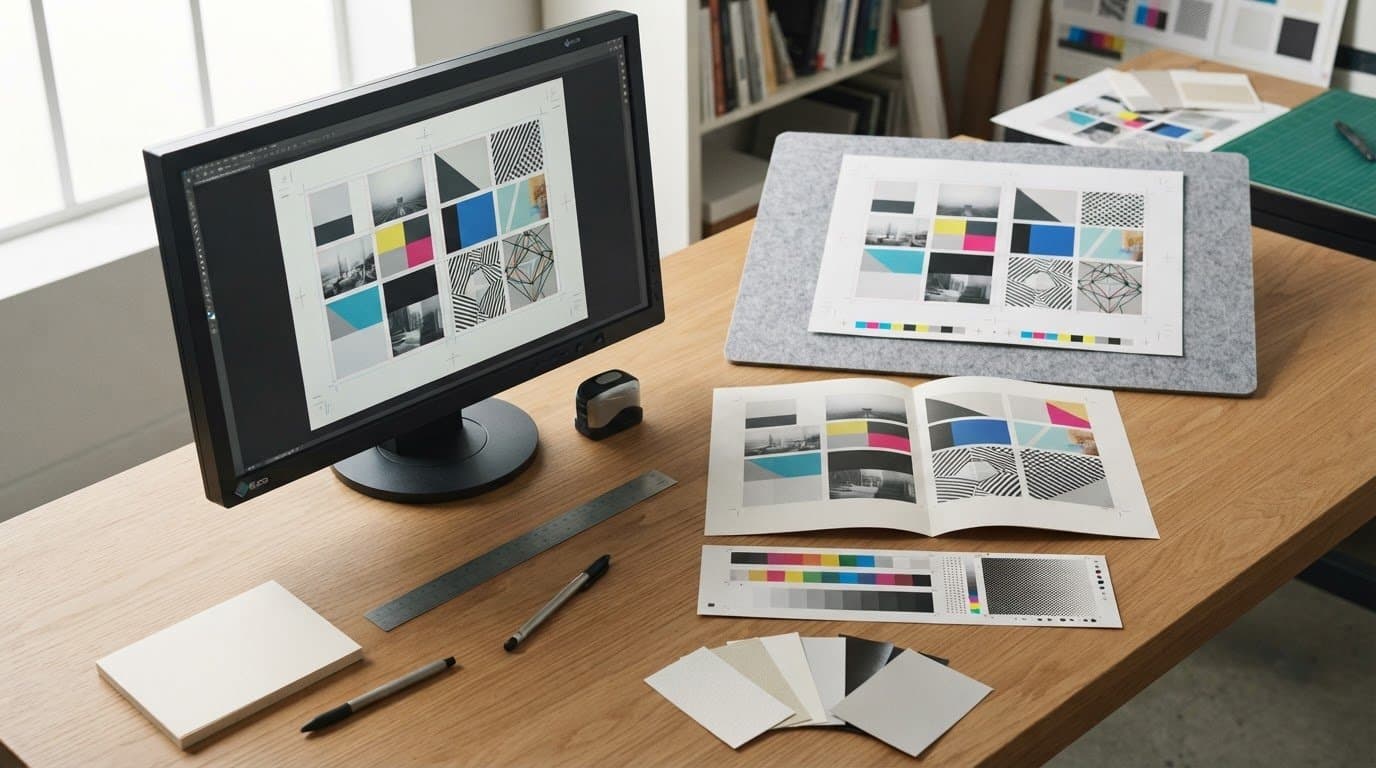
The journey from a digital database to a physical mailpiece starts with a clean CSV or SQL data stream. This data acts as the conductor for the press, signaling which variable image assets to pull for each record. To maintain visual integrity, all variable images must be high-resolution and pre-optimized for the specific substrate. Before the full run begins, we use a soft proofing process. This allows us to verify variable fields across thousands of records digitally, ensuring that every “if/then” rule triggers correctly and that no data overflows its designated space.
Scaling VDP for National Campaigns
Managing high-volume personalization requires significant operational breadth. Operating within a 90,000-square-foot facility provides the necessary space for high-capacity digital presses and the logistics of national distribution. For projects where cost efficiency is paramount, we often utilize hybrid workflows. This involves printing static “shells” on an offset press for speed and then running them through a digital press for the variable data overlays. Partnering with a variable data printing expert is essential for managing the complex data mapping required for these integrated runs. This collaborative approach ensures that even the largest campaigns retain the meticulous attention to detail of a boutique project.
Strategic Use Cases for High-Impact Personalization
High-impact personalized direct mail campaigns succeed by aligning specific messaging with the recipient’s current stage in the customer journey. For acquisition, this involves utilizing demographic data to send tailored offers to prospective customers who match your ideal buyer profile. Instead of a general greeting, an acquisition piece might feature imagery of a local landscape or products relevant to the recipient’s specific household income or interests. Retention strategies focus on deepening existing relationships through anniversary or loyalty mailers. These pieces reference specific past interactions, such as “It’s been one year since your last upgrade,” which can lift response rates by 33% compared to generic mailings. Additionally, transactional mail like invoices and statements can be transformed into marketing opportunities. This “Transpromo” approach utilizes the high open rates of essential documents to deliver personalized cross-sell offers directly on the statement page.
Maximizing ROI with Targeted Direct Mail
When scaling direct mail strategies for national segments, precision becomes even more critical to prevent wasted postage. For high-value B2B outreach, the use of “lumpy mail” or dimensional mailers provides a tactile experience that stands out in a crowded corporate office. These physical packages often include personalized inserts or custom-bound guides that demonstrate a deep understanding of the prospect’s specific business challenges. To bridge the gap between offline and online channels, we integrate personalized QR codes, also known as PURLs. These codes allow for real-time tracking of conversions and provide a seamless transition from a physical mailpiece to a custom landing page. This integrated approach ensures every dollar spent on personalized direct mail campaigns is measurable and optimized for the highest possible return.
Personalized Custom Books and Manuals
The application of Variable Data Printing extends beyond postcards and letters into complex document production. Professional custom book printing leverages variable data to create personalized covers or localized content within training manuals and catalogs. For national franchise operations, this means training materials can be printed on-demand with site-specific protocols or regional compliance data. This eliminates the need for massive print runs that lead to inventory waste and obsolete materials. By producing these materials as needed, organizations maintain agility and ensure that every manual is up-to-date. This on-demand model transforms catalogs into highly relevant sales tools tailored to a recipient’s specific interests or past purchase behavior, significantly increasing the likelihood of a conversion.
Data Hygiene and Fulfillment: The Backbone of Scale
Data hygiene is the unsung hero of successful personalized direct mail campaigns. Without a rigorous cleaning process, even the most creative variable data strategy can fail due to embarrassing “Dear [Null]” errors or incorrect address mapping. Maintaining NCOA (National Change of Address) compliance is mandatory for any enterprise mailing. It ensures your message reaches the intended recipient and helps you avoid the costs of undeliverable mail. By verifying addresses against the latest USPS data, you minimize wasted postage and maximize your campaign’s reach. This precision is especially important when you’re managing thousands of records across a national footprint.
Fulfillment at scale involves more than just putting paper in envelopes. Kitting and assembly require the precise physical insertion of personalized components into complex, multi-piece packages. For example, a loyalty mailer might include a personalized letter, a custom brochure, and a variable-data postcard, all unique to one recipient. Managing these moving parts across a 90,000-square-foot facility ensures that every recipient receives the exact components intended for them. Postage optimization is the final piece of the puzzle. By leveraging national distribution networks and presort automation, you can secure the lowest possible rates, such as the $0.395 commercial automation letter rate for 5-digit presort. To see how we manage these complex logistics, learn more about our integrated fulfillment services.
The Technical Checklist for Data Readiness
Step 1: Deduplicate your records to ensure you aren’t sending multiple pieces to the same household or business. This prevents brand friction and saves significant budget. Step 2: Standardize your data fields. VDP software requires consistent formatting to map variable images and text correctly across every record. Step 3: Securely transfer your data. We use encrypted channels to maintain recipient privacy and comply with enterprise security standards, ensuring your first-party data remains protected throughout the production cycle.
Industrial-Scale Fulfillment Logistics
Our facility utilizes automated sorting and high-speed inserting equipment to process thousands of pieces per hour without sacrificing precision. This automation is essential for maintaining the integrity of personalized direct mail campaigns where every piece is unique. Comprehensive warehousing and inventory management support multi-drop campaigns that roll out over several months, allowing for real-time adjustments to inventory as campaign data evolves. This centralized approach creates a streamlined workflow from the digital database to the physical mailbox. Fulfillment precision is as vital as print quality for campaign success.
Automating Personalization with MarCom On-Demand Portals
For national organizations, the primary challenge of personalized direct mail campaigns isn’t just the data; it’s accessibility for distributed teams. Centralized marketing departments often struggle to support local branches or franchise owners who need tailored materials on a tight schedule. Web-to-print portals serve as a command center, bridging this gap by providing a self-service environment for localized outreach. Through MarCom On-Demand technology, local users access pre-approved templates and personalize specific fields within strict corporate brand guidelines. This ensures that every piece of mail maintains a unified brand voice regardless of where it originates.
This on-demand model improves operational efficiency by allowing for small-batch, high-frequency orders. Instead of printing massive quantities of generic brochures that may become obsolete, teams print only what they need. This eliminates inventory waste and ensures that the most current data and offers are always in the hands of the consumer. Our unified partnership model brings technology, production, and fulfillment under one roof in our 90,000-square-foot facility. This centralized destination eliminates the friction often found between separate vendors, creating a streamlined journey from the initial digital order to the final delivery at the post office.
Empowering Distributed Teams with Centralized Control
Brand integrity is non-negotiable for enterprise-level campaigns. Automated portals include custom approval workflows, ensuring that any localized changes meet corporate standards before hitting the press. These systems handle variable fields for localized contact information, regional imagery, or site-specific pricing with ease. By automating these repetitive tasks, national organizations significantly reduce their time-to-market. What used to take weeks of back-and-forth design revisions now happens in minutes, allowing brands to respond to market shifts with the agility of a boutique shop while maintaining industrial-scale volume.
The Future of Integrated Strategic Communications
The integration of VDP and MarCom portals creates a scalable ecosystem that grows with your organization. As 90% of marketing teams increase their investment in direct mail in 2026, the ability to track and analyze performance becomes paramount. Real-time reporting and analytics within these portals provide insights into which localized variations drive the highest ROI. This data-driven approach allows for the continuous optimization of future mail drops, ensuring your strategic communications remain a catalyst for long-term growth. Discover how Linemark serves as your strategic ally to scale your next personalized campaign.
Scaling Your Strategic Communications for 2026
Mastering the intersection of digital data and physical production is the key to unlocking higher response rates and measurable ROI. We’ve explored how Variable Data Printing and rigorous data hygiene form the foundation of precision at scale. By leveraging centralized MarCom On-Demand portals, your distributed teams can now execute localized outreach without ever sacrificing corporate brand integrity. This integrated approach ensures that every piece of mail is as relevant as a digital ad but with the lasting impact of a tangible asset.
Success in this evolving landscape requires a strategic ally with the infrastructure to handle complexity. With over 30 years of industrial-scale print and logistics expertise and a 90,000-square-foot high-capacity production facility, we ensure your projects move seamlessly from the server to the mailbox. It’s time to transform your marketing from a tactical expense into a transformative growth engine. Partner with Linemark to launch your high-scale personalized direct mail campaign and experience the precision of a boutique shop backed by industrial power. Your data is ready to do more; we’re here to help you deliver it.
Frequently Asked Questions
What is the difference between personalized direct mail and a standard mail merge?
Standard mail merge usually limits you to simple text swaps like names or addresses. Personalized direct mail campaigns use Variable Data Printing to change every element on the page, including full-color images, tailored offers, and unique calls-to-action. This level of customization allows you to create a one-to-one communication experience. It transforms a generic mailing into a strategic asset that reflects the recipient’s specific purchase history or demographic profile.
Does personalizing every piece in a direct mail campaign significantly increase the cost?
While digital setup for personalization requires more data preparation, it often reduces costs associated with traditional plate-based printing. High-speed digital presses eliminate the need for physical plates; this makes short runs or individualized pieces more economical. The true value lies in the response rate. Fully personalized pieces can increase engagement by 135% compared to generic mailings. This makes the cost per acquisition significantly lower over the long term.
What kind of data file is required for a Variable Data Printing (VDP) project?
Variable Data Printing typically requires a structured database file such as a CSV, Excel spreadsheet, or a direct SQL export. The file must include clearly defined headers for each variable field, such as “First_Name” or “Last_Purchase_Category.” Standardizing these fields ensures our VDP software can map the data accurately to the design template. Clean, deduplicated data is essential for maintaining the professional integrity of your high-volume national run.
Can I personalize images and graphics, or just text fields?
You can personalize nearly any element on the piece, including images, graphics, and even entire layout sections. VDP technology allows the press to swap high-resolution image assets in real-time based on the data in your file. For instance, a travel brand could show a beach scene to one recipient and a mountain landscape to another. This visual relevance is a powerful catalyst for capturing attention in an ad-saturated environment.
How do I ensure my customer data is secure when working with a commercial printer?
Protecting your first-party data is a critical component of our industrial-scale operation. We utilize secure, encrypted channels for all data transfers and maintain strict internal protocols to ensure privacy and compliance. Our 90,000-square-foot facility operates with the security standards required for high-volume corporate and non-profit communications. This centralized control prevents the data leaks that often occur when projects are fragmented across multiple smaller service providers or unverified vendors.
What is the best way to track the success of a personalized direct mail campaign?
Tracking is most effective when you bridge the gap between offline mail and online actions. Personalized QR codes and PURLs (Personalized URLs) allow you to monitor exactly who engaged with your mailer in real-time. You can also use match-back analysis, where you compare your mailing list against your sales data during the campaign period. This provides a clear picture of ROI and helps you optimize future personalized direct mail campaigns.
Is personalized direct mail effective for B2B marketing as well as B2C?
Personalized direct mail is exceptionally effective for B2B marketing, particularly within Account-Based Marketing (ABM) strategies. In a B2B context, you can use data to tailor messaging to specific industry pain points or job titles. High-value B2B prospects often respond better to a physical, personalized package than a generic cold email. It demonstrates a level of professional investment that builds trust and sets your organization apart from digital competitors.
How long does it take to produce a high-volume personalized mail run?
Production timelines vary based on the complexity of the data and the total volume of the run. However, our high-capacity facility and digital production workflows are designed for speed and efficiency. Most high-volume personalized runs move from data approval to the post office much faster than traditional offset projects. We leverage over 30 years of logistics expertise to ensure your national campaign hits the mail stream on schedule without sacrificing boutique-level detail.