

 08/25/2026
  Steve Bearden
A blank wall in your facility isn’t just a structural necessity; it’s a high-performance communication platform that often remains underutilized. For many marketing directors and facility managers, the physical environment feels like a liability where complex layouts confuse visitors and inconsistent signage dilutes corporate authority. You’ve likely experienced the frustration of seeing expensive graphics peel or fade because the material specs didn’t match the environment’s demands. Managing a fragmented chain of vendors for design, print, and installation usually creates more friction than it solves.
This guide explores how to leverage environmental graphics as a strategic tool to transform your physical footprint into an immersive brand experience. You’ll discover the technical precision required for industrial-grade production, from navigating 2026 ADA compliance standards to selecting materials that withstand high-traffic wear. We’ll show you how to reduce navigation friction through intelligent wayfinding and unified visual systems that scale. We’re moving beyond simple decor to provide a roadmap for creating durable, professional environments that reflect your brand’s operational excellence and technical authority.
Key Takeaways
- Understand how environmental graphics serve as a critical bridge between architectural design and brand storytelling to enhance the user journey.
- Identify the most effective large-format applications, including wall murals and floor graphics, tailored for the unique demands of corporate and healthcare environments.
- Learn why material selection and rigorous surface adhesion testing are the primary safeguards against peeling, fading, and common installation failures.
- Master the critical transition from digital design to physical industrial production to ensure precision and operational efficiency during the hand-off phase.
- Discover how to maintain a cohesive brand presence across a national portfolio by leveraging a centralized production and distribution partner.
What are Environmental Graphics? Defining the Built Experience
Environmental graphic design (EGD) is the strategic use of visual communication to improve how people interact with and perceive a physical space. It’s much more than placing a logo on a wall. To answer the fundamental question, What are Environmental Graphics?, we must look at how graphics, architecture, and interior design converge to guide, inform, and inspire. While traditional signage focuses on simple identification, this multidisciplinary field creates an immersive environment that communicates a brand’s narrative through every available surface.
To better understand how these visual elements function in a professional setting, watch this helpful overview:
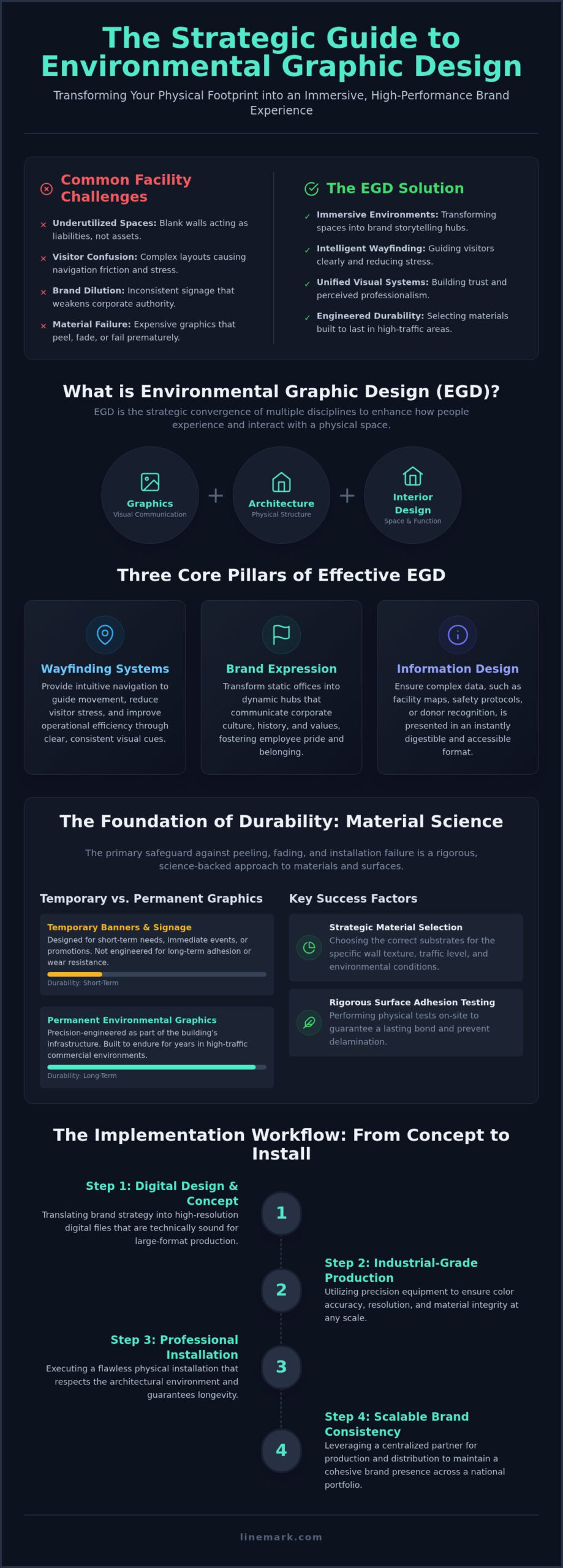
Modern corporations rely on three core pillars of EGD to maintain operational efficiency. Wayfinding systems reduce visitor stress by providing intuitive navigation. Brand expression transforms static offices into dynamic storytelling hubs. Information design ensures that complex data, like safety protocols or facility maps, is instantly digestible. Distinguishing between temporary signage and permanent environmental installations is vital for long-term planning. Temporary banners serve immediate, short-term needs; conversely, permanent environmental graphics are precision-engineered to endure for years as part of the building’s infrastructure.
The Strategic Value of Branded Environments
A well-executed branded environment acts as a silent ambassador for your organization. When visitors enter a facility that utilizes cohesive environmental graphics, they immediately perceive a higher level of corporate authority and professionalism. This visual consistency builds trust before a single word is spoken. For employees, these spaces foster a sense of belonging and pride, which directly impacts retention and daily engagement. Environmental graphic design effectively bridges the gap between a brand’s digital identity and its tangible, physical reality.
Beyond Signage: The Multidisciplinary Approach
In 2026, the industry has shifted away from “applied” graphics that look like an afterthought. Instead, we see a move toward “integrated” designs where visuals interact seamlessly with lighting, acoustics, and architectural textures. Achieving this level of sophistication requires a foundation built on high-quality large format graphics that can scale without losing resolution or impact. This multidisciplinary approach ensures that every wall mural or window film feels like a natural extension of the building itself, rather than a separate layer of decoration.
Types of Environmental Graphic Design (EGD) for Modern Spaces
- Experiential Branding: Visuals that communicate culture and history.
- Regulatory Signage: ADA-compliant and safety-critical messaging.
- Digital Integration: Graphics that interact with or frame digital displays.
- Wayfinding: Navigational cues that guide movement through a space.
By integrating variable data, organizations can personalize these environments at scale. This technology allows for the creation of donor walls, employee recognition displays, or site-specific messaging that can be updated without a full facility overhaul. This level of agility is a hallmark of a modern, tech-savvy approach to production.
Wall Murals and Large-Format Visuals
Architects and designers frequently utilize wall murals to create hero moments in lobbies and common areas. These oversized installations serve as a primary brand touchpoint, demanding industrial-grade production for maximum impact. High-resolution files must be printed on specialized substrates with meticulous paneling to ensure seamless joints across massive surfaces. The scale of these visuals directly influences brand perception; a crisp, perfectly installed mural projects corporate authority and stability. When you prioritize precision in these large-scale applications, you turn a passive architectural element into an active brand asset.
Wayfinding Systems and Directional Signage
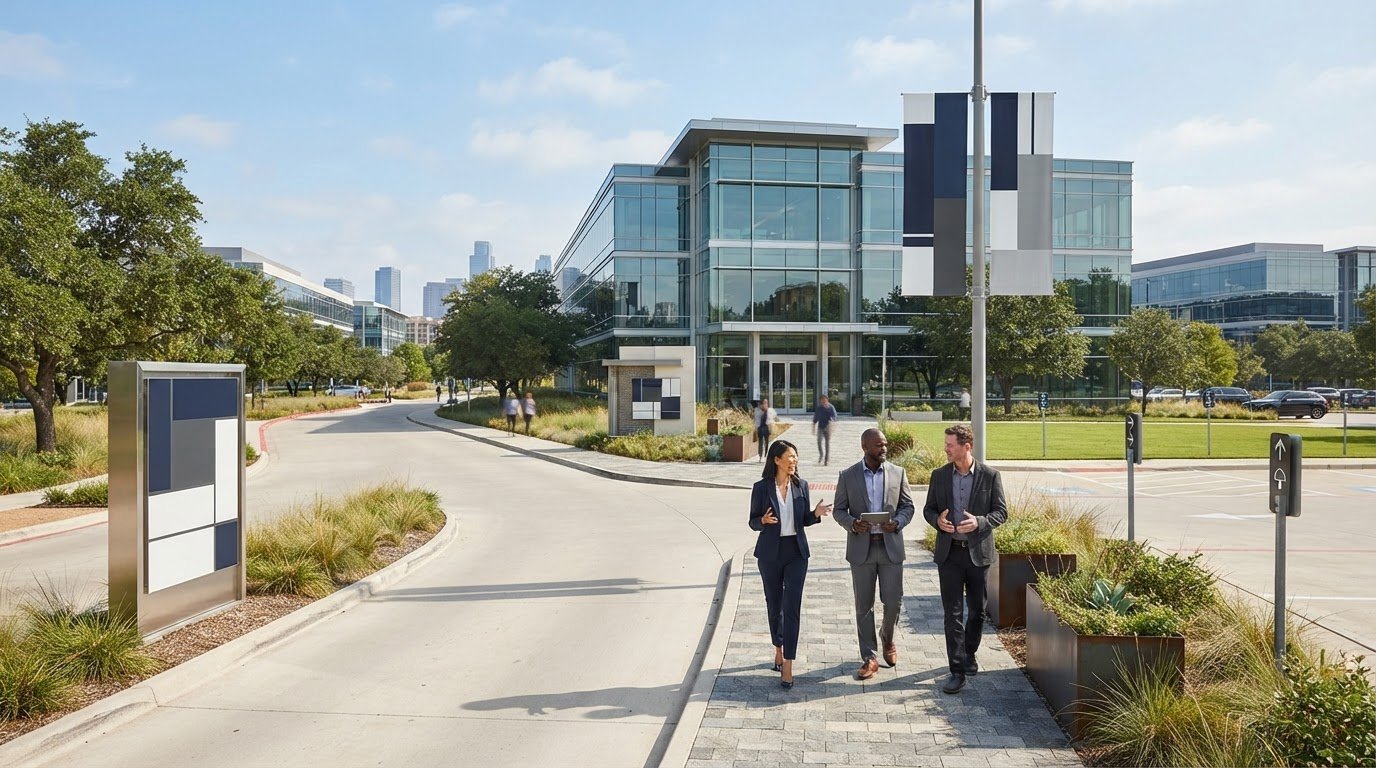
Wayfinding is a solution to the human problem of navigation in complex, high-volume facilities. It isn’t just about placing arrows; it’s about analyzing sightlines and identifying decision points where visitors are most likely to feel confused. Adhering to the industry standards for the implementation workflow: from digital concept to physical install is essential for maintaining consistency. For companies managing a national portfolio, standardizing these visual cues ensures a predictable brand experience regardless of the specific site layout. This reduces visitor friction and reinforces your role as a professional, organized entity.
Floor and Window Graphics
Maximizing underutilized surfaces is a hallmark of smart facility management. The utility of floor graphics extends from simple directional cues to temporary promotional zones in high-traffic areas. These applications require high-durability laminates to withstand constant foot traffic and industrial cleaning protocols. Window graphics offer a dual-purpose solution for branding and environmental control. They provide necessary privacy for conference rooms while helping with solar control by reducing glare. If you’re looking to optimize your physical space, our team can help you select the right large-format solutions for your specific facility needs.
Material Science: Choosing the Right Substrates for Durability
Success in environmental graphics depends on the invisible science of material compatibility. While many design agencies focus exclusively on visual language, industrial execution requires a rigorous assessment of the physical environment. Material selection is the most common point of failure in large-scale projects. Graphics peel or delaminate not because of the design, but because the chemical bond between the adhesive and the wall failed. We recommend performing standardized adhesion tests, often called pull tests, on every unique surface before production begins. This ensures the installation survives the facility’s lifecycle and maintains corporate authority.
Balancing aesthetic goals with long-term maintenance is a core challenge for facility managers. In 2026, corporate social responsibility (CSR) goals drive a significant shift toward sustainable material options. We now utilize PVC-free films and recyclable rigid substrates that meet LEED certification requirements without sacrificing industrial-grade durability. These eco-friendly choices allow organizations to transform their spaces while adhering to modern environmental standards.
Vinyls, Films, and Rigid Substrates
Choosing between cast and calendared vinyl is a fundamental technical decision that dictates longevity. Cast vinyl is the gold standard for long-term installations because it is manufactured to be dimensionally stable. It conforms to textured surfaces without shrinking or pulling away from corners. Calendared vinyl serves as a cost-effective alternative for flat surfaces and shorter durations. For high-impact dimensional branding, rigid materials like acrylic or brushed aluminum provide a sophisticated depth that standard films cannot replicate. Specialty frosted or metallic films add privacy and texture to glass partitions without the cost of custom glass etching.
Laminates and Surface Protection
Protection layers are non-negotiable for high-traffic environments. High-quality laminates shield environmental graphics from UV fading, harsh chemical cleaners, and physical abrasion. For public-facing areas, anti-graffiti coatings allow for the easy removal of ink or paint without damaging the underlying graphic. Floor-based applications must meet specific safety standards, such as the UL 410 slip-resistance rating, to ensure visitor safety and mitigate corporate liability. These protective finishes extend the life of your investment and ensure the brand remains pristine.
Adhesive Selection for Surface Integrity
The adhesive must be matched to the surface energy of the substrate to prevent failure. High-energy surfaces like bare metal bond easily, while low-energy surfaces like powder-coated plastics or modern “easy-clean” paints require specialized high-tack adhesives. For healthcare and education environments, we utilize low-VOC (Volatile Organic Compound) adhesives to maintain indoor air quality and comply with health regulations. Successful installation requires precisely matching the adhesive tack to the specific surface energy of the wall or floor. Planning for the graphic’s lifecycle also means deciding between permanent bonds and removable adhesives that allow for future updates without surface damage.
The Implementation Workflow: From Digital Concept to Physical Install
Designing environmental graphics is only half the battle. The true challenge lies in translating a digital vision into a physical reality without losing fidelity or structural integrity. This transition requires a sophisticated understanding of how digital files behave when scaled to hundreds of square feet. While a designer might focus on the visual narrative, the production team must focus on the logistics of execution. The hand-off between these two groups is the most critical phase of the project. Misaligned specifications at this stage lead to expensive errors on the factory floor and delays in the field.
Managing files for massive scale involves a strategic mix of vector and raster assets. Vector files are essential for typography and logos to ensure crisp edges at any size, while high-resolution raster images are necessary for complex photographic murals. Our role as a strategic communications ally is to bridge this gap, providing architects and designers with the technical guidance needed to ensure their concepts are printable and durable. This collaborative partnership ensures that the final installation matches the original intent with industrial precision.
Site Surveys and Technical Audits
Technical audits are a non-negotiable prerequisite for success. We don’t just measure the length of a wall; we perform laser-precise audits to account for every HVAC vent, electrical outlet, and fire safety device. These site surveys also include surface temperature and moisture checks. If a wall is too cold or the paint hasn’t fully outgassed, the adhesive bond will eventually fail. By identifying these obstacles early, we prevent costly reprints and ensure the graphic fits the unique geometry of the room perfectly the first time.
High-Capacity Production and Quality Control
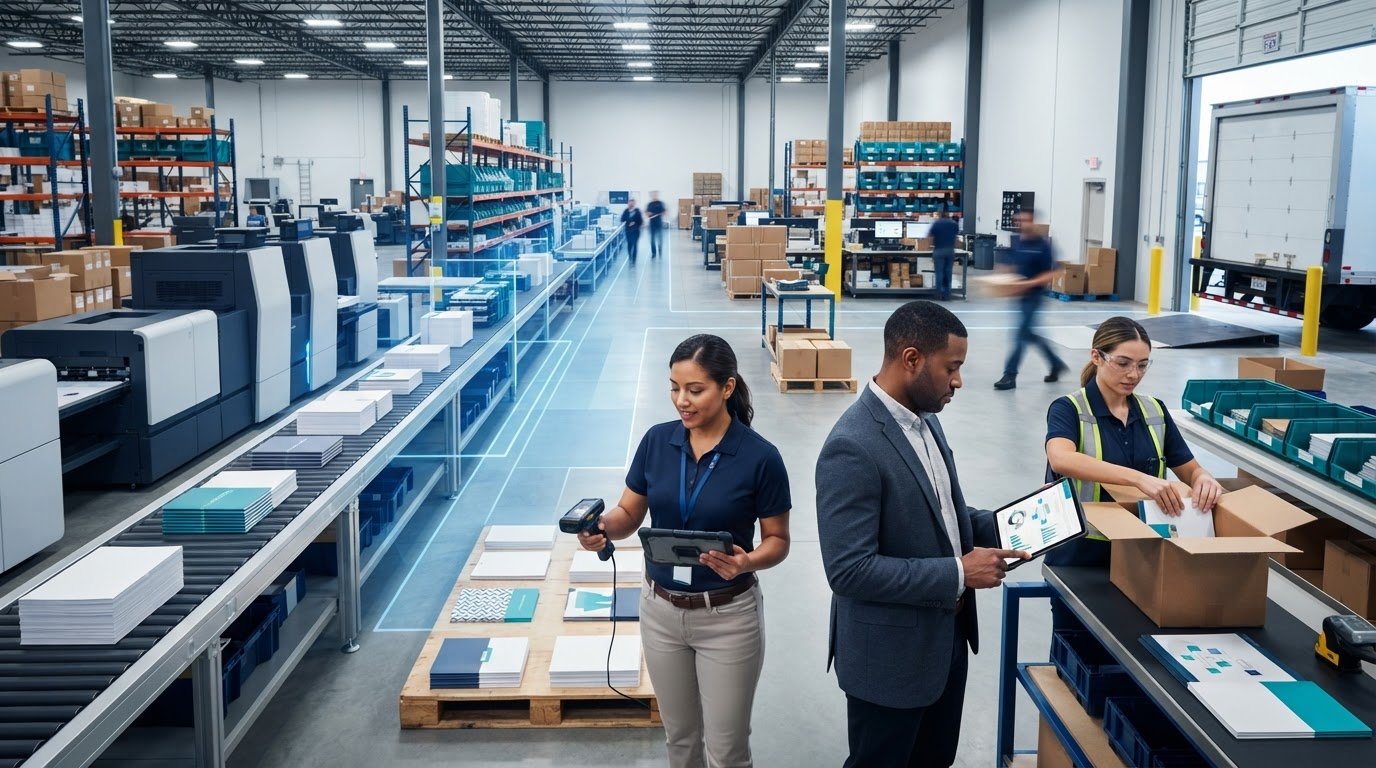
Our 90,000-square-foot production facility utilizes advanced commercial printing technology to maintain absolute color consistency across diverse materials. Whether your project requires vinyl, fabric, or rigid aluminum, the brand’s primary colors must match perfectly across every substrate. Centralized production is the only way to guarantee national brand standards for multi-site organizations. We manage high-volume orders with industrial precision, ensuring every panel is tracked and quality-checked before it leaves our facility for distribution.
Professional Installation Logistics
Professional installation is where the project finally comes to life. DIY attempts on large-format graphics often result in bubbles, misalignment, or permanent surface damage. Our teams coordinate directly with facility managers to minimize operational downtime, often scheduling work to ensure a seamless transition without interrupting daily business. A final walkthrough confirms every seam is perfect and every edge is secure, reflecting the corporate authority your brand demands. Ready to move from concept to reality? Partner with our production experts to streamline your next large-scale installation with confidence.
Scaling Your Brand Environment with a Strategic Print Partner
Avoiding the vendor fragmentation trap is critical for organizations that value precise brand standards. When production is centralized, every mural, floor graphic, and wayfinding sign is printed using the same calibrated technology and ink sets. This ensures color consistency across different materials, from vinyl to rigid aluminum. It’s not just about aesthetics; it’s about operational efficiency. A single-source partner handles the logistics of nationwide distribution and installation, providing a unified point of contact for every site manager in your network. This centralized approach guarantees that your brand identity remains cohesive regardless of geographic distance.
Lifecycle Management and On-Demand Updates
Branded environments aren’t static; they must evolve with your corporate messaging. Leveraging MarCom On-Demand portals allows for localized graphic updates without compromising national standards. These portals act as a centralized digital asset management system where site managers can re-order damaged panels or update specific directional cues on demand. Planning for these refresh cycles ensures your space remains modern and relevant. It future-proofs your facility against evolving brand narratives while simplifying the maintenance of high-traffic graphics. This level of agility transforms environmental graphics from a one-time expense into a scalable communications tool.
Partnering for Success
True success comes from moving away from transactional vendor relationships and toward a strategic communications ally. A partner with a 90,000-square-foot facility and over 30 years of industrial printing experience offers the scale and stability needed for complex, high-volume projects. We understand the nuances of large-format production and the meticulous detail required for nationwide installation. This combination of high-capacity technology and seasoned expertise ensures your project is handled with precision from concept to completion. Contact Linemark for your next large-format environmental project and discover how we can transform your physical space into a high-performance brand asset.
Transforming Your Facility into a Strategic Communication Asset
The transition from a static physical space to a high-performance branded environment is a strategic investment in corporate authority. Success requires a meticulous approach to material science and an industrial-grade production workflow that eliminates the friction of visitor navigation. By moving beyond simple signage and embracing comprehensive environmental graphics, you create a cohesive narrative that resonates with employees and visitors alike. This transformation ensures your physical footprint is as sophisticated and reliable as the services you provide.
Scaling this vision across a national footprint demands a partner with the infrastructure to guarantee absolute consistency. Our 90,000-square-foot high-capacity production facility and 30+ years of industrial printing and logistics experience provide the stability your brand needs. We offer nationwide installation and distribution capabilities to ensure your project is executed with precision, regardless of the location’s complexity. Your physical environment is one of your most powerful communication tools. It’s time to leverage it with the help of a strategic communications ally who understands the nuances of modern marketing and logistics.
Partner with Linemark for Precision Environmental Graphics and let’s begin the journey of transforming your space into an immersive brand experience.
Frequently Asked Questions
What is the difference between environmental graphics and wayfinding?
Environmental graphics is the broad umbrella term for all visual elements in a built space, while wayfinding is a specific functional subset focused on navigation. Wayfinding uses these graphics to guide people through decision points and complex facility layouts. While a wall mural might tell a brand story, a wayfinding sign specifically solves a human navigation problem. Both disciplines work together to create a cohesive, professional environment that reduces visitor friction.
How long do environmental graphics typically last?
The lifespan of these installations depends on material selection and environmental exposure, but high-quality indoor graphics typically last five to ten years. Cast vinyls and rigid substrates like aluminum offer the greatest durability for permanent fixtures. Outdoor applications may have a shorter lifecycle of three to five years due to UV exposure and weather conditions. Choosing industrial-grade laminates is essential to protect your investment from fading, abrasion, and harsh cleaning chemicals.
Can environmental graphics be installed on any surface?
Most surfaces are compatible with environmental graphics, but each requires a specific adhesive strategy based on surface energy. Smooth drywall, glass, and metal are ideal, while textured brick or low-VOC paints require specialized high-tack films. We don’t advise skipping a surface adhesion test before production to ensure the chemical bond is secure. This technical audit prevents premature peeling and ensures the installation maintains its integrity throughout its intended lifecycle in your facility.
Are environmental graphics easy to remove or update?
Ease of removal depends on the adhesive type selected during the planning phase. Removable adhesives allow for clean updates without damaging the underlying substrate, making them ideal for retail promotions or evolving corporate messages. Conversely, permanent adhesives are designed for long-term stability and may require more effort to remove. Strategic lifecycle management involves selecting the right film and adhesive combination so you don’t damage your surfaces during future facility brand refreshes.
What is the best material for high-traffic floor graphics?
High-traffic floor graphics require heavy-duty, slip-resistant vinyl paired with a UL 410-rated laminate. This specific rating ensures the surface provides adequate traction for pedestrians even when the floor is wet. The material must also feature a high-tack adhesive to prevent edge lifting under the weight of constant foot traffic or industrial cleaning equipment. Using industrial-grade substrates is the only way to ensure the graphics remain vibrant, safe, and professional in busy corridors.
How do I ensure my brand colors are consistent in large-format printing?
Color consistency is achieved through centralized production and rigorous color management protocols. By using a single strategic partner with high-capacity technology, you ensure that your primary brand colors match across different materials like vinyl, fabric, and aluminum. This eliminates the color drift often seen when managing multiple local vendors. A professional print partner uses spectrophotometers and standardized ink sets to maintain absolute visual integrity across your entire national portfolio of locations.
Do I need a professional installer for wall murals?
Professional installation is highly recommended for large-format wall murals to ensure a seamless, bubble-free finish. Large-scale graphics often involve multiple panels that must be perfectly aligned to maintain the visual narrative. Professional teams understand how to handle material stretching and surface preparation, which are common points of failure for DIY attempts. Expert installers also coordinate with facility managers to minimize downtime, ensuring the final project reflects the corporate authority and precision your brand demands.
How do environmental graphics contribute to LEED certification?
These branded installations contribute to LEED certification by utilizing sustainable materials and low-emitting adhesives. Choosing PVC-free films and recyclable rigid substrates helps meet requirements for material resources and indoor environmental quality. Additionally, using low-VOC (Volatile Organic Compound) adhesives ensures that installations don’t negatively impact air quality in sensitive environments like healthcare or education. These eco-friendly choices allow organizations to achieve their corporate social responsibility goals while transforming their physical spaces into high-performance environments.