

 05/23/2026
  Steve Bearden
By the time you finish this post, you will understand how to move beyond basic name-merge fields and implement a hyper-personalized direct mail strategy that uses dynamic imagery and behavior-triggered data. We will break down the specific digital printing technology required to execute these campaigns and how an integrated workflow in our Maryland facility eliminates the friction of multi-vendor handoffs.
For years, the industry treated variable data printing (VDP) as a digital version of a mail merge. You took a spreadsheet, dropped a "First_Name" field into a postcard template, and called it personalization. In 2026, that level of effort is the bare minimum. Marketing leaders who want to move the needle on response rates are now looking at VDP as a way to create a completely unique marketing experience for every single recipient.
According to USPS research, nearly 68% of consumers are more likely to engage with mail that feels tailored to their specific needs. To achieve that, we’ve moved from simple text swaps to fully dynamic content blocks where every image, offer, and call-to-action is dictated by the recipient's past behavior.
The Evolution from "Dear [Name]" to Hyper-Personalization
The core of modern direct mail marketing isn't the mail piece itself; it’s the data architecture behind it. We are seeing a massive shift toward "image-by-segment" and "image-by-individual" workflows. Instead of sending the same generic product photo to your entire list, we use VDP to swap imagery based on CRM data like purchase history or geographic location.
I’ve spent over 40 years on the production floor, and I’ve seen the "lowest-bidder" mentality fail more times than I can count. When you treat VDP as a commodity, you end up with version control errors and missed in-home dates. At our printing company in Maryland, we’ve built a workflow that treats data as the primary driver of the press.
We’re no longer just printing paper; we’re executing logic. If a customer in a cold climate browsed winter coats on your site but didn't buy, the VDP logic triggers a mailer with a photo of the specific coat they viewed, localized to the nearest retail branch, with a QR code that leads directly back to their abandoned cart. That’s the level of precision that wins in 2026.
Digital Printing Technology: The Engine of Modern VDP
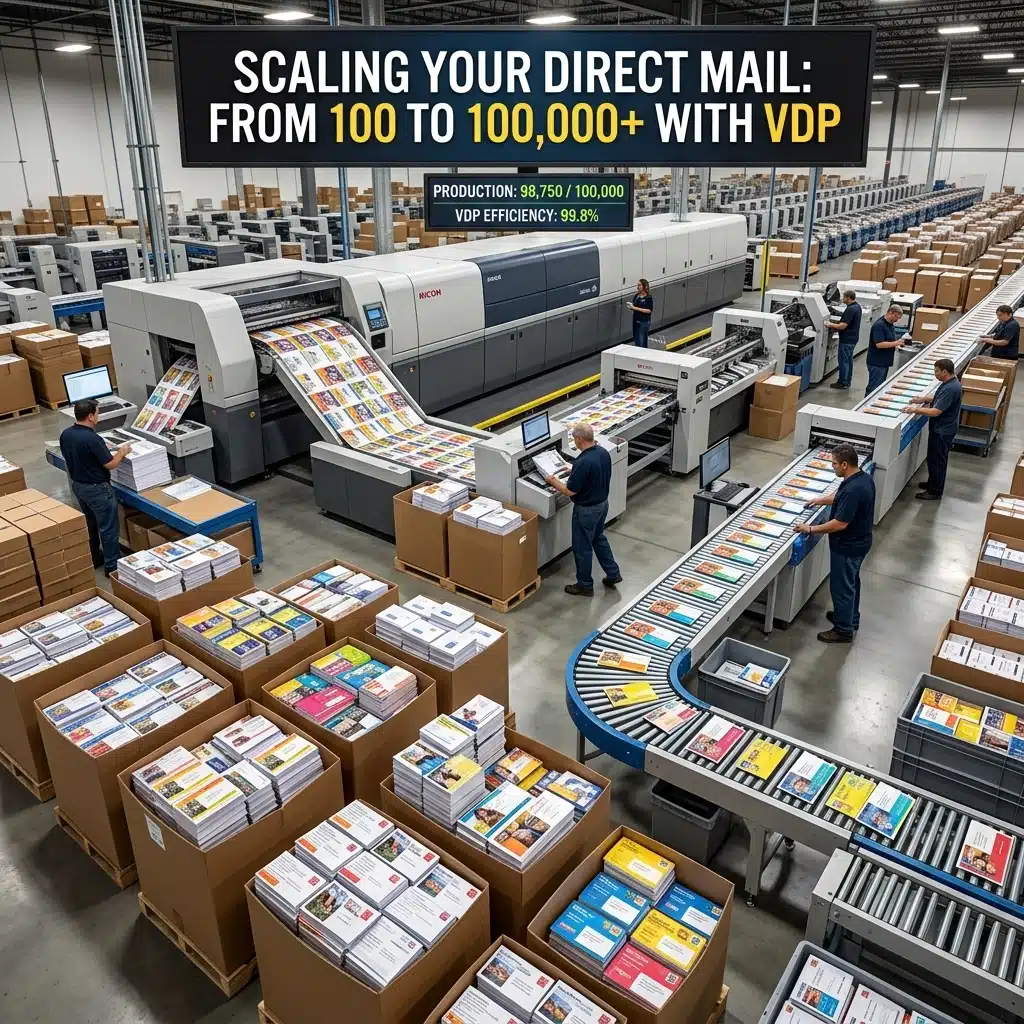
Executing hyper-personalization at scale requires more than just software; it requires industrial-grade hardware that can handle massive data streams without slowing down. At Linemark, we’ve invested in a fleet that allows us to pivot between short-run specialty work and high-volume national campaigns.
| Equipment | Primary Benefit for VDP | Best Use Case |
|---|---|---|
| Canon ProStream 3000 | High-speed inkjet web production with 1200 dpi resolution. | High-volume direct mail with 100% variable content. |
| HP Indigo 18K | Wide-format digital sheetfed with superior color matching (PMS). | Luxury catalogs and high-end personalized packaging. |
| Canon iX3200 | Precision sheetfed inkjet for heavy substrates. | Personalized postcards and self-mailers on premium stock. |
The Canon ProStream 3000, for example, is a workhorse for our direct mail clients. It allows us to run complex variable jobs at speeds that were previously only possible on offset presses, but with the added benefit of making every single square inch of the page unique. When you combine this with our in-house addressing and mail prep, you remove the "vendor sprawl" that usually kills a campaign's momentum.

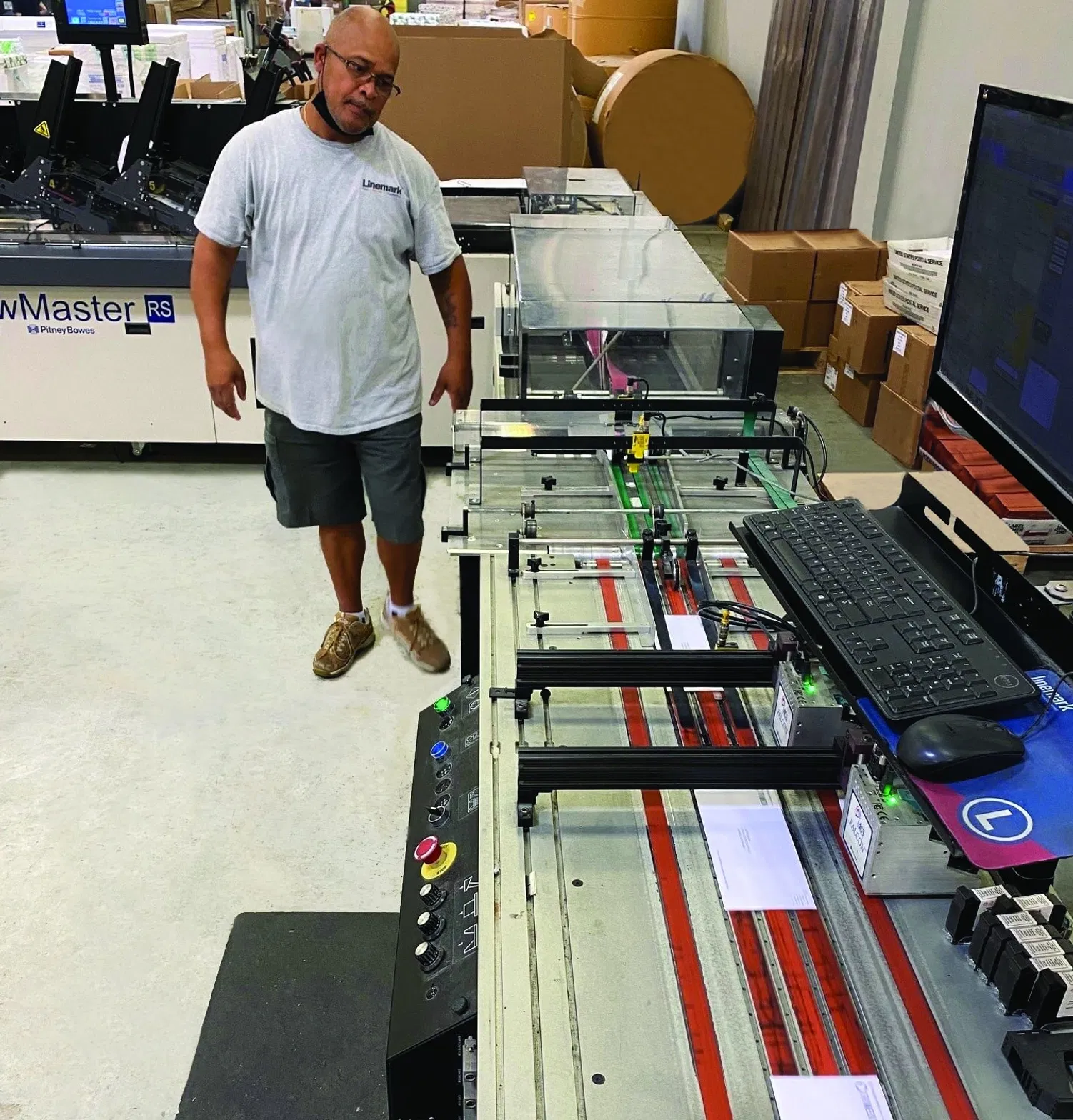
Precision is the foundation of variable data printing. Our automated feeding systems ensure that every unique piece is tracked from the press to the mail tray.
Visual Personalization: Why Images Outperform Text
While text personalization is functional, visual personalization is emotional. Our brains process images 60,000 times faster than text. In a crowded mailbox, a recipient is going to notice a photo of their own neighborhood or a product they recently interacted with long before they read their own name in a headline.
We utilize advanced composition engines that handle image swapping and layout reflowing in real-time. If one recipient requires a short paragraph of text and another requires a long one, the layout "breathes" to accommodate the data. This prevents the awkward "white space" or "text overflow" issues that plague amateur VDP setups.
For marketing directors, this means you can test creative variants with scientific accuracy. You can send Version A with a lifestyle image and Version B with a product-focused image to the same demographic and track the lift through individual-level QR codes. Because everything is handled in our Upper Marlboro facility, we can provide the reporting and attribution data you need to justify the spend.
Integrating the Workflow in Upper Marlboro, MD
The biggest risk in a complex VDP campaign is the "handoff." When you print at one shop, send the pieces to a separate finishing house, and then move them to a third-party mailer, you are asking for trouble. Data gets corrupted, version counts get mixed up, and freight costs eat your ROI.
We operate under the philosophy that accountability belongs in one place. At our 90,000-square-foot facility, the same team that handles your data hygiene is the same team monitoring the digital printing technology and the same team staging the USPS-verified mail trays.
There is no freight between buildings. There are no "it’s the other guy’s fault" phone calls. I’ve been on those 4:00 PM calls where a client is trying to track down a missing pallet between three different vendors. It’s a mess, and it’s why we keep everything in-house. From the Mueller Martini bindery to our high-speed Flowmaster inserters, the entire chain is integrated.

Operator culture at Linemark means constant vigilance. Every variable piece is checked for data integrity and color accuracy before it hits the mail stream.
Measurability and Attribution in 2026
If you can’t measure it, it’s not marketing: it’s just a guess. Modern variable data printing allows us to turn every mail piece into a digital touchpoint. By using unique QR codes or Personalized URLs (PURLs), we bridge the gap between the tactile experience of mail and the trackability of digital.
We see the best results when direct mail is used as an orchestrated channel. For example, a nonprofit client might use our Canon iX3200 to send out a short-run appeal to high-value donors. Each piece features a custom chart showing that specific donor's impact over the last five years. The QR code on that piece doesn't just go to a generic landing page; it goes to a personalized donation form with their name and a suggested "next-step" gift already filled in.
This level of integration requires a printing company in Maryland that understands both the mechanics of the press and the logic of the CRM. We handle the list hygiene, NCOA processing, and deduplication in-house to ensure your postage spend isn't wasted on bad data.
The Operator’s Perspective: Why "Under One Roof" Matters
I’m often asked why we haven't outsourced our finishing or mailing like many of our competitors. The answer is simple: control. When we run a job on the HP Indigo 18K, I know exactly how that sheet is going to behave when it hits the Mueller Martini Vareo Pro for perfect binding.
When you fragment your production, you lose the ability to catch small issues before they become expensive failures. By keeping everything in the same facility, we maintain a tight feedback loop between the pressroom and the mailroom. If an addressing head is struggling with a specific paper coating, we know it immediately and can adjust the chemistry on the press. That’s the difference between a "print shop" and a serious production facility.
Efficiency at the final stage. These trays represent the end of a highly automated, data-driven workflow that starts in prepress and ends with a direct USPS pickup from our floor.
Summary of Key Takeaways
- VDP is a Strategy, Not a Feature: Move beyond names and focus on dynamic imagery and behavior-triggered content to drive real engagement.
- Infrastructure Dictates Quality: Use high-end digital printing technology like the Canon ProStream 3000 to ensure your data-heavy jobs run at scale without compromising on quality.
- Consolidate Your Handoffs: Eliminate vendor sprawl by choosing a partner that handles print, finishing, and mailing in a single integrated workflow.
- Measure Every Piece: Use individual-level tracking (QR/PURLs) to tie your direct mail spend directly to your CRM's conversion data.
Ready to Audit Your Direct Mail Workflow?
If your current direct mail process feels like a series of disconnected handoffs, it’s time to look at an integrated solution.
- Request a Workflow Audit: Let our team look at your current data-to-mail process and identify where you’re losing time and money.
- Get a Sample Kit: See the difference that 1200 dpi inkjet and high-end digital finishing can make for your brand.
- Download Our USPS Rate Impact Analysis: Learn how our in-house presort and mail prep can offset rising postage costs.
Contact our team at Linemark to start your next VDP project.