


 09/20/2026
  Steve Bearden
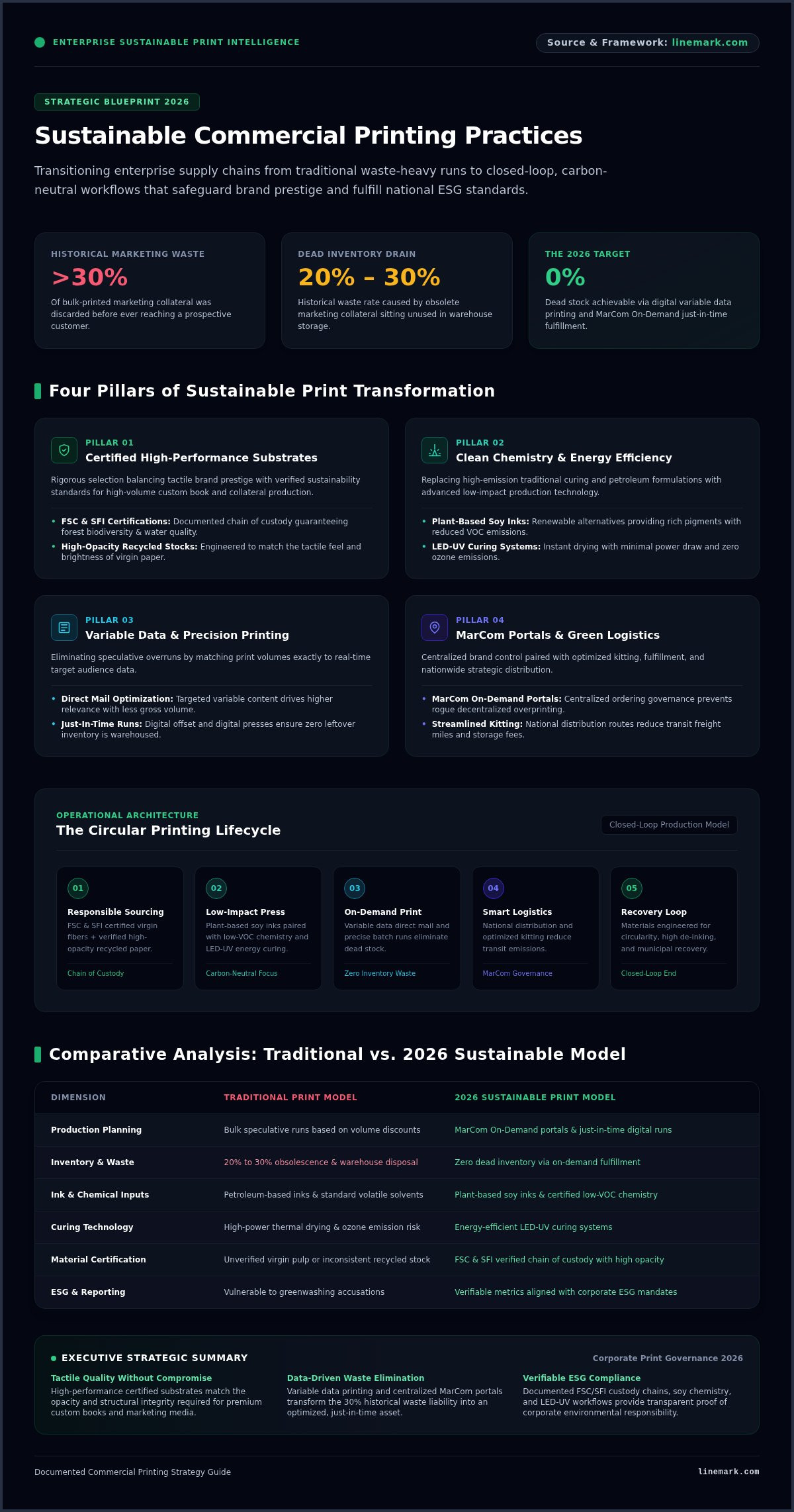
Did you know that historically, more than 30% of bulk-printed marketing materials were discarded before they ever reached a customer? In 2026, this level of waste isn’t just an environmental burden; it’s a strategic failure. You’ve likely felt the mounting pressure to adopt more sustainable printing practices while fearing that recycled substrates might look “cheap” or that your budget can’t accommodate premium eco-friendly options. It’s a difficult balance to strike, especially when stakeholders demand transparent data to avoid even the hint of greenwashing accusations.
This guide demonstrates how to integrate high-impact commercial printing with sophisticated, eco-conscious strategies that reduce your footprint without compromising on the industrial scale or professional quality your brand requires. We’ll explore a clear framework for selecting high-performance substrates and inks. We also examine how to leverage on-demand technology to eliminate inventory waste and secure the measurable proof of environmental responsibility your stakeholders expect. By the end, you’ll have a roadmap to transform your print supply chain into a catalyst for sustainable growth.
Key Takeaways
- Identify how to transition from simple recycled paper to holistic, carbon-neutral workflows that meet modern corporate sustainability mandates.
- Understand the selection process for high-performance FSC and SFI-certified substrates that maintain premium aesthetics for custom book printing.
- Implement sustainable printing practices by leveraging variable data printing and digital technology to eliminate inventory waste and optimize direct mail.
- Minimize your carbon footprint through strategic national distribution and streamlined kitting and fulfillment logistics.
- Utilize MarCom On-Demand portals to centralize control over materials and ensure eco-friendly brand standards across distributed marketing teams.
The Evolution of Sustainable Printing Practices in 2026
In 2026, sustainability is no longer a peripheral concern or a simple box to check on a procurement form. It has evolved into a core operational strategy that impacts every stage of the communication lifecycle. Modern sustainable printing practices now extend far beyond the selection of recycled paper; they encompass entire carbon-neutral workflows that integrate energy-efficient production, low-VOC chemistry, and data-driven waste reduction. This shift represents a transition from “green” as a marketing option to “green” as a corporate mandate.
Large-scale organizations now view their print supply chain as a critical component of their environmental footprint. By utilizing advanced technology like LED-UV curing systems and plant-based soy inks, high-capacity facilities can deliver industrial-scale production with a fraction of the traditional environmental impact. This technological pride isn’t just about the equipment; it’s about a commitment to precision that ensures every sheet printed serves a specific, data-backed purpose.
To better understand how technology and energy efficiency are reshaping the industry, watch this helpful video:
Meeting National ESG Standards with Print
Physical media remains a powerful touchpoint in modern marketing, but its inclusion in a corporate sustainability report requires rigorous data. Stakeholders expect transparency regarding the chain of custody for materials and the carbon footprint of production. Circular Printing is a closed-loop system of production and recycling where materials are designed for maximum reuse and minimal resource extraction. Adopting these sustainable printing practices bolsters brand authority, signaling to customers that a company’s commitment to the planet is integrated into its physical presence. This strategic alignment ensures that high-volume projects contribute to, rather than detract from, national ESG goals.
The True Cost of Inefficient Production
Overproduction remains one of the most significant environmental and financial drains on modern enterprises. Historically, organizations faced a 20% to 30% waste rate due to obsolete marketing collateral sitting in warehouses. Transitioning to on-demand production models eliminates this “dead inventory” entirely. While traditional offset methods are evolving with more efficient setup processes, the integration of digital printing allows for precise, just-in-time fulfillment. This shift doesn’t just lower the environmental burden; it directly improves the bottom line by reducing storage fees and material costs. Moving toward a centralized, on-demand model turns a business challenge into a concrete, scalable solution for both the budget and the planet.
Advanced Materials and Eco-Friendly Substrates
Selecting the right substrate is a technical decision that balances performance with environmental impact. It’s about precision. In 2026, the science of FSC (Forest Stewardship Council) and SFI (Sustainable Forestry Initiative) certifications provides a rigorous framework for ensuring wood fiber comes from responsibly managed forests. These certifications aren’t just labels; they represent a documented chain of custody that guarantees biodiversity protection and water quality. Using these certified stocks ensures your high-volume projects align with global sustainability benchmarks without sacrificing the structural integrity of the final product.
Many marketing leaders worry that recycled stocks look “cheap” or lack the necessary brightness for high-end collateral. Modern production methods have solved this challenge. High-performance recycled substrates now match the opacity and tactile quality of virgin stocks. This is particularly vital for custom book printing, where the physical experience of the page defines the brand’s perceived value. According to EPA paper and paperboard recovery data, the paper industry continues to lead in material recovery, making it a highly circular choice when managed with industrial expertise.
For large format graphics, the industry is moving aggressively away from traditional PVC. Vinyl is difficult to recycle and often contains harmful phthalates. We now utilize high-tensile polyester fabrics and biodegradable polyolefins that offer the same durability for window graphics and floor decals. These advanced materials provide a concrete, scalable solution for brands that need high-impact visuals without the environmental baggage of conventional plastics.
Beyond Paper: Large Format and Signage Alternatives
Textile-based signage has emerged as a premium alternative to traditional plastics. These materials are lighter to ship, which reduces transport emissions, and they can often be washed and reused for multiple campaigns. When selecting substrates for banners or murals, the focus is on matching longevity to the specific application. Short-term event graphics can utilize compostable cardstocks, while permanent installations benefit from recycled-content aluminum or PVC-free films. You can explore our large format graphics options to find the perfect match for your durability requirements.
Ink Technology: Soy, Vegetable, and Low-VOC Options
Ink choice is a critical pillar of sustainable printing practices. Soy and vegetable-based inks have largely replaced petroleum-derived formulations in high-capacity pressrooms. These alternatives significantly reduce Volatile Organic Compounds (VOCs), creating a safer environment for production teams and a cleaner output for the end user. These bio-based inks also simplify the de-inking process during recycling. This ensures that paper fibers can be reclaimed and reused more efficiently, effectively closing the loop on production. Adopting these advanced chemistries allows brands to maintain vibrant, high-fidelity color while adhering to strict environmental benchmarks.
Technology-Driven Waste Reduction Strategies
Modern production excellence relies on more than just efficient hardware. It requires a sophisticated integration of software and strategy to ensure every sheet of paper is utilized to its full potential. Within a 90,000-square-foot industrial environment, energy-efficient production is the result of meticulous planning. Implementing sustainable printing practices involves choosing the right technology for the specific project scale. While offset printing remains the gold standard for high-volume catalogs, digital printing offers the agility needed for short-run, just-in-time projects. This strategic choice minimizes setup waste and ensures energy consumption matches the output requirements.
Precision in the pressroom is enhanced by automated imposition and nesting software. These tools analyze the layout of every project to maximize sheet usage, significantly reducing the scrap generated during the trimming process. By optimizing the “real estate” of each press sheet, we ensure that raw materials, often verified by FSC Chain of Custody certification, are used with industrial precision. This technology-led approach transforms raw materials into finished goods with minimal environmental friction.
Variable Data and Targeted Communication
The “spray and pray” method of marketing is both inefficient and environmentally costly. Utilizing variable data printing allows brands to create highly targeted direct mail that speaks directly to the recipient’s needs. When every printed piece reaches an interested prospect, the total volume of mail decreases while conversion rates increase. This correlation between personalization and a reduced environmental footprint is a hallmark of modern sustainable printing practices. Data ensures that your message is relevant, which naturally eliminates the waste associated with generic, mass-produced collateral.
On-Demand Production and Small-Batch Scalability
Rigid minimum order requirements often trap organizations into ordering more collateral than they actually need. This leads to warehouses filled with “dead inventory” that eventually ends up in a recycler. Digital printing removes these barriers, allowing for small-batch scalability and rapid updates. If a brand standard or a product specification changes, you can update the digital file and print a new batch without discarding thousands of obsolete copies. Furthermore, high-quality binding and finishing ensure that these products are durable and long-lasting. This longevity is a subtle but powerful form of sustainability, as it reduces the frequency of reprints and extends the lifecycle of every brochure and custom book.
Supply Chain Optimization and Green Logistics
Logistics is the final, often overlooked, frontier of a truly eco-conscious strategy. While material choice and press efficiency are vital, the environmental impact of transporting high-volume projects can negate those gains if not managed with industrial precision. Centralizing production within a high-capacity, 90,000-square-foot facility allows for a unified workflow that bridges the gap between the pressroom and the loading dock. This integration is a defining characteristic of modern sustainable printing practices, ensuring that energy consumption is minimized by keeping production and distribution under one roof. Strategic national distribution further slashes Scope 3 emissions by optimizing freight routes and reducing the total mileage required to reach your end destination.
Efficiency in the supply chain is a catalyst for client growth. By consolidating these services, organizations eliminate the need for multiple energy-draining hubs and redundant transportation legs. This holistic journey from raw substrate to final delivery ensures that every project is handled with the meticulous attention to detail of a boutique shop, but with the power of a large-scale operation. It’s about precision. It’s about reliability. Most importantly, it’s about ensuring your environmental goals are met at every single touchpoint of the journey.
Sustainable Kitting and Fulfillment
For complex marketing campaigns, the way components are bundled matters just as much as the ink used to print them. We focus on streamlining kitting and fulfillment to reduce shipping bulk, which directly lowers the carbon footprint of every parcel. By utilizing custom-fit packaging and biodegradable void-fill materials, we eliminate the need for excessive plastic wrap or oversized boxes. This precision doesn’t just protect the environment; it protects your investment. Smart kitting reduces the risk of damaged goods during transit, which prevents the environmental cost of unnecessary re-prints. A unified distribution center ensures that every kit is assembled with meticulous attention to detail before it enters our national fulfillment network.
Inventory Management as an Eco-Strategy
Warehousing obsolete materials is a significant environmental burden that many organizations fail to account for in their sustainability reporting. Real-time tracking through advanced inventory management systems allows brands to maintain leaner stock levels of brochures, catalogs, and annual reports. This transparency prevents the common pitfall of over-ordering, which historically led to massive amounts of waste. By moving toward a “just-in-time” delivery model for items like corporate signage and banners, you ensure that your materials are current and relevant. This proactive approach to sustainable printing practices turns a business challenge into a streamlined, high-tech solution that values resource efficiency. Experience the efficiency of a unified logistics partner by visiting Linemark for your next national campaign.
Future-Proofing Your Brand with MarCom On-Demand
In 2026, the most effective way to implement sustainable printing practices across a national footprint is through centralized digital governance. A MarCom On-Demand portal acts as a single point of truth for your brand standards and environmental mandates. By centralizing the ordering process, you eliminate the fragmentation that leads to resource waste. It’s about control. You can pre-select eco-friendly substrates and low-VOC inks, ensuring that every branch office or regional manager adheres to your corporate ESG goals without exception.
Decentralized Access, Centralized Sustainability
Empowering local teams to order what they need shouldn’t mean sacrificing your environmental standards. A web-to-print solution allows regional stakeholders to customize pre-approved templates while the underlying production remains under centralized oversight. This effectively eliminates “rogue printing,” where local branches use small, inefficient local presses that don’t follow your specific sustainable printing practices. By routing all orders through a high-capacity, tech-forward facility, you ensure consistency in both brand identity and material responsibility. This centralized approach significantly reduces administrative waste and ensures that only the necessary volume of collateral is produced at any given time.
Partnering for Strategic Growth
Choosing a communications ally goes beyond simple vendor selection; it’s about finding a partner that understands the nuances of 2026 logistics and production technology. Linemark blends industrial power with the meticulous attention to detail required for modern sustainability. We use our 90,000-square-foot facility to deliver scalable solutions that prioritize efficiency at every stage of the lifecycle. Our technological pride is rooted in the ability to provide partners with concrete data on their environmental impact. The future of print is data-driven, offering clear reporting on paper usage and carbon impact directly through your custom portal.
Auditing your current print collateral is the first step toward a more responsible future. We help you identify which items can transition to an on-demand model and which materials can be swapped for higher-performance, eco-friendly alternatives. This proactive spirit values efficiency and high-touch service, ensuring your brand remains a leader in the modern marketing landscape. By moving from a transactional relationship to a unified partnership, you transform your print supply chain into a catalyst for long-term growth and environmental stewardship.
Building a Resilient, Eco-Conscious Communication Strategy
In 2026, sustainability is a technical optimization of the entire communication lifecycle. It’s no longer enough to simply choose recycled paper; your strategy must integrate high-performance substrates, precision technology, and optimized logistics. By leveraging data-driven variable data printing and on-demand production models, your organization can effectively eliminate the environmental and financial burden of obsolete inventory. These sustainable printing practices don’t just protect the planet; they streamline your operations and enhance your bottom line through measurable waste reduction.
Achieving this level of precision requires a strategic ally that balances industrial capacity with boutique-level attention to detail. We combine 30+ years of industrial expertise with a 90,000-square-foot state-of-the-art production facility to handle your most complex, high-volume projects with ease. Our advanced MarCom On-Demand technology provides the centralized control needed to enforce eco-standards across your entire national footprint. It’s time to move beyond transactional printing and embrace a holistic journey toward operational excellence. Partner with Linemark for your next sustainable print project today. We look forward to helping your brand lead the way in a more responsible and efficient future.
Frequently Asked Questions
What are the most sustainable paper options for custom book printing?
High-performance recycled stocks and paper certified by the Forest Stewardship Council (FSC) are the gold standards for custom book printing. These materials ensure that fibers originate from responsibly managed forests or post-consumer waste streams. Modern production technology ensures these substrates maintain the brightness and opacity required for professional results. By choosing certified stocks, you align your project with global environmental benchmarks without compromising the tactile experience of the book.
How does digital printing compare to offset printing in terms of environmental impact?
Digital printing is highly efficient for short-run projects because it eliminates the need for physical plates and minimizes setup waste. For high-volume commercial printing, offset printing remains the most energy-efficient choice per unit. Both methods now utilize advanced LED-UV curing systems that consume less power and emit negligible heat. The most sustainable choice depends on matching the production method to your specific volume to prevent overproduction and material waste.
Can large format graphics like wall murals be truly eco-friendly?
Large format graphics are increasingly sustainable thanks to the development of PVC-free substrates. Wall murals and window graphics can be produced using high-tensile polyester fabrics or biodegradable polyolefins that offer excellent durability. When combined with low-VOC inks, these materials provide a high-impact visual solution with a significantly lower environmental footprint than traditional vinyl. These advanced substrates are easier to recycle and avoid the harmful phthalates found in conventional plastics.
What is FSC certification and why does it matter for my business?
FSC certification is a rigorous chain-of-custody standard that ensures paper products come from responsibly managed forests. For your business, this certification provides verifiable proof of your commitment to sustainable printing practices. It protects against accusations of greenwashing by offering a documented trail from the forest to the finished product. Using FSC-certified materials ensures that your high-volume projects support biodiversity and respect the rights of indigenous communities across the globe.
How does variable data printing help reduce the environmental footprint of direct mail?
Variable data printing reduces waste by ensuring that every direct mail piece is relevant to the recipient. Instead of mass-producing generic collateral, you can use data to personalize content, which significantly increases conversion rates while lowering total print volume. This targeted approach eliminates the environmental cost of “spray and pray” marketing. It ensures that raw materials and energy are only used for communications that have a high probability of actual engagement.
Are soy-based inks as durable and vibrant as traditional petroleum-based inks?
Soy-based inks are actually superior to petroleum-based alternatives in several ways. They provide vibrant, high-fidelity colors and allow for easier de-inking during the recycling process, which yields cleaner reclaimed fibers. These inks emit significantly fewer Volatile Organic Compounds (VOCs), making the pressroom safer and the final product more eco-friendly. Brands don’t have to sacrifice durability or visual impact when switching to these bio-based chemistries for their professional commercial collateral.
What is a MarCom On-Demand portal and how does it prevent print waste?
A MarCom On-Demand portal is a centralized web-to-print platform that allows teams to order materials as needed. This “just-in-time” model prevents print waste by eliminating the need for large warehouses filled with static inventory. When brand standards or product specs change, you simply update the digital file instead of discarding thousands of obsolete brochures. This technology enforces sustainable printing practices by ensuring only necessary quantities are produced and distributed to your national locations.
How can I measure the carbon footprint of my national print campaigns?
Measuring the carbon footprint of national campaigns involves tracking material usage, press energy consumption, and logistics mileage. You should look for a partner that follows ISO 16759 standards for quantifying the carbon impact of print media. Advanced portals now offer data-driven reporting that provides transparency into your supply chain emissions. This information is critical for corporate ESG reporting and helps you identify specific areas where production and distribution can be further optimized.