

 07/12/2026
  Steve Bearden
With the global digital printing market projected to reach $38.84 billion in 2026, why do so many enterprises still struggle with inconsistent branding and slow turnaround times? It’s a common frustration for marketing leaders who manage distributed offices. You’ve likely seen how manual kitting and complex fulfillment can stall a campaign’s momentum. Modern digital printing services have evolved beyond simple production. They’re now the backbone of a sophisticated, data-driven supply chain that values precision over mere volume.
You know that your corporate communications require more than just a vendor; they require a strategic ally. This guide shows you how to leverage high-volume production, variable data, and on-demand portals to transform your marketing ROI. We’ll explore the shift from fragmented, transactional orders to a centralized journey that integrates reliable national distribution and intelligent inventory management. It’s time to move toward a model where operational excellence meets creative agility.
Key Takeaways
- Understand why digital printing has shifted from a short-run convenience to a high-volume industrial strategy for the modern enterprise.
- Learn how to protect brand integrity across national footprints using MarCom On-Demand portals and advanced digital printing services.
- Identify the technical “crossover point” between digital and offset methods to optimize production costs without sacrificing quality.
- Discover how to scale complex projects like custom book manufacturing and annual reports through automated, high-precision workflows.
- Streamline your operations by integrating kitting, fulfillment, and national distribution into a single, centralized logistics hub.
The Evolution of Digital Printing Services for Modern Enterprise
Digital printing has moved far beyond its origins as a quick solution for short runs. Today, it stands as a high-speed, toner or inkjet-based industrial process that powers some of the world’s most complex corporate communications. While traditional methods rely on physical plates, modern digital printing services utilize advanced electronic files to transfer images directly to a variety of media. This shift isn’t just about technology; it’s about a fundamental change in how enterprises approach production. It represents a move from transactional printing to a holistic journey where speed and precision coexist.
To better understand the quality and scale of these modern operations, watch this helpful overview:
By 2026, the gap between digital and offset quality has effectively closed. With the global digital printing market projected to reach $38.84 billion this year, the investment in precision is undeniable. Innovations such as the Xitron K2 workflow software update, released in early 2026, allow for enhanced automation and integrated project archiving. These tools ensure that every piece, whether it’s the first or the ten-thousandth, maintains absolute consistency. For a strategic communications ally, this reliability is the foundation of a successful multi-channel strategy where print and digital assets work in tandem.
Industrial-Scale Digital Capabilities
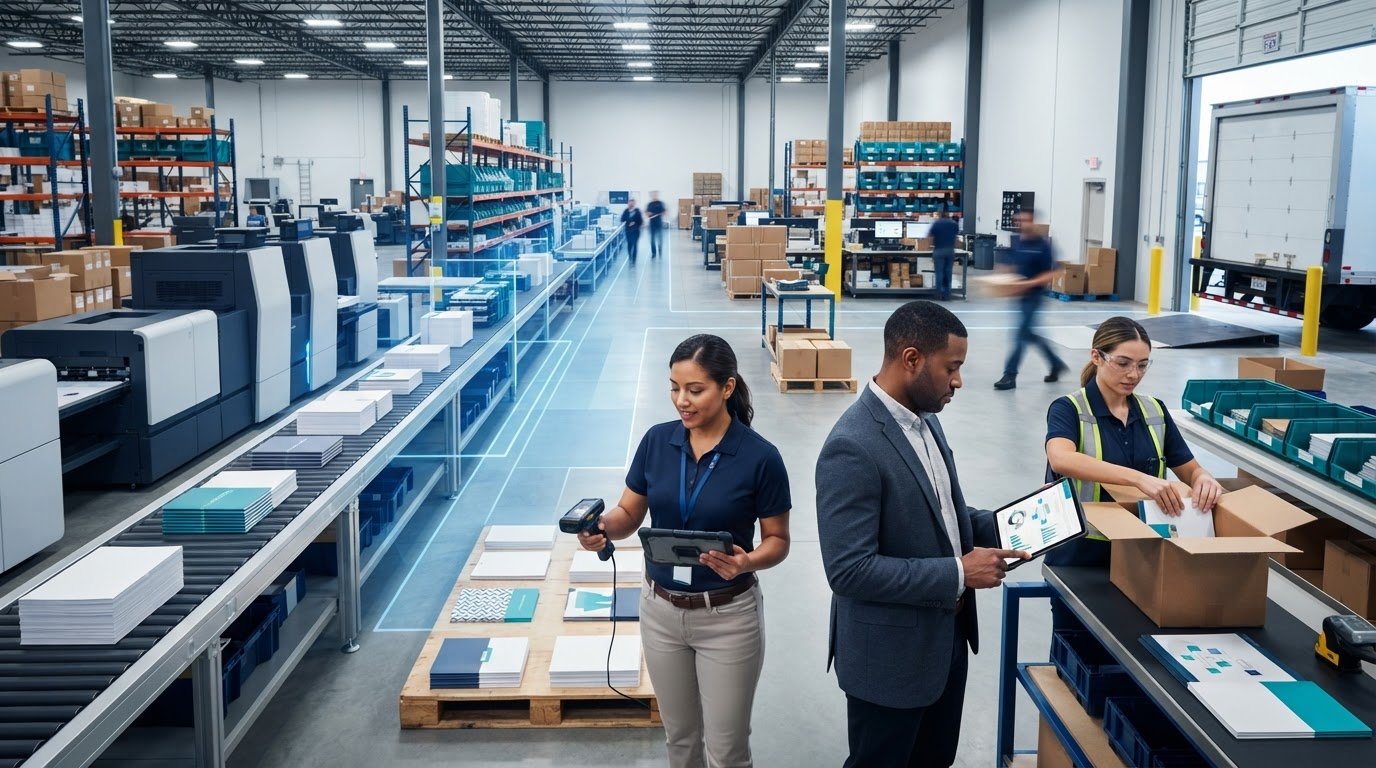
True scalability requires more than just high-end machinery. It demands a robust environment capable of handling high-capacity commercial presses. A 90,000-square-foot production facility provides the physical space necessary for integrated workflows, from initial file processing to complex binding and finishing. This industrial scale allows for the use of diverse substrates, including textured papers and synthetics, while applying specialized finishes that once required multiple, disjointed vendors. It’s a centralized approach that guarantees quality across every touchpoint.
For organizations that need to complement these large-scale services with specialized, high-performance label production at their own location, you can learn more about DuraFast Label Company to explore in-house printing solutions that maintain these same industrial standards.
Why Digital Printing is the Backbone of Agile Marketing
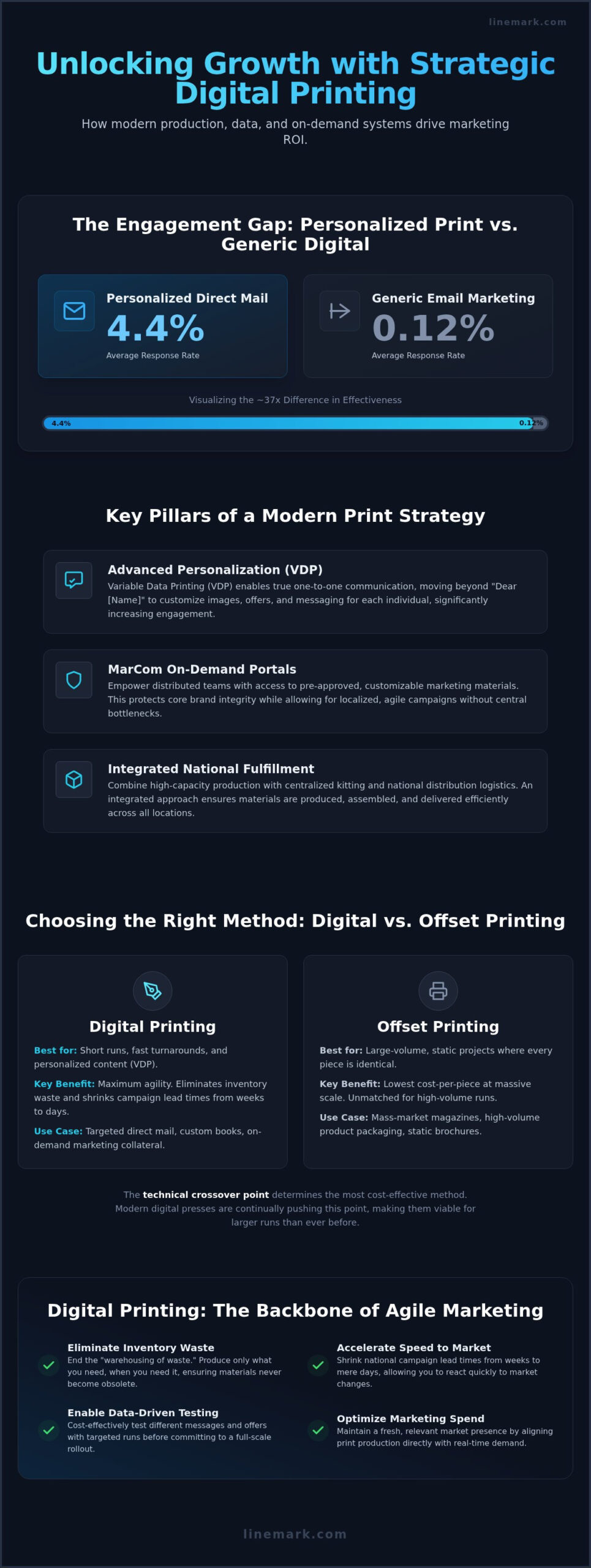
Speed is the new currency in corporate marketing. Digital printing services reduce lead times from weeks to mere days, allowing national campaigns to launch with unprecedented agility. You don’t have to commit to massive quantities that might become obsolete. Instead, you can:
- Test specific marketing messages with smaller, targeted runs before a full-scale rollout.
- Produce materials on-demand to eliminate the “warehousing of waste” that plagues traditional offset models.
- Adjust content in real-time to respond to market shifts or new state-level recycling regulations, such as those implemented in Maryland and Maine in 2026.
This approach ensures that your marketing ROI is driven by relevance and timing, not just bulk pricing. It’s a proactive spirit that values efficiency and high-touch service, turning your print production into a catalyst for growth.
Maximizing ROI with Variable Data and MarCom On-Demand
Modern marketing success depends on the ability to turn raw data into meaningful physical touchpoints. While traditional methods treat every recipient the same, sophisticated digital printing services allow for a 1-to-1 approach that resonates with individual customers. This shift mirrors the broader corporate move toward insight-based sales strategies, where the focus lies on solving complex business challenges rather than selling a simple product. By treating print as a strategic asset, you can move from transactional ordering to a holistic customer journey that drives measurable ROI.
The global print-on-demand market is expected to grow at a compound annual growth rate of 24.81% from 2026 to 2035. This rapid expansion is fueled by the need for agility and personalization. When you integrate data-driven strategies into your physical assets, you’re not just printing paper; you’re delivering a targeted message that demands attention. High-volume production environments now use advanced automation to ensure that every personalized piece is as accurate as it is impactful.
The Power of Personalization in Direct Mail
Variable Data Printing (VDP) is the engine behind highly effective outreach. It allows you to customize images, text, and specific offers for every recipient in a single print run. Instead of a generic brochure, a customer receives a piece tailored to their previous purchase history or geographic location. You can find deeper strategies for these campaigns in our direct mail guide. Personalized mailings consistently yield higher conversion rates because they cut through the noise of digital fatigue with relevant, tangible content.
Streamlining Brand Standards with Web-to-Print Portals
Maintaining brand integrity across a national footprint is a significant challenge for distributed marketing teams. Rogue marketing, where local offices create their own non-compliant materials, can dilute your brand’s authority. MarCom On-Demand portals solve this by providing a centralized digital asset library. Our MarCom On-Demand guide explains how these portals protect your standards while empowering local teams to order what they need. These web-to-print solutions offer several key benefits:
- Automated approval workflows that reduce administrative bottlenecks.
- Real-time inventory tracking to prevent stockouts of critical collateral.
- Pre-approved templates that ensure every logo and color remains consistent across all digital printing services.
Transitioning to a centralized portal can help your team streamline your marketing supply chain while maintaining the meticulous attention to detail your brand deserves. This proactive approach values both efficiency and high-touch service, ensuring your corporate communications are always ready for the next growth opportunity.
Digital vs. Offset Printing: Choosing the Right Method
Offset printing remains the industrial standard for massive, static production runs, utilizing physical plates to transfer ink to paper. In contrast, digital printing services rely on electrostatic or inkjet technology to apply pigment directly to the substrate from a digital file. The choice between these methods used to be a simple calculation based on volume. However, in 2026, the “crossover point” where offset becomes more cost-effective has climbed significantly. High-capacity industrial presses now allow digital workflows to handle tens of thousands of units with the same precision and speed once reserved for traditional offset machinery.
Quality benchmarks have also evolved to meet the demands of sophisticated brand managers. Modern digital systems utilize advanced color management to match Pantone colors with exceptional accuracy, ensuring your corporate identity remains consistent across every medium. Digital is also increasingly seen as the environmentally responsible choice. It eliminates the chemical-heavy plate-making process and significantly reduces material waste by allowing for exact production counts. This efficiency is critical as enterprises adapt to the 2026 regulatory landscape, including new producer responsibility laws in states like Maryland and Washington.
When Digital Wins: Speed and Customization
Digital technology is the clear winner when relevance and timing are your primary drivers. It’s the standard for high-engagement projects like personalized newsletters, corporate reports, and custom book printing. In industries where information changes rapidly, “just-in-time” inventory management prevents the accumulation of outdated materials. You can produce professional-grade publications on-demand, maintaining a lean supply chain that responds to market shifts in days rather than weeks. This agility turns your print production into a proactive marketing tool rather than a static expense.
Cost Efficiency Benchmarks for 2026
The financial decision hinges on balancing setup costs against per-unit costs. Offset requires a heavy upfront investment in plates and press preparation. Once the press is running, the per-unit cost is very low. Digital printing eliminates those setup costs entirely. For associations managing high-volume annual reports or corporations with frequent collateral updates, the total project cost is often lower with digital. It removes the hidden expenses of warehousing and the eventual disposal of obsolete stock. By analyzing your distribution frequency and the need for versioning, you can determine which method truly serves your bottom line. This strategic approach ensures your budget is allocated toward impact and growth, not just overhead.
High-Impact Applications: From Custom Books to Large Format
High-impact communication requires a blend of technological pride and operational excellence. Precision matters. Digital printing services in 2026 provide the versatility needed to execute everything from intricate corporate newsletters to massive annual reports with consistent quality. This isn’t just about ink on paper; it’s about creating a tangible experience that reinforces your brand’s position in the market. By utilizing high-capacity presses in a 90,000-square-foot facility, you can ensure that even the most complex kitting and fulfillment requirements are met without sacrificing the speed that modern business demands.
Custom Book Manufacturing at Scale
Associations and corporations often require specialized bound materials that go beyond simple stapled packets, demanding a level of durability that only professional binding can provide. Modern digital workflows offer several sophisticated options, including perfect bound, spiral, and hardcover finishes. These are essential for training manuals, catalogs, and member directories that must withstand frequent use in the field. On-demand book printing allows authors and corporate publishers to maintain a lean inventory, producing exactly what’s needed without the risk of obsolescence.
Environmental Graphics and Large Format
Transforming a physical corporate environment requires a strategic approach to large format graphics. Digital technology now powers expansive wall murals, durable floor graphics, and eye-catching window displays that can turn a lobby into a brand experience. The choice of substrate is critical for long-term ROI. Indoor graphics often prioritize vibrant color and texture, while outdoor materials require specialized coatings for UV resistance and weather durability. Because of the scale involved, professional installation is a necessity to ensure a seamless, bubble-free finish that reflects your brand’s attention to detail.
The journey from a digital file to a high-impact physical asset is a premium journey, not a simple transaction. Professional finishing and binding serve as the final signature of quality, turning standard documents into high-value assets that command respect. This meticulous attention to detail ensures that your communications are not only functional but also transformative. If you’re ready to elevate your brand’s physical presence through a unified partnership, you can partner with us for high-impact production and see how our industrial-scale facility handles your most ambitious projects with absolute precision.
Integrated Solutions: Beyond the Printing Press
The true value of modern digital printing services is realized not at the moment of production, but at the point of delivery. For a large-scale enterprise, the printing press is merely one component of a much broader, integrated supply chain. Managing complex kitting and fulfillment internally often leads to operational bottlenecks and inconsistent execution across distributed offices. By utilizing a centralized 90,000-square-foot logistics hub, you can move from managing individual print jobs to overseeing a streamlined, automated distribution network. This shift reduces the administrative burden on your internal marketing teams, allowing them to focus on strategy rather than logistics.
Effective inventory management is the safeguard against campaign delays. A sophisticated partner uses real-time data to prevent stockouts of critical marketing materials while simultaneously eliminating the “warehousing of waste.” This balance is achieved through a proactive spirit that values both high-capacity production and meticulous attention to detail. When your printing, storage, and distribution are handled under one roof, you gain a level of transparency and control that fragmented vendor models simply cannot provide. It turns a series of disconnected tasks into a single, cohesive journey.
Direct Mail Fulfillment and Logistics
Successful national outreach requires more than just high-quality production; it demands expert mailing list management and data processing. Integrated “print and mail” facilities allow for a seamless transition from the press to the postal stream. This proximity, combined with advanced variable data capabilities, ensures that personalized assets are dispatched with maximum efficiency. Strategic partners also implement postage optimization strategies, helping high-volume mailers navigate complex postal regulations to capture the best possible rates. This level of technical expertise is a hallmark of a seasoned expert who understands the nuances of modern logistics.
The Strategic Communications Ally
Selecting a partner for 2026 requires moving beyond a vendor-client relationship and toward a unified partnership. A design-to-distribution workflow saves both time and capital by removing the friction points between creative approval and final fulfillment. This collaborative approach ensures that your brand’s operational excellence is reflected in every package sent. When evaluating a potential ally for your digital printing services, consider this final checklist:
- Does the provider offer a centralized 90,000-square-foot facility for integrated production and fulfillment?
- Can they demonstrate over 30 years of industrial experience in handling high-volume, complex projects?
- Do they provide proprietary MarCom On-Demand portals to protect brand standards across national footprints?
- Are they equipped to handle advanced variable data printing for true 1-to-1 marketing at scale?
Choosing a partner who functions as a strategic communications ally ensures that your corporate communications are in capable, steady hands. This relationship-driven model provides the security and scalability necessary to drive your organization’s growth in an increasingly competitive landscape. It is a premium journey that prioritizes your end goals through every stage of the production cycle.
Scaling Your Strategic Communications for 2026
The future of enterprise growth depends on your ability to deliver personalized, high-impact messages with industrial-scale efficiency. You’ve seen how modern digital printing services have evolved from a simple production tool into a strategic asset that powers every stage of the customer journey. By centralizing your operations through on-demand portals and data-driven workflows, you can effectively eliminate brand inconsistency and the operational drag of manual fulfillment. This transition allows your marketing team to focus on high-level strategy while a trusted partner handles the technical nuances of production and distribution.
Success in 2026 requires more than just a vendor; it demands a strategic communications ally. With over 30 years of industrial expertise and a 90,000-sq-ft production facility, we provide the infrastructure necessary to scale your vision. From precision variable data printing to integrated kitting and fulfillment, our facility is designed to handle your most complex projects with absolute reliability. It’s time to move toward a model of operational excellence that respects your brand’s integrity and drives measurable ROI.
Partner with Linemark for your enterprise digital printing needs today and discover the confidence that comes from a unified, high-touch partnership. Your next great campaign is ready to take flight.
Frequently Asked Questions
What is the difference between digital and offset printing for large orders?
Offset printing utilizes physical plates and is cost-efficient for static, massive runs, whereas digital transfers files directly to the substrate. Modern digital printing services now handle much higher volumes before reaching the traditional cost crossover point. This allows your enterprise to maintain agility and versioning for large-scale campaigns without the heavy upfront investment in physical plate production.
How does variable data printing improve direct mail ROI?
Variable Data Printing (VDP) increases ROI by transforming generic mailers into highly relevant, personalized communications. By customizing text, images, and offers for each recipient based on their specific data, you cut through the noise of standard marketing. This precision leads to higher engagement rates because recipients are more likely to respond to content tailored to their unique needs and purchase history.
Can digital printing match my specific corporate brand colors?
Yes, modern digital technology utilizes sophisticated color management systems to match Pantone colors with exceptional precision. Our industrial-scale presses ensure that your corporate identity remains consistent across every medium, from brochures to large format graphics. This meticulous attention to detail protects your brand standards, providing the same reliability you’d expect from traditional offset methods while maintaining a proactive, tech-savvy approach.
What are the benefits of using a MarCom On-Demand portal?
A MarCom On-Demand portal centralizes your marketing assets, allowing distributed teams to order pre-approved collateral while protecting brand integrity. It eliminates “rogue” marketing by providing a single digital library of templates and standardizing the approval process. This web-to-print solution streamlines your supply chain and ensures every office has access to the latest materials without the administrative bottlenecks of manual management.
What types of binding are available for digital book printing?
Digital book production supports a wide range of professional finishes, including perfect bound, spiral, and hardcover options. These binding methods are ideal for creating durable training manuals, catalogs, and member directories that withstand heavy use. By choosing the right finish, you ensure your publications project a premium image that aligns with your organization’s commitment to quality and professional excellence.
Does Linemark handle national fulfillment and kitting?
Linemark operates an integrated 90,000-square-foot facility specifically designed for high-capacity kitting and national fulfillment. We handle the entire logistics journey, from initial production to final distribution, ensuring your materials reach their destination accurately. This centralized approach simplifies your supply chain and provides a unified partnership that manages complex, high-volume projects with industrial precision and meticulous attention to detail.
What is the typical turnaround time for high-volume digital print projects?
High-volume projects typically move from file approval to dispatch in days rather than the weeks required for traditional methods. Because there aren’t plates to manufacture, production begins almost immediately. This speed allows your enterprise to launch national campaigns with unprecedented agility, responding to market shifts or new regulatory requirements in real time without the delays of a fragmented supply chain.
Is digital printing more environmentally friendly than offset?
Digital methods are often the greener choice because they eliminate the chemical-heavy plate-making process and significantly reduce material waste. By printing exactly what’s needed through on-demand models, you prevent the accumulation and eventual disposal of obsolete stock. This efficiency helps your organization comply with emerging sustainability regulations, such as those in Maryland and Washington, while maintaining a lean, responsible production cycle.