

 10/23/2026
 Steve Bearden
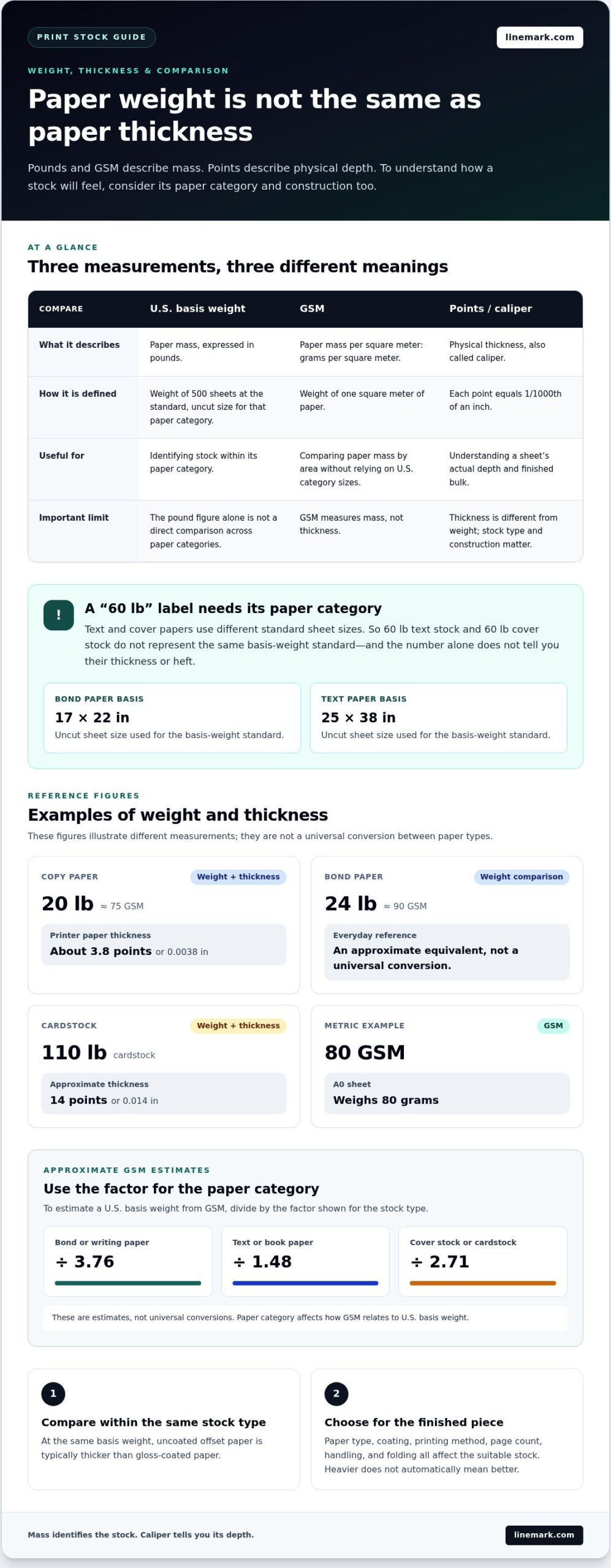
A heavier sheet isn’t automatically the better choice. The importance of paper weight in printing comes down to how the stock feels, performs, and suits the finished piece: in the United States, weight is commonly expressed in pounds or grams per square meter (GSM), while basis weight represents 500 sheets in a paper category’s standard size. GSM measures the weight of one square meter of paper, and points describe thickness, with each point equal to 1/1000th of an inch.
It’s easy to treat paper weight as a simple measure of quality, but the right stock depends on more than heft. Paper type, coating, printing method, page count, and how the piece will be handled all affect the choice. A stock that works well for a report may not suit a brochure cover or bound book.
This guide explains how paper weight relates to thickness and print performance, then compares practical options for common print products. You’ll also learn what to consider when choosing stock for offset or digital printing, so you can balance appearance, handling, and production requirements with confidence.
Key Takeaways
- Choose stock for the finished piece, considering its purpose, handling, page count, and desired feel rather than assuming heavier is always better.
- Heavier paper can help limit show-through with image-rich or double-sided printing, but it doesn’t guarantee better print quality.
- Match the stock to the product: a flexible text sheet, a sturdy cover, and a postcard each have different demands.
- Consider folding and finishing early. Cover stock and cardstock may need scoring to fold cleanly.
- Offset and digital equipment handle paper differently, so the suitable stock depends on both the project and the press.
What is Paper Weight and Why is it Important?
Paper weight describes a stock’s mass, but the number depends on the measurement system. In the United States, pounds usually refer to basis weight, while the metric system uses grams per square meter (GSM). These figures help identify a stock, but they don’t directly tell you its thickness. The importance of paper weight in printing becomes clearer when you consider the paper category and intended use alongside the measurement.
Paper weight measures mass; paper thickness, also called caliper, measures the sheet’s physical depth. Points and mils describe thickness, with each point representing 1/1000th of an inch. For example, standard 20 lb copy paper is about 3.8 points thick, or 0.0038 inches; 110 lb cardstock is about 14 points, or 0.014 inches.
GSM gives a straightforward metric comparison: it measures the weight of one square meter of paper. An A0 sheet of 80 GSM paper weighs 80 grams. The figure describes the sheet’s mass relative to its area, so GSM can help compare papers without relying on U.S. paper-category sizes.
U.S. basis weight works differently. It is the weight of 500 sheets measured at the standard, uncut size for that paper category. For bond paper, an uncut sheet measures 17 by 22 inches; for text paper, the basis is a ream of 500 sheets measuring 25 by 38 inches.
That category-specific standard size matters. A 60 lb text stock and a 60 lb cover stock don’t represent the same paper weight basis, because text and cover papers use different standard sheet sizes. The pound figure alone isn’t a direct comparison of thickness or heft between categories.
For everyday reference, standard 20 lb printer paper is approximately 75 GSM, while 24 lb bond paper is approximately 90 GSM. These are useful equivalents, not universal conversions: paper category affects the relationship. For estimates, divide GSM by 3.76 for bond or writing paper, by 1.48 for text or book paper, and by 2.71 for cover stock or cardstock. Understanding the importance of paper weight in printing means using the appropriate conversion for the stock type.
Two sheets with similar basis-weight labels can feel different because category, coating, and construction affect thickness. At the same basis weight, uncoated offset paper is typically thicker than gloss-coated paper. Compare both the weight system and stock type, especially when sheet feel, folding, or finished bulk matters.
Does heavier paper improve print quality?
Heavier stock can improve handling and reduce show-through, but weight alone doesn’t guarantee sharper images. The right choice depends on the piece’s purpose, artwork, paper type, and printing method.
Feel, Durability, and Print Quality
Paper weight influences how substantial a printed piece feels and how it holds up during handling. A heavier sheet can lend a brochure or presentation a more substantial feel, while lighter stock suits everyday documents that need to remain easy to handle.
For double-sided printing, heavier-weight bond paper can help prevent ink from showing through. It’s also used for presentations, signs, fliers, contracts, and resumes. Heavier printing papers range from 32 to 80 lb and often suit brochures, catalogs, and marketing materials. The useful choice is the stock that supports the document’s purpose without adding unnecessary bulk.
Mailing adds another consideration: heavier pieces weigh more, which can affect postage depending on their format and mailing category. The United States Postal Service also requires postcards to meet a minimum point measure for acceptance, so thickness matters for eligibility as well as handling.
Image Quality and Brand Perception
Paper weight can influence how printed images appear, but it doesn’t determine image sharpness by itself. A heavier sheet can help limit show-through when a document includes graphics or images, especially in double-sided work. Image quality also depends on the paper’s surface and how the ink interacts with it.
Stock also affects a reader’s first impression. A sturdy cover can make a catalog feel more substantial, while lighter text pages keep a multi-page piece easier to handle. This physical impression contributes to perceived quality, but choosing the heaviest sheet available won’t improve the design or compensate for unsuitable paper. Match the stock to the message, layout, and way readers will use the piece.
For a practical comparison, consider the complete printed item rather than a single sheet: the cover, interior pages, and folds all shape its feel. The intended audience and frequency of handling help determine whether extra substance enhances the experience or makes the piece cumbersome.
Coating, Paper Type, and Finish
Coating, paper category, and finish affect how a stock feels and how its weight translates into thickness. At the same basis weight, uncoated offset paper is typically thicker than gloss-coated paper. A pounds label alone therefore won’t predict the finished feel across different stock types.
Coating and surface influence a paper’s appearance and interaction with printed images, so they help determine the best choice. Decide whether the piece needs a smooth, coated surface or an uncoated feel, then compare weights within that paper type. For commercial printing, align the stock with the artwork and finished format so the material supports the result rather than adding weight without purpose.
When comparing options for a project, commercial printing can bring paper selection and production requirements into the same conversation, helping connect the desired feel with the intended print outcome.
Paper weights for common print products
Paper weight refers to a stock’s basis weight or GSM, but useful ranges vary by paper type and product. These examples connect familiar print formats with practical stock choices.
Common Weights and Uses
A paper-weight chart is a starting point for matching stock to a product’s use, feel, and handling needs. Compare the paper category as well as the number, since text and cover weights use different basis sizes.
- Everyday printing: 80-110 GSM is commonly used for letterheads and reports.
- Magazines and booklets: 120-170 GSM is a common range for interior pages.
- Brochures and flyers: 120-210 GSM can provide more substance than everyday paper.
- High-end business cards and folders: 250-300 GSM is a common range.
For a magazine, page count and binding matter too: thicker interior stock adds bulk across the finished publication. Choosing paper weight for an individual page without considering the complete piece can change how the publication handles and feels.
Card-Stock Weight Options
Cardstock is a heavier, more rigid stock used when a printed item needs structure and durability. The right weight depends on whether it needs to bend, stand upright, or withstand frequent handling.
Light cardstock used for flyers and brochures commonly ranges from 120-170 GSM, while heavy cardstock commonly ranges from 200-300 GSM. Extra-heavy paper for premium prints is commonly 300 GSM or higher. These GSM ranges offer a quick comparison, but the product’s format and paper category still matter.
In U.S. basis-weight examples, 60 lb cardstock is a light card stock used for business cards, postcards, greeting cards, posters, and tickets. 80 lb card stock is commonly used for business cards, dividers, postcards, folders, invitations, menus, and table tents. A useful chart should therefore connect weight with intended use, not treat one number as a universal specification.
Cover-Weight Paper Uses
Cover-weight paper is designed for outer pages and other components that need more body than text-weight stock. Common cover-paper basis weights are 65, 80, and 100 pounds, giving planners familiar options for balancing stiffness and handling.
A 65 lb cover paper is approximately 175 GSM, while 100 lb cover paper is approximately 270 GSM. An 80-100 lb cover stock, or 220-300 GSM, is recommended for invitations and greeting cards; 100 lb cover paper, or 270 GSM or higher, is recommended for business cards.
For books and catalogs, choose a cover’s durability based on how often readers will handle the piece and how the cover joins the text pages. Cover-weight paper and cardstock may need scoring for proper folding, unlike text-weight paper, which folds more easily. Consider finishing requirements alongside weight when comparing stocks.
Choosing paper weight based on document purpose
Start with the document’s purpose: everyday reading, professional presentation, or repeated handling. Then compare suitable stocks by weight, paper category, and finished format.
Matching Weight to the Print Job
Matching weight to purpose means choosing stock that supports the document’s use without unnecessary bulk. For everyday documents, paper weighing 20 to 40 lb is a common recommendation; 80-110 GSM is also used for general printing, including reports.
Professional documents call for a more substantial feel. A guide recommends 28-32 lb bond paper, or 100-120 GSM, for professional documents. Paper weighing 24 lb, or 90 GSM, is often used for business letters and reports, while 28 lb, or 105 GSM, suits presentations and professional correspondence.
For brochures and flyers, recommendations include 100-120 lb text paper, or 120-170 GSM. These different measurements reflect paper categories, so compare like with like rather than treating pounds and grams per square meter as interchangeable labels. A 100 lb text stock can also serve brochure pages while remaining light enough for saddle-stitching.
Resumes have their own balance of readability and substance: paper weighing 105-120 GSM is used for them. Match the stock to the document’s audience and use, then consider whether it needs to fold, bind, or withstand repeated handling.
Preventing Show-Through
For double-sided printing, consider heavier paper when images or graphics may show through from the reverse side. Heavier-weight bond paper is used for double-sided printing, and its added substance can help limit ink show-through.
The right choice depends on the content and paper type, not just the number measured in pounds. A text-heavy report and a graphic-rich presentation, for example, place different demands on the sheet. Mid-weight bond paper is used for reports, business letterhead, legal documents, and proposals; heavier bond paper suits presentations and image-led work.
Text-weight paper is thinner and lighter than cover-weight paper, so a cover stock isn’t automatically the best answer for interior pages. Consider the complete document: page count, images on both sides, and handling all influence a suitable stock. For a booklet, 100-pound text paper can support brochure pages and remain light enough for saddle-stitching.
Postcards have a separate thickness requirement: the United States Postal Service requires them to meet a minimum point measure for acceptance. Since points describe thickness rather than basis weight, choosing stock by pounds alone may not address this format requirement.
Paper weight for offset and digital printing
For offset and digital printing, suitable stock must work for both the finished piece and the press. Weight matters, but equipment limits, paper category, coating, and format also shape the choice.
Digital printers have different maximum paper-feed limits, so a stock that runs on one machine may not suit another. Check the printer’s specifications before using heavy paper. Everyday documents often use 80 GSM paper, while lightweight printing paper typically weighs 20 to 24 lb. Standard-weight printing paper typically weighs 24 to 28 lb.
Offset printing also depends on the equipment. Higher-basis-weight paper cannot be run on web presses, while some lower-basis-weight sheets cannot be run on sheetfed equipment. The lightest or heaviest option isn’t automatically the most practical: the press type and sheet characteristics must align.
Text paper is available in 50, 60, 70, 80, and 100 lb weights. Text stock can range from 20 to 100 lb or more, while cover stock uses a different basis size. Compare papers within the same category, then consider whether the job needs text pages, a cover, or both.
Digital printing often suits projects that use variable data or require on-demand production; offset printing is another method for commercial work. With either method, sheet weight is only one part of the specification. Coated and uncoated text-weight and cover-weight papers are available, and their surfaces affect appearance and feel.
Think through the finished format. Invitations may need substantial cover stock, while documents for everyday use may work well on lighter paper. Posters have different handling and display needs. For a bound book, page count and cover stock together affect finished bulk, so don’t select interior sheets in isolation.
For heavier printing papers, the common range is 32 to 80 lb, with brochures, catalogs, and marketing materials among their uses. Extra-heavy printing papers typically exceed 80 lb and can reach 120 lb or more. As weight rises, the stock can feel sturdier, but it may also challenge a printer’s feed limits. Match the material to the press before finalizing the job.
Compare a physical sheet of paper in the intended category, then assess its feel, finish, and suitability for the machine and format. Paper samples can help evaluate weight, texture, and print quality before a bulk purchase. To align stock selection with production needs, discuss your print project.
Linemark: Custom Book Printing
Linemark’s Custom Book Printing helps organizations produce finished books with paper choices aligned to the project’s purpose. Consider interior stock, cover weight, page count, and binding together: a thicker sheet can change the book’s bulk and feel, while the cover needs to suit its handling and presentation.
Bring your preferred paper weight, book format, and intended use into the planning conversation. For a book project, Linemark can connect those choices with custom book printing requirements. Linemark also provides commercial printing, direct mail, and large format graphics for other printed materials.
Contact Linemark to discuss your print project or visit linemark.com.
Make the Stock Part of the Plan
Plan paper selection from the start, alongside the project’s format, audience, and intended use. Understanding the importance of paper weight in printing helps make material selection a deliberate part of the reader experience, rather than a last-minute production detail. The right decision supports how your message is handled, read, and remembered.
For a book, Linemark’s Custom Book Printing can bring stock decisions into the production plan. Direct Mail and Large Format Graphics help organizations carry their message across different formats. Each project benefits from matching the paper or print material to its purpose and the impression it needs to make.
Ready to put those choices into motion? Contact Linemark about your print project and take the next step with a clear direction. A thoughtful material choice can help your finished piece work harder for your message.
Frequently Asked Questions
Can all printers handle heavy paper?
No. Printer feed limits vary, so a heavy sheet accepted by one device may exceed another’s capacity. The feed path and paper-handling design determine which stock a printer can use, not the weight label alone. Before choosing heavy paper for a desktop or production printer, compare its media specifications with the stock’s category and thickness. A sheet may fall within a listed weight range yet still be unsuitable because its caliper is too great.
What’s the difference between lb and gsm?
“Lb” usually describes U.S. basis weight, while GSM measures the mass of one square meter of paper. A 20 lb bond sheet is approximately 75 GSM, and 24 lb bond is approximately 90 GSM. These comparisons depend on paper category, so there isn’t one universal pounds-to-GSM conversion. For example, bond, text, and cover stocks use different basis sizes, which changes how their pound ratings relate to GSM.
What does paper weight mean in printing, and how is it measured?
Paper weight identifies a stock’s mass using a category-based U.S. measure or the metric GSM scale. U.S. basis weight describes the weight of 500 sheets at that paper type’s standard base size; GSM measures mass per square meter. When reviewing a stock specification, look at the category alongside the weight. That helps distinguish a weight rating from thickness, which is commonly measured in points or caliper.
What are the differences between paper weight in lb, text weight, cover weight, and gsm?
“Lb” is a basis-weight label, while text and cover identify paper categories with different standard sheet sizes. Text-paper basis weight uses 500 sheets measuring 25 by 38 inches; cover stock uses a 20 by 26-inch basis size. GSM instead measures the mass of a square meter, independent of those U.S. basis sizes. As a result, matching pound numbers across text and cover stocks doesn’t mean equal weight or thickness.
How does paper weight affect print quality, durability, opacity, and feel?
Heavier stock can feel more substantial and help reduce show-through, especially on double-sided pages with graphics. It can also support durability in frequently handled materials, but weight alone doesn’t make images sharper. Coating, surface, ink, and paper type influence image appearance. For example, uncoated offset paper is typically thicker than gloss-coated paper at the same basis weight, so equal pound ratings can produce different thicknesses and feel.
Which paper weights are best for flyers, brochures, business cards, posters, and books?
Flyers and brochures commonly use 120-210 GSM, while business cards often use 100 lb cover stock, or 270 GSM or higher. Cardstock used for posters includes 60 lb and 80 lb options. Book interiors may use 80 lb text paper; cover choices vary with the project, from 10-point stock for smaller perfect-bound projects to 16-point stock for frequently handled catalogs. Treat these as starting points, then match stock to format and use.
How does paper weight affect printing and mailing costs in the United States?
Heavier paper usually costs more than lighter paper and adds weight to the finished piece. For U.S. mail, that extra weight can affect postage depending on the format and mailing category; postcards must also meet a minimum thickness requirement for acceptance.