


 11/01/2026
 Steve Bearden
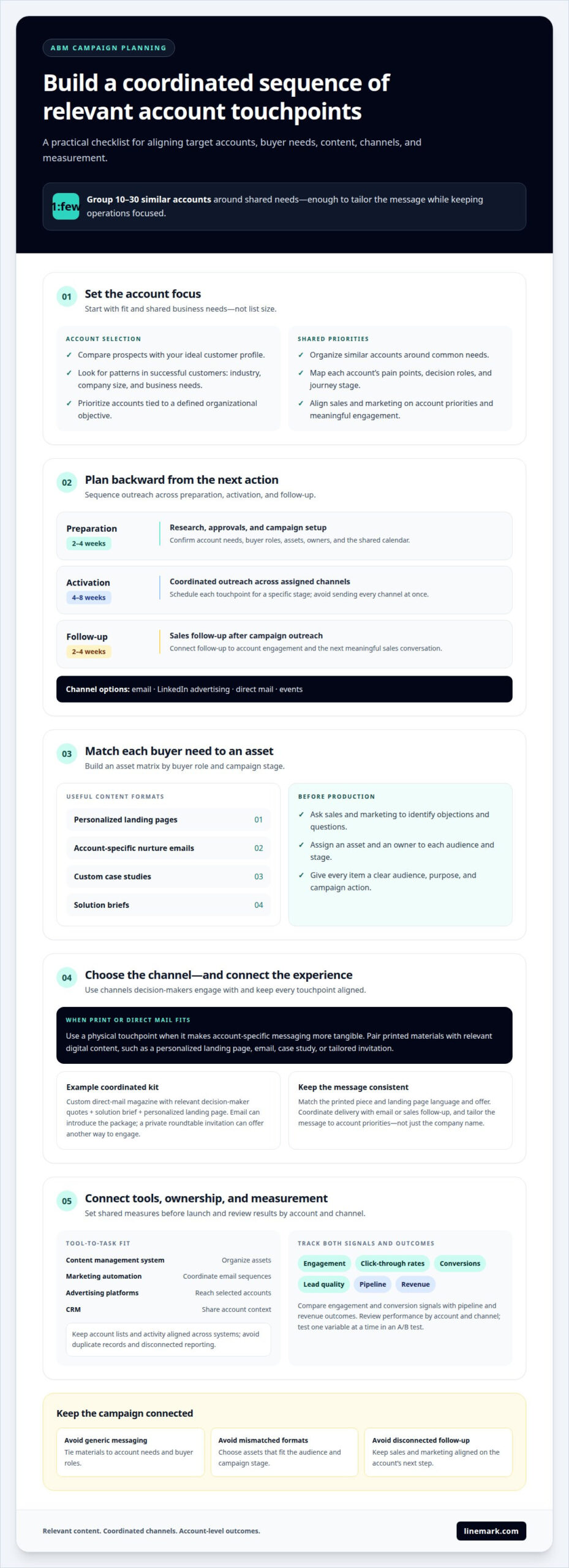
Broad reach isn’t the goal of account-based marketing; coordinated relevance is. Plan ABM campaign materials around specific account needs and buyer roles, then match each piece to a channel those people use. For a 1:few campaign, group 10-30 similar accounts so you can tailor the message without losing operational focus.
That focus is what makes ABM useful for teams pursuing valuable B2B accounts: sales and marketing can work from the same account priorities instead of sending disconnected messages. The challenge is deciding what to create, how personal each asset should be, and where it will have the most impact.
This guide walks through a practical plan for ABM campaign materials, from defining target accounts and researching their needs to choosing formats, coordinating channels, and measuring results. Learn how to tailor each touchpoint to its audience while keeping production and execution aligned.
Key Takeaways
- Build your target-account list around shared business needs, then tailor the message to each account group and its buyer roles.
- Pair useful digital content with printed pieces or direct mail when a tangible, account-specific touchpoint supports the campaign.
- Set shared goals for sales and marketing, and track account engagement alongside pipeline and revenue outcomes.
- Choose channels based on where decision-makers spend time, then coordinate the campaign’s preparation, activation, and follow-up.
Campaign planning and execution
Build the campaign as a coordinated sequence: define target accounts, match content to buying needs, and measure progress at the account level. A shared calendar helps marketing and sales align every channel and stage.
-
Map Campaign Stages and Channels
Map each target account group to a sequence of channels, from first contact through follow-up. For a 1:few campaign, organize 10-30 similar accounts around shared needs, then assign email, LinkedIn advertising, direct mail, or an event to a specific stage.
Plan backward from the desired next action. Preparation for a 1:1 campaign lasts 2 to 4 weeks, activation lasts 4 to 8 weeks, and follow-up lasts 2 to 4 weeks. In a week-by-week calendar, schedule research and approvals during preparation, coordinated outreach during activation, and sales follow-up afterward. Avoid sending every channel at once.
-
Create a Content and Asset Plan
Create an asset matrix that links each buyer role and campaign stage to a useful format. Personalized landing pages, account-specific nurture emails, custom case studies, and solution briefs can address the different questions a buying group asks while evaluating a solution.
To plan ABM campaign content and materials, list each target account’s pain points, decision roles, and journey stage, then assign an asset and an owner. Ask marketing and sales to identify objections and questions, and use those insights to shape personalized content. Make sure every item supports a campaign action instead of producing material without a clear audience or purpose.
-
Select Tools for Creating and Distributing Materials
Choose tools for specific tasks: use a content management system to organize assets, marketing automation to coordinate email sequences, and advertising platforms to reach selected accounts. A customer relationship management system can help marketing and sales share account context.
Which tools help create and distribute ABM campaign materials? Combine the tools your team uses for content production, account coordination, email, advertising, and analytics. Check that account lists and campaign activity stay aligned across systems, and avoid adding a platform that creates duplicate records or disconnected reporting.
-
Measure Material Performance and Avoid Common Mistakes
Set account-level and campaign-level measures before launch. Track engagement, click-through rates, conversions, lead quality, pipeline, and revenue to see whether each asset moves target accounts toward meaningful sales conversations.
To measure performance, compare engagement and conversion signals with pipeline and revenue outcomes, then review results by account and channel. Test one variable at a time in an A/B test. Avoid generic messaging, mismatched formats, and disconnected marketing and sales follow-up; each can weaken the link between a material and its intended account action.
Print and direct mail tactics
Use print and direct mail when a physical touchpoint can make account-specific messaging more tangible. An ABM campaign can combine printed materials, personalized landing pages, email, case studies, and tailored invitations.
-
Identify the Campaign Materials
Choose materials that help each target account take a clear next step. For example, pair a custom direct-mail magazine featuring relevant decision-maker quotes with a solution brief and personalized landing page. Email can introduce the package, while an invitation to a private roundtable offers another way to engage.
For a direct mail kit, coordinate the printed piece, personalized note, and digital destination as one experience. Another option is a branded executive gift box paired with a landing-page invitation. Match each format to the audience and campaign stage, and avoid sending a package unrelated to the account’s needs or messaging.
-
Personalize Materials for Target Accounts
Use account research to shape the message, not just to insert a company name. Address the target’s business priorities, relevant pain points, and the interests of the people receiving the material. For example, a case study can highlight a related challenge, while a direct-mail magazine can include insights relevant to the account’s industry.
Keep the physical and digital experience consistent. Give the printed piece a specific call to action, then make its landing page reflect the same language and offer. Coordinate delivery with email or sales follow-up so recipients can see how each touchpoint connects. Personalization should clarify the value, not add decorative details that distract from it.
When a coordinated physical touchpoint fits your strategy, direct mail campaigns can bring print and account-focused messaging together.
ABM campaign goals and benefits
Set goals around account progress, not activity alone. In account-based marketing, sales and marketing focus resources on high-value accounts and coordinate relevant experiences for their buying groups.
- Choose target accounts where focused engagement can support a meaningful business opportunity. ABM suits B2B companies with long sales cycles, high-value deals, and several stakeholders involved in enterprise decisions. Start with patterns among successful existing customers, such as industry, company size, and business needs.
Compare each prospect with your ideal customer profile. A strong fit gives sales a clearer reason to invest in direct outreach and tailored content. Avoid expanding the list just to increase its size; prioritize accounts where your solution connects to a defined organizational objective.
- Align sales and marketing around a shared outcome, such as target-account pipeline or revenue. A common measure keeps campaign choices tied to sales progress instead of isolated activity totals. Agree on what counts as meaningful engagement, such as a relevant stakeholder responding or an account taking a requested next step.
Define ownership before launch. Marketing can coordinate account-focused communications, while sales provides context on active conversations and buying roles. For example, if a decision-maker raises a concern, the teams can adapt follow-up messaging and equip sales with a useful response.
- Track account-level and campaign-level performance separately. At the account level, review which stakeholders engage and whether conversations advance. At the campaign level, compare clicks, conversions, lead quality, and sales closing ratios across channels and materials.
Connect those signals to pipeline and revenue rather than treating a click as a finished result. A dashboard that separates account activity from campaign activity can show whether a strong response came from one account or reflects a broader pattern. Use that distinction to refine future efforts.
- Assess benefits through the buying group’s experience as well as sales outcomes. Personalized content can address different roles, questions, and decision stages within a target account. This relevance helps sales and marketing support a coordinated conversation instead of sending disconnected messages.
Review progress with sales after each campaign stage. Identify which profile characteristics, content formats, and interactions appeared among accounts moving forward. Keep what worked, revise weak points, and apply those lessons to the next account-based marketing cycle.
Channel selection and campaign timing
Choose channels by matching account behavior and campaign stage to the next action you want. Effective account-based marketing connects digital and physical materials instead of treating each channel as a separate effort.
Digital options include email, LinkedIn advertising and InMail, webcasts, and retargeting. Physical materials, such as direct mail, can complement these channels when a tangible touchpoint supports the message.
- Identify where each target audience is most likely to engage. Use account research and sales conversations to understand preferred channels, stakeholder roles, and current buying activity. For example, LinkedIn advertising can reach decision-makers at selected accounts, while an email sequence can provide more detailed follow-up.
Consider the resources available to run each channel well. A strategy with more touchpoints than the team can coordinate may create gaps between marketing and sales. When in-house bandwidth is limited, partnering with a B2B appointment setting agency such as Virtual Sales Limited can ensure target accounts receive timely follow-up. Choose a focused mix that supports consistent messaging and clear ownership.
- Match each channel to a specific campaign moment. Use an initial personalized ad or email to establish relevance, then follow with a webcast, event invitation, or direct mail when it fits the account’s interests. Keep the call to action consistent across touchpoints.
Digital and physical materials work best when each serves the audience and reinforces the same message. A LinkedIn ad can introduce a topic, while a direct-mail piece or event invitation offers a distinct next step. Avoid sending every format to every contact.
- Set timing around account signals and sales activity. Coordinate outreach with sales so a new email, retargeting placement, or direct touchpoint supports an active conversation. Pause or adjust scheduled messaging when an account’s needs or engagement change.
Use a shared calendar to show channel, audience, owner, and intended action. A partner or sales representative can flag account developments, helping marketing adjust timing before messages feel disconnected or repetitive.
- Review metrics by account and channel after each campaign stage. Compare engagement, conversions, and meaningful sales responses to see which combinations support progress. Use the findings to adjust the channel mix, timing, and creative for the next account-based marketing effort.
For personalized printed pieces produced through digital printing services, align the format and message with the audience’s next step.
Linemark: Custom Book Printing
Linemark turns account insights into coordinated print materials, including custom books for detailed, lasting presentations. When a target account needs a substantial resource to share across its buying group, a custom-printed book can bring research, case studies, and solution information together in one format.
For campaigns built around multiple touchpoints, Linemark also provides direct mail, large-format graphics, and commercial printing. These services can support a consistent experience across a mailed piece, printed collateral, and physical campaign environments. Choose the format based on the account’s audience, message, and planned next step.
To discuss print materials for your ABM campaign, contact Linemark or visit linemark.com.
Put your account strategy into motion
A strong ABM program depends on deliberate choices: each touchpoint should help a specific account understand why the next conversation matters. Treat your ABM campaign materials as part of that conversation, not as isolated deliverables. Keep account priorities in view as you refine the message, coordinate teams, and prepare each piece for its intended role.
The next step is to turn your campaign plan into production-ready materials. Linemark supports this work with print formats suited to targeted communications, from a detailed book to a direct-mail piece or large-format graphic. Match the format to your audience and campaign purpose, then contact Linemark to discuss your plan.
Contact Linemark to plan your campaign and move your account strategy toward its next meaningful interaction.
Frequently Asked Questions
What is Account Based Marketing (ABM)?
Account Based Marketing is a B2B strategy that focuses marketing and sales efforts on selected organizations. Instead of building one broad campaign for everyone, a team coordinates outreach to an account and the people involved in its purchasing decisions. For example, messages for a finance leader and an operations lead can address different concerns while supporting the same business conversation.
What Are the Goals of an ABM Campaign?
An ABM campaign aims to deepen engagement with priority accounts and support outcomes such as pipeline and revenue. It can also help teams focus on organizations that fit their ideal customer profile. Set a goal that connects activity to account progress, such as securing a meeting with a relevant stakeholder or advancing an active opportunity.
What are good ABM examples?
A good example starts with an account-specific business issue and gives each stakeholder a relevant reason to engage. For a manufacturing company evaluating process changes, a campaign might offer leaders a tailored operational briefing, followed by a working session with subject-matter experts. Sales can use the discussion to understand objections and identify a useful next step for the organization.
What does ABM stand for in marketing?
ABM stands for Account Based Marketing. The term describes a focused approach to B2B marketing in which organizations prioritize specific companies rather than treating every prospect as part of one broad audience. The account is the organizing unit, so marketing activity and sales conversations are planned around that organization’s needs, stakeholders, and potential fit.
What are the best ABM campaign materials for each stage of the buyer journey?
Match each material to the buyer’s next decision. Early in the journey, use a concise insight or issue checklist to establish relevance. During evaluation, provide a tailored business case or implementation roadmap. Near a decision, give stakeholders a clear summary of requirements, responsibilities, and expected next steps to help the buying group align internally.
What are examples of effective ABM campaign materials?
Effective examples include an executive letter tied to a company priority, an account-specific benchmarking report, and a stakeholder summary prepared after a sales conversation. Each should make its relevance clear without relying only on the recipient’s name. Confirm the content reflects a real account need, gives the reader a practical takeaway, and supports one clear next action.