

 05/21/2026
  Steve Bearden
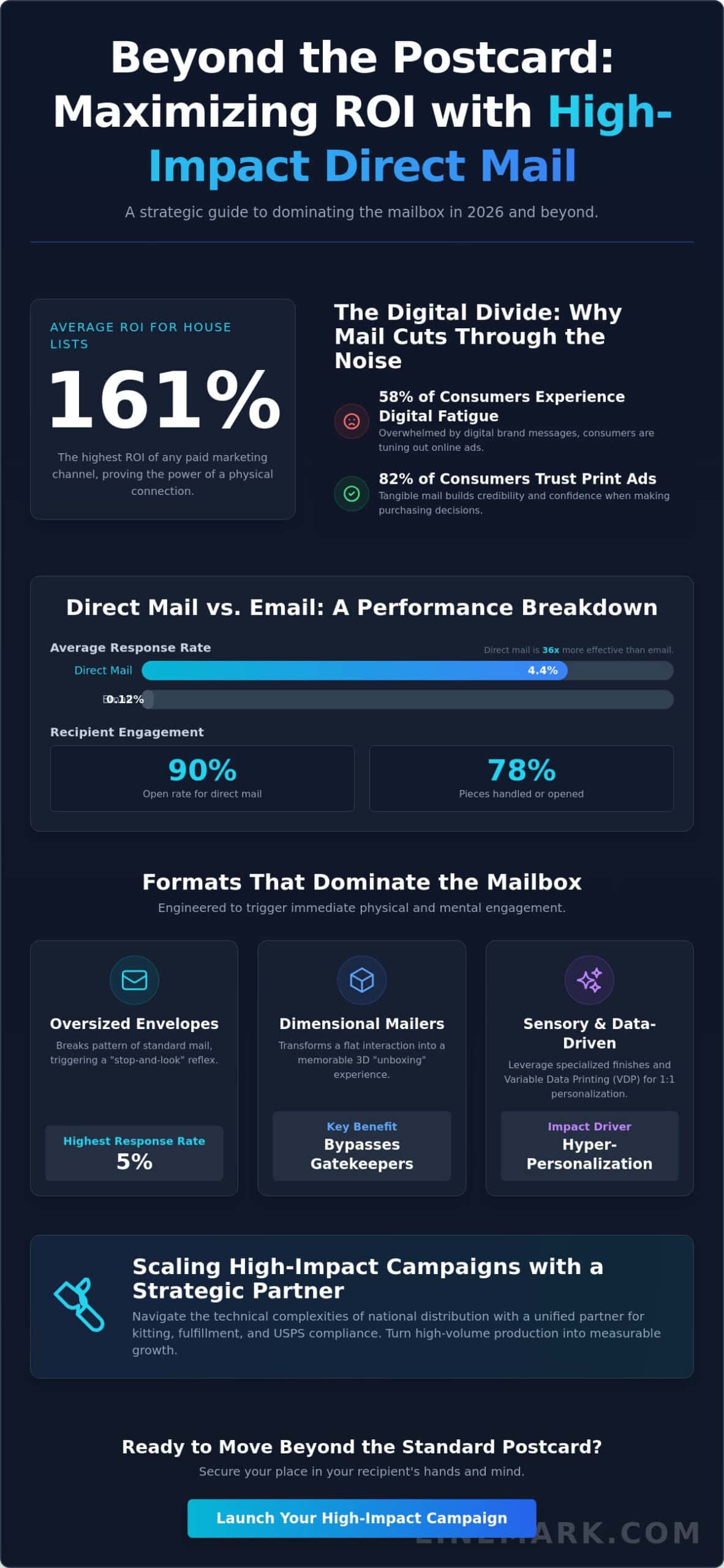
While digital ads fight for fractions of a percentage point in engagement, direct mail sent to house lists is delivering an average ROI of 161 percent, which is currently the highest of any paid marketing channel. You likely recognize that standard postcards often yield diminishing returns as digital fatigue sets in for 58 percent of consumers. To truly command attention, national brands are moving beyond the basics and investing in high-impact direct mail formats that utilize tactile engineering and data-driven precision. These sophisticated pieces don’t just reach a mailbox; they demand to be opened, with response rates for oversized envelopes now exceeding 5 percent.
Integrating these automated triggers into your CRM turns a static campaign into a reactive marketing tool. With the decline of third-party data due to privacy regulations, leveraging your own CRM insights—or specialized data tools like ScreenMe™ for property management—is the only way to maintain a competitive edge. This technological focus is what positions us as a strategic communications ally rather than a simple service provider. We help you engineer a holistic journey that starts at the mailbox and ends with a measurable conversion. By combining technical production capabilities with data-driven strategy, we ensure your project is handled with the meticulous attention to detail required for modern marketing success.
This guide provides the strategic framework you need to identify formats with the highest ROI for your 2026 campaigns. We’ll examine the technical requirements of dimensional mail, the transformative potential of variable data printing, and the operational precision required for national distribution. You’ll discover how a unified partnership can streamline complex kitting and fulfillment processes, turning high-volume production into a catalyst for measurable growth. We’ll show you how to move from a transactional mindset to a holistic communications strategy that secures your place in the recipient’s hands and mind.
Key Takeaways
- Understand the neuroscience behind haptic memory and why non-standard physical formats are essential for triggering immediate recipient responses.
- Learn how to deploy high-impact direct mail formats, including 3D dimensional elements and oversized postcards, to dominate the visual landscape of the mailbox.
- Explore how specialized finishes and substrate weights communicate brand authority and extend the time recipients spend interacting with your message.
- Discover how to leverage Variable Data Printing (VDP) to deliver dynamic, recipient-specific imagery that matches individual customer profiles.
- Understand how to manage the technical complexities of national distribution through centralized kitting and fulfillment services.
Beyond the Standard Postcard: Defining High-Impact Direct Mail in 2026
High-impact direct mail formats represent a strategic departure from the generic. They are engineered to trigger an immediate physical response through tactile engineering. Unlike standard mailings, these specialized pieces rely on haptic memory, which is the brain’s ability to recall information based on touch. In the context of Direct Mail, this means your brand stays top-of-mind longer because the recipient physically engaged with a unique structure. We’ve moved beyond broad mass-mailing into an era of “smart-mailing.” This approach uses specialized physical structures to increase conversion velocity and drive an average ROI of 161 percent for house lists.
The metrics support this evolution toward high-impact direct mail formats. While digital messages are often ignored, direct mail open rates are as high as 90 percent. Research shows that 78 percent of pieces are handled or opened by recipients. The format you choose directly influences how quickly a prospect moves through the sales funnel.
To better understand how these physical elements translate into results, watch this helpful video:
The ROI of Non-Standard Dimensions
Breaking the pattern of standard #10 envelopes is essential for national campaigns. When a mailbox is filled with uniform shapes, an unusual dimension triggers a natural “stop-and-look” reflex. Oversized envelopes, for example, achieve the highest response rate at over 5 percent, followed by postcards at 4 percent. Balancing this creative impact with USPS postage requirements is a technical necessity. With the First-Class Forever stamp rate at $0.78 as of April 2026, precision in weight and size is critical. You need to maintain visual dominance without incurring unnecessary surcharges. Our expertise in industrial production ensures that your 6×11 or larger formats meet these rigorous technical standards while maximizing mailbox visibility.
Digital Fatigue and the Physical Advantage
Digital marketing fatigue is a measurable reality that brands can’t afford to ignore. 58 percent of consumers report feeling overwhelmed by the volume of digital brand messages. This saturation has driven email’s average response rate down to 0.12 percent, while direct mail maintains a significantly higher 4.4 percent. High-impact formats turn the mailbox into a premium “unboxing” experience. First impressions are structural; the weight of the paper and the unique fold of the mailer signal that your message is worth the recipient’s time. This physical advantage builds trust, with 82 percent of consumers trusting print ads when making a purchasing decision. It’s a tangible way to cut through the noise and establish a credible connection.
Dimensional and Oversized Formats: Breaking the Mailbox Barrier
The physical barrier of the mailbox is where most campaigns succeed or fail. High-impact direct mail formats like dimensional and oversized pieces are specifically designed to break through this barrier by occupying more physical and mental space than a standard letter. As the U.S. Small Business Administration points out, Direct Mail is Hot Again because it provides a tangible touchpoint that digital ads simply cannot replicate. By moving beyond the standard #10 envelope, you signal to the recipient that your message is a priority.
The Power of Dimensional (3D) Mailers
Dimensional mailers transform a flat interaction into a three-dimensional experience. Pop-up cards and telescoping mailers are particularly effective in B2B environments where the surprise factor can bypass gatekeepers. These formats turn a standard delivery into a physical event that recipients are likely to share with colleagues. For high-value prospect targeting, box-mailers that incorporate kitting and fulfillment services offer a premium feel that justifies the investment. Our production facility manages these complex, multi-piece projects with the meticulous attention of a boutique shop, ensuring every component is perfectly placed for maximum impact. This level of precision is essential for maintaining brand integrity during high-volume national distributions.
Oversized and Non-Standard Postcard Dimensions
Oversized postcards provide the visual real estate needed to dominate the mailbox landscape. While a standard card might get lost, 6×11 and jumbo formats demand immediate attention. Recent data shows that oversized envelopes achieve a response rate over 5 percent, while postcards follow at 4 percent. When designing these larger formats, white space and bold typography are critical for clarity. You don’t want to clutter the extra space; you want to use it to create a singular, powerful focal point. Effective July 12, 2026, the USPS will require mailers to include accurate length, width, and height dimensions for all commercial parcels. This makes technical precision in your direct mail production more important than ever to avoid new noncompliance fees and ensure your campaign remains cost-effective.
Beyond postcards, self-mailers and booklets allow for deep-dive storytelling without the barrier of an envelope. These formats are ideal for annual reports or detailed newsletters where you need to convey complex information through high-quality commercial printing. Integrated formats take this a step further by including functional items like stickers or magnets. This physical integration keeps your brand in the recipient’s environment long after the mail is opened. By combining these elements into a single, cohesive piece, you create multiple touchpoints that drive measurable ROI and bypass digital fatigue.
Sensory Marketing: Using Tactile Finishes and Substrates for Impact
Visual appeal is only the first step in a successful campaign. While color and layout draw the eye, it is the physical engineering of the piece that establishes brand authority. High-impact direct mail formats utilize tactile finishes to trigger haptic memory, creating a sensory experience that digital screens cannot replicate. This physical connection is a core component of effective direct mail strategies because it increases the time a recipient spends with your message. When a prospect feels a heavy, textured mailer, their brain associates that physical weight with organizational stability and trust.
Tactile Coatings and Sensory Finishes
Specialized coatings transform standard paper into an interactive tool. Soft-touch lamination is a popular choice for premium brands, as it creates a velvet-like texture that encourages the recipient to keep holding the piece. This increased dwell time is critical for complex offers. You can also use spot UV finishes to create high-gloss contrast against matte backgrounds. This technique serves a dual purpose: it adds a sophisticated aesthetic and physically guides the recipient’s thumb toward your primary call-to-action. To further incentivize these innovations, the USPS is offering a 5 percent postage discount for mailings that incorporate tactile, sensory, or interactive elements through June 30, 2026. This promotion makes it more cost-effective to experiment with grit finishes, scented inks, or even heat-activated textures that change as the recipient handles the mail.
Substrate Selection: Beyond Standard Paper
The choice of substrate is the foundation of your mailer’s perceived value. Moving to a heavyweight cover stock, such as 100lb or higher, immediately distinguishes your brand from the flimsy circulars that clutter most mailboxes. Our industrial production capabilities allow for the use of diverse materials, including synthetics that offer superior durability and a unique hand-feel. These materials ensure your message survives the automated sorting process in pristine condition.
Sustainability has also become a non-negotiable standard for consumers in 2026. Brands that don’t prioritize eco-friendly materials risk losing trust with their audience. We utilize recycled substrates and soy-based inks to meet these expectations without sacrificing the structural integrity of the mailer. By combining these sustainable choices with advanced binding and finishing techniques like embossing or foil stamping, you create a three-dimensional feel that signals quality. Die-cutting further invites interaction by using physical windows or custom shapes to reveal information. These structural choices turn a simple delivery into a curated brand experience that drives measurable ROI.
The Data Factor: Leveraging Variable Data Printing (VDP) for Individualized Impact
Hyper-Personalized Visuals and Offers
Variable Data Printing is the engine of modern direct mail relevance. It allows you to move beyond basic “Dear Name” personalization and enter the realm of dynamic storytelling. For instance, a national brand can send a mailer featuring a personalized map to the nearest storefront or display product photos that align with the recipient’s specific demographic profile. This dynamic approach lifts conversion rates because it addresses the consumer’s immediate needs rather than sending a generic offer. Our high-capacity Variable Data Printing services ensure that even the most complex, high-volume variable layouts are produced with industrial-grade precision, maintaining brand consistency across millions of unique pieces.
Phygital Integration: QR Codes and PURLs
High-impact formats are most effective when they bridge the gap between physical and digital worlds through “phygital” integration. Campaigns that combine direct mail with digital integration see a 63 percent higher response rate than standalone efforts. QR codes are no longer just links to homepages; in 2026, they serve as gateways to augmented reality experiences or instant messaging for quotes. Personalized URLs (PURLs) take this further by tracking individual engagement in real-time. This allows your team to monitor exactly when a recipient interacts with a piece, providing the data needed to trigger follow-up actions in your omnichannel marketing funnel.
Integrating these automated triggers into your CRM turns a static campaign into a reactive marketing tool. With the decline of third-party data due to privacy regulations, leveraging your own CRM insights is the only way to maintain a competitive edge. This technological focus is what positions us as a strategic communications ally rather than a simple service provider. We help you engineer a holistic journey that starts at the mailbox and ends with a measurable conversion. By combining technical production capabilities with data-driven strategy, we ensure your project is handled with the meticulous attention to detail required for modern marketing success.
Scaling High-Impact Campaigns with a Strategic Print Partner
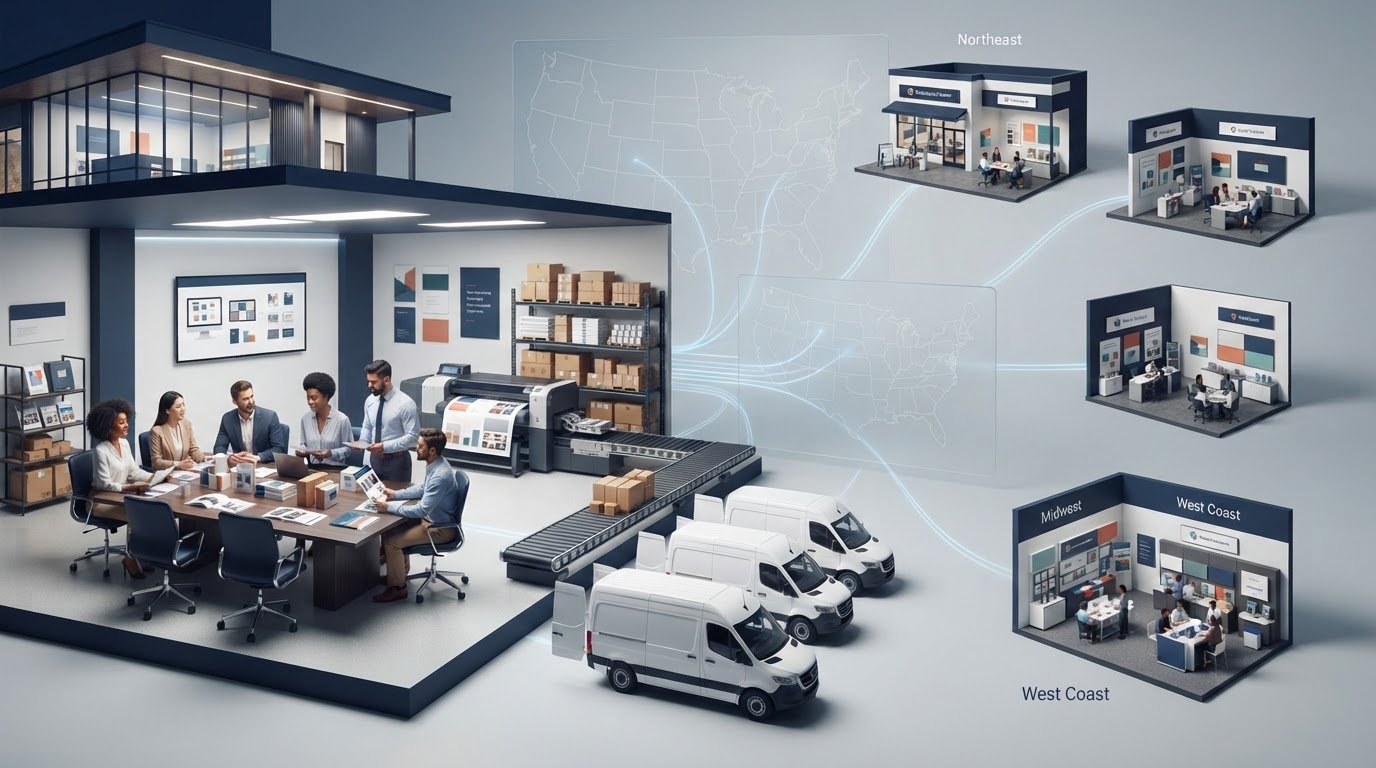
Executing a strategy for high-impact direct mail formats requires more than creative vision; it demands industrial-scale precision. While a boutique shop might handle a small run of dimensional mailers, national campaigns require a centralized production facility capable of maintaining consistency across millions of pieces. Our 90,000 square foot high-tech production center serves as the hub for this complex execution. We don’t just print; we manage the entire lifecycle of your project, from inventory management to the intricate details of kitting and fulfillment. This centralized approach ensures that every recipient receives a pristine, high-quality mailer that reflects your brand’s authority.
The complexity of modern mailers often involves multiple components, such as integrated magnets, die-cut windows, or personalized booklets. Managing these elements at scale requires a well-oiled machine that can handle high-volume runs without sacrificing the meticulous attention to detail your brand deserves. By positioning ourselves as a strategic communications ally, we move your project beyond a simple transaction and into a unified partnership focused on measurable ROI.
From Technical Concept to Nationwide Fulfillment
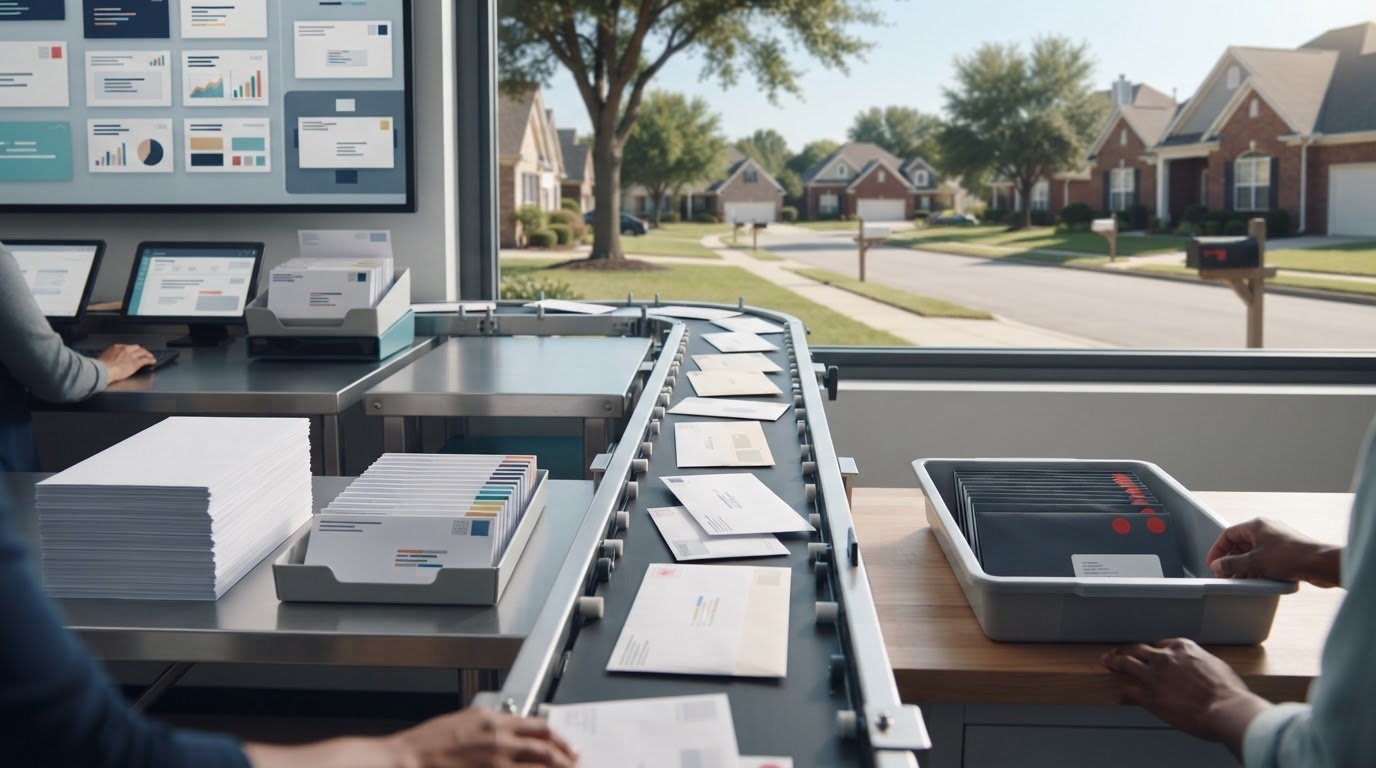
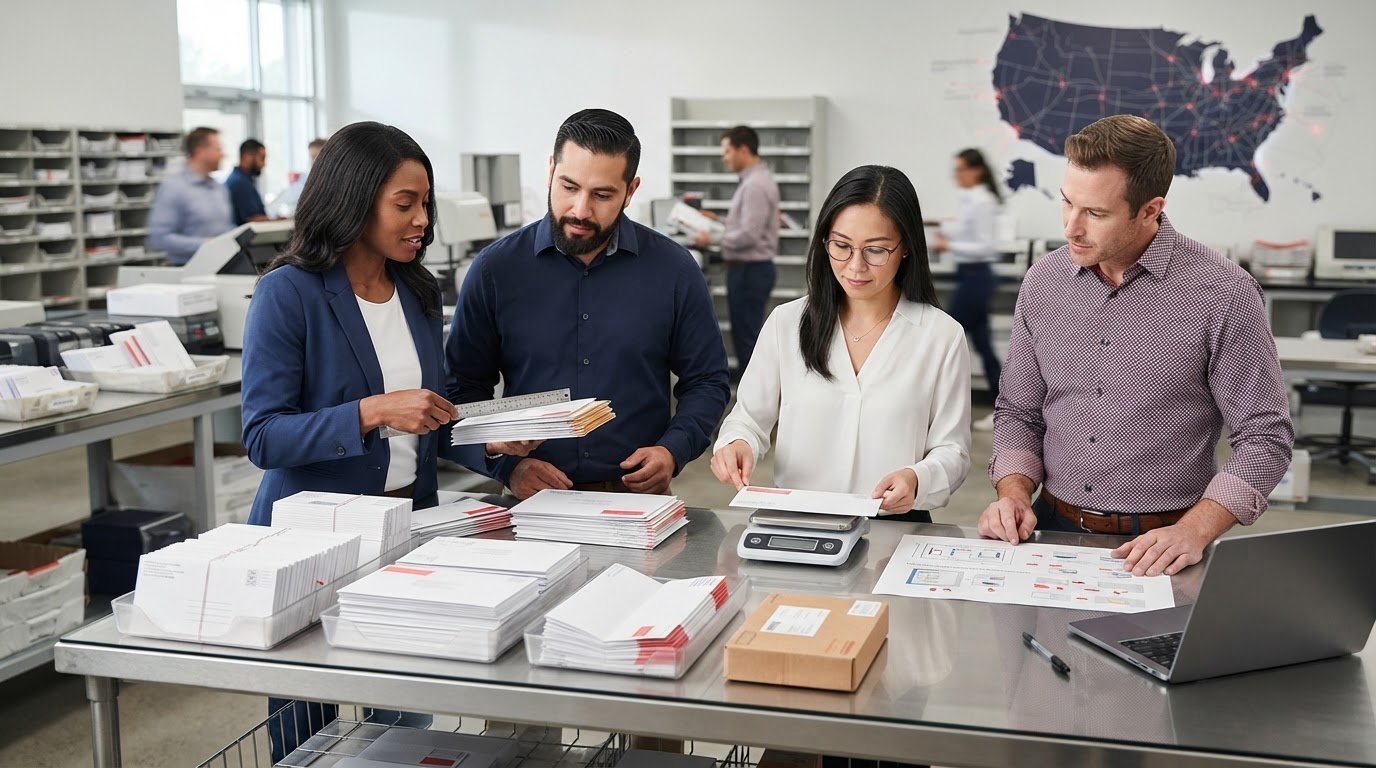
Moving from a technical concept to nationwide distribution involves navigating a landscape of industrial logistics. High-impact formats must be engineered to survive the rigors of the automated sorting process. We collaborate with your team to ensure that even the most unusual shapes meet USPS requirements, helping you avoid noncompliance fees that can erode your budget. Strategic sorting and co-mingling techniques can lead to postage savings of 3 to 5 percent, which is vital given that postage often represents the largest portion of a campaign budget. Our quality control protocols ensure that every piece, whether it’s an oversized envelope or a complex pop-up card, meets the highest standards before it enters the mail stream.
Streamlining with MarCom On-Demand Portals
Maintaining brand control across distributed teams is a significant challenge for national organizations. Using MarCom On-Demand allows you to decentralize the ordering process while keeping your brand assets locked and compliant. This portal automates the production of high-impact direct mail formats, allowing local representatives to trigger personalized mailings that still adhere to your corporate design standards. It’s a scalable solution that removes the friction from high-volume marketing, ensuring your message reaches the right mailbox at the right time. Contact Linemark today to engineer your next high-impact campaign.
Engineering Your Competitive Edge in the 2026 Mailbox
Success in 2026 requires moving beyond the flat, generic messaging of the past. By adopting high-impact direct mail formats, you transform a routine delivery into a tangible brand experience that commands attention and drives measurable ROI. We’ve explored how the fusion of tactile engineering, oversized dimensions, and data-driven personalization creates a physical touchpoint that digital channels simply cannot match. It’s about turning complex logistics into a streamlined, high-performance marketing engine that bypasses noise and builds lasting trust.
Linemark stands as your strategic communications ally in this journey. With our 90,000-square-foot advanced production facility and over 30 years of industrial print expertise, we handle high-volume, complex projects with precision. Our nationwide kitting and fulfillment capabilities ensure your campaign reaches its destination in pristine condition, regardless of scale. We’re ready to help you navigate the nuances of modern production and logistics to achieve your specific growth goals. Start your high-impact direct mail journey with Linemark. Your next campaign deserves the meticulous attention and technological pride that only a seasoned partner can provide.
Frequently Asked Questions
What makes a direct mail format “high-impact” compared to standard mail?
A direct mail format is considered high-impact when it utilizes non-standard structural elements to trigger an immediate physical response. Unlike standard postcards or letters, these formats use depth, unique textures, or oversized dimensions to command attention. They are specifically engineered to bypass the mental filters created by digital fatigue and standard mailbox clutter. This structural uniqueness transforms a simple delivery into a tangible brand event.
Are dimensional mailers significantly more expensive to send than postcards?
While dimensional mailers generally incur higher postage costs than standard postcards, they often deliver a superior return on investment. For example, oversized envelopes currently achieve response rates over 5 percent, which is significantly higher than the 0.12 percent average for email. You should view these costs as a strategic investment in conversion velocity rather than a simple expense that doesn’t drive measurable growth.
How does Variable Data Printing (VDP) improve the performance of specialized formats?
Variable Data Printing elevates high-impact direct mail formats by matching the physical message to the recipient’s specific data profile. It allows you to change imagery, layouts, and offers in real-time based on purchase history or location. This hyper-personalization transforms a generic mailer into a relevant, one-to-one communication. It resonates more deeply with the consumer and drives a higher conversion rate for national campaigns.
What is the best direct mail format for a B2B marketing campaign in 2026?
Dimensional mailers, such as pop-up cards or box-mailers, are the most effective choice for B2B campaigns because they create a physical event that bypasses gatekeepers. These structures signal a high-value offer and encourage the recipient to engage with the brand on a tactile level. For high-stakes prospecting, the surprise factor of a 3D element ensures your message isn’t just seen but shared among decision-makers.
Can high-impact formats be automated for recurring marketing campaigns?
You can automate these campaigns by integrating your CRM with a MarCom On-Demand portal. This allows distributed teams or automated triggers to launch complex, multi-piece mailers without manual intervention. Centralized production ensures that even automated, recurring runs maintain the meticulous quality and brand control required for national distribution. It’s a scalable solution that turns complex logistics into a streamlined marketing engine.
What are the USPS requirements for oversized or dimensional direct mail?
The USPS requires accurate length, width, and height reporting for all commercial parcels starting July 12, 2026. Current rates as of April 26, 2026, set a First-Class postcard at $0.61 and a metered letter at $0.74. Precision in these dimensions is vital for avoiding noncompliance fees and maintaining the efficiency of your high-impact direct mail formats. Our industrial expertise ensures your pieces meet all technical mailing standards.
How do I choose between a tactile finish like soft-touch and a visual finish like spot UV?
Soft-touch lamination is the ideal choice when your goal is to increase dwell time through a premium, velvet-like feel. If your objective is to highlight a specific call-to-action or create visual drama, spot UV provides the necessary high-gloss contrast. The most effective strategy often involves combining both to engage multiple senses simultaneously and guide the recipient’s thumb toward your primary message or offer.