

 11/07/2026
 Steve Bearden
An elevator ride can be more than a pause between floors. Custom elevator wraps use printed graphics on doors, walls, or floors to create branding, wayfinding, or decorative surfaces. The right treatment depends on the building, the elevator’s shape, and what the space needs to communicate.
Elevator areas give people a close-up view of a building’s environment, so graphics can do more than add color. They can reinforce a brand, help visitors find their way, or bring a considered finish to a shared space. Surface and layout matter: flat doors offer different design possibilities than curved walls, and graphics must leave essential elevator features accessible.
This guide explains what elevator wraps are, where they work in commercial buildings, and how graphics can engage tenants, visitors, and customers. You’ll learn how custom printing supports the design, from choosing coverage and imagery to preparing artwork for the elevator’s surfaces. This context makes it easier to plan a wrap that suits both the space and its purpose.
Key Takeaways
- Match wrap coverage to the elevator’s surfaces and shape, and plan installation around building operations to limit disruption.
- Choose graphics and finishes that fit the building type, audience, and purpose, from wayfinding to visual identity.
- Use elevator graphics to make a brief ride an opportunity to inform, orient, or engage visitors and tenants.
- Custom printing helps tailor artwork to the doors and surrounding walls, creating a cohesive application for the space.
What are Elevator Wraps?
Elevator wraps are vinyl graphics applied to elevator doors, cab walls, or floors. Custom elevator wraps can carry branding, wayfinding, or decorative imagery across a chosen surface. A wrap covers an existing finish; it does not replace the elevator door or cab panel.
Decals are usually smaller, separate graphics. A wrap covers a larger, continuous area, while a panel is a rigid surface component rather than an applied graphic. For example, a hotel might wrap its doors in a coordinated design and use a small decal for floor directions.
Installation starts by measuring the target surface and preparing artwork to fit its shape. The installer cleans and dries the door or wall, then applies the graphic using a wet method. They align it and smooth it from the middle outward to reduce air bubbles. Curved walls and doors require more careful fitting than flat surfaces.
Scheduling is part of preparation. Building teams can coordinate elevator access and choose a work window that limits disruption to tenants, guests, and visitors. At a hotel, for example, planning around guest traffic helps keep the installation area clear. Installers also plan how to protect nearby surfaces and manage tools during application.
Wraps must leave sensors, call buttons, inspection certificates, and emergency equipment uncovered. Most architectural finish products are described as having an NFPA 101 “Life Safety Code” rating and an ASTM E84 Class A fire rating. A material rating alone doesn’t establish that a particular installation meets every applicable fire or accessibility requirement.
Building owners coordinate the project with building management and elevator service personnel. Approval processes depend on the building and elevator arrangements, so involve those parties in installation planning before work begins.
Removal can typically be completed without damaging the elevator surface, though specialized tools or solvents may be needed. For nearby companies, search under commercial graphics, architectural finishes, or elevator wrap installation, which are common service categories.
Wrap applications for different building types
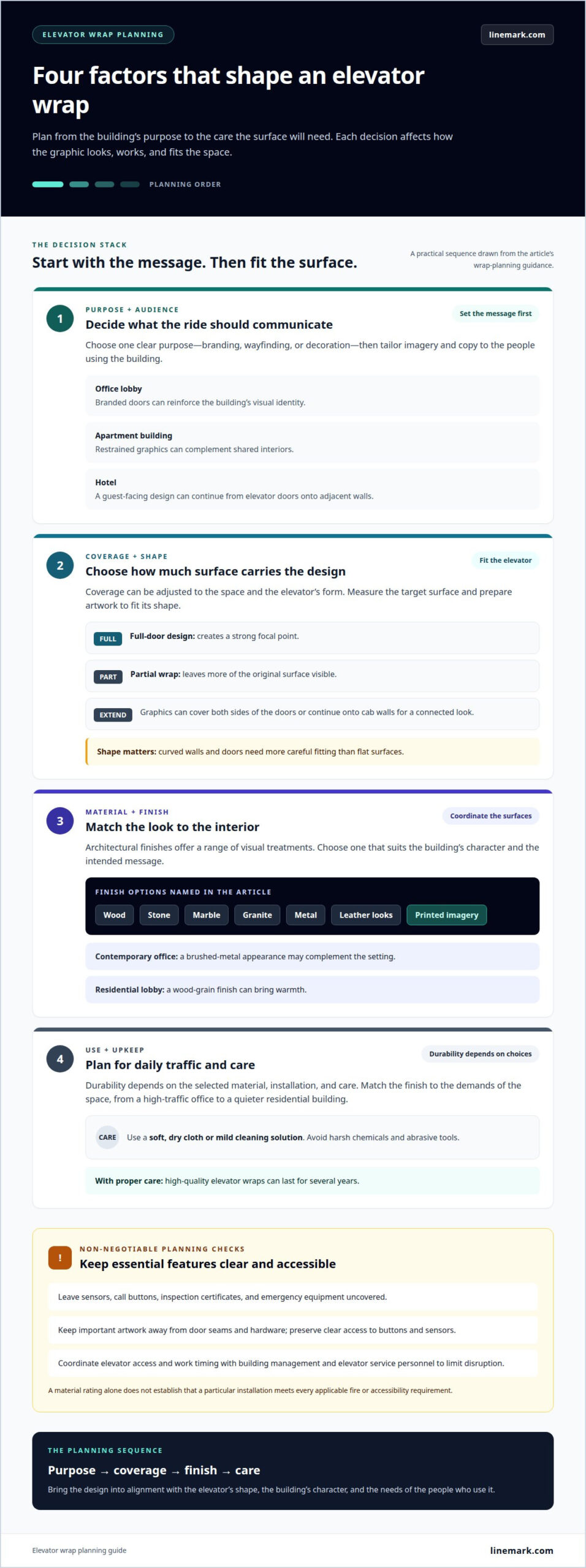
Start with the building’s audience and the elevator’s role. An office lobby can use branded doors to reinforce its visual identity, while an apartment building may use restrained graphics that complement shared interiors. Hotels can extend a guest-facing design from elevator doors onto adjacent walls. Each choice should suit the existing finishes and the message visitors encounter.
Coverage can be tailored to the space. A full-door design creates a strong focal point, while a partial wrap leaves more of the original surface visible. Graphics can cover both sides of the doors or extend onto cab walls for a connected look. Before choosing coverage, plan around buttons, sensors, and other elevator features that must remain unobstructed.
Material and finish influence the visual result. Architectural finishes come in many options, including wood, stone, marble, granite, metal, and leather looks. A brushed-metal appearance may complement a contemporary office, while a wood-grain finish can bring warmth to a residential lobby. Printed imagery offers another option, especially when a building needs branded artwork or wayfinding.
Durability depends on the selected material, installation, and care. High-quality elevator wraps can last for several years with proper care. A high-traffic office and a quieter residential building may place different demands on the surface, so match the finish to its daily use. Cleaning matters too: use a soft, dry cloth or mild cleaning solution, and avoid harsh chemicals and abrasive tools.
To plan a cohesive application, decide which surfaces will carry the design, then match the material and finish to the building’s character. This sequence helps align door graphics, wall coverage, and the surrounding interior.
Elevator graphics and audience engagement
Elevator graphics give buildings a focused place to communicate with visitors, tenants, and customers. A branded door can reinforce an office identity, while a hotel graphic can introduce the property’s visual style. Because the elevator is part of a visitor’s route, artwork can also support wayfinding or add decoration. Set one clear purpose before choosing imagery, colors, and copy.
Custom elevator door graphics can carry a logo, campaign message, or location-specific information. For example, a medical office might use a calm visual theme, while a retail building could feature a seasonal promotion. Keep text brief and contrast strong so the main idea is easy to read at a glance. Avoid placing important content where door seams or hardware interrupt it.
Brand consistency starts with the elements already used across the building. Match elevator artwork to lobby signage, color palettes, and printed materials instead of treating the doors as an isolated display. A property with several elevator banks can use a shared layout, then vary imagery by floor, tenant, or destination. This creates a coordinated system without making every surface identical.
Wayfinding graphics work best when they address a specific visitor need. A directional cue near the elevator can help people find a destination, while a concise message can explain what is on a floor. Keep elevator graphics distinct from required building information, and preserve clear access to buttons and sensors. The design should support movement, not compete with it.
Plan the viewing experience from the elevator approach through the ride. Choose imagery that reads from the hallway, then make sure key details still make sense at close range. The building team can review the design against its audience, purpose, and surrounding finishes before production. This helps turn a decorated door into a useful brand touchpoint without overloading the space with competing messages.
Custom-printed elevator wraps
Custom elevator wraps can be tailored in size, shape, and color, allowing artwork to follow each door’s usable area. A full-door print creates a continuous visual statement, while partial coverage can preserve visible metal around a logo or message. Graphics can also extend onto cab walls for a coordinated interior. Plan the coverage before producing artwork so seams and hardware do not interrupt key elements.
Custom printing gives a building team control over imagery and brand details. A corporate office might feature a color-led design and concise identity, while a hotel could use artwork that reflects its interior style. Printed graphics can support wayfinding, decoration, or branding. Choose one primary purpose, then organize the image, logo, and copy around it.
Production begins with accurate measurements and a layout for the selected surfaces. The design must account for door edges, seams, buttons, and sensors, leaving required equipment uncovered. Review the artwork at full size before printing. This can reveal whether text is legible and whether an image aligns across adjoining doors or onto a wall.
Custom-printed elevator wraps use HP Latex inks and waterproof, UV-resistant matte lamination. These production details support a printed finish suited to an elevator environment. The final appearance still depends on the artwork, chosen coverage, and surface preparation. A matte finish can also help the graphic sit naturally alongside surrounding materials.
Coordinate the print file, coverage plan, and installation sequence as one workflow. For example, review a two-door design as a complete composition, not as separate files, so the image reads correctly when the doors meet. Confirming that relationship before printing helps prevent visual breaks and keeps the intended message clear.
For coordinated building visuals beyond the elevator, explore banner and signage printing as part of the same communications plan.
Linemark: Custom Book Printing
Linemark provides large-format production for commercial graphics projects, including elevator wraps. Turn to the team when a building needs custom graphics planned for elevator doors or cab surfaces, with artwork tailored to the selected coverage and intended message. Coordinating the design and print specifications helps align the finished application with your signage and broader communications.
For projects that extend beyond the elevator, Linemark also provides commercial printing, direct mail, and custom book printing. These services can support a connected communications program, such as pairing an interior graphic with printed materials for tenants, visitors, or customers. The right combination depends on the project’s audience and goals.
Contact Linemark to discuss your commercial graphics project.
Plan the Next Visual Touchpoint
Use the elevator as part of a broader visual journey through your building. A graphic can introduce a campaign, reinforce a property identity, or connect a lobby experience with the spaces beyond it. Start by deciding what visitors should notice, understand, or remember when they encounter the doors.
That decision can guide how custom elevator wraps fit into your communications plan, whether they support a building refresh or a time-sensitive message. Consider how the design will relate to other graphics and printed materials, and how it can evolve as your building’s priorities change. A clear purpose gives production a practical direction.
Bring your goals, artwork, and elevator surfaces into one conversation with Linemark. Contact Linemark about elevator wraps to discuss a graphic approach for your commercial space. A considered first step can help turn an everyday transition into a purposeful part of the visitor experience.
Frequently Asked Questions
What Is an Elevator Wrap?
An elevator wrap is a printed surface treatment applied to an elevator door, cab wall, or floor. It changes the appearance of that area without replacing the underlying surface. For example, a building can use a wrap to carry a campaign message through its lobby, then update the graphic when the campaign changes.
What are custom elevator wraps?
Custom elevator wraps are graphics produced for the dimensions, shape, and visual purpose of a specific elevator. Artwork can be designed around the building’s identity, a campaign, or visitor information. A property with multiple elevators can use coordinated designs while assigning different imagery to each bank, helping visitors distinguish areas without repeating identical graphics throughout.
What materials and finishes are used for elevator wraps?
Elevator graphics commonly use vinyl, while architectural films can create finishes resembling wood, stone, marble, granite, metal, or leather. The choice affects the cab’s visual character and how the graphic fits the surrounding interior. For a branded image, printed artwork offers more control over color and content than a finish that imitates a material.
How long does elevator wrap installation take?
Installation time depends on the amount of coverage, surface shape, preparation needs, and elevator access. A partial door graphic involves less application work than a design extending across doors and cab walls. Scheduling also depends on when the elevator can be taken out of normal use, so building operations and the installation plan need to align.
How durable are elevator wraps, and how are they maintained?
High-quality elevator wraps can last for several years with proper care. As part of routine building maintenance, look for changes at edges or seams and keep the surface clean. Use a soft cloth or mild cleaning solution, and avoid abrasive tools and harsh chemicals. These steps help preserve the graphic’s appearance in a frequently used shared space.
Where can I find custom elevator wrap companies near me?
Linemark produces commercial graphics, including large-format graphics for building interiors.