

 02/26/2026
  Steve Bearden
For many organizations, the annual report production cycle is a source of significant stress. Juggling stakeholder approvals, deciphering technical jargon, and managing tight deadlines can overshadow the document’s true purpose. The entire process of annual report printing and design often feels fragmented and overwhelming, leaving you to worry about color consistency and final quality when the stakes are at their highest.
This guide is your strategic ally for 2026. We will demystify the production lifecycle, providing a clear framework for navigating every critical stage-from initial concepts that captivate stakeholders to the technical specifications that ensure a flawless final product. Consider this your roadmap to transforming a complex challenge into a streamlined success, empowering you to produce a report that not only meets deadlines but makes the powerful, professional impact your company deserves.
Key Takeaways
- Learn to reframe your annual report from a regulatory requirement into a strategic asset that enhances brand narrative and investor confidence.
- Discover how specific design decisions in layout, typography, and data visualization directly influence your report’s readability and impact.
- Understand the critical link between creative choices and final costs to streamline the annual report printing and design process and prevent budget overruns.
- Gain a step-by-step production roadmap that demystifies the entire workflow, from initial file submission to final, flawless delivery.
Beyond Compliance: Why Your Annual Report Is a Critical Strategic Asset
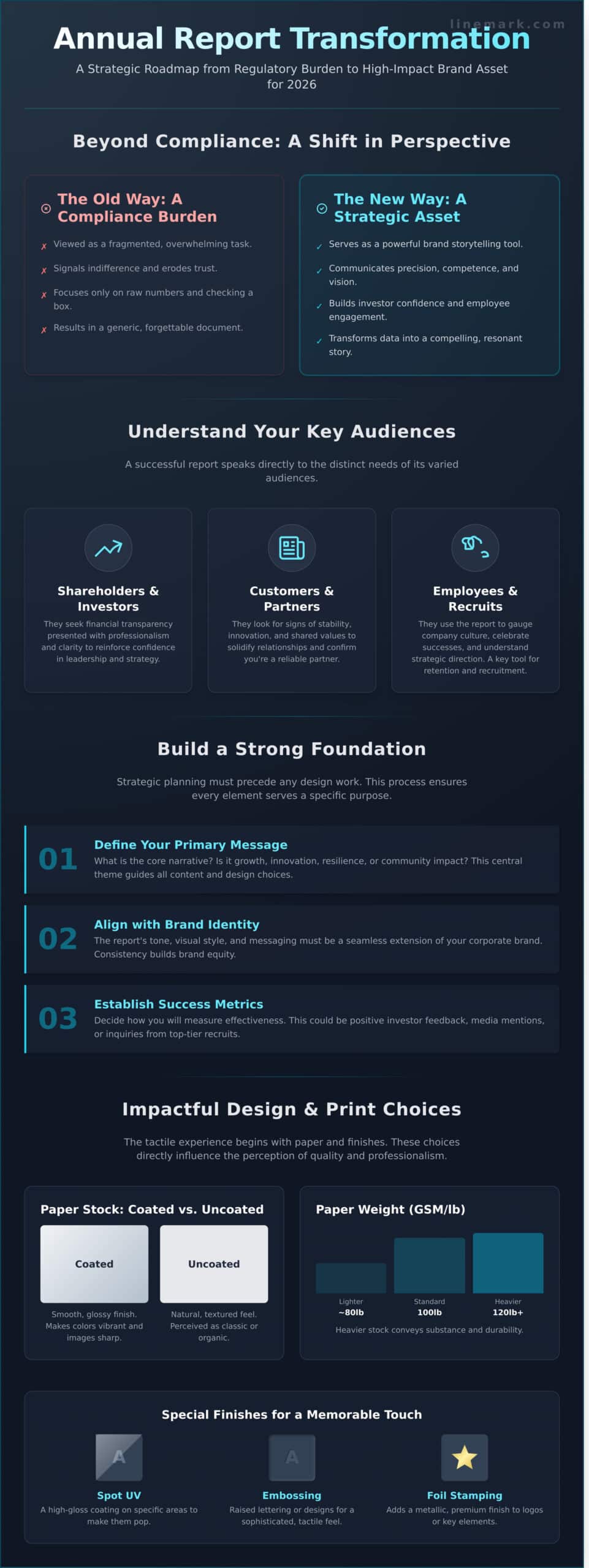
For many organizations, the annual report is treated as a regulatory necessity-a box to be checked. This view overlooks its immense potential. Far more than a summary of financials, the annual report is one of your most powerful brand storytelling and marketing assets. While it is fundamentally a comprehensive report on a company’s activities, its strategic value extends into building investor confidence, reinforcing brand values, and driving employee engagement. It is a tangible representation of your company’s performance, vision, and stability.
Just as an annual report fulfills a key compliance role, the initial business setup process lays the groundwork for all future corporate obligations. For companies navigating the complexities of formation and economic development requirements, particularly in dynamic markets like the UAE, professional guidance is essential. To understand these foundational steps better, you can visit Setup Business One.
The difference between a generic document and a high-impact publication is stark. A low-effort report signals indifference, potentially eroding trust and creating a perception of a company just going through the motions. In contrast, a professionally executed report-one that benefits from strategic annual report printing and design-communicates precision, competence, and a forward-looking vision. The tactile quality of premium paper, the clarity of sharp infographics, and a cohesive narrative transform data into a compelling story that resonates with every stakeholder.
Key Audiences and Their Expectations
A successful report speaks directly to the distinct needs of its varied audiences. Understanding their expectations is the first step in crafting a document that delivers measurable impact.
- Shareholders and Investors: They demand more than raw numbers. They seek financial transparency presented with professionalism and clarity, reinforcing their confidence in your leadership and strategy.
- Customers and Partners: This group looks for signs of stability, innovation, and shared values. A well-crafted report can solidify relationships by showcasing your company as a reliable and visionary partner.
- Employees and Recruits: Your team, both current and future, uses the annual report to gauge company culture, celebrate successes, and understand the strategic direction. It is a powerful tool for retention and recruitment.
Setting Clear Goals for Your Report
To transition your report from an obligation to an asset, strategic planning must precede any design work. This foundational process ensures every element serves a specific purpose.
- Define Your Primary Message: Before a single page is designed, determine the core narrative. Is the theme growth, innovation, resilience, or community impact? This central message will guide all content and design choices.
- Align with Brand Identity: The report’s tone, visual style, and messaging must be a seamless extension of your corporate brand. Consistency builds brand equity and reinforces your market position.
- Establish Success Metrics: Decide how you will measure the report’s effectiveness. Success could be defined by positive investor feedback, media mentions, or even inquiries from potential partners and top-tier recruits.
Strategic Design Decisions That Define Your Report’s Impact
An annual report is more than a summary of the year; it is a critical brand communication asset. Thoughtful design is the mechanism that transforms raw data and corporate milestones into a compelling, coherent narrative that resonates with stakeholders. A well-executed layout guides the reader’s eye, while carefully chosen typography ensures clarity and reinforces your corporate identity. Every element, from color palette to image selection, must work in concert to support your message, a principle supported by guidance like Columbia Law School’s guide to impactful annual reports, which emphasizes the power of storytelling through design. This is where strategic annual report printing and design moves beyond simple production and becomes a high-impact communications tool.
Choosing the Right Paper Stock and Finishes
The tactile experience of your report begins with the paper. This choice is made during the design phase and directly influences the final perception of quality and professionalism. Key considerations include:
- Coated vs. Uncoated Stock: Coated papers have a smooth, often glossy finish that makes colors appear more vibrant and images sharper. Uncoated stocks offer a more natural, textured feel, often perceived as more classic or organic.
- Paper Weight (GSM/lb): A heavier paper stock (e.g., 100lb text, 100lb cover) conveys substance and durability, distinguishing your report from a temporary handout. Lighter weights can feel flimsy and may be less resilient.
- Special Finishes: Techniques like spot UV (a high-gloss coating on specific areas), embossing (raised lettering), or foil stamping add a sophisticated, memorable touch that draws attention to key elements like your logo or the report’s title.
Selecting the Best Binding Method
The binding method secures your document and affects its usability and aesthetic. The right choice depends on your report’s page count and intended use.
- Perfect Binding: The industry standard for thicker reports, this method glues pages to the spine to create a clean, flat edge, similar to a paperback book. It offers a highly professional and durable finish.
- Saddle Stitching: Ideal for reports with fewer pages (typically under 64), this cost-effective option uses staples along the spine.
- Coil or Wire-O Binding: This functional choice allows the report to lay completely flat when open, making it perfect for documents that need to be referenced frequently during presentations or meetings.
Data Visualization and Infographics
Complex financial data and performance metrics can be dense and intimidating. Effective data visualization is the solution. Turning spreadsheets into clear, compelling charts, graphs, and infographics makes information immediately accessible and easier to digest. The key to successful data visualization is ensuring every graphic is not only accurate but also fully aligned with your brand guidelines-using your corporate fonts, colors, and style. This consistency reinforces your brand’s story and demonstrates a meticulous attention to detail throughout the entire annual report printing and design process.
From Screen to Press: How Design Choices Impact Printing Outcomes
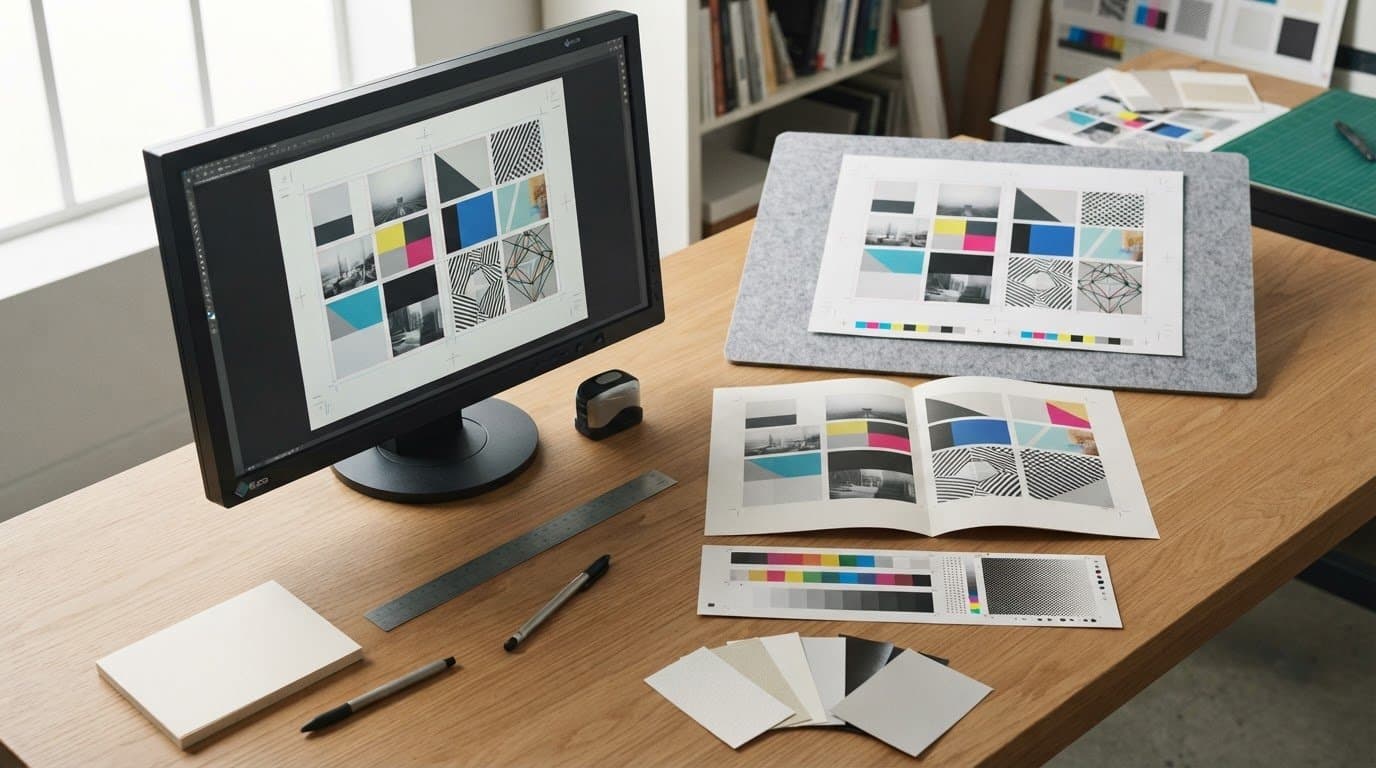
Translating a digital concept into a physical asset is where the complexity of annual report printing and design often becomes a concern. Every decision made during the creative phase has a direct consequence on the budget, timeline, and final quality of your report. Understanding this relationship is the key to managing costs without compromising impact.
The first major decision is the printing method itself. For large quantities where per-unit cost is paramount, offset printing delivers superior color fidelity and efficiency. For smaller runs or when variable data is needed, digital printing offers speed and flexibility. Your project’s scale and objectives will determine the optimal path forward.
The Cost Equation: Paper, Color, and Finishes
Your budget is directly shaped by three core design components. As your single-source partner, we help you navigate these variables to achieve a premium result efficiently.
- Paper and Finishes: Heavier paper stocks, specialty textures, and finishes like foil stamping or embossing elevate the tactile experience but also increase material and production costs.
- Color Application: Standard full-color printing uses a four-color CMYK process. If your brand requires precise color matching, using an additional Pantone (spot) color ensures consistency but adds a layer of cost for the separate ink and press setup.
- Page Count: Offset presses print on large sheets that are folded into signatures. Designing your report in increments of 4, 8, or 16 pages utilizes the full press sheet, eliminating waste and reducing your final cost. A 64-page book is significantly more economical to produce than a 66-page one.
Timeline and Production Realities
Time is a critical resource in production. Complex binding methods like perfect binding require additional curing time compared to simpler saddle-stitching. Likewise, a thorough proofing cycle-including both digital proofs for layout and physical proofs for color accuracy-is essential and must be built into the schedule. Last-minute design changes are the primary cause of delays and budget overruns, as they can force a project to be replated and rescheduled. A meticulously prepared, “print-ready” file is your greatest asset, ensuring a seamless transition from design to delivery and reflecting the precision your stakeholders expect.
The End-to-End Production Workflow: A Step-by-Step Guide
Navigating the annual report printing and design process can seem complex. At Linemark, we transform this complexity into a clear, streamlined, and fully transparent workflow. Our end-to-end production journey is designed to provide complete peace of mind, managed by a single point of contact who oversees every detail from file submission to final delivery. This is how we ensure your vision is executed with absolute precision.
Steps 1-3: Pre-Press and Proofing
The foundation of a flawless final product is built here. After an initial consultation, your files undergo a meticulous technical review, known as preflighting, to identify and resolve any potential issues. You will then receive a digital proof to approve all content and layout details. For final assurance, a physical hard copy proof is provided, allowing you to experience the exact paper stock and confirm color accuracy before the full production run begins.
Steps 4-5: Printing and Finishing
With approvals complete, your project moves to our state-of-the-art production floor. We select the optimal printing method for your needs-offset for high-volume efficiency or digital for smaller, customized runs. Following printing, our finishing department executes with precision, handling everything from cutting and binding to applying sophisticated finishes like foil stamping or embossing. Rigorous quality control checkpoints are integrated at every stage to guarantee a perfect result.
Steps 6-7: Fulfillment and Distribution
Our integrated service extends far beyond the press. We manage complex kitting and assembly, inserting personalized cover letters or other collateral. If your distribution is phased, we offer secure warehousing and inventory management. Finally, we handle the direct mail and distribution, ensuring your completed annual report reaches every shareholder and stakeholder on your list, on time and in perfect condition.
This seamless, single-source workflow is the Linemark difference. By managing every component under one roof, we deliver unparalleled efficiency, quality, and reliability for your most critical communications. Explore our integrated solutions to see how we can streamline your next project.
Choosing Your Partner: The Linemark Integrated Advantage
Your annual report is more than a document; it is a critical statement of your company’s performance, vision, and stability. For a project of this magnitude, coordinating separate design agencies, printers, and mail houses introduces unnecessary risk and complexity. Miscommunication, missed deadlines, and inconsistent quality can undermine the entire effort. The least risky choice is a single, integrated partner who manages every detail under one roof, ensuring a flawless execution from concept to delivery. This is the Linemark difference.
With over 30 years of experience, we have refined the process of annual report printing and design into a seamless, secure, and scalable service. We act as a direct extension of your team, providing the strategic guidance and production power needed to create a document that truly represents your brand.
A True Single-Source Solution
The value of a true single-source partner lies in complete accountability and streamlined execution. When one expert team manages your project from initial design consultation through printing, finishing, and distribution, the potential for error disappears. This integrated model provides:
- Seamless Communication: A dedicated project manager serves as your single point of contact, ensuring your vision is perfectly executed at every stage.
- End-to-End Accountability: We take full ownership of the project timeline and quality, eliminating the blame-shifting that can occur between separate vendors.
- Flawless Handoffs: By managing the entire workflow, we prevent the critical file errors and spec misinterpretations that often happen when moving from a designer to a printer.
Technology and Quality You Can Trust
Our commitment to a seamless process is backed by significant investment in state-of-the-art technology. Housed within our 90,000-square-foot facility, our equipment and systems are built to handle projects of any scale with uncompromising precision. We leverage advanced capabilities like Variable Data Printing (VDP) to personalize reports for key stakeholders, adding a powerful layer of targeted communication.
When you partner with Linemark, you gain the confidence that comes from:
- Unyielding Brand Consistency: Our advanced G7 Master-certified color management ensures your brand colors are reproduced perfectly across all printed and digital materials.
- Ironclad Data Security: We operate under strict security protocols to manage and protect your sensitive financial information throughout the production process.
Don’t leave your most important communications project to chance. Entrust your annual report printing and design to a partner with the experience, technology, and integrated process to deliver exceptional results every time. Partner with an expert for your next annual report. Request a consultation today.
From Vision to Reality: Your Partner in Annual Report Excellence
As this guide has detailed, the modern annual report is no longer a simple compliance document-it is a critical strategic asset for brand storytelling and stakeholder engagement. Its ultimate success hinges on a deliberate fusion of impactful design and flawless production execution. This integrated approach is the cornerstone of exceptional annual report printing and design, ensuring your final piece communicates with unparalleled clarity and authority.
Transforming this strategic vision into a tangible asset requires a partner with proven, end-to-end capabilities. At Linemark, we bring over 30 years of industry leadership to every project, managed from our state-of-the-art, 90,000 sq. ft. production facility. As your dedicated single-source partner, we eliminate complexity and provide the streamlined support needed to turn your ambitious concepts into an impressive printed reality.
Start your annual report project with confidence. Contact Linemark for a consultation.
Let us help you create a 2026 report that not only meets expectations but sets a new standard for your industry.
Frequently Asked Questions About Annual Report Printing
How much does it cost to print an annual report?
The cost of annual report printing and design is determined by several key project specifications. Final pricing depends on factors such as the total quantity, final page count, your choice of paper stock and weight, and the binding method. Special finishes like foil stamping, embossing, or custom die-cuts will also influence the budget. We provide a detailed, customized quote based on your unique project requirements to ensure complete transparency and cost-effectiveness for your organization’s needs.
What is the typical turnaround time for annual report printing?
While project complexity varies, a typical turnaround time is between 5 and 10 business days after the final proof has been approved. Factors that can influence this timeline include the print quantity, binding style, and any intricate finishing services required. At LineMark, our integrated production workflow is optimized for efficiency. We provide a precise production schedule for every project, ensuring your critical deadlines are met with reliability and professional precision every single time.
What’s the difference between offset and digital printing for annual reports?
Offset printing is the ideal solution for large-volume runs, as it provides superior color consistency and the lowest per-unit cost. It uses plates to transfer ink onto paper, making it perfect for quantities over 500. Digital printing, conversely, is highly effective for smaller quantities and projects requiring faster turnarounds or variable data. It prints directly from a digital file, offering flexibility without the setup costs of offset plates. We guide you to the optimal technology for your specific goals.
What is the best binding for an annual report?
The optimal binding choice depends on your report’s page count and desired aesthetic. Perfect binding offers a clean, sophisticated squared-off spine, ideal for reports with a higher page count. For thinner booklets, saddle-stitching (stapling along the fold) provides a professional and cost-effective solution. Other options like wire-o or coil binding allow the report to lay completely flat when open, which is excellent for data-heavy presentations. We can help you select the most functional and impressive option.
How should I prepare my design files for the printer?
For best results, please submit your files as high-resolution (300 DPI) press-quality PDFs. It is critical to ensure all fonts are embedded or converted to outlines and that all images are in CMYK color mode, not RGB. Your design should include a 0.125-inch bleed on all sides where content extends to the edge of the page. Our dedicated pre-press team will review every file to confirm it is production-ready, guaranteeing a flawless and professional final printed product.
Can you mail the annual reports directly to our shareholders?
Absolutely. LineMark operates as a single-source partner, seamlessly integrating our printing capabilities with comprehensive mailing and fulfillment services. We manage the entire distribution process, from processing your mailing list and CASS certifying addresses to optimizing postage for maximum savings. This streamlined, in-house solution ensures your annual reports are delivered to shareholders, investors, and key stakeholders accurately and on schedule, removing the logistical burden from your team and ensuring timely communication.
What are the most common mistakes to avoid when designing an annual report?
Common mistakes often involve technical oversights that compromise the final quality. Using low-resolution images will result in a blurry, unprofessional print. Another frequent error is inconsistent branding or a cluttered layout that hinders readability and dilutes your message. Neglecting to design with proper bleed and margins can also cause critical content to be trimmed. A successful annual report printing and design project begins with a technically sound and well-organized file from the very start.
Why is a hard copy proof important for an annual report?
A hard copy proof is a vital quality control step before a full production run. While a digital PDF proof is useful for checking content and layout, it cannot accurately represent the final color on your chosen paper stock. A physical proof allows you to see, feel, and approve the paper, ink colors, and overall finish. For a high-stakes document like an annual report, it provides absolute confidence that the final product will meet your exact specifications.