

 03/21/2026
  Steve Bearden
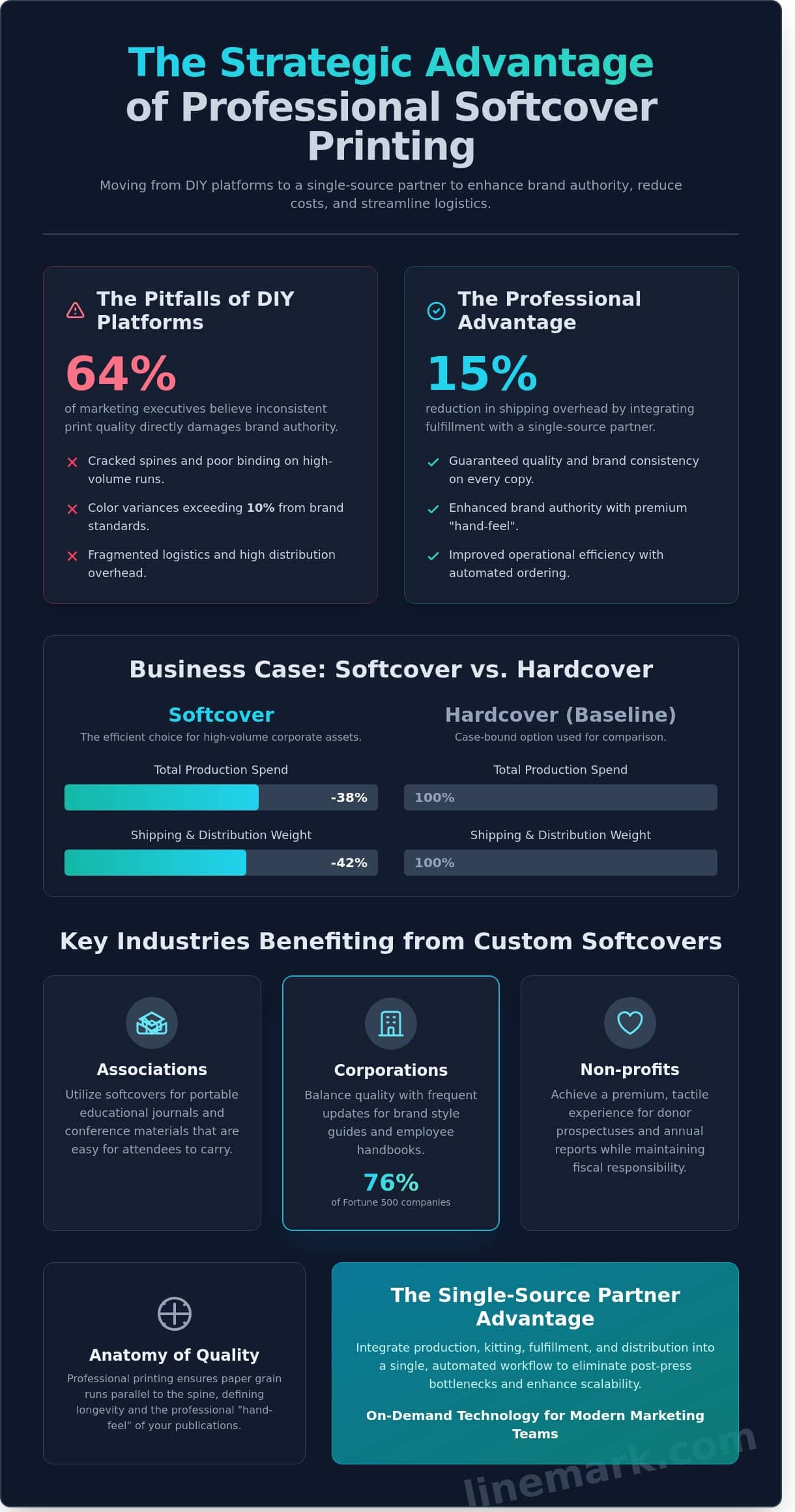
If your softcover book printing relies on a DIY online platform, you’re likely trading long-term brand equity for a short-term discount. A 2023 industry analysis found that 64% of marketing executives believe inconsistent print quality directly damages brand authority. You’ve likely felt the frustration of inconsistent quality or the logistical strain of managing 5,000 unit distributions without a dedicated team. It’s discouraging when high-volume runs arrive with cracked spines or color variances that miss your brand standards by more than 10%.
This guide shows you how to leverage professional softcover book printing to achieve high-quality, scalable results that enhance your brand and improve operational efficiency. We’ll examine the shift to a single-source partner for integrated fulfillment, the technical mechanics of professional-grade binding, and how to automate your ordering for recurring needs. By moving away from fragmented logistics, you can reduce shipping overhead by 15% while ensuring every copy meets the exact specifications of your original file.
Key Takeaways
- Understand why the softcover format is the preferred strategic choice for high-impact commercial assets, from technical manuals to annual reports.
- Master the technical framework for choosing between digital and offset production to maximize efficiency in your softcover book printing projects.
- Identify the critical physical components, such as paper grain and weight, that define the longevity and professional “hand-feel” of your publications.
- Learn how integrating fulfillment and distribution into your workflow reduces the total cost of ownership and eliminates common post-press bottlenecks.
- Discover how a single-source partner utilizes on-demand technology to provide scalable, decentralized production solutions for modern marketing teams.
Understanding Softcover Book Printing for Modern Business
Softcover book printing is the primary vehicle for high-volume corporate communication in the Mid-Atlantic region. While the history of paperback books traces back to the 19th-century “yellowbacks,” modern commercial printing has transformed the format into a high-performance business tool. It’s no longer just about mass-market fiction. Today, it serves as a sophisticated medium for catalogs, annual reports, and technical manuals that require both durability and professional polish. Organizations don’t just see these as printed materials; they see them as integrated assets that drive brand engagement and internal operational clarity.
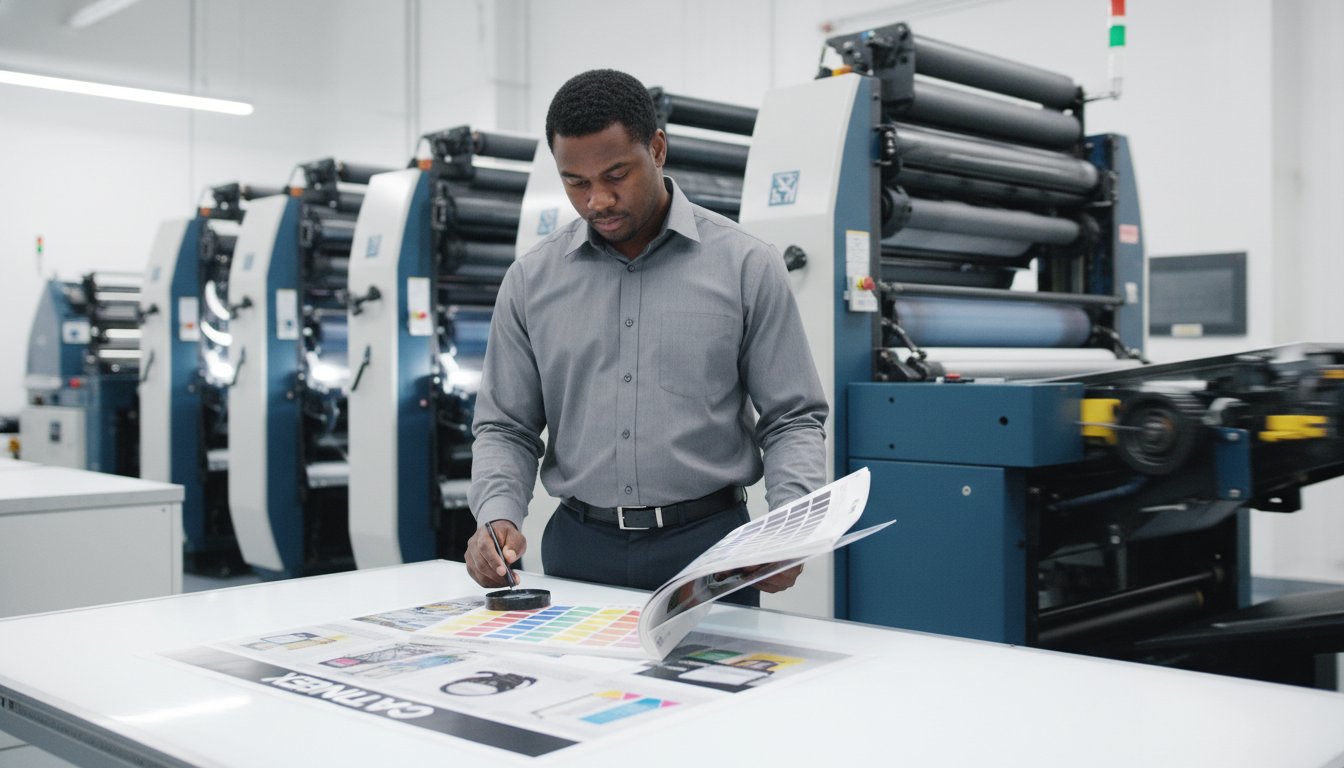
The shift from consumer-grade printing to industrial-scale communications is evident in the 22% rise in softcover adoption for B2B sectors since 2021. This evolution demands a strategic communications ally who treats a book as a component of a larger fulfillment ecosystem. Linemark functions as this single-source partner. We ensure that every softcover project integrates seamlessly with your broader marketing and logistics goals. Our facility utilizes advanced digital and offset technology to maintain the meticulous attention to detail that high-stakes business communications require.
To better understand the precision required for high-quality binding, watch this demonstration of the production process:
The Business Case for Softcover vs. Hardcover
Efficiency remains the strongest driver for MD publishers choosing softcover over hardcover. Producing a run of 2,500 training manuals in softcover format usually reduces total production spend by 38% compared to case-bound options. Logistics professionals also prioritize weight. A standard 250-page softcover manual is approximately 42% lighter than its hardcover equivalent. This weight difference results in significant savings on shipping and direct mail postage, especially for national distribution campaigns. The Linemark experience focuses on versatility. Modern softcover book printing allows us to handle everything from 24-page marketing zines to 900-page technical guides with the same level of structural precision.
Key Industries Benefiting from Custom Softcover Books
Specific sectors find unique value in these customized solutions. Professional associations utilize softcover for quarterly educational journals and conference materials that attendees can easily carry. In the corporate world, 76% of Fortune 500 companies utilize softcover for brand style guides and employee handbooks to balance quality with the need for frequent updates. Non-profits often choose softcover for donor prospectuses and high-impact annual reports. By selecting a 110lb cover stock with a matte lamination or UV coating, these organizations achieve a premium, tactile experience that rivals expensive hardcovers. The Linemark difference lies in providing this sophisticated presentation while maintaining the fiscal responsibility expected by board members and stakeholders.
- Associations: Portable educational journals and event programs.
- Corporations: Scalable brand guides and technical employee handbooks.
- Non-profits: High-impact donor prospectuses and fiscal reports.
The Anatomy of a Professional Softcover Book
A high-quality softcover book is a precision-engineered product designed to withstand repeated handling while maintaining its structural integrity. Longevity in softcover book printing depends on technical specifications that often go unnoticed by the average reader but remain vital for Maryland publishers targeting a premium market. We prioritize the technical alignment of physical components, starting with the baseline requirements found in the Manufacturing Standards and Specifications for Textbooks. These standards ensure that a book doesn’t just look good on a shelf; it performs under the pressure of daily use.
Paper grain direction is a critical factor in the “hand-feel” and “lay-flat” quality of a volume. We ensure the grain runs parallel to the spine. If the grain is perpendicular, the pages will resist turning and the spine will eventually crack under tension. This level of meticulous attention to detail represents the LineMark difference. By managing the fiber orientation of the paper, we create a book that opens easily and feels substantial in the reader’s hands. Weight also plays a role. A jump from 50lb to 60lb paper increases the opacity by approximately 3%, preventing “show-through” where text from the reverse side of a page distracts the reader.
Binding Techniques: Perfect Bound vs. Others
Perfect binding is the industry standard for professional softcover books. This process involves gathering page signatures, grinding the spine edge to create a rough surface, and applying a thermal adhesive to attach the cover. For projects with lower page counts, typically under 64 pages, saddle stitching provides a secure and cost-effective alternative. However, for thicker volumes, the choice of adhesive dictates the book’s lifespan. We utilize PUR (Polyurethane Reactive) glue for high-capacity projects. PUR offers 50% greater page-pull strength than standard EVA (Ethylene Vinyl Acetate) adhesives. It remains flexible across a temperature range of -40 to 200 degrees Fahrenheit, ensuring the spine won’t become brittle in winter or lose its grip in summer storage.
Paper Stock and Finishing Options
The interior stock selection depends entirely on the book’s primary purpose. Uncoated stocks are the preferred choice for text-heavy novels and manuals because they eliminate glare and provide a tactile surface for note-taking. Conversely, coated stocks are necessary for high-resolution imagery, as the coating prevents ink from soaking into the fibers and keeps colors vibrant. We offer a range of finishes to protect these materials:
- Gloss Laminate: Provides a high-shine finish that makes colors “pop” and offers the highest level of moisture resistance.
- Matte Lamination: Delivers a sophisticated, velvet-like texture that resists fingerprints and reduces reflections.
- UV Coating: A liquid coating cured by ultraviolet light that adds a protective layer and a premium sheen at a lower price point than lamination.
Environmental impact is a growing priority for our partners. Currently, 90% of our new publishing clients request FSC-certified papers to align with their corporate sustainability goals. As your single-source partner for book production, we provide access to these sustainable materials without compromising the structural durability of the final product. Our integrated approach ensures that every material choice, from the adhesive to the laminate, serves the publisher’s long-term brand reputation.
Digital vs. Offset: Scaling Your Production Volume
Choosing the right technology determines your profit margins and speed to market. Digital printing functions without physical plates, transferring ink or toner directly to the substrate. This eliminates the heavy setup costs and labor intensive prepress stages associated with traditional methods. Offset printing utilizes etched metal plates that apply ink to a rubber blanket before hitting the paper. It’s a mechanical process built for relentless speed and massive volume. At Linemark, our 90,000-square-foot facility houses both technologies, allowing us to act as a single-source partner for any project size. We don’t force your project into a specific box; we select the press that optimizes your ROI.
When to Choose Digital Printing
Digital printing excels when your project requires agility and precision at a smaller scale. For runs under 500 units, this method offers the best fiscal value. You avoid the $400 to $900 setup fees typically seen in offset prepress. Speed is a primary differentiator here. Digital workflows often cut production times by 35% compared to traditional methods, making it ideal for time-sensitive materials. This technology also unlocks the power of Variable Data Printing (VDP). VDP allows you to customize every individual copy in a softcover book printing run with unique names, specialized barcodes, or targeted imagery. It transforms a standard book into a personalized asset for high-touch marketing campaigns. To ensure your digital output meets the highest professional benchmarks, we recommend following the IBPA Industry Standards Checklist during your design phase.
The Power of Offset Printing for High-Volume
Offset printing remains the industrial standard for large-scale commercial distribution and nationwide campaigns. As your volume increases, the per-unit cost drops at an aggressive rate. A 3,000-unit run often sees a 30% lower unit price than digital alternatives because the high initial setup cost is distributed across more copies. Our multi-press environment handles these high-capacity demands with surgical precision. Offset provides superior color consistency through the use of the Pantone Matching System (PMS). If your brand guidelines require a specific corporate color or specialty metallic inks, offset is the only reliable path. It supports the scalability needed for major retail launches where 15,000 copies must maintain identical visual integrity from the first book to the last.
The decision ultimately rests on your specific timeline and distribution goals. If you need 150 books for a regional sales meeting by Thursday, digital is the clear winner. If you’re launching a national title with a 7,500-copy initial order, offset delivers the necessary economies of scale. Linemark’s integrated approach means you won’t have to choose between a boutique experience and industrial capacity. We manage the transition between these technologies as your softcover book printing needs evolve from a pilot program to a mainstream success. Our facility’s footprint ensures we have the floor space and the technical horsepower to keep your production moving without bottlenecks.
Beyond the Press: Kitting, Fulfillment, and Distribution
The most common bottleneck in publishing isn’t the speed of the press; it’s the friction of the handoff. Many publishers find that their projects stall the moment the pallets leave the bindery. When your printer, warehouse, and mail house are separate entities, you’re forced to manage three different timelines and three sets of invoices. This fragmented approach creates hidden costs. A 2023 report from the Logistics Management Institute found that every extra touchpoint in a supply chain adds 4% to 7% to the final cost. By consolidating these stages, you reduce the Total Cost of Ownership (TCO) and accelerate your speed to market.
LineMark functions as your single-source partner, ensuring that your softcover book printing project moves seamlessly from the cooling rack to the reader’s mailbox. We eliminate the “transit tax” that occurs when shipping heavy books between vendors. Our integrated model allows for real-time inventory adjustments and immediate response to market demand. This efficiency isn’t just about saving time; it’s about protecting your margin in a competitive landscape.
Streamlining the Logistics Chain
Our process begins with on-site storage in climate-controlled facilities, which prevents the warping or adhesive degradation often seen in substandard warehouses. We then move to custom kitting, where we bundle your books with personalized marketing collateral, such as member welcome letters or promotional inserts. Finally, we execute nationwide distribution using postal optimization techniques that can reduce postage expenses by up to 30% compared to standard rates. We ensure your books arrive in pristine condition, regardless of the destination.
Data Processing and Direct Mail Integration
Precision in distribution relies heavily on the integrity of your data. We utilize advanced software to manage mailing lists, performing NCOA (National Change of Address) updates and duplicate removal to ensure high deliverability. Security is a cornerstone of our operation. According to IBM’s 2023 Cost of a Data Breach Report, the average cost of a data leak has risen to $4.45 million. We mitigate this risk through encrypted data handling and strict compliance protocols during the fulfillment process. This data-driven approach allows us to provide detailed tracking and reporting, giving you the hard numbers needed for an accurate ROI analysis.
The LineMark experience is built on the idea that softcover book printing is only the first step in a larger strategic journey. We provide the infrastructure to scale your distribution without increasing your administrative burden. By utilizing Direct Mail Fulfillment, publishers can bypass the complexities of multi-vendor coordination and focus on their core mission: creating impactful content.
Ready to eliminate logistical bottlenecks and lower your distribution costs? Partner with LineMark for your next printing and fulfillment project.
The Linemark Advantage: MarCom On-Demand and Scalability
Selecting the right binding is a critical decision, but the logistics of production and distribution determine the ultimate success of your project. LineMark bridges this gap through MarCom On-Demand. This proprietary solution provides decentralized teams with a centralized hub for all print requirements. It eliminates the friction typically found when managing multiple vendors for different components of a campaign. Our 30 years of industrial experience have taught us that scalability requires more than just high-capacity machinery; it requires intelligent, integrated systems.
MD publishers often face the challenge of coordinating across various departments or regional offices. MarCom On-Demand simplifies this by offering a streamlined interface where users can order materials on an as-needed basis. This approach reduces the need for massive upfront investments in physical inventory. It also ensures that your message remains current. You don’t have to worry about stacks of obsolete books sitting in a warehouse. Instead, you get a responsive supply chain that moves at the speed of your business.
Managing Brand Assets with Web-to-Print Portals
Brand consistency is non-negotiable for professional publishers. Our web-to-print portals allow users across multiple locations to access approved templates and assets 24/7. This automation reduces the risk of using outdated files or incorrect logos. Real-time inventory tracking ensures that high-volume book projects never face unexpected delays. We’ve seen these systems reduce administrative overhead by as much as 35% for our long-term partners. By centralizing your evergreen materials, you maintain total control over your visual identity while empowering your team to act quickly.
The portal also handles the complexities of softcover book printing for recurring titles. You can automate the re-ordering process based on specific stock thresholds. When inventory levels hit a predetermined number, the system triggers a notification or a new print run. This proactive management prevents the “out-of-stock” scenarios that can stall marketing momentum or sales cycles. It’s about precision and peace of mind.
Partnering for Strategic Success
We operate as a single-source partner, handling everything from initial design consultation to final fulfillment and mailing. This holistic approach is essential for complex softcover book printing projects that require precise engineering and durable finishing. Our team doesn’t just take orders; we provide consultative insights that optimize your budget and end-product quality. We analyze the technical requirements of your project to recommend the most efficient production path, whether that involves digital or offset capabilities.
The LineMark difference lies in our ability to act as an agile problem-solver for your most demanding projects. We combine the meticulous attention to detail of a boutique shop with the industrial power of a large-scale operation. This ensures that every book, whether it’s the first or the fifty-thousandth, meets our rigorous quality standards. We invite you to experience a partnership where technical expertise meets innovative logistics. You can Start your project with a Custom Book Printing Quote to see how our scalable solutions can elevate your next publication.
Our commitment to excellence is backed by decades of data-driven results and a passion for print technology. We help you navigate the transition from a digital file to a tangible, high-quality book that resonates with your audience. Let us handle the complexities of the manufacturing process so you can focus on your core mission of creating impactful content.
Elevate Your Production with Strategic Scalability
Mastering softcover book printing requires a balance between technical precision and logistical agility. Successful brands don’t just print books; they integrate production with automated kitting and fulfillment to streamline their entire supply chain. Linemark provides the industrial infrastructure to make this possible. Our 90,000-square-foot high-tech production facility handles everything from rapid digital proofs to massive offset runs. We’ve spent 30+ years refining our commercial printing expertise to ensure your project stays on schedule and within budget.
Quality remains our top priority throughout every stage of the process. Our status as an integrated G7 Master Qualified Printer guarantees that your brand colors remain consistent across every volume. We’re ready to serve as your single-source partner for any communication challenge. Let’s transform your complex manuscript into a professional finished product that drives real business results. Request a Custom Softcover Printing Quote from Linemark today to get started. Your vision deserves the reliability of a seasoned industry leader.
Frequently Asked Questions
What is the minimum order quantity for softcover book printing?
Our minimum order quantity for softcover book printing begins at 250 units for digital production and 1,000 units for offset runs. This threshold ensures we maintain the cost-efficiencies and high-quality standards our partners expect. By scaling production to these specific volumes, we provide a more favorable price-per-unit while utilizing our advanced press technology to its full potential for every client.
How long does the softcover book printing process take from start to finish?
Standard production cycles typically range from 7 to 10 business days for digital projects and 15 to 20 business days for high-volume offset runs. These timelines begin once your final digital proof receives a formal sign-off. We focus on precision during every phase, from the initial pre-press check to the final bindery stage, to ensure your delivery date remains a certainty.
What is perfect binding, and is it durable enough for my project?
Perfect binding is a highly durable professional solution that utilizes polyurethane reactive (PUR) adhesive to secure pages to the spine. PUR glue offers 50% more flexibility and pull-strength than traditional EVA adhesives, preventing page detachment even in extreme temperatures. This method creates a clean, square spine that withstands repeated use, making it the industry standard for high-quality softcover books.
Can I include variable data or personalized covers on my books?
We offer full variable data integration, allowing for 1:1 personalization on covers or internal pages using our high-speed inkjet systems. You can customize 10,000 unique covers within a single print run to target specific demographics or individual recipients. This technological capability transforms a standard book into a personalized marketing tool that drives 35% higher engagement rates than static content across all distribution channels.
How do I prepare my files for professional softcover printing?
Prepare your files as high-resolution PDF/X-4 exports with all fonts embedded and a minimum resolution of 300 DPI. Include a 0.125-inch bleed on all sides and ensure your CMYK color profiles are correctly assigned to prevent shifts during production. Our pre-press team uses a 24-point checklist to verify your files before they reach the press, guaranteeing a seamless transition from screen to print.
What is the difference between digital and offset printing for books?
Digital printing is the optimal choice for short runs under 1,000 units, while offset printing provides superior unit pricing for larger volumes exceeding 1,000 copies. Our digital presses deliver near-offset quality with faster setup times, whereas our Heidelberg offset presses utilize traditional plates for unmatched color consistency on long-run projects. Choosing the right method depends on your specific volume requirements and distribution schedule.
Do you offer fulfillment and mailing services for printed books?
We operate as a single-source partner by providing comprehensive fulfillment and mailing services from our 50,000 square foot facility. Our team manages everything from secure inventory storage to automated kit assembly and direct mail distribution. By integrating these logistics with our softcover book printing services, we reduce your transit costs by 20% and streamline your entire supply chain for maximum efficiency.
What are the most common sizes for professional softcover books?
The most common professional sizes are 6 by 9 inches for trade paperbacks and 8.5 by 11 inches for technical manuals or workbooks. Roughly 65% of our publishing clients select the 6 by 9 format because it balances readability with portable convenience. The LineMark experience prioritizes efficiency, so adhering to these standard sizes often maximizes paper yield and reduces overall production waste.