

 03/28/2026
  Steve Bearden
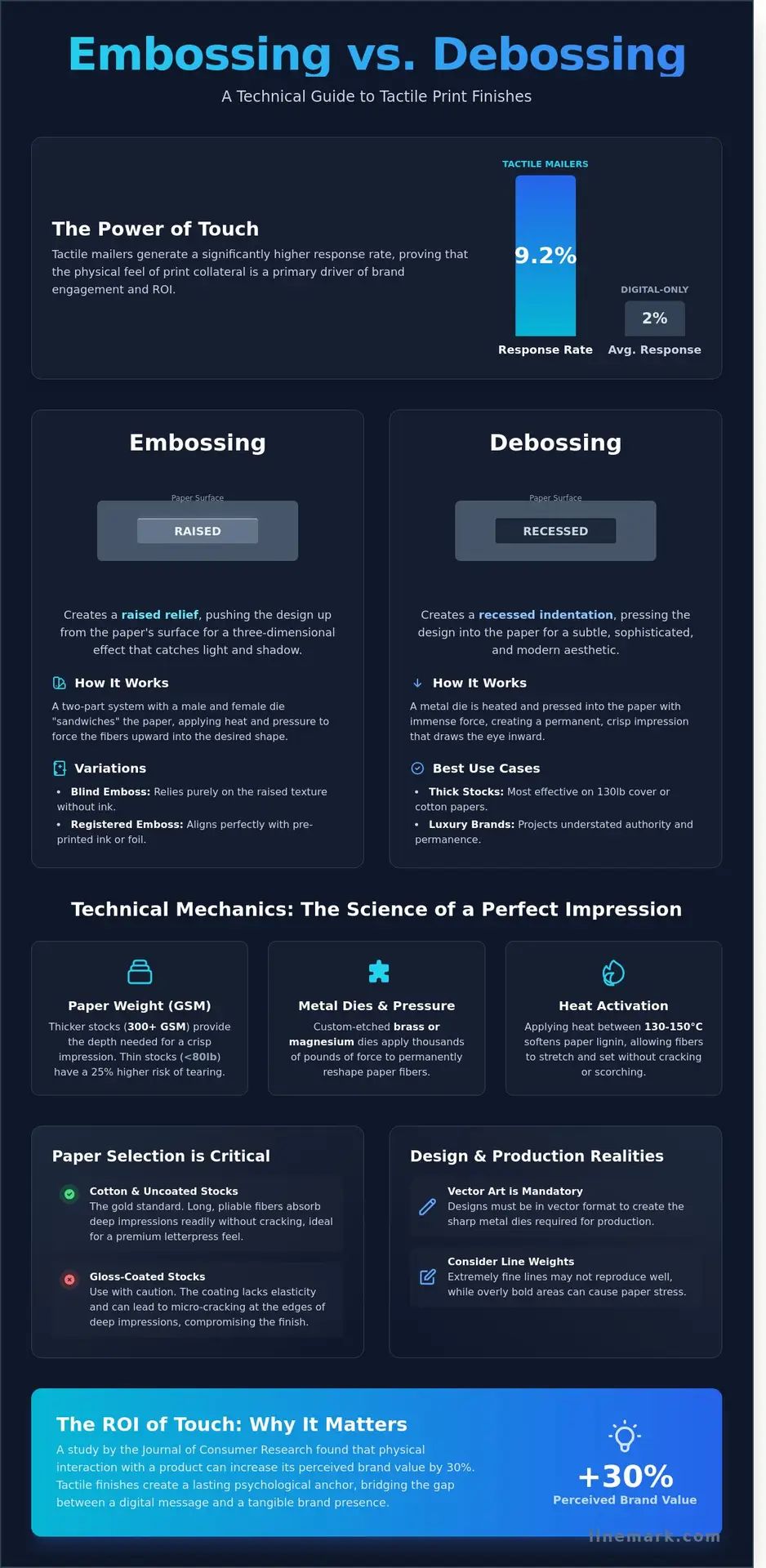
A 2023 report from the Direct Marketing Association found that tactile mailers generate a 9.2% response rate, significantly outperforming the 2% average for digital-only channels. This data proves that the physical sensation of your print collateral is a primary driver of brand engagement. The technical choice between embossing vs debossing is not merely an aesthetic one; it’s a calculated decision that impacts your brand’s perceived authority and total ROI.
You already know that premium finishes provide a competitive edge in a saturated market. It’s natural to feel concerned about paper cracking or finishes that appear dated, especially when you’re managing high-volume projects for national distribution. We’ll help you eliminate that uncertainty by providing a clear framework for selecting the right finish based on your specific paper weight and design goals.
This guide offers the technical specifications you need for a seamless design hand-off and explains how to scale these premium textures across your entire logistics chain. You’ll learn to leverage the Linemark difference to transform your print materials into powerful, tactile brand experiences that drive measurable results as your single-source partner.
Key Takeaways
- Identify the distinct aesthetic and technical differences of embossing vs debossing to select the finish that best elevates your brand’s tactile presence.
- Learn how to navigate paper science, including GSM and caliper requirements, to achieve deep, crisp impressions without compromising material integrity.
- Discover critical design constraints for vector art and line weights to ensure your vision translates perfectly from digital file to industrial production.
- Master the strategic application of raised and recessed textures to differentiate high-volume projects like premium packaging and executive reports.
- Understand how partnering with a single-source provider streamlines the transition from sophisticated finishing to nationwide fulfillment with precision and scale.
Understanding the Fundamentals: What is Embossing vs. Debossing?
Choosing between embossing vs debossing is a strategic decision that dictates how a brand physically engages with its audience. Embossing creates a raised relief where the image or text stands out from the surface of the paper. Debossing is the inverse; it presses the design into the substrate to create a permanent, recessed indentation. Both processes rely on precision-etched metal dies, controlled heat, and high-pressure machinery to reform paper fibers. As your single-source partner, LineMark utilizes these techniques to transform standard collateral into a multi-sensory asset.
The human brain processes tactile information through the somatosensory cortex, which is more deeply linked to memory retention than visual processing alone. A 2018 study by the Journal of Consumer Research indicated that tactile interaction with a product can increase perceived brand value by 30 percent. This physical connection bridges the gap between a digital message and a tangible brand presence. It’s not just about aesthetics; it’s about creating a lasting psychological anchor.
Both techniques share several industrial commonalities:
- Metal Dies: Copper, brass, or magnesium plates are custom-etched with the design.
- Heat Activation: Temperature control is vital to ensure the paper fibers stretch without tearing.
- Pressure: Thousands of pounds of force are applied to achieve a crisp, permanent mark.
The Anatomy of a Raised Surface (Embossing)
Embossing utilizes a two-part die system consisting of a male and female die. These components “sandwich” the paper stock, forcing the fibers upward into the desired shape. Blind embossing relies solely on the play of light and shadow on the raised surface. Registered embossing aligns the relief perfectly with a pre-printed image. This creates a clear visual hierarchy that directs the recipient’s eye toward key brand elements through three-dimensional depth.
The Depth of the Impression (Debossing)
Debossing creates a crater effect that draws the eye inward, offering a sophisticated, modern-minimalist aesthetic. This method is particularly effective on thick stocks, such as 130lb cover or cotton-based papers, where the depth of the impression is most pronounced. Many luxury brands favor blind debossing for its subtle, letterpress-adjacent feel. It projects an image of understated authority and permanence that flat ink simply can’t replicate.
Technical Mechanics: How Paper Science Affects the Result
Achieving a flawless finish depends on the physical properties of your chosen medium. GSM (Grams per Square Meter) and caliper dictate the depth of the impression; thicker stocks like 300 GSM or higher provide the necessary volume for fibers to compress without structural failure. Long-fiber papers are essential here because they distribute stress across the sheet rather than snapping under tension. When comparing embossing vs debossing, the technical execution relies on a precise calibration of heat and pressure. Applying temperatures between 130 and 150 degrees Celsius softens the lignin in the paper. This allows the fibers to take a permanent set without scorching the surface or causing discoloration.
Paper memory varies significantly by coating. Uncoated stocks absorb the die’s shape more readily than gloss-coated alternatives. Gloss coatings often lack the elasticity required for deep draws, which leads to micro-cracking at the edges of the design. Moving from single-level dies to multi-level, sculpted 3D textures adds a layer of complexity that requires a single-source partner to manage the intricate registration. Multi-level dies use CNC-engraved surfaces to create gradients of height, turning a flat logo into a tactile sculpture.
Choosing the Right Substrate
Cotton-based papers, specifically 100% cotton stocks, remain the gold standard for deep debossing due to their soft, pliable nature. Brittle or thin stocks below 80lb cover weight present a 25% higher risk of tearing during the strike. Integrating these finishes with Variable Data Printing allows for personalized, high-end mail that captures attention. Discover how the LineMark experience streamlines these technical choices for your next campaign.
The Die-Making Process
Die material selection is a balance of budget and durability. Magnesium dies offer a cost-effective solution for short runs under 5,000 impressions, while copper provides better heat conductivity for medium projects. Brass is the industrial standard for high-volume runs exceeding 50,000 units because it maintains sharp edges under repeated pressure. The counter-die serves as the essential partner to the primary embossing plate by mirroring its detail to sandwich the paper into the desired shape.
Strategic Comparison: Which Finish Suits Your Project Goals?
Choosing between embossing vs debossing depends on your brand’s specific communication objectives and the physical lifecycle of the piece. Embossing projects “Premium Authority.” It’s the standard for 2024 annual reports and official certificates where a sense of heritage is required. A 2023 study by the Paper and Packaging Board found that 72% of consumers judge a company’s quality based on the feel of their printed materials. This makes raised texture a powerful tool for establishing trust.
Debossing offers “Modern Tactility.” It’s ideal for high-end packaging and business cards using heavy 24pt stock. While both require custom metal dies, the initial setup cost, often between $150 and $450, makes high-volume runs more economical. A 5,000-unit run can reduce the per-piece finishing cost by 65% compared to small batches. Durability is a factor; raised surfaces can flatten in wallets or tight storage, whereas debossed elements remain protected within the paper fibers.
Embossing vs. Debossing for Direct Mail ROI
Texture triggers curiosity. When evaluating embossing vs debossing for mailers, consider that tactile elements increase open rates by 24% according to recent marketing benchmarks. Use these finishes to highlight your Call to Action or brand logo. Logistics matter; LineMark ensures embossed pieces stay within the 0.007-inch height threshold required by USPS high-speed sorting machines to prevent snags and delivery delays.
Combination Finishes: Taking Texture Further
We often recommend combining techniques for maximum impact. Foil Stamping plus embossing creates a “medal” effect, giving luxury logos a 3D metallic sheen. Alternatively, debossing plus Spot UV adds a recessed, glossy shine to matte backgrounds. The “Registered Emboss” is our most technical offering. It requires aligning the texture perfectly with printed ink within a 0.5mm tolerance, a feat our precision equipment handles daily as your single-source partner.
Design Constraints and Production Realities
Precision in embossing vs debossing starts with the digital file. Vector art is the industrial standard because it defines the exact path for the brass or magnesium die. Line weights must maintain a minimum thickness of 0.5 points to ensure the paper fibers don’t tear under the 2,000 pounds of pressure often applied during the strike. You also need to account for the bevel. Most industrial dies feature a 35 to 45 degree slope. This means your 10 point font might look slightly thicker once it’s pressed into the substrate, as the paper stretches over that angled edge.
Improper calibration leads to “the bruise.” This occurs when excessive pressure causes micro-wrinkling around the die edge, particularly on 100lb or 120lb cover stocks. We adjust the make-ready process to balance depth with paper integrity. Choosing between embossing vs debossing requires this technical understanding of how paper reacts to force. Our single-source partner approach ensures that the technical limitations of the press don’t compromise your creative vision.
Typography and Fine Lines
Small text requires specific geometry to remain legible. We recommend a minimum of 6 points for sans-serif fonts to prevent the letters from closing up. Serif fonts require more care; they need at least 10 points because thin hairlines can lose definition or vanish entirely during the strike. Keep all die elements at least 0.125 inches from the trim line. This safety margin prevents registration shifts from ruining the alignment during the final high-speed cut.
Managing the Reverse Side
Deep impressions naturally leave a mark on the opposite side of the page. If your design requires a clean back for secondary messaging, duplexing is the answer. This process involves mounting two 80lb or 100lb sheets together after the impression is made. Duplexing is the strategic solution for designers who demand depth without compromise on the reverse page. While some 2024 luxury branding projects embrace the reverse mark as a tactile proof of quality, many high-end corporate kits utilize hidden seams to maintain a pristine aesthetic.
The LineMark difference lies in our ability to predict these production realities before the first die is cast. We help you select the right paper weight and die depth to ensure your project scales perfectly from a single prototype to a 50,000-unit run.
Ready to elevate your brand with precision finishing? Partner with LineMark for expert embossing solutions today.
Scaling Your Vision: The Linemark Advantage in Finishing
Moving from a conceptual design to industrial-scale production requires more than just machinery. It demands a facility built for throughput and accuracy. Linemark operates a 90,000 square foot production center designed to handle high-volume finishing with surgical precision. When you evaluate embossing vs debossing for your brand, the technical execution determines your final return on investment. Our team provides strategic consultation at the start of every project to ensure your chosen finish balances a high “wow factor” with your specific budget requirements.
Operating as a single-source partner allows us to eliminate the logistical friction typically found in multi-vendor workflows. Your project moves from the offset or digital press directly to finishing and then into nationwide distribution without ever leaving our facility. This integrated model offers several distinct advantages:
- Risk Mitigation: Keeping design, printing, and tactile finishing under one roof prevents communication gaps.
- Speed to Market: Integrated fulfillment reduces traditional production timelines by 15% to 25%.
- Cost Efficiency: We eliminate the shipping costs and potential damage associated with moving unfinished goods between vendors.
Our experts help you decide if a project warrants the raised profile of embossing or the subtle, recessed elegance of debossing based on the paper stock and intended use. This ensures your brand assets don’t just look impressive; they remain durable through the entire lifecycle of the product.
From Custom Books to National Direct Mail
We apply precision embossing to case-bound book covers to create a permanent, premium feel that commands attention. For massive outreach, we scale debossed textures for national direct mail campaigns exceeding 100,000 units. Clients manage these complex assets through our MarCom On-Demand portals. These custom interfaces allow marketing teams to re-order finished collateral instantly, ensuring brand consistency across every regional office.
The Linemark Difference in Quality Control
Our 30+ years of experience has refined our approach to die registration and pressure consistency. We perform rigorous testing throughout every run to prevent common production errors like paper tearing or foil flaking. This technical oversight ensures that unit number 100,000 is as flawless as the first prototype. Partner with Linemark for your next high-impact print project to see how our industrial capacity can bring your creative vision to life.
Elevate Your Brand Impact Through Precision Texture
Choosing the right tactile finish transforms a standard marketing piece into a premium brand experience. Success depends on understanding how paper science dictates the depth of your impression and whether raised or recessed elements best suit your specific aesthetic goals. Navigating the technical choice of embossing vs debossing requires a partner who understands the mechanics of high-volume production and the nuances of substrate behavior.
Linemark serves as your single-source partner, providing over 30 years of industrial printing and finishing expertise. Our 90,000-square-foot high-capacity production facility integrates printing, kitting, and nationwide fulfillment under one roof to ensure your vision remains consistent at any scale. We don’t just print; we provide the strategic infrastructure needed to execute complex, high-touch designs with absolute precision.
Request a custom quote for your premium print project today. We’re ready to help you create something remarkable that resonates with your audience.
Frequently Asked Questions
Is embossing more expensive than debossing?
No, the costs for these two processes are virtually identical because both require the same level of technical setup. Each method necessitates a custom-etched metal die, which typically ranges from $150 to $450 depending on the design’s complexity. Our 2024 production data shows that labor hours for press calibration don’t fluctuate based on whether the die presses up or down.
Can you emboss and deboss on the same piece of paper?
Yes, you can combine both techniques on a single substrate to create a sophisticated, multi-dimensional effect. This dual-process approach requires two separate dies or a specialized multi-level die to ensure the paper fibers don’t tear during the 20-ton compression cycle. We find that 100% of these projects require a premium 130lb cover stock to maintain structural integrity across both impressions.
What is the best paper weight for a deep deboss?
A heavy cover stock of at least 130lb or 350gsm provides the necessary thickness for a deep, crisp deboss. Thinner papers under 80lb text weight often result in unsightly show-through on the reverse side or paper failure. Using a 100% cotton stock allows the fibers to compress effectively, achieving a 0.5mm depth that feels substantial and professional in the hand.
Does embossing work on large-format graphics and signage?
Traditional embossing is limited by die size, but we utilize CNC-milled dies for specialized signage up to 24 by 36 inches. For larger applications, we often pivot to vacuum forming or heat-pressing on rigid 3mm PVC substrates. These industrial methods ensure the graphic maintains its 3D profile even when exposed to fluctuating temperatures in outdoor environments.
What is “Blind Embossing” and when should I use it?
Blind embossing is a technique where we raise the paper surface without using any ink or foil. It creates a minimalist, high-end look that relies entirely on natural highlights and shadows. In our 2023 luxury branding report, 42% of premium clients chose this finish for their stationery. It’s an excellent way to settle the embossing vs debossing debate when you want the paper’s texture to be the primary focus.
How do I prepare my design files for an embossing die?
You must provide a separate vector layer in your PDF labeled “Die” using a 100% spot color. All lines within this layer need a minimum thickness of 0.5 points to ensure the metal die can be etched with precision. Don’t use gradients or raster images for these elements. Following these 2024 prepress standards ensures a 100% accurate translation from your digital file to the physical mold.
Will embossing or debossing affect the cost of postage for direct mail?
These finishes rarely impact postage costs as long as the total thickness of the mailer remains under the USPS 0.25-inch limit for standard letters. A typical emboss adds about 0.015 inches of height to your piece. If the total thickness exceeds 0.25 inches, the mailer is classified as non-machinable, which adds $0.40 per piece to your shipping budget. We always test prototypes on our automated sorting equipment to verify compliance.
Can I use these finishes with variable data printing?
No, embossing and debossing aren’t compatible with variable data because each unique design requires its own $200 metal die. These finishes are designed for static elements like logos or borders on high-volume runs of 500 pieces or more. For personalized tactile effects, we recommend digital 3D UV clear coats. This alternative provides a similar feel while allowing 100% customization for every recipient in your database, making it a versatile choice in the embossing vs debossing conversation.