

 11/09/2026
 Steve Bearden
Print can do more than introduce a store; it can give customers a reason to return. Local store marketing print materials include postcards, brochures, flyers, banners, signs, and other pieces that share offers, useful information, or reminders in a tangible format.
Digital channels are valuable, but a printed message can stay visible after a customer leaves the screen. Choose materials to fit the moment: a storefront sign can attract attention, while a postcard can deliver a timely offer or thank-you directly to existing customers.
This guide explains what marketing materials are and how different print formats support local promotion and customer retention. It focuses in particular on postcards and direct mail, with practical ideas for making each piece relevant, easy to act on, and consistent with the experience customers expect from your store.
Key Takeaways
- Match each print format to its role, from building storefront visibility to sharing detailed business information.
- Use brochures to organize useful details so customers can quickly find what matters to them.
- Shape postcards around a clear purpose, such as promoting an event, sharing a reminder, or thanking a customer.
- Make direct mail more relevant to existing customers with thoughtful offers and a clear next step.
1. What are some examples of print marketing?
Local store marketing print materials include business cards, stationery, posters, calendars, postcards, and direct mail. Each serves a different customer touchpoint. A poster can highlight a storefront promotion, while a business card gives customers a reminder to keep. Use consistent colors, type, and wording to make your brand more recognizable across formats.
Business cards and stationery can establish credibility in everyday interactions. Include your store’s name, address, phone number, and opening information, then share cards at checkout, events, or service appointments. Consistent details help customers remember your business and reconnect when they need to.
For broader awareness, place posters where customers can see them, such as a window or community notice area. Direct mail can carry a message into nearby households, while printed inserts can introduce a related service at the point of sale. Calendars offer another kind of visibility: a useful calendar can keep a business name in view across 365 days. These pieces make the brand a tangible reminder beyond a visit or online interaction.
Choose formats according to your goal and audience. Use posters for visible announcements, business cards for personal introductions, and calendars for lasting reminders. Postcards and direct mail work for messages sent to customers or prospects. Pair a clear offer with a simple next step so readers know how to respond.
Keep printing practical by matching the format and quantity to a realistic distribution plan. A concise design, standard size, and focused message can avoid unnecessary complexity. Consider where customers will encounter each piece and how often its information may need updating.
Common mistakes include cluttered layouts, hard-to-read text, outdated details, and offers without a clear call to action. Before printing, check the proof for spelling, contact information, dates, and legibility. Choose relevant visuals and leave enough space around key messages. A careful review helps each piece support awareness and customer relationships.
2. What are marketing materials?
Marketing materials communicate a business’s value and guide customers toward an action. For a neighborhood retailer, that could be a business card at checkout, a flyer announcing a seasonal sale, or a brochure explaining services. Give each piece a clear purpose: build awareness, answer questions, or encourage a purchase.
Brochures suit information that needs more space than a small card or flyer can provide. A local shop can use one to explain product ranges, service options, store policies, or what makes its business distinctive. Organize content with clear headings, concise descriptions, and relevant images. A tri-fold brochure has three panels on each side; a bi-fold has four panels and one central fold. Choose the layout that gives each topic enough room.
Business cards support professional introductions, while flyers put a focused message in customers’ hands. A card can carry the store name and contact details; a flyer can highlight an event or promotion. Retailers can add a QR code to a business card to connect its printed details with a digital destination, such as a product page or appointment form. According to the RRD Print Impact Report, 50% of marketers with print programs use QR codes in print marketing and expect to continue doing so.
The right format can also depend on the business’s stage. A new store may prioritize cards and flyers that introduce its location, while an established retailer might use brochures to explain a wider range of services. For a new campaign, keep the message focused: identify the audience, choose one action, then select a format that fits the information without crowding the design.
Use consistent colors, type, and store details across cards, brochures, and flyers. That coordination helps customers recognize the business across different interactions. For a larger storefront message, large format graphics can extend the same visual identity to prominent spaces.
3. What is printed promotional material?
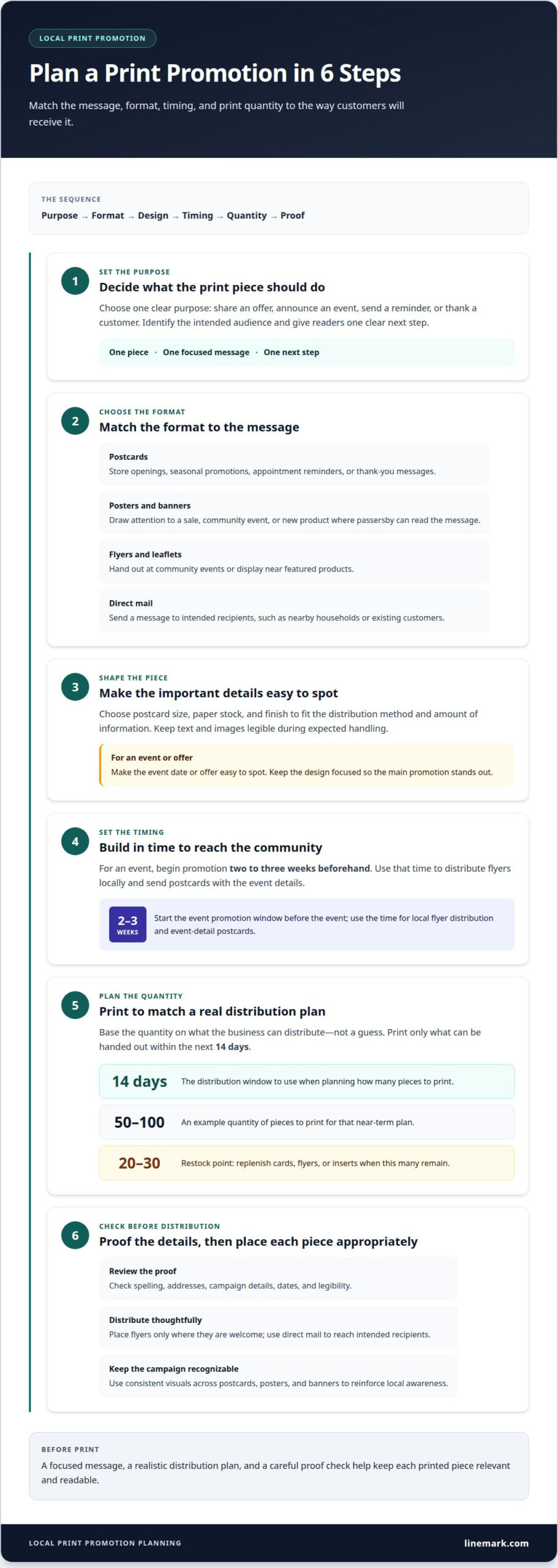
Printed promotional material carries a specific message, such as an offer, event announcement, reminder, or thank-you. A postcard can announce a store opening, share a seasonal promotion, remind customers about an appointment, or thank them after a purchase. Match the format to the message and the action you want readers to take.
Posters and banners can draw attention to a sale, community event, or new product. Place them where passersby can read the message, and make the event date or offer easy to spot. Flyers and leaflets are useful to hand out at community events or display near featured products. Keep the design focused so the main promotion stands out.
Choose postcard size, paper stock, and finish to suit the distribution method and amount of information. A short event notice may fit a compact format, while a detailed promotion needs more room. Select a finish that keeps text and images legible during expected handling. For local distribution, place flyers only where they are welcome; use direct mail to reach intended recipients. Keep addresses and campaign details accurate.
How many should a store print? Base the quantity on a specific distribution plan, not a guess: print only what the business can hand out within the next 14 days, such as 50-100 pieces. Restock cards, flyers, or inserts when 20-30 remain, so active promotions don’t run out unexpectedly.
For an event, retailers are advised to begin promotion two to three weeks beforehand. Use that time to distribute flyers locally and send postcards with the event details. Give each piece one clear call to action, such as visiting the store or attending the event. Consistent visuals across postcards, posters, and banners help reinforce local awareness.
4. Postcards and direct mail for customer retention
Retention mail gives existing customers a reason to remember and revisit a local store. A postcard can acknowledge a recent purchase, share a relevant offer, or remind someone about a seasonal service. Segment the audience by purchase history or interests, then tailor the message to what those customers are likely to value.
Make the visual impression useful and immediate. Put the store name, offer, and next step where readers can find them quickly. For example, a neighborhood café could send a thank-you postcard with a returning-customer offer. One sample evergreen promotion is 10% off the next visit. A clear expiration date or redemption instruction helps customers understand how to act.
Direct mail can support repeat engagement beyond a single postcard. A retailer might welcome a new customer, follow up with a product-related suggestion, then send a seasonal reminder. Make each piece distinct instead of repeating the same promotion. Catalogs offer more room for product discovery, while a postcard delivers one focused message.
Measure the campaign against a specific response, such as redeemed offers or repeat visits. The ANA Response Rate Report 2023 gives direct mail a 15.6% response rate and 160.9% ROI for house files of existing customers. These figures describe that report’s existing-customer list category, not a guaranteed outcome for every store. Use a unique offer code or campaign identifier to connect responses with the mailing.
For a local retailer, the lasting value comes from relevance and follow-through. Send a birthday message only when that information is available and appropriate to use; otherwise, choose a seasonal event or product reminder. Keep customer details accurate, align the offer with the store experience, and make the next action easy. Plan a customer-retention mailing around a clear audience, message, and response goal.
Linemark
Linemark helps local businesses turn retention and awareness goals into coordinated print communications. When a campaign combines customer mailings with in-store visibility, Linemark’s Direct Mail, Commercial Printing, and Large Format Graphics offerings can support postcards, promotional pieces, and signage. The right mix depends on the audience, message, distribution plan, and how customers encounter the store. For example, pair a postcard that encourages another visit with consistent visual messaging inside the store. Linemark also provides Custom Book Printing when a bound format suits the information. Bring your campaign objective, audience, key message, and desired action to plan practical print materials. Contact Linemark to discuss your local store marketing print materials.
Put Your Next Print Campaign in Motion
Use your next campaign to build a more consistent connection with customers. Choose an audience, define the action you want them to take, and align each printed touchpoint with that purpose. A coordinated plan for local store marketing print materials can carry your message from the mailbox to the storefront and keep it recognizable at every interaction.
Linemark can support your plan with Direct Mail, Large Format Graphics, and Custom Book Printing. The right combination depends on your communication goal and the format your customers need. Bring your audience, message, and intended next step to the discussion to shape a print program for your store.
Contact Linemark to discuss print materials and take the next step toward a customer connection built to last.
Frequently Asked Questions
What are marketing materials?
Marketing materials are communication pieces a business uses to inform customers, support a campaign, or prompt a next step. They can help before, during, or after a purchase. For example, a product insert can explain care instructions after checkout, while a service guide can help prospective customers understand their options before booking.
What are some examples of print marketing?
Examples include product inserts, menus, coupons, newsletters, catalogs, postcards, and in-store signs. A specialty shop might include a printed care guide with a purchase, while a grocer could use a newsletter to introduce seasonal products. Choose pieces based on where customers encounter them and what information they need at that moment.
What is printed promotional material?
Printed promotional material is a physical piece designed to publicize an offer, product, service, or event. A coupon, event invitation, or product announcement can serve this purpose. Unlike general informational content, a promotional piece usually gives readers a specific reason to respond, such as attending an event or learning about a featured item.
Why are brochures effective?
Brochures are useful when customers need organized information they can review at their own pace. A home goods store, for example, can group product categories and care guidance so shoppers can compare options without relying on memory. Clear section labels and a logical reading order make the brochure easier to use during a sales conversation or after customers leave.
Why are flyers effective?
Flyers make a focused message easy to distribute where the intended audience gathers. A community theater could announce a new production, with the title, dates, venue, and ticket details easy to scan. A strong headline and one clear next step help readers understand the announcement without sorting through unrelated information.
What are the best print materials for different types of local businesses?
The best format depends on the business’s goal. A restaurant may prioritize takeout menus, while a salon could use appointment reminders and service information. A boutique might share a seasonal product guide, and an event organizer may need signs and handouts. Start with the customer’s decision point, then choose a piece that answers a relevant question or supports the next action.