

 11/08/2026
 Steve Bearden
A retail counter can do more than complete a sale: it can put a timely offer directly in a shopper’s path. Point of purchase display printing creates custom displays and signs that present products or promotions where shoppers are deciding what to buy. Countertop displays work especially well near checkout, where a compact format keeps the message visible while customers wait.
A display is more than a holder for products. Its format and placement shape how shoppers encounter the message. The right choice depends on the retail setting, campaign length, and space available.
This guide explains what POP displays do, how countertop displays support retail counters, and how floor, end-cap, pallet, and other signage formats differ. You’ll also learn how temporary, semi-permanent, and permanent displays suit different campaigns, helping you choose a format for your retail environment.
Key Takeaways
- Match a display’s placement and footprint to the retail space so it supports the promotion without obstructing customer movement.
- Use countertop displays to present products or messages near checkout, and keep the display tidy and stocked.
- Choose temporary, semi-permanent, or permanent formats based on how long the campaign needs to stay in place.
- Explore how printed graphics and signage can support a coordinated retail presentation across counters, aisles, and sales floors.
What Are Some Other Types of Point of Purchase Retail Signage?
Custom display design starts with the retail space, product, and campaign goal. A small counter near checkout calls for a different footprint than an end cap or entrance. Map customer movement, available floor or counter space, and sightlines before choosing a structure. A freestanding floor display, for example, can present a larger assortment, while a compact sign can direct attention to one featured item.
Make the product and central message easy to spot. Use graphics that reinforce the promotion, keep essential copy readable from the intended viewing distance, and leave room for shoppers to reach the merchandise. Sketch the placement, product quantity, and customer approach, then refine the shape and artwork around those practical needs. A temporary display can suit a short campaign; cardboard and coroplast are common cost-effective material options.
Choose a POP display printer based on its ability to match the format, print method, materials, and production needs. Digital printing can suit variable or shorter-run work, while offset printing can support repeatable production at scale. The right method depends on quantity, artwork, and project requirements.
Common display materials include cardboard, coroplast, wood, metal, and plastic. Material selection affects durability and handling, so consider expected use, weight, location, and exposure to routine contact. Prioritize stable construction, suitable materials, and responsible handling. Requirements depend on the retail setting and applicable rules.
Price depends on the project and is provided after a quote request; dimensions, quantity, materials, finishing, and assembly affect the estimate. Turnaround depends on production complexity, artwork readiness, and shipping needs. Digital and offset printing are both options. Artwork files should match the agreed dimensions, include final graphics, and clearly identify folds or cut lines. Packaging and installation depend on the display’s construction: temporary displays are often designed to ship flat and assemble simply, while permanent formats may ship assembled. Plan delivery around store access and placement. The U.S. Government Printing Office includes point-of-purchase displays among materials printed on publication rotogravure presses.
Countertop displays
Countertop displays sit near checkout, where shoppers wait in line and make last-minute choices. They bring a product or promotion within easy view and reach. A small tray of snack bars, for example, can present an add-on beside the register. This format gives brands a focused place to highlight items without taking up floor space. Its compact footprint makes placement important: the display should fit the counter while leaving room for checkout tasks.
Start with one product or message. A clear visual hierarchy helps shoppers understand the offer quickly: feature the product first, then add a concise headline or supporting graphic. Keep the key message visible from the customer’s position in line. A display promoting a travel-size item, for instance, can show the product alongside a short benefit statement. Too many competing messages can make the offer harder to grasp.
Match the display’s shape and capacity to what it holds. A shallow tray suits individually packaged products, while compartments can keep several product types organized. Consider how shoppers will pick up an item and how staff will restock it. A display that crowds the payment terminal or blocks merchandise can disrupt checkout, so account for nearby equipment and counter traffic when planning the layout.
Keep the finished display clean, orderly, and well-stocked so the promotion remains clear throughout the day. Staff can straighten products and remove empty packaging during routine counter upkeep. For a limited-time offer, use graphics that can be updated with the campaign; for a lasting placement, choose a message that stays relevant. These decisions connect artwork, product arrangement, and counter use. Retail graphics and signage can help carry a coordinated visual message across store displays.
POP display and signage formats
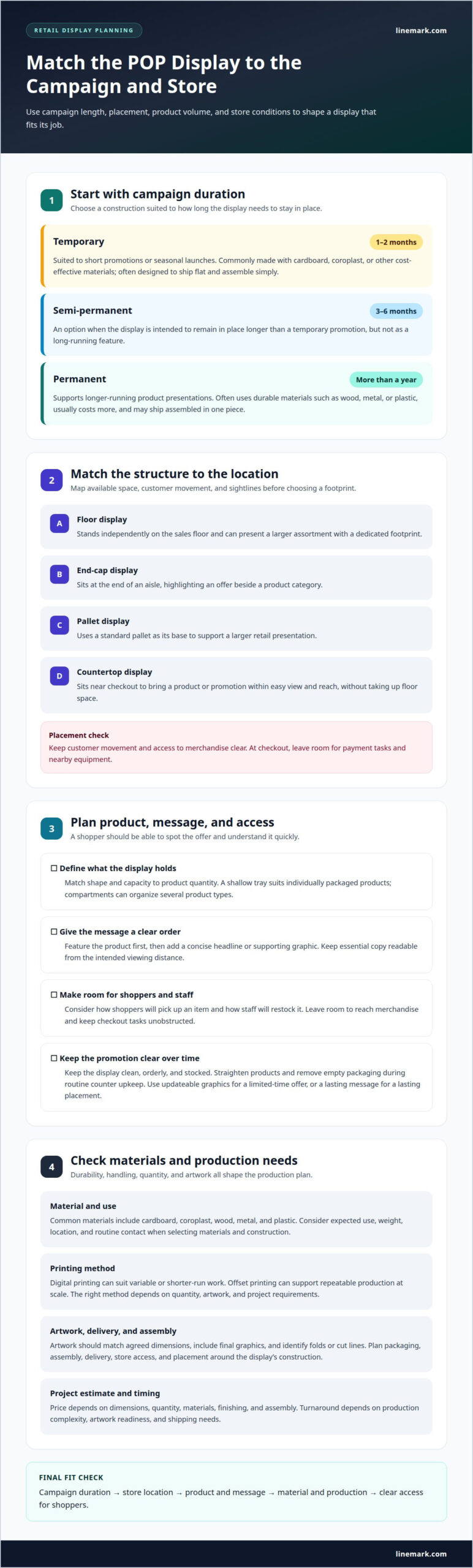
Match a display format to campaign duration, product volume, and store location. Temporary POP displays are typically used for 1-2 months, making them suitable for short promotions or seasonal launches. Semi-permanent displays are intended for 3-6 months of use. Permanent displays can last more than a year, supporting longer-running product presentations.
Materials and construction often reflect how long the display will be used. Temporary formats commonly use cardboard, coroplast, or other cost-effective materials and are designed to ship flat and assemble simply. Permanent displays use durable materials such as wood, metal, or plastic, and usually cost more. They often ship in one piece, already assembled. A short campaign may suit a temporary structure, while a continuing product feature can call for a permanent format.
Location helps determine the structure. Floor displays stand independently on the sales floor, giving a promotion a dedicated footprint. End-cap displays sit at aisle ends, where they can highlight an offer beside a product category. Pallet displays use standard pallets as their base to support larger retail presentations. Each format should suit its setting without obstructing customer movement or access to merchandise.
Printed signage can complement a display or carry the promotion on its own. Choose a format that makes the message visible from the intended viewing distance. A floor display, for example, can introduce a featured product while a nearby sign reinforces the offer. Consistent graphics help the campaign stand out without forcing every message into one structure.
To select a format, first define how long the display needs to stay in place. Identify its location and the products or messages it must support. Then consider assembly, shipping, and how signage will work alongside nearby fixtures. These decisions help make the display useful across retail stores and keep the format aligned with the campaign’s purpose.
POP display definition and purpose
A point-of-purchase (POP) display is a promotional fixture or sign placed near where shoppers decide what to buy. It can present a product, explain an offer, or direct attention to a featured item. For example, a display beside a product shelf can help shoppers notice a new flavor while browsing. Point of purchase display printing turns campaign artwork into physical materials for these retail moments.
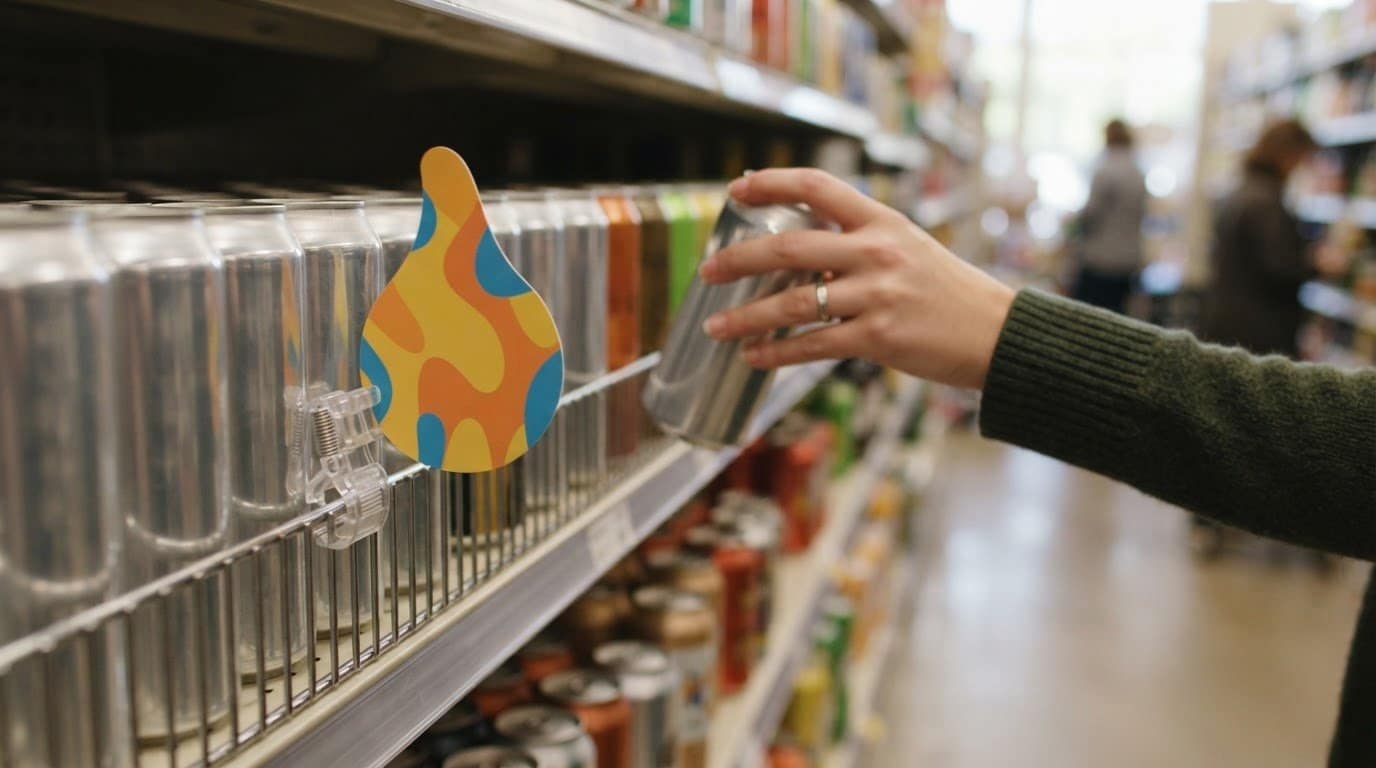
A POP display connects a message with foot traffic at a relevant point in the store. One near an entrance can introduce a promotion; one near checkout can highlight an add-on. Aisle placement depends on available space and customer movement. The aim is to catch attention without blocking access or making the shopping route harder to follow.
POP displays can support temporary campaigns or permanent product presentations. Their value depends on how well the format fits the product, message, and location. Retailers can refresh graphics regularly so returning shoppers see new content. Clear product presentation and an easy-to-read offer help make each display useful to customers and store teams.
The market was estimated to be worth 11 billion dollars in 2021. Companies investing in POP displays saw a 140% increase in sales over competitors that didn’t use them. These figures describe market-level findings, not a guaranteed result for an individual campaign. Results depend on factors such as product, placement, promotion, and execution.
Plan a display by defining its purpose first, such as introducing a new item or supporting a seasonal offer. Then identify where it will be placed, what shoppers should notice, and how the message will stay current. For coordinated retail communication, plan printed signage for your display around the campaign’s location and purpose.
Linemark
Linemark helps organizations turn retail campaign plans into coordinated print and signage. When a POP program needs more than one printed touchpoint, Commercial Printing and Large Format Graphics can carry a consistent message across retail materials. The right approach depends on the campaign’s purpose, display locations, and how shoppers will encounter each message.
Bring the project together by identifying the featured product, display setting, and other materials that need to carry the same campaign. These details help define production scope and keep the printed elements aligned. Linemark can support retail graphics alongside broader commercial print needs.
Contact Linemark to discuss your retail display and signage project.
Make the Next Retail Campaign More Connected
Use your next campaign to align the display message with materials shoppers encounter before and after entering the store. Thoughtful point of purchase display printing can be part of a coordinated plan, connecting a retail message with supporting campaign communications. Linemark offers Large Format Graphics, Direct Mail, and Custom Book Printing for organizations with related print needs across a broader campaign.
Start by defining the promotion’s purpose, audience, and retail placement. Then shape the printed materials around that plan so each piece has a clear role. If you’re ready to discuss how retail display graphics could fit your campaign, contact Linemark about POP printing. A clear plan is a practical first step toward a more cohesive retail experience.
Frequently Asked Questions
What Are POP Displays?
POP displays are printed retail fixtures or graphics that support a product or promotion near a buying decision. They can also organize product information at the shelf. A small sign, for example, can distinguish a new product from neighboring items, while a branded display can group related products. Match the message to nearby merchandise so shoppers can understand the connection quickly.
Looking For POP Graphics?
POP graphics are printed visual elements used on retail displays, signs, or nearby surfaces. A campaign might use a headline panel on a fixture and a coordinating graphic on a window or floor. Keep colors, product imagery, and promotional language consistent across those pieces. Linemark offers Large Format Graphics and Banners & Signage for printed communications in retail environments.
Ready to Get Your POP Print Solutions Moving?
Prepare a clear project brief before production. Include the campaign objective, display location, approximate dimensions, artwork status, quantity, and related printed materials. For example, note whether the message needs to coordinate with a store window graphic or a broader campaign. Linemark provides commercial printing and large-format graphics. Share your project details with Linemark to discuss the next steps.
What Features of Backlit POP Displays Can Help You?
Backlit POP displays use illumination behind or within a graphic to make its visual content more noticeable. This can help a promotion remain visible in a dimmer aisle or against a busy background. Use strong contrast and concise copy, since lighting cannot make a cluttered message easier to understand. Plan the display’s position around nearby fixtures and available power access.
What Is The Function Of POP Displays In Retailing Today?
POP displays give retailers a physical way to connect product information with a specific shopping moment. They can introduce a new item, explain a promotion, or guide attention toward nearby merchandise. A display beside a seasonal product, for example, can clarify which items belong to the offer. Clear messaging helps customers understand the promotion without relying on staff explanations.
Where do you use Point-of-Purchase (POP) displays?
Place POP displays where the message relates directly to nearby products or customer activity. Aisle ends can feature category promotions, entrance areas can introduce storewide campaigns, and checkout counters can present compact add-on items. Larger freestanding displays may work on open sales floors when they leave customer pathways clear. Consider sightlines, access, and surrounding merchandise before finalizing placement.