

 07/07/2026
  Steve Bearden
Why are marketers shifting budgets back to physical mailboxes when digital ads are so easy to deploy? The answer lies in the data. Direct mail response rates can reach 9% for house lists, outperforming the 1% average for email by a staggering margin. As digital fatigue reaches a breaking point, direct mail catalog marketing has re-emerged as a high-performance engine for growth. It offers a tactile experience that pixels simply can’t replicate, creating a lasting impression that drives traffic back to your digital ecosystem.
You’re likely feeling the pressure of this shift, especially with the 4.8% average USPS postage rate increase scheduled for July 12, 2026. Managing fragmented vendors and rising distribution costs makes it difficult to scale without losing the precision your brand demands. This guide provides the roadmap you need to leverage industrial-scale production and data-driven logistics for maximum impact. We’ll show you how to streamline your end-to-end process, reduce per-unit costs, and use sophisticated kitting and fulfillment to turn every catalog into a measurable revenue driver.
Key Takeaways
- Discover why physical catalogs are outperforming digital channels in 2026 by providing a sensory experience that captures undivided attention.
- Learn how to implement advanced direct mail catalog marketing strategies by integrating variable data printing for hyper-personalized customer journeys.
- Optimize your marketing budget by aligning specific catalog formats with seasonal outreach and high-intent customer segments.
- Streamline your operations through centralized kitting, inventory management, and high-volume distribution to reduce per-unit costs.
- Transform your outreach from a simple mailing into a high-tech, omnichannel bridge that drives measurable digital engagement and ROI.
The Strategic Value of Direct Mail Catalog Marketing in 2026
Direct mail catalog marketing isn’t just a legacy tactic; it’s a high-precision storytelling engine designed for a saturated market. In an era where digital ads are often ignored or blocked, the physical catalog provides a sensory touchpoint that demands attention. Current projections show the advertising mail market will reach $73.57 billion by 2026, driven by brands that recognize the power of tangible engagement. This growth reflects a shift toward quality over quantity, where the goal is to create a lasting connection rather than a fleeting digital impression.
To better understand how these physical pieces drive results, watch this helpful video:
Breaking Through Digital Fatigue
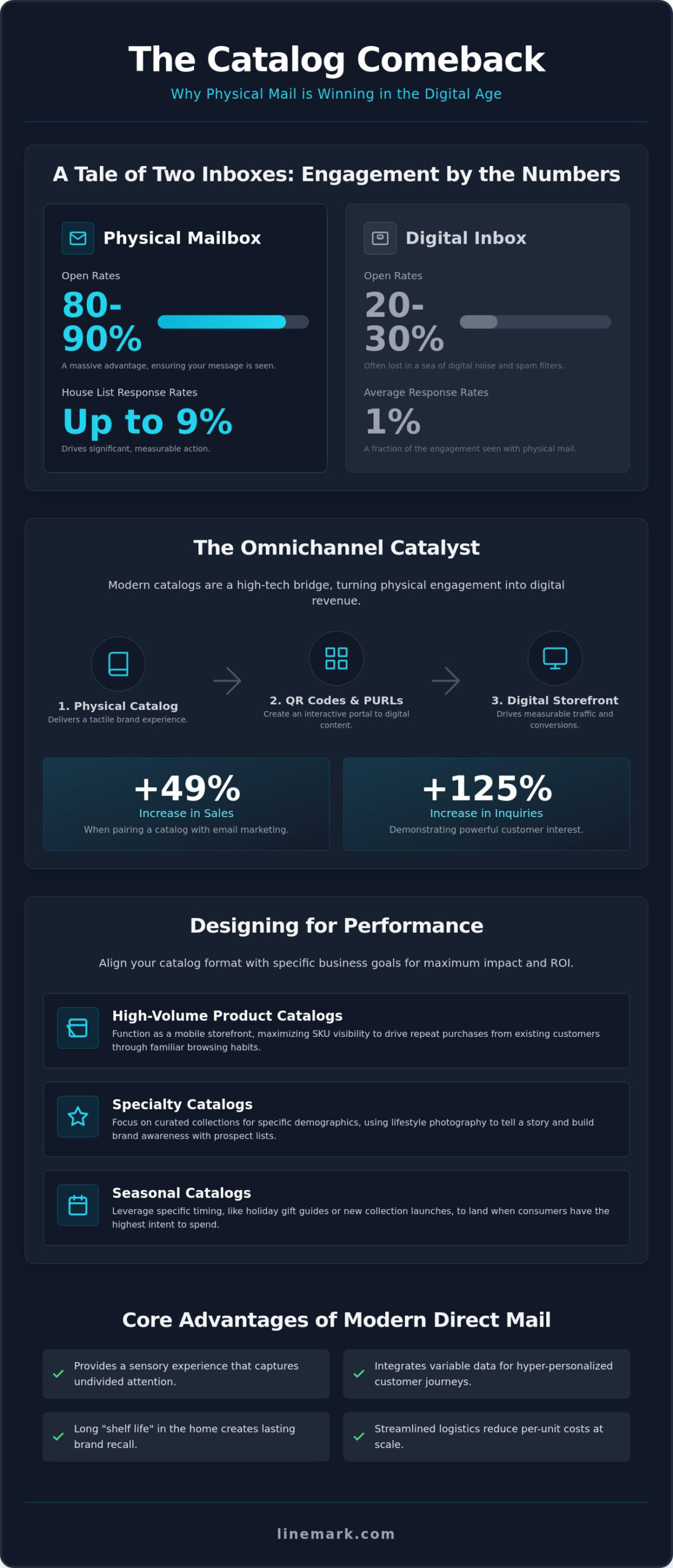
Consumers are overwhelmed by the constant barrage of emails and push notifications. This digital saturation has led to a significant decline in click-through rates, making physical outreach more valuable than ever. Statistics from 2026 indicate that direct mail open rates remain between 80% and 90%, providing a massive advantage over email’s 20% to 30% range. A catalog has a physical presence in the home. It sits on coffee tables and kitchen counters, serving as a persistent brand reminder that digital ads simply can’t match. This shelf life translates into higher brand recall and multiple engagement opportunities from a single mailing.
Catalogs as a Catalyst for Omnichannel Growth
Modern catalogs act as a bridge to your digital storefront. By integrating QR codes and Personalized URLs (PURLs), you can transform a static page into an interactive portal. When you use a catalog to support direct mail as a primary revenue driver, the results are measurable. Research shows that pairing a catalog with email marketing can lead to a 49% increase in sales and a 125% increase in inquiries. We help you close the loop by integrating mailing data with your CRM, allowing for precise tracking of response rates and customer behavior. This data-driven approach ensures that your high-volume production isn’t just about scale, but about strategic ROI.
Designing High-Performance Catalogs: Formats and Strategic Categories
Successful direct mail catalog marketing depends on aligning your physical format with specific business goals. Whether you’re launching a comprehensive inventory showcase or a targeted seasonal lookbook, every technical choice impacts your bottom line. Harvard Business Review research on catalog marketing highlights that physical mailers are especially effective for brands where the tactile experience enhances perceived value. This “stopping power” begins the moment a recipient sees the cover in their mailbox. It’s the first filter for engagement, requiring bold imagery and high-quality finishes that distinguish your brand from standard correspondence.
Choosing the Right Catalog Format
Your marketing objectives dictate your format. High-volume product catalogs serve as a mobile storefront, requiring layouts that maximize SKU visibility without sacrificing readability. These are often sent to existing customers to drive repeat purchases through familiar browsing habits. Specialty catalogs, by contrast, focus on curated collections for specific demographics. These pieces use lifestyle photography to tell a story, often targeting prospect lists to build brand awareness. Seasonal catalogs leverage specific timing, such as holiday gift guides or spring collection launches. By aligning your production cycles with these peak demand periods, you ensure your outreach lands exactly when consumers are ready to spend.
Technical Specifications for Industrial-Scale Production
When operating at an industrial scale, technical precision is non-negotiable. You must balance a premium hand-feel with the practicalities of postage. For instance, the USPS recently increased the maximum weight for Marketing Mail flats to 20 ounces, allowing more content per piece before moving into higher-cost parcel rates. However, every gram counts when calculating national distribution costs. Choosing the right paper stock is a critical decision. A 60lb gloss text might suffice for high-volume mailers, while an 80lb matte cover adds the durability needed for a persistent shelf life in the home.
Binding options also play a role in both aesthetics and cost. Saddle stitching is efficient for catalogs up to 64 pages, offering a lightweight and cost-effective solution. For larger, high-page-count projects, perfect binding provides a professional, book-like spine that stands out on a shelf. To further elevate the piece, consider advanced finishing techniques like spot UV coatings or soft-touch textures. These sensory details increase the dwell time of your mailer. If you’re looking to optimize your mailing strategy, our insights on direct mail logistics can help you scale your program efficiently without sacrificing quality.
Leveraging Data-Driven Personalization for Catalog ROI
Personalization is the engine that converts a generic mailer into a high-performance sales tool. In the modern direct mail catalog marketing landscape, consumers expect relevance. Research indicates that 52% of consumers now anticipate that direct mail will be personalized to their specific needs. By moving beyond simple name fields to complex data integration, brands can see engagement levels rise significantly. This isn’t just about aesthetics; it’s about using first-party data to solve the reader’s problem before they even open the cover. When a catalog feels curated for the individual, it transitions from “junk mail” to a valued resource.
Variable Data Printing (VDP) in Catalog Marketing
Variable Data Printing (VDP) is a core component of advanced commercial printing. It allows for the modification of text, graphics, and entire layouts from one piece to the next without interrupting the high-speed production process. Imagine a catalog where the featured products on the first five pages change based on the recipient’s previous purchase history. We can include local store maps for the nearest physical location or unique QR codes that track individual engagement in real time. Our high-speed digital presses ensure these complex data sets are rendered with surgical precision, maintaining industrial quality while delivering a boutique, personalized experience.
Predictive Modeling and Audience Targeting
Effective personalization begins long before the ink hits the paper. It starts with sophisticated audience segmentation. By analyzing historical CRM data, we help you identify which customers are most likely to respond to a physical touchpoint. This predictive modeling filters out low-intent segments, allowing you to focus your budget on high-conversion prospects. 97% of direct mail users report higher response rates when using personalized mail, proving that data is the key to scaling your ROI.
- Segment by behavior: Group customers by purchase frequency and average order value to tailor high-end or discount-focused catalogs.
- Geographic precision: Target specific regions to coincide with local events, climate shifts, or store openings.
- A/B Optimization: Test different imagery or messaging strategies to see which creative assets drive the most digital traffic.
This strategic approach ensures that every catalog sent is a calculated investment. We don’t just print and mail; we act as a strategic ally to ensure your data is working as hard as your creative assets. This creates a closed-loop reporting system that allows for constant optimization, turning your direct mail catalog marketing program into a scalable and predictable revenue generator.
To further refine these results, businesses often leverage the sales intelligence and performance marketing expertise of partners like Rank Digital to ensure their digital and physical channels are perfectly synchronized for growth.
Mastering Production Logistics: Printing, Kitting, and National Distribution
Execution is the final bridge between a creative concept and a customer’s doorstep. While personalization drives the strategy, industrial-scale logistics ensure that your direct mail catalog marketing program remains cost-effective and reliable. The journey from a digital file to a physical mailbox involves a rigorous five-step process: data/creative pre-press, high-capacity printing, precision binding, automated assembly, and strategic postal entry. Each stage requires meticulous oversight to prevent the friction that often occurs when using fragmented vendors. By centralizing these operations within a 90,000-square-foot facility, we provide the physical space and technical infrastructure necessary to manage national programs with surgical precision.
Offset vs. Digital Production at Scale
Choosing the right print method is a balance of volume and variety. Offset printing remains the gold standard for massive, high-volume runs where cost-per-unit is the primary concern. It delivers exceptional color depth and consistency across millions of pages. Conversely, digital printing is the engine of the personalization strategies discussed earlier. It allows us to swap content on the fly without stopping the presses. Our facility maintains a rhythmic balance between these technologies, ensuring brand integrity is preserved whether you’re printing 10,000 targeted catalogs or 1,000,000 mass-market pieces. Precise binding and finishing then transform these sheets into durable, professional products that withstand the rigors of the national mail stream.
Streamlined Fulfillment and Mailing Strategies
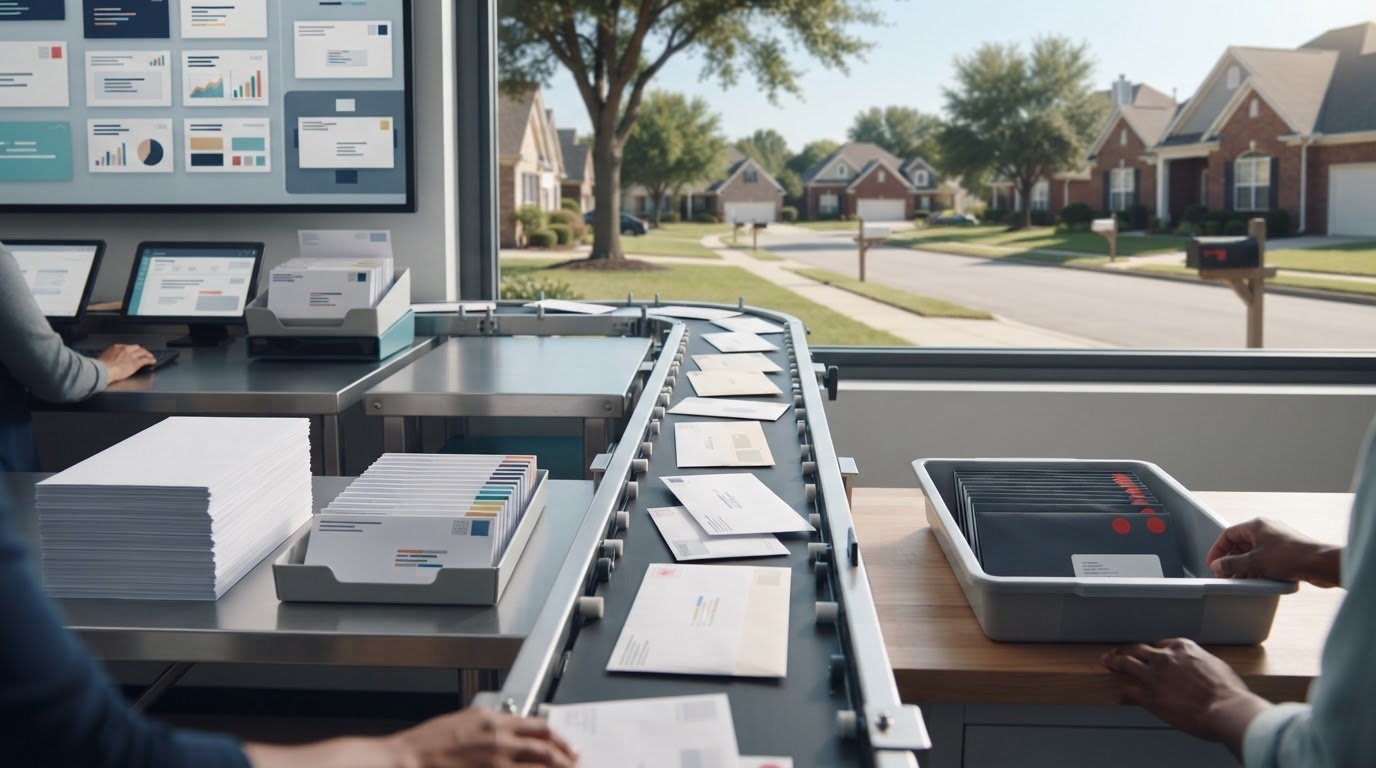
Logistics complexity increases exponentially when catalogs are paired with additional components like personalized letters, coupons, or product samples. This is where automated kitting becomes essential. We use high-speed insertion and assembly lines to reduce manual labor costs and eliminate human error. Managing large-scale inventory requires a sophisticated system that tracks every pallet and piece, ensuring that your materials are ready for distribution the moment they are needed. This end-to-end control is vital for maintaining a steady flow of communication with your audience.
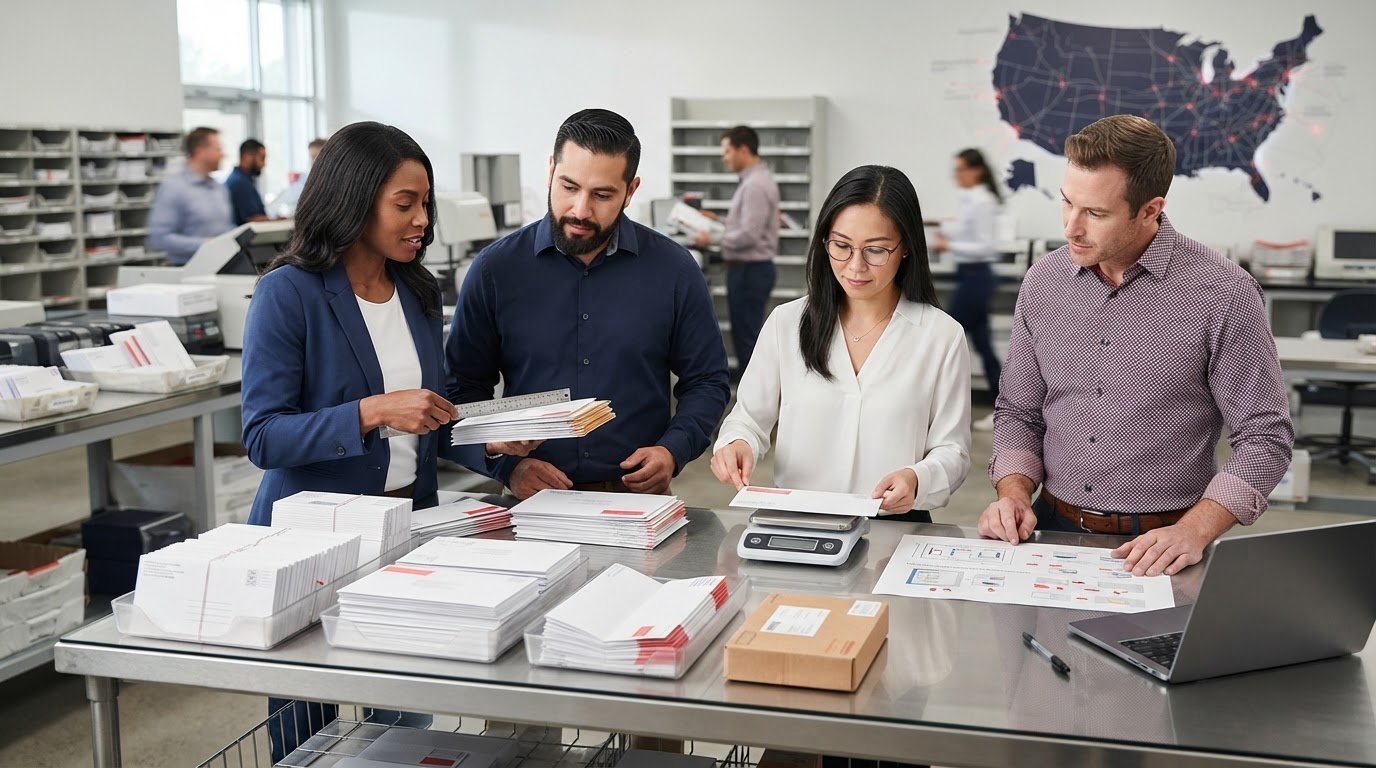
Navigating the evolving USPS landscape is perhaps the most critical aspect of catalog logistics. With postage rates increasing by an average of 4.8% on July 12, 2026, optimization is no longer optional. For example, the base rate for Marketing Mail Flats will reach $1.140 for pieces weighing 1 oz. or less. We mitigate these costs through sophisticated mail sorting and destination entry strategies. By dropping mail closer to its final destination, we help you secure significant discounts that protect your ROI. If you are ready to optimize your distribution, our team can help you master the complexities of kitting and fulfillment for your next national campaign.
This holistic approach to production and logistics ensures that your project is never a series of disjointed transactions. Instead, it is a unified journey managed by a single partner committed to operational excellence. We focus on the technical nuances of weight, thickness, and postal regulations so you can focus on the growth of your brand.
Scaling Your Program with Linemark’s Integrated Solutions
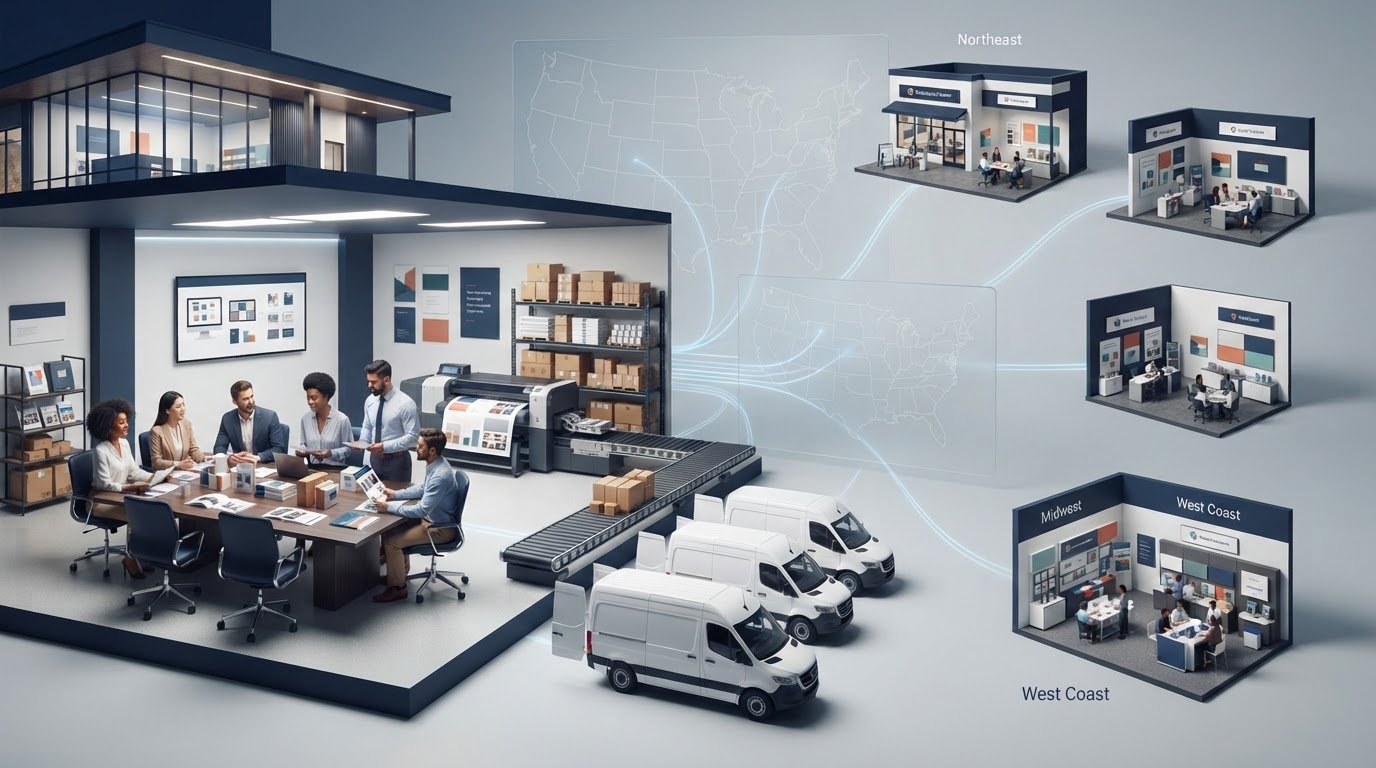
Scaling your program requires more than just a printer; it demands a strategic communications ally that understands the intricacies of high-volume logistics. Fragmented vendor relationships often lead to hidden costs and communication gaps that erode your ROI. By centralizing your direct mail catalog marketing within a single, integrated ecosystem, you eliminate the friction of managing separate print, kitting, and mailing providers. This unified approach ensures that every catalog, whether part of a national association mailing or a corporate product launch, benefits from consistent brand standards and optimized distribution paths. We focus on the technical details so you can focus on your broader marketing objectives.
MarCom On-Demand: Simplifying Catalog Management
Managing catalog updates for distributed teams or franchise networks often creates a logistical bottleneck. Our MarCom On-Demand portal solves this by providing a centralized destination for your marketing assets. Local managers can access approved templates to customize catalogs for their specific regions while you maintain absolute control over core brand elements. This platform provides real-time inventory tracking and automated reordering, ensuring that your high-volume programs never stall due to stock shortages. It’s a scalable solution for national corporations that need to react quickly to market shifts without sacrificing operational excellence.
The Linemark Advantage: 30 Years of Industrial Precision
Our reputation is built on over 30 years of handling complex, large-scale projects with the meticulous attention to detail usually reserved for boutique shops. We’ve invested in the latest advancements in technical production to ensure our partners stay ahead of the curve. Looking toward late 2026 and beyond, we anticipate even deeper integration of generative AI within direct mail workflows. Research shows that 40% of marketers are already using AI to refine their campaigns, and we’re prepared to help you leverage these tools for even greater personalization and efficiency.
Our 90,000-square-foot facility isn’t just about size; it’s about the technological pride we take in every piece of mail that leaves our dock. We act as a catalyst for your growth by combining industrial-grade capacity with agile problem-solving. Whether you’re managing the impact of the July 2026 USPS rate changes or scaling a specialized kitting program, our team is ready to guide you through every step of the journey. The future of direct mail catalog marketing belongs to those who can bridge the gap between physical impact and digital precision. We’re ready to help you build that bridge and drive measurable results for your brand.
Elevating Your Brand Through Industrial-Scale Catalog Strategy
Modern marketing requires a steady balance between physical impact and digital precision. The re-emergence of catalogs as a primary revenue driver is fueled by their ability to bypass digital noise and offer a sensory brand experience that sticks. Successful direct mail catalog marketing in 2026 demands more than just great design. It requires the technical infrastructure to handle variable data at scale and the logistics expertise to navigate complex postal regulations without sacrificing ROI.
Centralizing your production within our 90,000-square-foot high-capacity facility ensures your projects are handled with surgical precision. We bring over 30 years of industrial printing and logistics expertise to every partnership, acting as a strategic ally rather than a mere vendor. With our integrated MarCom On-Demand technology, you maintain absolute brand control while empowering your team with distributed marketing capabilities. This holistic approach transforms your outreach from a simple mailing into a sophisticated growth engine. Partner with Linemark for your next national catalog campaign and experience the difference that industrial authority and collaborative innovation can make. We’re ready to help you turn your vision into a measurable success.
Frequently Asked Questions
Is direct mail catalog marketing still effective in 2026?
Yes, direct mail catalog marketing remains a high-performance channel for driving ROI. Response rates for physical mail can reach 9% for house lists, which is significantly higher than the 1% average seen in email campaigns. In an era of digital fatigue, the tactile nature of a catalog captures undivided attention and provides a longer shelf life within the home. This leads to higher brand recall and increased digital conversions.
What is the best paper weight for a national direct mail catalog?
The optimal paper weight balances a premium hand-feel with the practicalities of postage costs. Many national programs utilize 60lb or 70lb gloss text for internal pages and an 80lb matte cover for added durability. With the USPS allowing Marketing Mail flats to weigh up to 20 ounces, you have more flexibility to include high-quality stock. We help you select materials that maintain brand integrity while staying within your weight targets.
How much does it cost to print and mail a catalog at scale?
Total investment depends on volume, page count, and your chosen distribution strategy. While we don’t provide fixed pricing without a project review, the July 12, 2026, USPS rate increase sets the median postage for Marketing Mail Flats at $1.140 for pieces 1 oz. or less. Industrial-scale production typically lowers your per-unit printing costs. We focus on optimizing every stage of the process to protect your marketing budget and maximize ROI.
Can I personalize every catalog in a 100,000-unit print run?
Yes, our high-speed digital presses and Variable Data Printing (VDP) technology allow for full personalization at massive scales. You can customize images, offers, and text for every individual recipient in your database. This level of precision goes far beyond simple name fields. By tailoring content to previous purchase history or geographic location, you can increase engagement rates. Data-driven personalization is the key to making high-volume runs feel like boutique experiences.
What is the difference between perfect binding and saddle stitching for catalogs?
The main difference is the spine construction and page capacity. Saddle stitching uses staples along the fold and is ideal for catalogs up to 64 pages. It’s a cost-effective, lightweight solution for seasonal lookbooks. Perfect binding uses a strong adhesive to create a flat, professional spine similar to a paperback book. This method is preferred for high-page-count catalogs that require a premium, durable feel and a visible spine on a bookshelf.
How do I integrate QR codes into my catalog for tracking purposes?
QR codes should be placed prominently near product listings or specific calls-to-action to bridge the gap between print and digital. We recommend using unique, trackable codes for different segments or individual recipients. When scanned, these codes can lead to personalized landing pages or direct shopping carts. This allows for real-time tracking of scan rates and conversions. It’s a critical component for closing the loop in an omnichannel marketing strategy.
How long does the production and distribution process take for a national campaign?
A typical national campaign requires four to six weeks from final file approval to mailbox delivery. This timeline accounts for pre-press data processing, high-volume printing, binding, and automated kitting. It also includes the transit time required for strategic postal entry. We work as your strategic ally to manage every milestone. Our goal is to ensure your catalogs arrive exactly when your audience is most likely to engage with your seasonal or promotional offers.
Does Linemark handle the kitting and mailing of my catalogs?
Yes, we provide comprehensive kitting and fulfillment services within our 90,000-square-foot facility. We don’t just print your materials; we manage the entire logistics chain. This includes inserting additional components, managing inventory, and navigating complex USPS regulations to secure the best possible postage rates. By centralizing these services, we reduce vendor friction and ensure your project moves seamlessly from the press to the recipient’s doorstep with surgical precision.