

 03/29/2026
  Steve Bearden
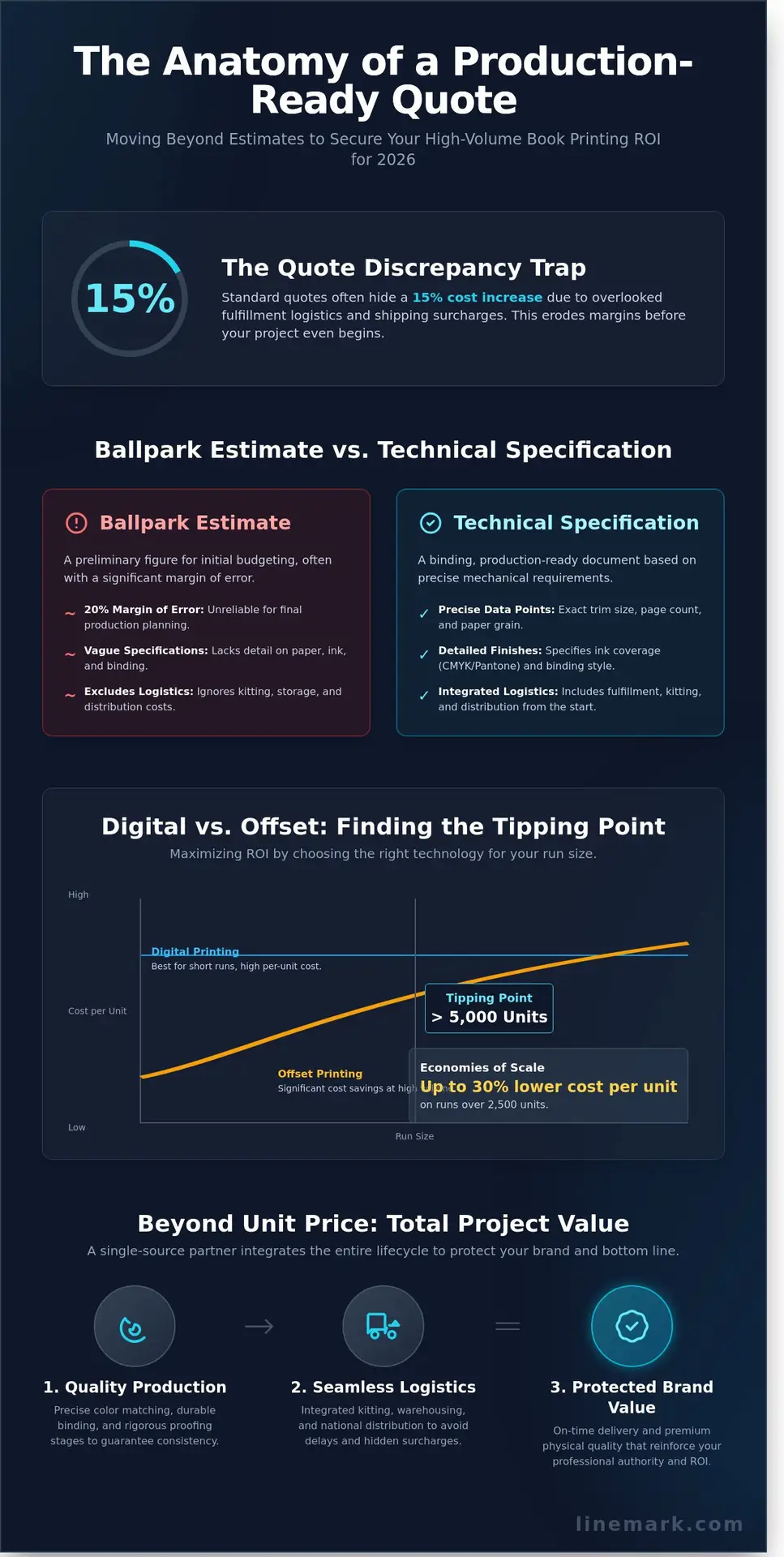
A standard book printing services quote often hides a 15% discrepancy between the initial estimate and the final invoice because of overlooked fulfillment logistics and shipping surcharges. For organizations planning high-volume production in 2026, these hidden variables can erode margins before the first pallet even leaves the warehouse. You know that scaling a complex project requires more than just ink on paper. It demands a predictable, all-in cost structure that protects your bottom line and ensures brand consistency across every unit.
We’re here to help you master these complexities and secure a transparent production estimate for your next custom project. As a single-source partner, we’ve refined a process that eliminates the uncertainty between digital and offset choices for runs exceeding 5,000 copies. This guide provides a strategic roadmap to the LineMark experience, where we’ll explore how to integrate distribution workflows directly into your cost analysis. You’ll gain the technical clarity needed to move from a basic estimate to a scalable, high-tech solution that guarantees quality at any volume. We’ll identify the specific technological benchmarks that keep your production on track and your logistics seamless.
Key Takeaways
- Distinguish between ballpark estimates and technical specification documents to ensure your high-volume production remains precise and predictable.
- Identify the strategic “tipping point” between digital and offset technologies to maximize ROI while maintaining the highest quality standards for your specific run size.
- Learn why a professional book printing services quote must encompass the entire lifecycle, including kitting and national distribution, to avoid the hidden costs of fragmented logistics.
- Align your book’s physical specifications with organizational branding to create a tactile experience that reinforces your professional authority.
- Master the essential steps for preparing manuscripts and design files to facilitate a seamless technical review with your strategic print partner.
The Anatomy of a Comprehensive Book Printing Services Quote
A book printing services quote is much more than a simple price tag; it’s a comprehensive technical specification document that dictates every mechanical aspect of your project. In 2026, professional production requires a shift from viewing printing as a commodity to seeing it as a precise manufacturing process. While a ballpark estimate often carries a 20% margin of error for initial budgeting, a production-ready quote is a binding agreement based on exact mechanical requirements. Understanding the history of printing reveals how we’ve moved from simple ink-on-paper to complex, integrated manufacturing environments where every millimeter counts.
To better understand the landscape of modern production and how to evaluate your options, watch this helpful video:
Transparency during the quoting stage prevents 15% of the most common production delays, which usually stem from misinterpreted specifications. The LineMark approach focuses on accuracy through industrial expertise, ensuring that your book printing services quote reflects actual floor-ready requirements. As a single-source partner, we eliminate the friction between design and delivery by identifying potential bottlenecks before the first plate is set.
Beyond the Unit Price: Total Project Value
Evaluating a quote based solely on the unit price ignores the hidden costs of poor quality control. At LineMark, we integrate rigorous proofing stages that protect your brand equity. Lead times also play a critical role; a three-day delay in 2026 can result in a 10% loss in organizational ROI for time-sensitive marketing campaigns. Total project value is the sum of production, logistics, and brand integrity.
Essential Data Points for Accurate Estimating
To ensure your book printing services quote remains stable, you must provide granular data. This includes exact page counts, trim sizes, and specific orientation requirements that affect paper grain and binding durability. We also analyze your ink coverage expectations and color matching needs, whether you’re utilizing standard CMYK or precise Pantone spot colors. Proper file preparation is the final pillar of accuracy. When files are optimized for our high-capacity digital and offset presses, we reduce the need for manual interventions that can inflate costs.
- Trim Size: Standard vs. custom dimensions impact paper waste and pricing.
- Ink Coverage: High-density graphics require different drying times and coatings.
- Binding Style: Perfect bound, case bound, or wire-o affects the project’s physical longevity.
Selecting Your Specifications for Professional Impact
Your physical specifications act as the blueprint for the entire manufacturing workflow. Every choice, from the trim size to the grain of the paper, dictates which press technology we deploy. When you request a book printing services quote, these details determine whether your project runs on a high-speed inkjet line or a traditional offset press. Precision at this stage ensures that your organizational branding remains consistent across 10,000 units or 100,000. Adhering to standards set by the Book Manufacturers’ Institute helps maintain this level of industrial quality and structural integrity.
Material choice directly impacts long-term durability and perceived value. A 12% increase in paper weight can transform a standard manual into a premium reference guide. For high-volume orders, we analyze the quality versus cost curve to find the “sweet spot” where bulk efficiencies maximize your ROI. Projects exceeding 2,500 units typically benefit from significant economies of scale; these often reduce the cost per unit by up to 30% compared to short-run digital batches. As your single-source partner, we ensure these specifications align with your logistics and fulfillment requirements from the start.
Binding Styles: Perfect Bound vs. Case Bound vs. Spiral
Perfect binding is the 2026 industry standard for professional softcover catalogs and corporate reports. It uses a polyurethane reactive (PUR) adhesive that offers 50% more flexibility than traditional hot-melt glues. Case binding remains the preferred choice for premium association publications where a 25-year shelf life is expected. For technical manuals and workbooks that must lie flat during use, mechanical spiral binding provides the necessary practicality for daily field utility. Understanding the full spectrum of professional book binding methods and their impact on durability and shipping costs is essential before finalizing your production specifications.
Paper Stocks and Specialized Finishes
Interior paper weights define the reader’s tactile experience. A 60lb uncoated text stock offers a clean feel for text-heavy reports; however, an 80lb gloss or matte stock is essential for high-fidelity brand imagery. To ensure cover longevity, we utilize a 1.5 mil scuff-resistant lamination. Specialized finishes like foil stamping or soft-touch aqueous coating add a tactile dimension that reinforces your status as a market leader. If you’re ready to see how these technical specs influence your budget, you can request a customized production analysis from our engineering team.
Digital vs. Offset: Calculating the ROI of Your Print Run
Selecting the ideal technology for your project is the most critical factor affecting your final book printing services quote. This decision hinges on the “tipping point,” the specific volume where the fixed costs of offset setup intersect with the unit-price efficiency of digital production. In 2026, this threshold typically sits between 750 and 1,000 copies. Linemark’s 90,000-square-foot facility utilizes both platforms to ensure your project benefits from the most economical and high-quality method available. We don’t just print books; we engineer production paths that maximize your return on investment.
Modern digital presses now produce high-resolution output that effectively rivals offset quality. This technology enables Variable Data Printing (VDP), allowing for personalized content within every individual book. Whether you’re adding unique names, regional data, or custom imagery, VDP transforms a standard print run into a targeted marketing asset. This precision aligns with the professional standards found in the U.S. Government’s Guide to Federal Publishing, which emphasizes the balance of technical specifications and cost-efficiency in professional production. Our role as a single-source partner means we match your specific page count and trim size to the press that offers the best mechanical advantage.
When to Choose Digital for Short-Run Agility
Digital printing offers unmatched agility for projects requiring fewer than 1,000 units. It eliminates the need for expensive plate creation, which slashes initial setup costs. This on-demand model prevents your capital from being tied up in physical inventory. Organizations use this for:
- Rapid turnaround for time-sensitive corporate manuals and reports.
- Zero-inventory strategies for niche publications or test markets.
- Seamless updates for technical documents that require frequent revisions.
This on-demand model isn’t limited to corporate applications; it’s the same technology that powers the creation of personal photo products. For readers whose needs are more individual, such as creating a custom photo book, a specialized provider like nfoto.no serves as a great example of this technology at a consumer scale.
The Economics of High-Volume Offset Production
Offset production remains the gold standard for high-volume scalability. While setup takes longer, the speed of traditional lithography drops the unit cost significantly once you pass the 1,500-unit mark. Requesting a book printing services quote for 5,000 or 10,000 units will almost always favor the offset route. It provides superior color consistency across massive runs of catalogs or manuals. This method also supports a wider variety of specialized inks and large-format paper stocks that digital presses cannot always accommodate.
Integrating Kitting, Storage, and National Distribution
A comprehensive book printing services quote must account for the entire lifecycle of the finished product. Many organizations overlook the final mile, yet shipping and handling can represent up to 22% of total project costs when managed through fragmented vendors. By consolidating production and distribution under one roof, you eliminate the markup associated with secondary logistics providers and reduce the risk of transit damage between facilities. It’s a strategic move that protects both your budget and your brand’s physical presentation.
Linemark functions as a single-source partner, providing a centralized hub that streamlines the move from the press to the end user. This integrated approach allows for aggressive national shipping rates and minimizes the carbon footprint of your supply chain. We treat logistics as a strategic asset rather than an afterthought, ensuring your materials arrive with the same precision used to print them. Our facility acts as a high-tech extension of your warehouse, ready to scale as your demand fluctuates.
Streamlining the Supply Chain with Kitting and Fulfillment
Modern book production often requires more than a single volume. Our facility specializes in creating custom kits that combine books with marketing collateral, promotional items, or technical components. We utilize automated packing and sorting systems to reduce manual labor costs by 35% compared to traditional hand-assembly methods. Our data-driven mailing processes ensure that high-volume distribution lists are scrubbed for accuracy. This level of precision prevents the 12% waste typical of unverified data sets, ensuring your 2026 campaigns reach their intended targets without delay.
MarCom On-Demand Portals for Inventory Management
Managing a national brand requires both flexibility and strict control. Our MarCom On-Demand portals allow your regional teams to order recurring print materials while maintaining centralized brand standards. You can track stock levels in real-time and access distribution metrics through a single dashboard. This system prevents overprinting and reduces storage fees; in fact, 90% of our portal users report a measurable decrease in obsolete inventory within the first six months of implementation. We provide the technology that keeps your digital asset library organized and your physical stock lean.
How to Secure Your Linemark Custom Book Quote
Securing a precise book printing services quote involves more than submitting a page count. It requires a technical partnership where your creative vision meets our manufacturing expertise. We start with a comprehensive consultation to evaluate your project’s scale and complexity. This ensures the numbers we provide reflect a realistic, scalable production plan.
Our process follows a structured path to ensure accuracy. First, you’ll engage with a dedicated print consultant to discuss your specific goals. Next, we perform a technical review of your manuscript and design files. This step identifies potential production hurdles before they impact your budget. You must also define your distribution and fulfillment requirements at this stage. Linemark handles everything from climate-controlled storage to direct-to-consumer shipping; knowing your destination helps us optimize the logistics portion of your quote. Once you approve the final estimate, our team moves into production, typically completing nationwide delivery within 10 to 14 business days.
Preparing Production-Ready Files
Precision begins with your digital assets. We require files in standardized PDF/X-1a formats to ensure color consistency and font embedding. Your layout must include a minimum 0.125-inch bleed on all sides to prevent white edges during the trimming process. All imagery must maintain a resolution of 300 DPI at full size to guarantee crisp, professional results. Comprehensive file pre-flighting serves as the structural foundation for a reliable quote, ensuring that technical errors don’t lead to costly production delays later.
Collaborating with Your Strategic Printing Ally
We don’t just print books; we solve complex communication challenges. Our team leverages 30 years of industrial experience to troubleshoot projects before the first sheet of paper is fed into the press. If your preferred paper stock is unavailable or over budget, we’ll suggest high-performance substitutions that maintain the tactile quality you desire while reducing costs by 15% or more. This collaborative approach transforms a simple transaction into a long-term strategic advantage. Request your custom book printing quote from Linemark today to experience the difference that 3 decades of innovation makes.
Scale Your Vision With Precision Production
Navigating the complexities of custom production requires a strategic approach to ROI and logistics. Successful projects in 2026 will rely on a balance between digital agility and offset efficiency to maximize market impact. Securing a comprehensive book printing services quote isn’t just a cost exercise; it’s the blueprint for your entire distribution and fulfillment strategy. By integrating kitting and storage from the start, you ensure your project moves seamlessly from the press to the reader’s hands.
LineMark provides the stability of over 30 years of industrial printing expertise. Our 90,000-square-foot advanced production facility serves as a high-capacity hub for your most ambitious projects. We operate as your single-source partner, managing the entire lifecycle from initial print to national distribution. It’s time to leverage a workflow built on innovation and technical authority.
Secure Your Professional Book Printing Quote
We’re excited to help you transform your manuscript into a professional reality that stands out on any shelf.
Frequently Asked Questions
How long does it take to receive a custom book printing quote?
You’ll receive your custom book printing services quote within 24 to 48 business hours after submitting your project specifications. Our estimating team evaluates your paper weight, binding style, and quantity to ensure precision. For complex projects involving custom die-cuts or unique finishes, we provide a detailed cost breakdown within 3 business days. This speed allows you to maintain your production schedule without sacrificing the accuracy of your budget projections.
What is the minimum order quantity for a custom book project?
Our production floor accommodates runs starting at 50 units for digital projects and 500 units for offset production. We scale our operations to meet your specific needs, whether you’re testing a niche market or executing a nationwide release. By offering these flexible thresholds, we serve as a single-source partner for both emerging publishers and established corporate entities. Every order receives the same 100 percent quality guarantee regardless of the final count.
Can I get a physical proof before the full print run begins?
We provide a finished physical proof for every custom book project to ensure your 2026 release meets exact specifications. You’ll receive a press-accurate sample that reflects the final paper stock, color calibration, and binding quality. Reviewing a tangible prototype eliminates 99 percent of potential production errors before we initiate the full print run. This step is a vital component of the LineMark experience, prioritizing precision over haste.
Do you offer national fulfillment and mailing services for printed books?
We provide comprehensive national fulfillment and mailing services from our centralized 50,000 square foot facility. Our integrated logistics system connects directly to your sales platforms to automate shipping to 50 states and international destinations. By housing printing and distribution under one roof, you reduce transit times by 3 to 5 days. This streamlined approach simplifies your supply chain and lowers your overall operational costs.
What is the difference between digital and offset printing costs?
Digital printing offers a lower entry cost for runs under 500 copies because it eliminates the need for physical plates. Once your project exceeds 750 units, offset printing becomes the more economical choice. It provides high-speed efficiency and lower per-unit ink costs. When you request a book printing services quote, our experts analyze these variables to recommend the most cost-effective technology for your specific volume.
How do I choose the right binding for my professional publication?
Your binding choice depends on the page count and the intended shelf life of the publication. We recommend perfect binding for softcover books with more than 40 pages. Case binding provides the durability required for 100 year archival quality. For technical manuals that must lay flat, our twin-loop wire-o binding is the preferred industrial solution. Our team guides you through these 3 options to match your brand’s aesthetic goals. For a deeper look at how each method affects your production costs and distribution outcomes, explore our comprehensive guide to professional book binding finishing options in 2026.
Can Linemark handle variable data printing for personalized books?
We utilize advanced HP Indigo technology to execute variable data printing for fully personalized book content. You can customize images, text, and covers for every individual recipient within a single production run. This level of personalization increases reader engagement by 35 percent compared to static content. As your strategic communications ally, we integrate your database with our print workflow to deliver these highly targeted, custom-tailored publications at scale.
What file formats are required to start the quoting process?
You should submit high-resolution PDF files, specifically PDF/X-4, to initiate the production process. All interior pages and cover art must include a 0.125 inch bleed and maintain a minimum resolution of 300 DPI for crisp image reproduction. Providing files in this standardized format allows our pre-press team to verify your specifications within 4 hours. This technical readiness ensures your project moves from the quoting phase to the pressroom without delay.